Request Demo
What are NXNL1 modulators and how do they work?
25 June 2024
NXNL1 modulators represent a promising frontier in the field of medical science, particularly in the realm of neuroprotection and retinal diseases. NXNL1, or Nucleoredoxin-like 1, is a gene that encodes a protein involved in the regulation of oxidative stress and cell survival. Researchers have been delving into the potential of NXNL1 modulators to address a range of debilitating conditions. In this blog post, we will explore what NXNL1 modulators are, how they operate, and the various applications they hold for medical treatments.
The concept of NXNL1 modulators is fundamentally linked to the role of the NXNL1 protein in cellular processes. NXNL1 has been shown to play a key role in maintaining the redox balance within cells, which is crucial for cell survival and function. Redox balance refers to the equilibrium between the production of reactive oxygen species (ROS) and their detoxification. An imbalance can lead to oxidative stress, which is implicated in numerous diseases, including neurodegenerative disorders and retinal degeneration.
NXNL1 modulators work by influencing the activity of the NXNL1 protein, thereby helping to restore or maintain redox balance within cells. These modulators can be small molecules, peptides, or other agents designed to enhance or inhibit the function of NXNL1, depending on the therapeutic need. By modulating NXNL1 activity, these agents can help protect cells from oxidative damage, promote cell survival, and potentially reverse or slow down disease progression.
The mechanism of action for NXNL1 modulators primarily revolves around their ability to regulate redox-sensitive signaling pathways. When oxidative stress occurs, it can activate various cellular pathways that lead to inflammation, apoptosis (programmed cell death), and other deleterious effects. NXNL1 modulators can intervene in these pathways by either boosting the cell's antioxidant defenses or by directly scavenging ROS, thereby mitigating the harmful effects of oxidative stress.
One of the most promising applications of NXNL1 modulators is in the treatment of retinal diseases. The retina is highly susceptible to oxidative damage due to its high metabolic rate and constant exposure to light. Conditions such as age-related macular degeneration (AMD) and retinitis pigmentosa (RP) involve progressive retinal degeneration, leading to vision loss. Studies have demonstrated that enhancing NXNL1 activity can protect retinal cells from oxidative stress, thereby potentially preserving vision and slowing the progression of these diseases.
In addition to retinal diseases, NXNL1 modulators are being investigated for their potential in treating neurodegenerative disorders such as Alzheimer's disease, Parkinson's disease, and amyotrophic lateral sclerosis (ALS). These conditions are characterized by the progressive loss of neurons, which is often driven by oxidative stress and inflammation. By modulating NXNL1 activity, it may be possible to protect neurons, reduce inflammation, and slow disease progression, offering new hope for patients suffering from these debilitating conditions.
Moreover, the role of NXNL1 modulators extends beyond neuroprotection and retinal health. They are also being explored for their potential in treating cardiovascular diseases, diabetes, and certain types of cancer. In cardiovascular diseases, for example, oxidative stress is a key factor in the development of atherosclerosis and heart failure. NXNL1 modulators could help mitigate oxidative damage to the heart and blood vessels, improving outcomes for patients with these conditions.
In conclusion, NXNL1 modulators represent a versatile and promising class of therapeutic agents with the potential to address a wide range of diseases driven by oxidative stress. By restoring redox balance and protecting cells from oxidative damage, these modulators offer new avenues for treatment and hope for patients with conditions that currently have limited therapeutic options. As research progresses, it is likely that we will see even more applications for NXNL1 modulators, further highlighting their significance in the field of medical science.
The concept of NXNL1 modulators is fundamentally linked to the role of the NXNL1 protein in cellular processes. NXNL1 has been shown to play a key role in maintaining the redox balance within cells, which is crucial for cell survival and function. Redox balance refers to the equilibrium between the production of reactive oxygen species (ROS) and their detoxification. An imbalance can lead to oxidative stress, which is implicated in numerous diseases, including neurodegenerative disorders and retinal degeneration.
NXNL1 modulators work by influencing the activity of the NXNL1 protein, thereby helping to restore or maintain redox balance within cells. These modulators can be small molecules, peptides, or other agents designed to enhance or inhibit the function of NXNL1, depending on the therapeutic need. By modulating NXNL1 activity, these agents can help protect cells from oxidative damage, promote cell survival, and potentially reverse or slow down disease progression.
The mechanism of action for NXNL1 modulators primarily revolves around their ability to regulate redox-sensitive signaling pathways. When oxidative stress occurs, it can activate various cellular pathways that lead to inflammation, apoptosis (programmed cell death), and other deleterious effects. NXNL1 modulators can intervene in these pathways by either boosting the cell's antioxidant defenses or by directly scavenging ROS, thereby mitigating the harmful effects of oxidative stress.
One of the most promising applications of NXNL1 modulators is in the treatment of retinal diseases. The retina is highly susceptible to oxidative damage due to its high metabolic rate and constant exposure to light. Conditions such as age-related macular degeneration (AMD) and retinitis pigmentosa (RP) involve progressive retinal degeneration, leading to vision loss. Studies have demonstrated that enhancing NXNL1 activity can protect retinal cells from oxidative stress, thereby potentially preserving vision and slowing the progression of these diseases.
In addition to retinal diseases, NXNL1 modulators are being investigated for their potential in treating neurodegenerative disorders such as Alzheimer's disease, Parkinson's disease, and amyotrophic lateral sclerosis (ALS). These conditions are characterized by the progressive loss of neurons, which is often driven by oxidative stress and inflammation. By modulating NXNL1 activity, it may be possible to protect neurons, reduce inflammation, and slow disease progression, offering new hope for patients suffering from these debilitating conditions.
Moreover, the role of NXNL1 modulators extends beyond neuroprotection and retinal health. They are also being explored for their potential in treating cardiovascular diseases, diabetes, and certain types of cancer. In cardiovascular diseases, for example, oxidative stress is a key factor in the development of atherosclerosis and heart failure. NXNL1 modulators could help mitigate oxidative damage to the heart and blood vessels, improving outcomes for patients with these conditions.
In conclusion, NXNL1 modulators represent a versatile and promising class of therapeutic agents with the potential to address a wide range of diseases driven by oxidative stress. By restoring redox balance and protecting cells from oxidative damage, these modulators offer new avenues for treatment and hope for patients with conditions that currently have limited therapeutic options. As research progresses, it is likely that we will see even more applications for NXNL1 modulators, further highlighting their significance in the field of medical science.
How to obtain the latest development progress of all targets?
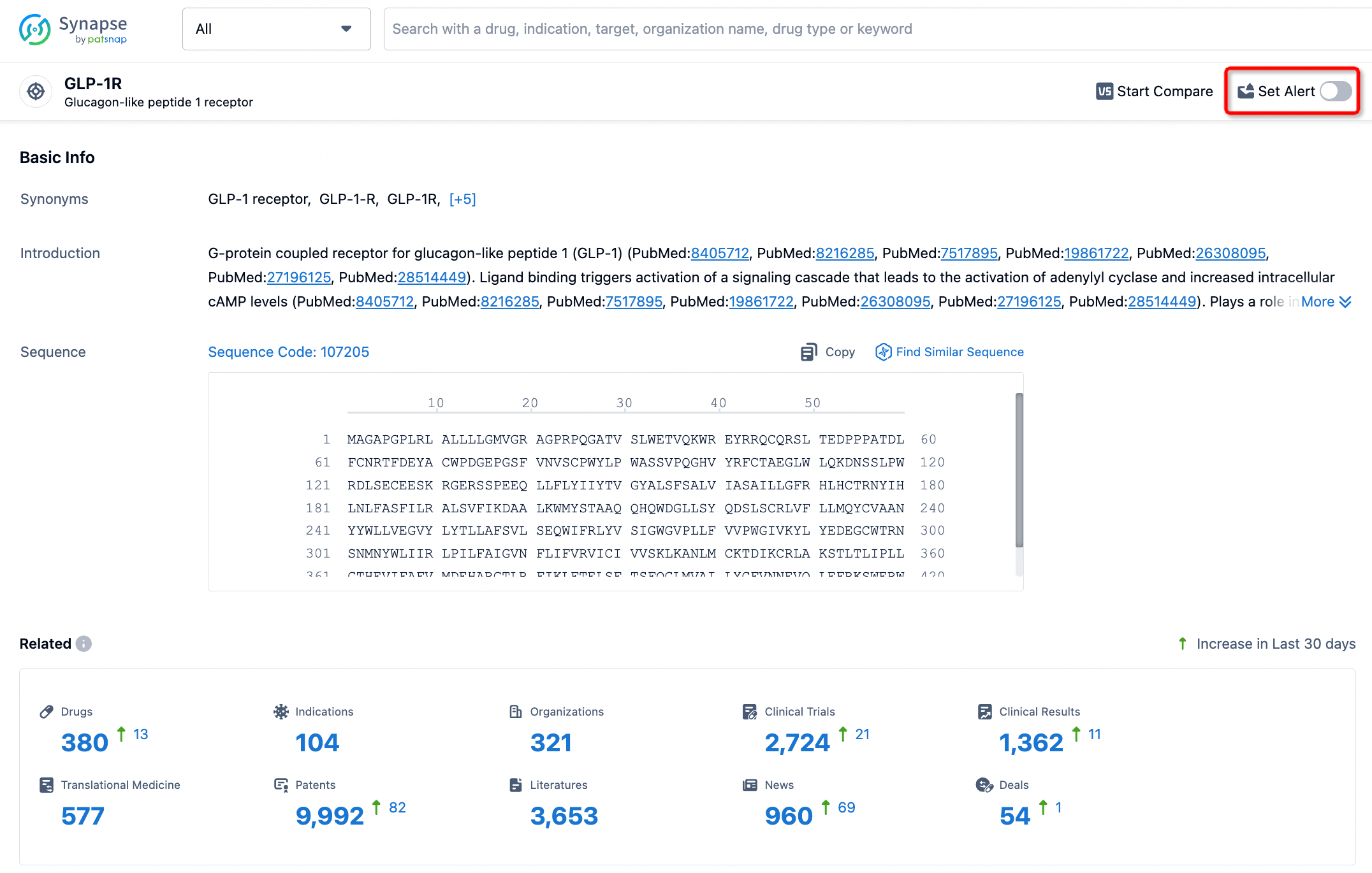
In the Synapse database, you can stay updated on the latest research and development advances of all targets. This service is accessible anytime and anywhere, with updates available daily or weekly. Use the "Set Alert" function to stay informed. Click on the image below to embark on a brand new journey of drug discovery!


AI Agents Built for Biopharma Breakthroughs
Accelerate discovery. Empower decisions. Transform outcomes.
Get started for free today!
Accelerate Strategic R&D decision making with Synapse, PatSnap’s AI-powered Connected Innovation Intelligence Platform Built for Life Sciences Professionals.
Start your data trial now!
Synapse data is also accessible to external entities via APIs or data packages. Empower better decisions with the latest in pharmaceutical intelligence.