Request Demo
What are PAK4 inhibitors and how do they work?
21 June 2024
Introduction to PAK4 inhibitors
PAK4 inhibitors are a class of therapeutic agents that have garnered significant attention in recent years due to their potential in treating a variety of diseases, particularly cancer. PAK4, or p21-activated kinase 4, is an enzyme that plays a crucial role in numerous cellular processes such as cytoskeletal reorganization, gene expression, and cell survival. Dysregulation of PAK4 has been linked to oncogenesis and metastasis, making it a compelling target for cancer therapy. By inhibiting PAK4, researchers aim to disrupt these pathological processes and provide a novel avenue for treatment.
How do PAK4 inhibitors work?
PAK4 inhibitors function by directly interfering with the kinase activity of PAK4. Kinases are enzymes that transfer phosphate groups to specific substrates, a process essential for activating or deactivating various signaling pathways within the cell. PAK4, in particular, is involved in the regulation of the cytoskeleton, cell motility, and survival pathways. When PAK4 is overexpressed or hyperactivated, it can lead to uncontrolled cell division, evasion of apoptosis, and enhanced invasive properties—all hallmarks of cancer.
PAK4 inhibitors aim to revert these malignant behaviors by binding to the ATP-binding site or other critical areas of the enzyme, thereby blocking its activity. This inhibition prevents the phosphorylation of downstream targets, which in turn disrupts the signaling networks that promote tumor growth and survival. Additionally, PAK4 inhibitors can induce cell cycle arrest and enhance the sensitivity of cancer cells to other therapeutic agents, offering a multi-faceted approach to cancer treatment.
What are PAK4 inhibitors used for?
The primary focus of PAK4 inhibitors has been in the realm of oncology, given the enzyme’s significant role in cancer progression. Preclinical studies have shown that PAK4 inhibitors can effectively reduce tumor growth in various cancer models, including breast cancer, pancreatic cancer, and colorectal cancer. By targeting PAK4, these inhibitors can not only inhibit primary tumor growth but also reduce metastatic spread, which is often a critical challenge in cancer management.
Beyond cancer, PAK4 inhibitors are also being explored for their potential in treating other diseases. For instance, PAK4 has been implicated in the pathology of neurodegenerative diseases such as Parkinson's and Alzheimer's. Research is ongoing to determine whether PAK4 inhibitors can slow down or halt the progression of these debilitating conditions. Moreover, PAK4’s involvement in fibrosis and inflammation suggests that inhibitors could be beneficial in treating disorders like pulmonary fibrosis and inflammatory bowel disease.
In clinical settings, PAK4 inhibitors are still largely in the investigative stages, with several compounds undergoing early-phase clinical trials. These trials aim to assess the safety, tolerability, and preliminary efficacy of PAK4 inhibitors in human subjects. Early results are promising, but more extensive studies are required to fully understand the therapeutic potential and long-term effects of these agents.
Another exciting area of research is the combination of PAK4 inhibitors with other treatments. For example, combining PAK4 inhibitors with traditional chemotherapy, targeted therapy, or immunotherapy could potentially enhance overall treatment efficacy. Such combination strategies could provide a more comprehensive attack on cancer cells, reducing the likelihood of resistance development and improving patient outcomes.
In conclusion, PAK4 inhibitors represent a promising frontier in the fight against cancer and other diseases. As research progresses, these inhibitors could offer new hope for patients who have limited treatment options. While challenges remain, particularly in understanding the full spectrum of PAK4’s biological functions and ensuring the specificity of inhibitors, the potential benefits make this an exciting area of medical research.
PAK4 inhibitors are a class of therapeutic agents that have garnered significant attention in recent years due to their potential in treating a variety of diseases, particularly cancer. PAK4, or p21-activated kinase 4, is an enzyme that plays a crucial role in numerous cellular processes such as cytoskeletal reorganization, gene expression, and cell survival. Dysregulation of PAK4 has been linked to oncogenesis and metastasis, making it a compelling target for cancer therapy. By inhibiting PAK4, researchers aim to disrupt these pathological processes and provide a novel avenue for treatment.
How do PAK4 inhibitors work?
PAK4 inhibitors function by directly interfering with the kinase activity of PAK4. Kinases are enzymes that transfer phosphate groups to specific substrates, a process essential for activating or deactivating various signaling pathways within the cell. PAK4, in particular, is involved in the regulation of the cytoskeleton, cell motility, and survival pathways. When PAK4 is overexpressed or hyperactivated, it can lead to uncontrolled cell division, evasion of apoptosis, and enhanced invasive properties—all hallmarks of cancer.
PAK4 inhibitors aim to revert these malignant behaviors by binding to the ATP-binding site or other critical areas of the enzyme, thereby blocking its activity. This inhibition prevents the phosphorylation of downstream targets, which in turn disrupts the signaling networks that promote tumor growth and survival. Additionally, PAK4 inhibitors can induce cell cycle arrest and enhance the sensitivity of cancer cells to other therapeutic agents, offering a multi-faceted approach to cancer treatment.
What are PAK4 inhibitors used for?
The primary focus of PAK4 inhibitors has been in the realm of oncology, given the enzyme’s significant role in cancer progression. Preclinical studies have shown that PAK4 inhibitors can effectively reduce tumor growth in various cancer models, including breast cancer, pancreatic cancer, and colorectal cancer. By targeting PAK4, these inhibitors can not only inhibit primary tumor growth but also reduce metastatic spread, which is often a critical challenge in cancer management.
Beyond cancer, PAK4 inhibitors are also being explored for their potential in treating other diseases. For instance, PAK4 has been implicated in the pathology of neurodegenerative diseases such as Parkinson's and Alzheimer's. Research is ongoing to determine whether PAK4 inhibitors can slow down or halt the progression of these debilitating conditions. Moreover, PAK4’s involvement in fibrosis and inflammation suggests that inhibitors could be beneficial in treating disorders like pulmonary fibrosis and inflammatory bowel disease.
In clinical settings, PAK4 inhibitors are still largely in the investigative stages, with several compounds undergoing early-phase clinical trials. These trials aim to assess the safety, tolerability, and preliminary efficacy of PAK4 inhibitors in human subjects. Early results are promising, but more extensive studies are required to fully understand the therapeutic potential and long-term effects of these agents.
Another exciting area of research is the combination of PAK4 inhibitors with other treatments. For example, combining PAK4 inhibitors with traditional chemotherapy, targeted therapy, or immunotherapy could potentially enhance overall treatment efficacy. Such combination strategies could provide a more comprehensive attack on cancer cells, reducing the likelihood of resistance development and improving patient outcomes.
In conclusion, PAK4 inhibitors represent a promising frontier in the fight against cancer and other diseases. As research progresses, these inhibitors could offer new hope for patients who have limited treatment options. While challenges remain, particularly in understanding the full spectrum of PAK4’s biological functions and ensuring the specificity of inhibitors, the potential benefits make this an exciting area of medical research.
How to obtain the latest development progress of all targets?
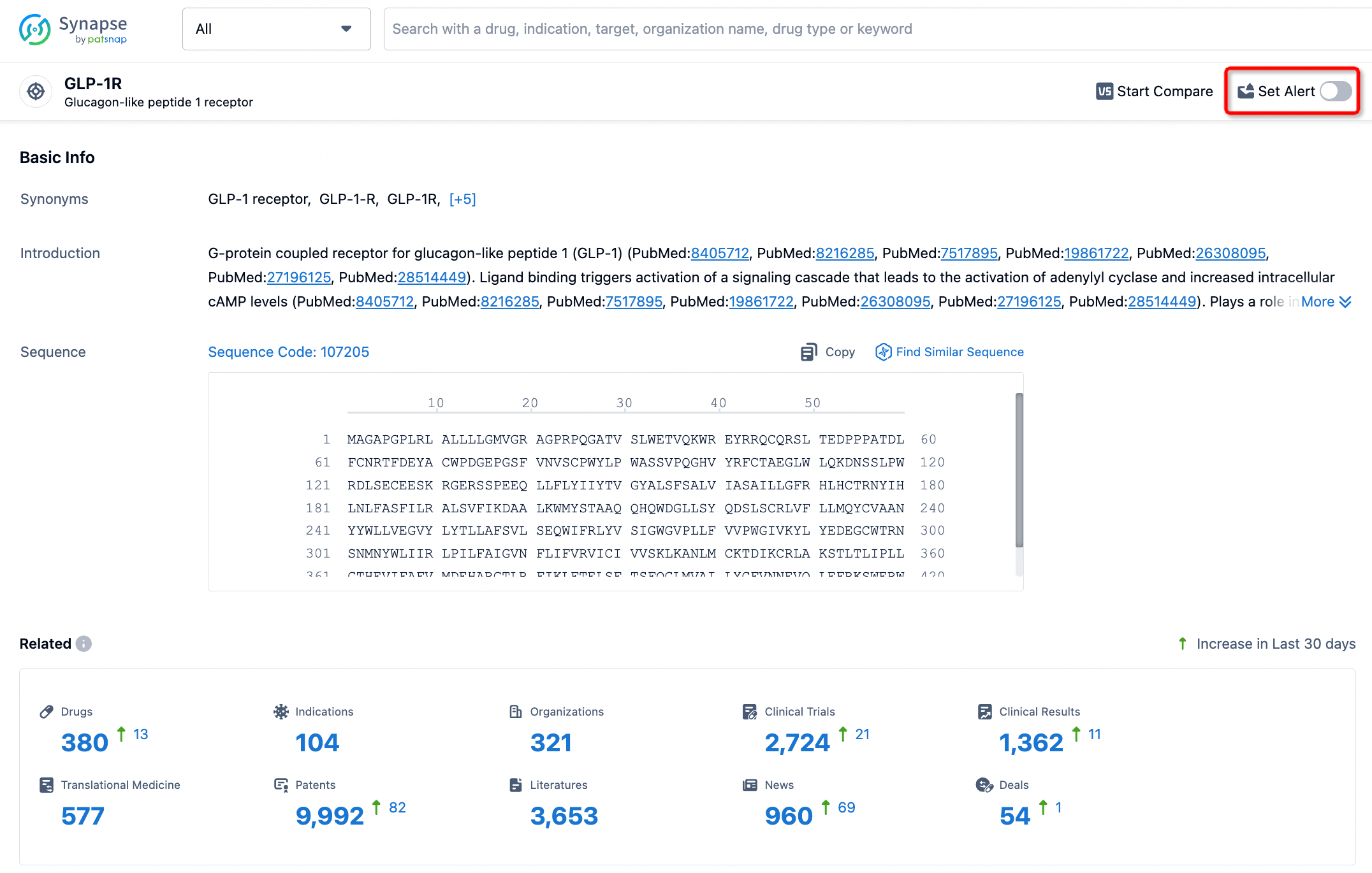
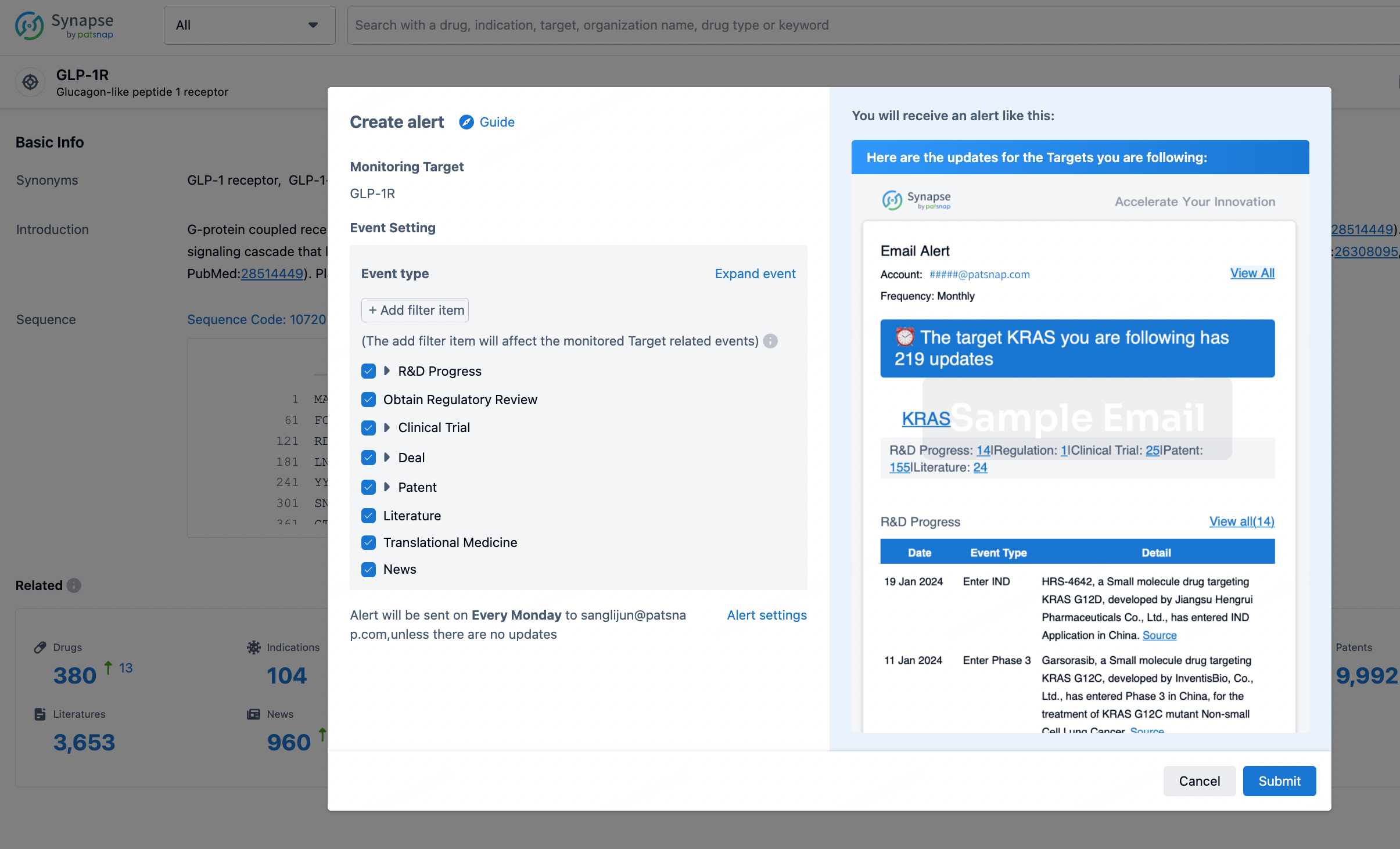
In the Synapse database, you can stay updated on the latest research and development advances of all targets. This service is accessible anytime and anywhere, with updates available daily or weekly. Use the "Set Alert" function to stay informed. Click on the image below to embark on a brand new journey of drug discovery!
AI Agents Built for Biopharma Breakthroughs
Accelerate discovery. Empower decisions. Transform outcomes.
Get started for free today!
Accelerate Strategic R&D decision making with Synapse, PatSnap’s AI-powered Connected Innovation Intelligence Platform Built for Life Sciences Professionals.
Start your data trial now!
Synapse data is also accessible to external entities via APIs or data packages. Empower better decisions with the latest in pharmaceutical intelligence.