Request Demo
What are PGC-1α modulators and how do they work?
25 June 2024
In the ever-evolving landscape of biomedical research, one of the most intriguing and promising areas of study involves the modulation of PGC-1α, or peroxisome proliferator-activated receptor gamma coactivator 1-alpha. This transcriptional coactivator plays a pivotal role in regulating cellular energy metabolism, and its modulators are being examined for their potential therapeutic applications across a wide range of diseases.
PGC-1α, often described as the "master regulator" of mitochondrial biogenesis, orchestrates the expression of genes involved in energy expenditure, oxidative metabolism, and thermogenesis. Given its central role in energy homeostasis, modulating PGC-1α activity offers a compelling avenue for addressing metabolic disorders, neurodegenerative diseases, and even age-related decline in physiological functions.
PGC-1α modulators work through various mechanisms to influence the expression and activity of this critical coactivator. These compounds can either enhance or inhibit PGC-1α function, depending on the desired therapeutic outcome. One primary mechanism involves the activation of upstream signaling pathways that increase the transcription of the PGC-1α gene. For instance, AMPK (AMP-activated protein kinase) and SIRT1 (sirtuin 1) are well-known upstream activators of PGC-1α. AMPK, often referred to as the cellular energy sensor, responds to low energy states by activating PGC-1α to promote mitochondrial biogenesis and fatty acid oxidation. Similarly, SIRT1, a NAD+-dependent deacetylase, enhances PGC-1α activity through deacetylation, thereby promoting mitochondrial function and oxidative metabolism.
Additionally, PGC-1α modulators can influence post-translational modifications, such as phosphorylation and acetylation, which affect the stability and activity of the PGC-1α protein. For example, pharmacological agents that mimic caloric restriction or exercise can activate SIRT1, leading to the deacetylation and activation of PGC-1α. Other compounds may work by stabilizing the PGC-1α protein, preventing its degradation and thereby maintaining its activity within the cell.
Given the extensive role of PGC-1α in energy metabolism, its modulators have found potential uses in several therapeutic areas. One of the most promising applications is in the treatment of metabolic disorders, such as obesity and type 2 diabetes. By enhancing PGC-1α activity, these modulators can increase mitochondrial biogenesis and oxidative metabolism, leading to improved insulin sensitivity and energy expenditure. This makes them attractive candidates for combating the metabolic dysfunctions associated with these conditions.
Neurodegenerative diseases, including Alzheimer's and Parkinson's disease, are another area where PGC-1α modulators show significant promise. Mitochondrial dysfunction is a hallmark of these diseases, contributing to neuronal loss and cognitive decline. By boosting mitochondrial function and reducing oxidative stress, PGC-1α modulators hold the potential to slow the progression of neurodegeneration and improve neurological outcomes.
Moreover, PGC-1α modulators are being explored for their anti-aging properties. As organisms age, there is a natural decline in mitochondrial function and overall cellular energy production. Enhancing PGC-1α activity could mitigate some of these age-related declines, promoting healthier aging and extending the healthspan.
Research has also indicated potential benefits of PGC-1α modulation in cardiovascular diseases, muscle-wasting conditions, and even cancer. In cardiovascular diseases, improved mitochondrial function and energy metabolism can enhance cardiac efficiency and resilience. For muscle-wasting conditions like sarcopenia, enhanced mitochondrial biogenesis can support muscle maintenance and function. In oncology, PGC-1α's role in regulating cellular metabolism presents a double-edged sword; while its activation might support normal cell function and survival, it must be carefully balanced to avoid potentially aiding cancer cell metabolism.
In summary, PGC-1α modulators are a burgeoning area of research with the potential to revolutionize the treatment of a variety of diseases. By fine-tuning the master regulator of mitochondrial biogenesis and energy metabolism, these compounds could offer novel therapeutic strategies for metabolic disorders, neurodegenerative diseases, and age-related conditions, among others. As research progresses, the hope is that these modulators will move from the lab to the clinic, offering new hope for patients worldwide.
PGC-1α, often described as the "master regulator" of mitochondrial biogenesis, orchestrates the expression of genes involved in energy expenditure, oxidative metabolism, and thermogenesis. Given its central role in energy homeostasis, modulating PGC-1α activity offers a compelling avenue for addressing metabolic disorders, neurodegenerative diseases, and even age-related decline in physiological functions.
PGC-1α modulators work through various mechanisms to influence the expression and activity of this critical coactivator. These compounds can either enhance or inhibit PGC-1α function, depending on the desired therapeutic outcome. One primary mechanism involves the activation of upstream signaling pathways that increase the transcription of the PGC-1α gene. For instance, AMPK (AMP-activated protein kinase) and SIRT1 (sirtuin 1) are well-known upstream activators of PGC-1α. AMPK, often referred to as the cellular energy sensor, responds to low energy states by activating PGC-1α to promote mitochondrial biogenesis and fatty acid oxidation. Similarly, SIRT1, a NAD+-dependent deacetylase, enhances PGC-1α activity through deacetylation, thereby promoting mitochondrial function and oxidative metabolism.
Additionally, PGC-1α modulators can influence post-translational modifications, such as phosphorylation and acetylation, which affect the stability and activity of the PGC-1α protein. For example, pharmacological agents that mimic caloric restriction or exercise can activate SIRT1, leading to the deacetylation and activation of PGC-1α. Other compounds may work by stabilizing the PGC-1α protein, preventing its degradation and thereby maintaining its activity within the cell.
Given the extensive role of PGC-1α in energy metabolism, its modulators have found potential uses in several therapeutic areas. One of the most promising applications is in the treatment of metabolic disorders, such as obesity and type 2 diabetes. By enhancing PGC-1α activity, these modulators can increase mitochondrial biogenesis and oxidative metabolism, leading to improved insulin sensitivity and energy expenditure. This makes them attractive candidates for combating the metabolic dysfunctions associated with these conditions.
Neurodegenerative diseases, including Alzheimer's and Parkinson's disease, are another area where PGC-1α modulators show significant promise. Mitochondrial dysfunction is a hallmark of these diseases, contributing to neuronal loss and cognitive decline. By boosting mitochondrial function and reducing oxidative stress, PGC-1α modulators hold the potential to slow the progression of neurodegeneration and improve neurological outcomes.
Moreover, PGC-1α modulators are being explored for their anti-aging properties. As organisms age, there is a natural decline in mitochondrial function and overall cellular energy production. Enhancing PGC-1α activity could mitigate some of these age-related declines, promoting healthier aging and extending the healthspan.
Research has also indicated potential benefits of PGC-1α modulation in cardiovascular diseases, muscle-wasting conditions, and even cancer. In cardiovascular diseases, improved mitochondrial function and energy metabolism can enhance cardiac efficiency and resilience. For muscle-wasting conditions like sarcopenia, enhanced mitochondrial biogenesis can support muscle maintenance and function. In oncology, PGC-1α's role in regulating cellular metabolism presents a double-edged sword; while its activation might support normal cell function and survival, it must be carefully balanced to avoid potentially aiding cancer cell metabolism.
In summary, PGC-1α modulators are a burgeoning area of research with the potential to revolutionize the treatment of a variety of diseases. By fine-tuning the master regulator of mitochondrial biogenesis and energy metabolism, these compounds could offer novel therapeutic strategies for metabolic disorders, neurodegenerative diseases, and age-related conditions, among others. As research progresses, the hope is that these modulators will move from the lab to the clinic, offering new hope for patients worldwide.
How to obtain the latest development progress of all targets?
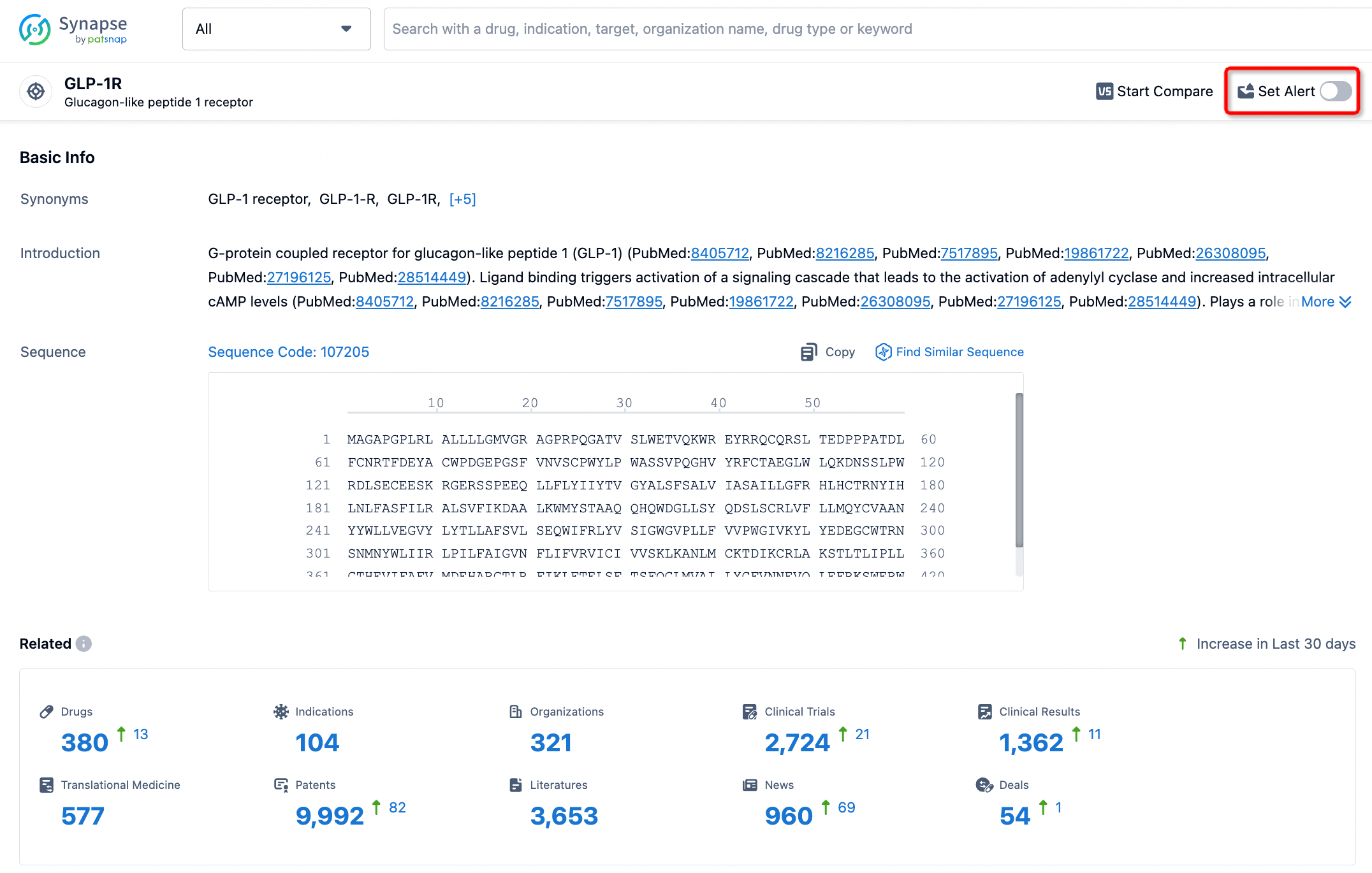
In the Synapse database, you can stay updated on the latest research and development advances of all targets. This service is accessible anytime and anywhere, with updates available daily or weekly. Use the "Set Alert" function to stay informed. Click on the image below to embark on a brand new journey of drug discovery!


Hiro LS Researcher
The AI Search Engine Built to Accelerate Biopharma Decisions
Search across billion-scale life sciences data to uncover signals, validate evidence, and act with confidence.
Ask any biopharma research question→
Get started for free today!
Accelerate Strategic R&D decision making with Synapse, Patsnap’s AI-powered Connected Innovation Intelligence Platform Built for Life Sciences Professionals.
Discover Synapse Data Servers
Synapse data is now integrated into the PatSnap LS Model Context Protocol (MCP) service. Customize your LLM agent now using our MCP server!