Request Demo
What are PI3Kα inhibitors and how do they work?
21 June 2024
Phosphoinositide 3-kinases (PI3Ks) are a family of enzymes involved in various cellular functions, such as growth, proliferation, differentiation, and survival. Among the different isoforms of PI3Ks, PI3Kα has garnered significant attention in the field of oncology due to its pivotal role in cancer development and progression. PI3Kα inhibitors have emerged as a promising class of targeted therapies designed to disrupt the aberrant signaling pathways that drive tumor growth and survival. In this blog post, we will delve into the mechanisms of action of PI3Kα inhibitors and explore their clinical applications.
PI3Kα inhibitors are designed to specifically target the alpha isoform of the PI3K enzyme. The PI3K pathway is activated by various growth factors and hormones, leading to the production of phosphatidylinositol (3,4,5)-trisphosphate (PIP3). PIP3 serves as a second messenger that recruits and activates downstream signaling proteins, including Akt, a serine/threonine kinase essential for cell survival and proliferation. By inhibiting PI3Kα, these drugs prevent the formation of PIP3, thereby blocking the downstream signaling cascades that promote cancer cell growth and survival.
PI3Kα inhibitors exert their effects by binding to the ATP-binding pocket of the PI3Kα enzyme, thereby preventing its interaction with ATP, which is necessary for its kinase activity. This inhibition leads to a decrease in the levels of PIP3, resulting in the suppression of Akt activation. Consequently, the downstream signaling pathways that contribute to tumorigenesis, such as the mTOR pathway, are also inhibited. This multi-level blockade of signaling pathways ultimately results in the inhibition of cancer cell proliferation and induction of apoptosis.
One of the key advantages of PI3Kα inhibitors is their ability to selectively target cancer cells with mutations in the PIK3CA gene, which encodes the catalytic subunit of the PI3Kα enzyme. Mutations in PIK3CA are among the most common genetic alterations in various cancers, including breast, colorectal, and endometrial cancers. These mutations result in the constitutive activation of the PI3Kα enzyme, leading to uncontrolled cell growth and survival. By specifically inhibiting the mutant PI3Kα enzyme, PI3Kα inhibitors offer a targeted therapeutic approach that minimizes off-target effects and enhances treatment efficacy.
PI3Kα inhibitors have shown promising results in the treatment of various cancers, either as monotherapy or in combination with other therapeutic agents. One of the most notable successes has been in the treatment of hormone receptor-positive, HER2-negative advanced breast cancer. Alpelisib, a selective PI3Kα inhibitor, has been approved by the FDA for use in combination with fulvestrant, an estrogen receptor antagonist, in patients with PIK3CA-mutated breast cancer. Clinical trials have demonstrated that this combination significantly improves progression-free survival compared to fulvestrant alone.
In addition to breast cancer, PI3Kα inhibitors are being investigated for their potential in other malignancies characterized by PIK3CA mutations. For instance, ongoing clinical trials are evaluating the efficacy of PI3Kα inhibitors in colorectal cancer, endometrial cancer, and head and neck squamous cell carcinoma. Preliminary data from these studies have shown promising antitumor activity, suggesting that PI3Kα inhibitors may become a valuable addition to the treatment arsenal for these cancers.
However, the use of PI3Kα inhibitors is not without challenges. One of the main concerns is the potential for adverse effects, such as hyperglycemia, rash, and gastrointestinal toxicity. These side effects are primarily attributed to the inhibition of PI3K signaling in normal tissues. Therefore, careful patient selection and management of adverse effects are crucial to optimizing treatment outcomes.
In conclusion, PI3Kα inhibitors represent a significant advancement in the field of targeted cancer therapy. By specifically targeting the PI3Kα enzyme, these inhibitors disrupt critical signaling pathways that drive tumor growth and survival, offering a promising treatment option for cancers harboring PIK3CA mutations. As research in this area continues to evolve, PI3Kα inhibitors are poised to play an increasingly important role in the personalized treatment of cancer.
PI3Kα inhibitors are designed to specifically target the alpha isoform of the PI3K enzyme. The PI3K pathway is activated by various growth factors and hormones, leading to the production of phosphatidylinositol (3,4,5)-trisphosphate (PIP3). PIP3 serves as a second messenger that recruits and activates downstream signaling proteins, including Akt, a serine/threonine kinase essential for cell survival and proliferation. By inhibiting PI3Kα, these drugs prevent the formation of PIP3, thereby blocking the downstream signaling cascades that promote cancer cell growth and survival.
PI3Kα inhibitors exert their effects by binding to the ATP-binding pocket of the PI3Kα enzyme, thereby preventing its interaction with ATP, which is necessary for its kinase activity. This inhibition leads to a decrease in the levels of PIP3, resulting in the suppression of Akt activation. Consequently, the downstream signaling pathways that contribute to tumorigenesis, such as the mTOR pathway, are also inhibited. This multi-level blockade of signaling pathways ultimately results in the inhibition of cancer cell proliferation and induction of apoptosis.
One of the key advantages of PI3Kα inhibitors is their ability to selectively target cancer cells with mutations in the PIK3CA gene, which encodes the catalytic subunit of the PI3Kα enzyme. Mutations in PIK3CA are among the most common genetic alterations in various cancers, including breast, colorectal, and endometrial cancers. These mutations result in the constitutive activation of the PI3Kα enzyme, leading to uncontrolled cell growth and survival. By specifically inhibiting the mutant PI3Kα enzyme, PI3Kα inhibitors offer a targeted therapeutic approach that minimizes off-target effects and enhances treatment efficacy.
PI3Kα inhibitors have shown promising results in the treatment of various cancers, either as monotherapy or in combination with other therapeutic agents. One of the most notable successes has been in the treatment of hormone receptor-positive, HER2-negative advanced breast cancer. Alpelisib, a selective PI3Kα inhibitor, has been approved by the FDA for use in combination with fulvestrant, an estrogen receptor antagonist, in patients with PIK3CA-mutated breast cancer. Clinical trials have demonstrated that this combination significantly improves progression-free survival compared to fulvestrant alone.
In addition to breast cancer, PI3Kα inhibitors are being investigated for their potential in other malignancies characterized by PIK3CA mutations. For instance, ongoing clinical trials are evaluating the efficacy of PI3Kα inhibitors in colorectal cancer, endometrial cancer, and head and neck squamous cell carcinoma. Preliminary data from these studies have shown promising antitumor activity, suggesting that PI3Kα inhibitors may become a valuable addition to the treatment arsenal for these cancers.
However, the use of PI3Kα inhibitors is not without challenges. One of the main concerns is the potential for adverse effects, such as hyperglycemia, rash, and gastrointestinal toxicity. These side effects are primarily attributed to the inhibition of PI3K signaling in normal tissues. Therefore, careful patient selection and management of adverse effects are crucial to optimizing treatment outcomes.
In conclusion, PI3Kα inhibitors represent a significant advancement in the field of targeted cancer therapy. By specifically targeting the PI3Kα enzyme, these inhibitors disrupt critical signaling pathways that drive tumor growth and survival, offering a promising treatment option for cancers harboring PIK3CA mutations. As research in this area continues to evolve, PI3Kα inhibitors are poised to play an increasingly important role in the personalized treatment of cancer.
How to obtain the latest development progress of all targets?
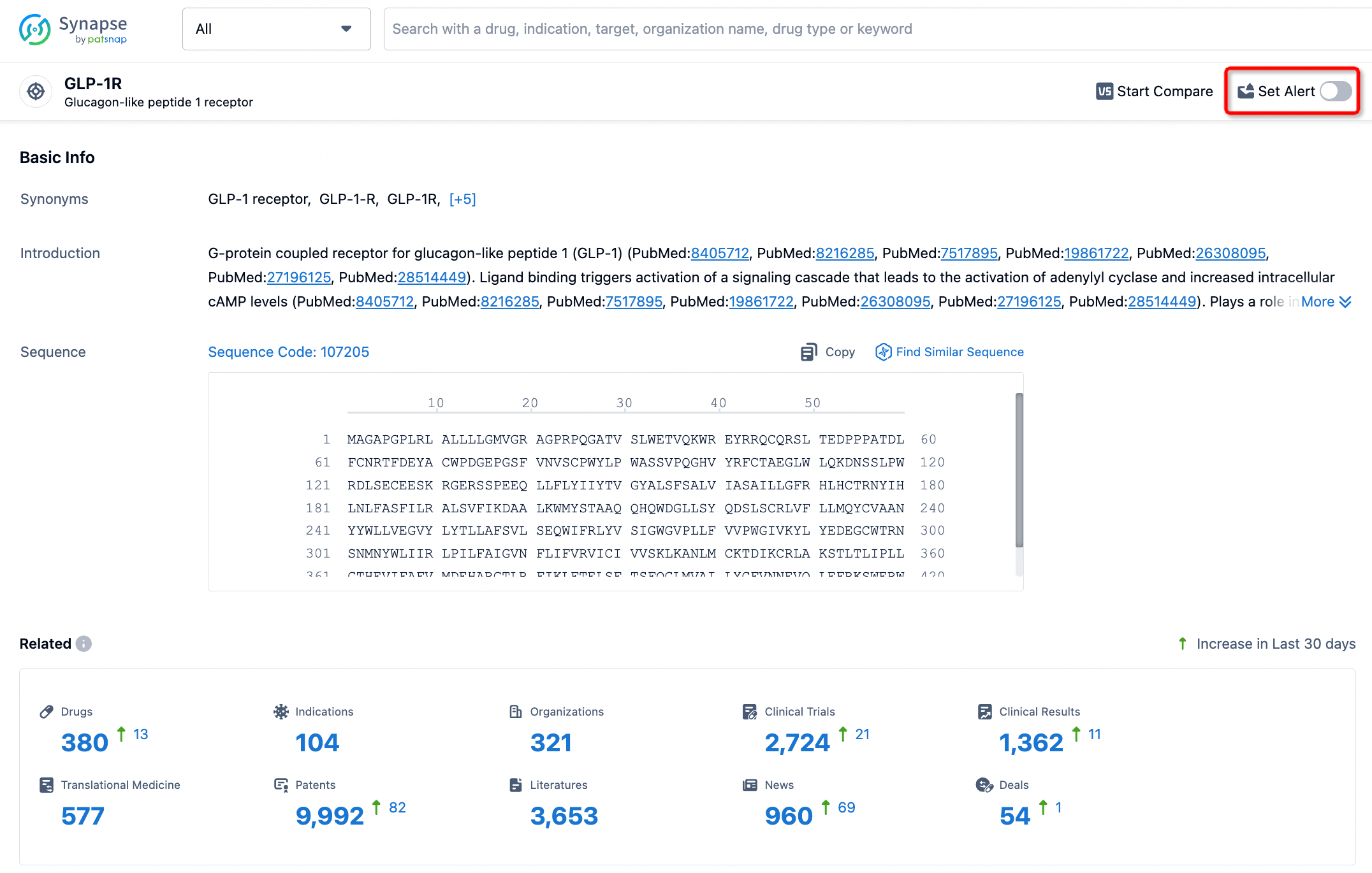
In the Synapse database, you can stay updated on the latest research and development advances of all targets. This service is accessible anytime and anywhere, with updates available daily or weekly. Use the "Set Alert" function to stay informed. Click on the image below to embark on a brand new journey of drug discovery!


AI Agents Built for Biopharma Breakthroughs
Accelerate discovery. Empower decisions. Transform outcomes.
Get started for free today!
Accelerate Strategic R&D decision making with Synapse, PatSnap’s AI-powered Connected Innovation Intelligence Platform Built for Life Sciences Professionals.
Start your data trial now!
Synapse data is also accessible to external entities via APIs or data packages. Empower better decisions with the latest in pharmaceutical intelligence.