Request Demo
What are PI3Kγ inhibitors and how do they work?
21 June 2024
Phosphoinositide 3-kinases (PI3Ks) are a family of enzymes involved in various cellular functions, such as cell growth, proliferation, differentiation, and survival. Among the different isoforms of PI3Ks, PI3Kγ is of particular interest due to its unique role in immune cell signaling and inflammatory responses. PI3Kγ inhibitors are emerging as a promising class of therapeutic agents with the potential to address a variety of inflammatory and autoimmune diseases, as well as certain types of cancer.
PI3Kγ inhibitors work by selectively targeting and inhibiting the activity of the PI3Kγ enzyme. To understand their mechanism of action, it's essential to grasp how PI3Kγ functions in the body. PI3Kγ is predominantly expressed in leukocytes (white blood cells) and is activated by G-protein coupled receptors (GPCRs) in response to various extracellular signals. Upon activation, PI3Kγ catalyzes the conversion of phosphatidylinositol (4,5)-bisphosphate (PIP2) to phosphatidylinositol (3,4,5)-trisphosphate (PIP3). This lipid product acts as a secondary messenger, recruiting and activating downstream signaling proteins such as AKT, which in turn regulate key cellular processes like migration, survival, and cytokine production.
By inhibiting PI3Kγ, these drugs prevent the formation of PIP3, thereby blocking the downstream signaling pathways that lead to inflammation and immune cell activation. This selective inhibition allows for the modulation of immune responses without broadly compromising immune function, making PI3Kγ inhibitors an attractive option for treating conditions characterized by excessive or inappropriate immune activation.
PI3Kγ inhibitors are primarily being explored for their potential in treating inflammatory and autoimmune diseases. Conditions such as rheumatoid arthritis, systemic lupus erythematosus, and inflammatory bowel disease are characterized by chronic inflammation and an overactive immune response. By dampening the signaling pathways that drive these responses, PI3Kγ inhibitors can help to reduce inflammation and tissue damage, potentially offering a new avenue for patients who do not respond adequately to existing therapies.
In addition to their role in managing inflammatory diseases, PI3Kγ inhibitors are also being investigated for their potential in oncology. Cancer is a complex disease involving not only uncontrolled cell proliferation but also the evasion of immune surveillance. Tumor-associated macrophages (TAMs) and myeloid-derived suppressor cells (MDSCs) are immune cells within the tumor microenvironment that can promote tumor growth and suppress anti-tumor immune responses. PI3Kγ plays a crucial role in the function of these cells, and inhibiting its activity can reprogram the tumor microenvironment to enhance anti-tumor immunity. This makes PI3Kγ inhibitors a promising adjunct to existing cancer therapies, including immunotherapy.
Clinical trials are underway to evaluate the safety and efficacy of PI3Kγ inhibitors in various disease contexts. The results so far are encouraging, with several compounds demonstrating favorable pharmacokinetic profiles and manageable safety profiles. However, like all emerging therapies, PI3Kγ inhibitors are not without their challenges. Potential side effects and the development of resistance are areas of ongoing research, and long-term studies are needed to fully understand the implications of chronic PI3Kγ inhibition.
In conclusion, PI3Kγ inhibitors represent a novel and exciting class of therapeutic agents with the potential to address unmet needs in the treatment of inflammatory and autoimmune diseases, as well as cancer. By targeting a key regulatory enzyme in immune cell signaling, these drugs offer a targeted approach to modulating immune responses, potentially leading to more effective and safer treatments for a range of conditions. As research continues to advance, the full therapeutic potential of PI3Kγ inhibitors will become clearer, paving the way for new and improved treatment options for patients.
PI3Kγ inhibitors work by selectively targeting and inhibiting the activity of the PI3Kγ enzyme. To understand their mechanism of action, it's essential to grasp how PI3Kγ functions in the body. PI3Kγ is predominantly expressed in leukocytes (white blood cells) and is activated by G-protein coupled receptors (GPCRs) in response to various extracellular signals. Upon activation, PI3Kγ catalyzes the conversion of phosphatidylinositol (4,5)-bisphosphate (PIP2) to phosphatidylinositol (3,4,5)-trisphosphate (PIP3). This lipid product acts as a secondary messenger, recruiting and activating downstream signaling proteins such as AKT, which in turn regulate key cellular processes like migration, survival, and cytokine production.
By inhibiting PI3Kγ, these drugs prevent the formation of PIP3, thereby blocking the downstream signaling pathways that lead to inflammation and immune cell activation. This selective inhibition allows for the modulation of immune responses without broadly compromising immune function, making PI3Kγ inhibitors an attractive option for treating conditions characterized by excessive or inappropriate immune activation.
PI3Kγ inhibitors are primarily being explored for their potential in treating inflammatory and autoimmune diseases. Conditions such as rheumatoid arthritis, systemic lupus erythematosus, and inflammatory bowel disease are characterized by chronic inflammation and an overactive immune response. By dampening the signaling pathways that drive these responses, PI3Kγ inhibitors can help to reduce inflammation and tissue damage, potentially offering a new avenue for patients who do not respond adequately to existing therapies.
In addition to their role in managing inflammatory diseases, PI3Kγ inhibitors are also being investigated for their potential in oncology. Cancer is a complex disease involving not only uncontrolled cell proliferation but also the evasion of immune surveillance. Tumor-associated macrophages (TAMs) and myeloid-derived suppressor cells (MDSCs) are immune cells within the tumor microenvironment that can promote tumor growth and suppress anti-tumor immune responses. PI3Kγ plays a crucial role in the function of these cells, and inhibiting its activity can reprogram the tumor microenvironment to enhance anti-tumor immunity. This makes PI3Kγ inhibitors a promising adjunct to existing cancer therapies, including immunotherapy.
Clinical trials are underway to evaluate the safety and efficacy of PI3Kγ inhibitors in various disease contexts. The results so far are encouraging, with several compounds demonstrating favorable pharmacokinetic profiles and manageable safety profiles. However, like all emerging therapies, PI3Kγ inhibitors are not without their challenges. Potential side effects and the development of resistance are areas of ongoing research, and long-term studies are needed to fully understand the implications of chronic PI3Kγ inhibition.
In conclusion, PI3Kγ inhibitors represent a novel and exciting class of therapeutic agents with the potential to address unmet needs in the treatment of inflammatory and autoimmune diseases, as well as cancer. By targeting a key regulatory enzyme in immune cell signaling, these drugs offer a targeted approach to modulating immune responses, potentially leading to more effective and safer treatments for a range of conditions. As research continues to advance, the full therapeutic potential of PI3Kγ inhibitors will become clearer, paving the way for new and improved treatment options for patients.
How to obtain the latest development progress of all targets?
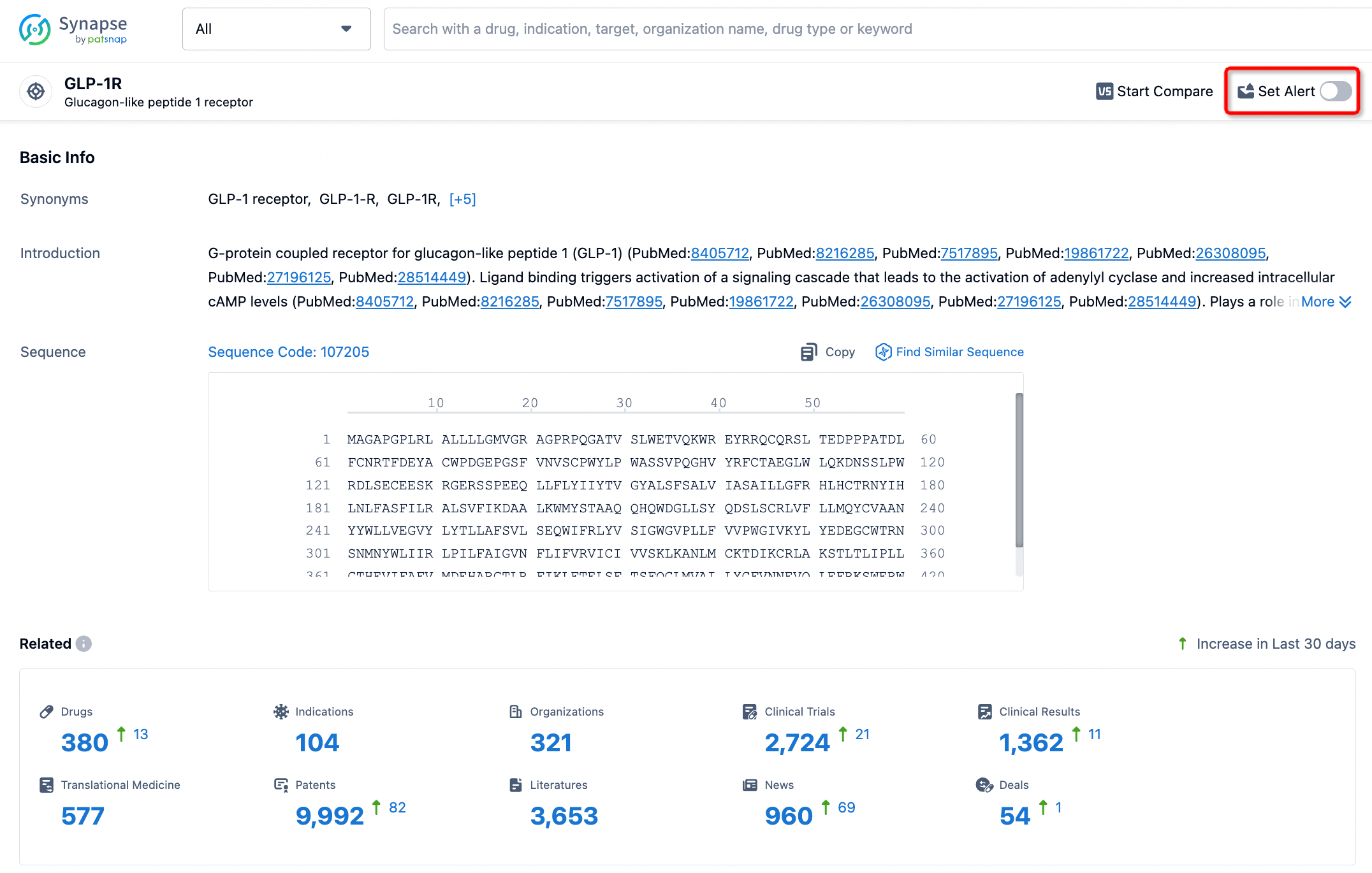
In the Synapse database, you can stay updated on the latest research and development advances of all targets. This service is accessible anytime and anywhere, with updates available daily or weekly. Use the "Set Alert" function to stay informed. Click on the image below to embark on a brand new journey of drug discovery!


AI Agents Built for Biopharma Breakthroughs
Accelerate discovery. Empower decisions. Transform outcomes.
Get started for free today!
Accelerate Strategic R&D decision making with Synapse, PatSnap’s AI-powered Connected Innovation Intelligence Platform Built for Life Sciences Professionals.
Start your data trial now!
Synapse data is also accessible to external entities via APIs or data packages. Empower better decisions with the latest in pharmaceutical intelligence.