Request Demo
What are PI4Kβ inhibitors and how do they work?
21 June 2024
Phosphoinositide 4-kinase beta (PI4Kβ) inhibitors are emerging as a significant topic of interest in the field of pharmacology and biochemistry. These inhibitors are part of a broader category of phosphoinositide 4-kinase (PI4K) inhibitors, which play a crucial role in various cellular processes. In this post, we will delve into the fundamental aspects of PI4Kβ inhibitors, elucidate how they work, and explore their diverse applications.
Phosphoinositide 4-kinases are enzymes that catalyze the phosphorylation of phosphatidylinositol (PI), a type of phospholipid found in cell membranes, to produce phosphatidylinositol 4-phosphate (PI4P). PI4P serves as a precursor for the synthesis of other important phosphoinositides, which are essential for several cellular functions, including signal transduction, membrane trafficking, and cytoskeletal organization. Among the different isoforms of PI4Ks, PI4Kβ (PI4KB) has garnered particular interest due to its specific roles in various cellular processes and disease pathways.
PI4Kβ inhibitors are small molecules that specifically inhibit the activity of the PI4Kβ enzyme. By doing so, they effectively reduce the production of PI4P and subsequently affect the downstream signaling pathways that rely on this lipid intermediate. These inhibitors are designed to bind to the enzyme's active site or allosteric sites, thereby preventing the phosphorylation process. The development of PI4Kβ inhibitors involves extensive medicinal chemistry efforts to optimize their specificity, potency, and pharmacokinetic properties.
The mechanism of action of PI4Kβ inhibitors can be understood by examining their impact on cellular signaling cascades. PI4Kβ is involved in the synthesis of PI4P at the Golgi apparatus and the plasma membrane. PI4P, in turn, serves as a substrate for the production of PI(4,5)P2, which is a critical lipid for recruiting and activating various proteins involved in membrane dynamics and signaling. By inhibiting PI4Kβ, these inhibitors disrupt the synthesis of PI4P and PI(4,5)P2, leading to alterations in membrane composition and impairing the function of proteins that depend on these lipids for their activity.
One of the well-studied pathways affected by PI4Kβ inhibitors is the phosphoinositide 3-kinase (PI3K)/Akt signaling pathway. PI3K converts PI(4,5)P2 into phosphatidylinositol (3,4,5)-trisphosphate (PI(3,4,5)P3), which acts as a second messenger to activate Akt, a key regulator of cell survival, growth, and metabolism. By reducing PI(4,5)P2 levels, PI4Kβ inhibitors can attenuate PI3K/Akt signaling, potentially leading to decreased cell proliferation and increased apoptosis in cancer cells.
PI4Kβ inhibitors have shown promise in various therapeutic areas due to their ability to modulate critical cellular processes. One of the primary applications of these inhibitors is in antiviral therapy. Several viruses, including hepatitis C virus (HCV), enteroviruses, and rhinoviruses, rely on PI4Kβ-mediated PI4P synthesis for their replication. By inhibiting PI4Kβ, these inhibitors can effectively block viral replication and offer a potential treatment strategy for viral infections.
In addition to antiviral applications, PI4Kβ inhibitors are being explored as potential anticancer agents. Given the role of PI4Kβ in PI3K/Akt signaling and cell proliferation, targeting this enzyme could provide a novel approach to cancer therapy. Preclinical studies have demonstrated that PI4Kβ inhibitors can suppress tumor growth and enhance the efficacy of existing anticancer drugs, highlighting their potential as combination therapies.
Furthermore, PI4Kβ inhibitors have shown promise in the treatment of neurodegenerative diseases. Dysregulation of phosphoinositide metabolism has been implicated in conditions such as Alzheimer's disease and Parkinson's disease. By modulating PI4Kβ activity, these inhibitors may help restore normal phosphoinositide levels and improve neuronal function, offering a potential therapeutic avenue for neurodegenerative disorders.
In summary, PI4Kβ inhibitors represent a fascinating area of research with significant therapeutic potential. By targeting the PI4Kβ enzyme, these inhibitors can modulate critical cellular processes and offer new treatment options for viral infections, cancer, and neurodegenerative diseases. Continued research and development of PI4Kβ inhibitors hold promise for advancing our understanding of cellular signaling and improving human health.
Phosphoinositide 4-kinases are enzymes that catalyze the phosphorylation of phosphatidylinositol (PI), a type of phospholipid found in cell membranes, to produce phosphatidylinositol 4-phosphate (PI4P). PI4P serves as a precursor for the synthesis of other important phosphoinositides, which are essential for several cellular functions, including signal transduction, membrane trafficking, and cytoskeletal organization. Among the different isoforms of PI4Ks, PI4Kβ (PI4KB) has garnered particular interest due to its specific roles in various cellular processes and disease pathways.
PI4Kβ inhibitors are small molecules that specifically inhibit the activity of the PI4Kβ enzyme. By doing so, they effectively reduce the production of PI4P and subsequently affect the downstream signaling pathways that rely on this lipid intermediate. These inhibitors are designed to bind to the enzyme's active site or allosteric sites, thereby preventing the phosphorylation process. The development of PI4Kβ inhibitors involves extensive medicinal chemistry efforts to optimize their specificity, potency, and pharmacokinetic properties.
The mechanism of action of PI4Kβ inhibitors can be understood by examining their impact on cellular signaling cascades. PI4Kβ is involved in the synthesis of PI4P at the Golgi apparatus and the plasma membrane. PI4P, in turn, serves as a substrate for the production of PI(4,5)P2, which is a critical lipid for recruiting and activating various proteins involved in membrane dynamics and signaling. By inhibiting PI4Kβ, these inhibitors disrupt the synthesis of PI4P and PI(4,5)P2, leading to alterations in membrane composition and impairing the function of proteins that depend on these lipids for their activity.
One of the well-studied pathways affected by PI4Kβ inhibitors is the phosphoinositide 3-kinase (PI3K)/Akt signaling pathway. PI3K converts PI(4,5)P2 into phosphatidylinositol (3,4,5)-trisphosphate (PI(3,4,5)P3), which acts as a second messenger to activate Akt, a key regulator of cell survival, growth, and metabolism. By reducing PI(4,5)P2 levels, PI4Kβ inhibitors can attenuate PI3K/Akt signaling, potentially leading to decreased cell proliferation and increased apoptosis in cancer cells.
PI4Kβ inhibitors have shown promise in various therapeutic areas due to their ability to modulate critical cellular processes. One of the primary applications of these inhibitors is in antiviral therapy. Several viruses, including hepatitis C virus (HCV), enteroviruses, and rhinoviruses, rely on PI4Kβ-mediated PI4P synthesis for their replication. By inhibiting PI4Kβ, these inhibitors can effectively block viral replication and offer a potential treatment strategy for viral infections.
In addition to antiviral applications, PI4Kβ inhibitors are being explored as potential anticancer agents. Given the role of PI4Kβ in PI3K/Akt signaling and cell proliferation, targeting this enzyme could provide a novel approach to cancer therapy. Preclinical studies have demonstrated that PI4Kβ inhibitors can suppress tumor growth and enhance the efficacy of existing anticancer drugs, highlighting their potential as combination therapies.
Furthermore, PI4Kβ inhibitors have shown promise in the treatment of neurodegenerative diseases. Dysregulation of phosphoinositide metabolism has been implicated in conditions such as Alzheimer's disease and Parkinson's disease. By modulating PI4Kβ activity, these inhibitors may help restore normal phosphoinositide levels and improve neuronal function, offering a potential therapeutic avenue for neurodegenerative disorders.
In summary, PI4Kβ inhibitors represent a fascinating area of research with significant therapeutic potential. By targeting the PI4Kβ enzyme, these inhibitors can modulate critical cellular processes and offer new treatment options for viral infections, cancer, and neurodegenerative diseases. Continued research and development of PI4Kβ inhibitors hold promise for advancing our understanding of cellular signaling and improving human health.
How to obtain the latest development progress of all targets?
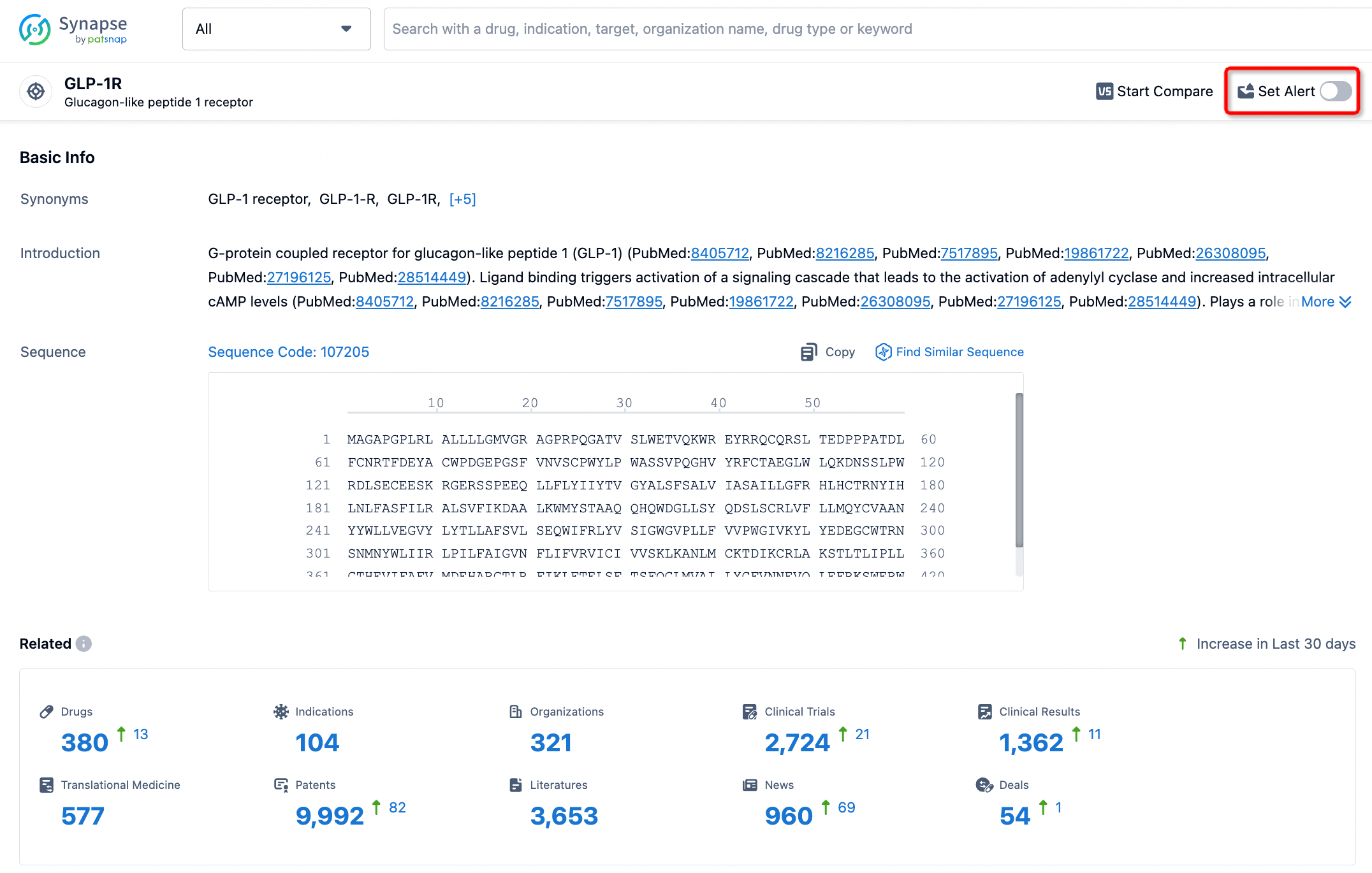
In the Synapse database, you can stay updated on the latest research and development advances of all targets. This service is accessible anytime and anywhere, with updates available daily or weekly. Use the "Set Alert" function to stay informed. Click on the image below to embark on a brand new journey of drug discovery!


AI Agents Built for Biopharma Breakthroughs
Accelerate discovery. Empower decisions. Transform outcomes.
Get started for free today!
Accelerate Strategic R&D decision making with Synapse, PatSnap’s AI-powered Connected Innovation Intelligence Platform Built for Life Sciences Professionals.
Start your data trial now!
Synapse data is also accessible to external entities via APIs or data packages. Empower better decisions with the latest in pharmaceutical intelligence.