Request Demo
What are PIM3 inhibitors and how do they work?
21 June 2024
Introduction to PIM3 inhibitors
PIM3 inhibitors are emerging as promising therapeutic agents in the field of oncology, owing to their ability to target specific protein kinases involved in cancer cell proliferation and survival. PIM3 is one of the three members of the proviral integration site for Moloney murine leukemia virus (PIM) family of serine/threonine kinases, which also includes PIM1 and PIM2. These kinases are implicated in various cellular processes such as cell cycle progression, apoptosis, and metabolism. Overexpression of PIM3 has been observed in a variety of cancers, including pancreatic, colorectal, and prostate cancers, making it a viable target for therapeutic intervention.
How do PIM3 inhibitors work?
PIM3 inhibitors function by specifically binding to the ATP-binding site of the PIM3 kinase, thereby inhibiting its enzymatic activity. This inhibition disrupts downstream signaling pathways that are crucial for cancer cell survival and proliferation. The PIM family kinases are known to phosphorylate a range of substrates involved in critical cellular processes. For instance, PIM kinases can phosphorylate the pro-apoptotic protein BAD, rendering it inactive and thus promoting cell survival. They also phosphorylate and activate several cell cycle regulators such as cyclin-dependent kinase (CDK) inhibitors, thereby facilitating rapid cell division.
By inhibiting PIM3, these inhibitors effectively halt the phosphorylation of these substrates, leading to an induction of apoptosis (programmed cell death) and a halt in cell cycle progression. Moreover, PIM3 inhibitors can also impact cellular metabolism by regulating genes involved in glucose and lipid metabolism, thereby adding another layer of anti-cancer activity.
What are PIM3 inhibitors used for?
The primary application of PIM3 inhibitors is in cancer therapy. Given the overexpression of PIM3 in various malignancies, targeting this kinase offers a strategic approach to hinder tumor growth and enhance the efficacy of existing treatments. For example, in pancreatic cancer, high levels of PIM3 are associated with poor prognosis and resistance to conventional therapies. PIM3 inhibitors can sensitize these cancer cells to chemotherapy and radiation, thereby improving treatment outcomes.
In colorectal cancer, PIM3 overexpression is linked to increased tumor aggressiveness and metastasis. By inhibiting PIM3, the migratory and invasive capabilities of these cancer cells are significantly reduced, which could potentially limit metastatic spread and improve patient survival rates. Similarly, in prostate cancer, where PIM3 is often overexpressed in androgen-independent tumors, PIM3 inhibitors can provide a novel treatment option for patients who have become resistant to androgen deprivation therapy.
Beyond oncology, PIM3 inhibitors are also being explored for their potential in treating other diseases characterized by dysregulated cell growth and survival. There is ongoing research into their application in conditions such as fibrosis and certain inflammatory diseases, where PIM3 plays a role in cellular proliferation and inflammatory responses.
In conclusion, PIM3 inhibitors represent a promising class of therapeutic agents with the potential to significantly impact the treatment landscape for various cancers and possibly other diseases. By specifically targeting the PIM3 kinase, these inhibitors can disrupt essential cellular processes in cancer cells, leading to reduced tumor growth and enhanced sensitivity to conventional therapies. As research continues, it is likely that the scope of PIM3 inhibitors will expand, offering new hope for patients with difficult-to-treat conditions.
PIM3 inhibitors are emerging as promising therapeutic agents in the field of oncology, owing to their ability to target specific protein kinases involved in cancer cell proliferation and survival. PIM3 is one of the three members of the proviral integration site for Moloney murine leukemia virus (PIM) family of serine/threonine kinases, which also includes PIM1 and PIM2. These kinases are implicated in various cellular processes such as cell cycle progression, apoptosis, and metabolism. Overexpression of PIM3 has been observed in a variety of cancers, including pancreatic, colorectal, and prostate cancers, making it a viable target for therapeutic intervention.
How do PIM3 inhibitors work?
PIM3 inhibitors function by specifically binding to the ATP-binding site of the PIM3 kinase, thereby inhibiting its enzymatic activity. This inhibition disrupts downstream signaling pathways that are crucial for cancer cell survival and proliferation. The PIM family kinases are known to phosphorylate a range of substrates involved in critical cellular processes. For instance, PIM kinases can phosphorylate the pro-apoptotic protein BAD, rendering it inactive and thus promoting cell survival. They also phosphorylate and activate several cell cycle regulators such as cyclin-dependent kinase (CDK) inhibitors, thereby facilitating rapid cell division.
By inhibiting PIM3, these inhibitors effectively halt the phosphorylation of these substrates, leading to an induction of apoptosis (programmed cell death) and a halt in cell cycle progression. Moreover, PIM3 inhibitors can also impact cellular metabolism by regulating genes involved in glucose and lipid metabolism, thereby adding another layer of anti-cancer activity.
What are PIM3 inhibitors used for?
The primary application of PIM3 inhibitors is in cancer therapy. Given the overexpression of PIM3 in various malignancies, targeting this kinase offers a strategic approach to hinder tumor growth and enhance the efficacy of existing treatments. For example, in pancreatic cancer, high levels of PIM3 are associated with poor prognosis and resistance to conventional therapies. PIM3 inhibitors can sensitize these cancer cells to chemotherapy and radiation, thereby improving treatment outcomes.
In colorectal cancer, PIM3 overexpression is linked to increased tumor aggressiveness and metastasis. By inhibiting PIM3, the migratory and invasive capabilities of these cancer cells are significantly reduced, which could potentially limit metastatic spread and improve patient survival rates. Similarly, in prostate cancer, where PIM3 is often overexpressed in androgen-independent tumors, PIM3 inhibitors can provide a novel treatment option for patients who have become resistant to androgen deprivation therapy.
Beyond oncology, PIM3 inhibitors are also being explored for their potential in treating other diseases characterized by dysregulated cell growth and survival. There is ongoing research into their application in conditions such as fibrosis and certain inflammatory diseases, where PIM3 plays a role in cellular proliferation and inflammatory responses.
In conclusion, PIM3 inhibitors represent a promising class of therapeutic agents with the potential to significantly impact the treatment landscape for various cancers and possibly other diseases. By specifically targeting the PIM3 kinase, these inhibitors can disrupt essential cellular processes in cancer cells, leading to reduced tumor growth and enhanced sensitivity to conventional therapies. As research continues, it is likely that the scope of PIM3 inhibitors will expand, offering new hope for patients with difficult-to-treat conditions.
How to obtain the latest development progress of all targets?
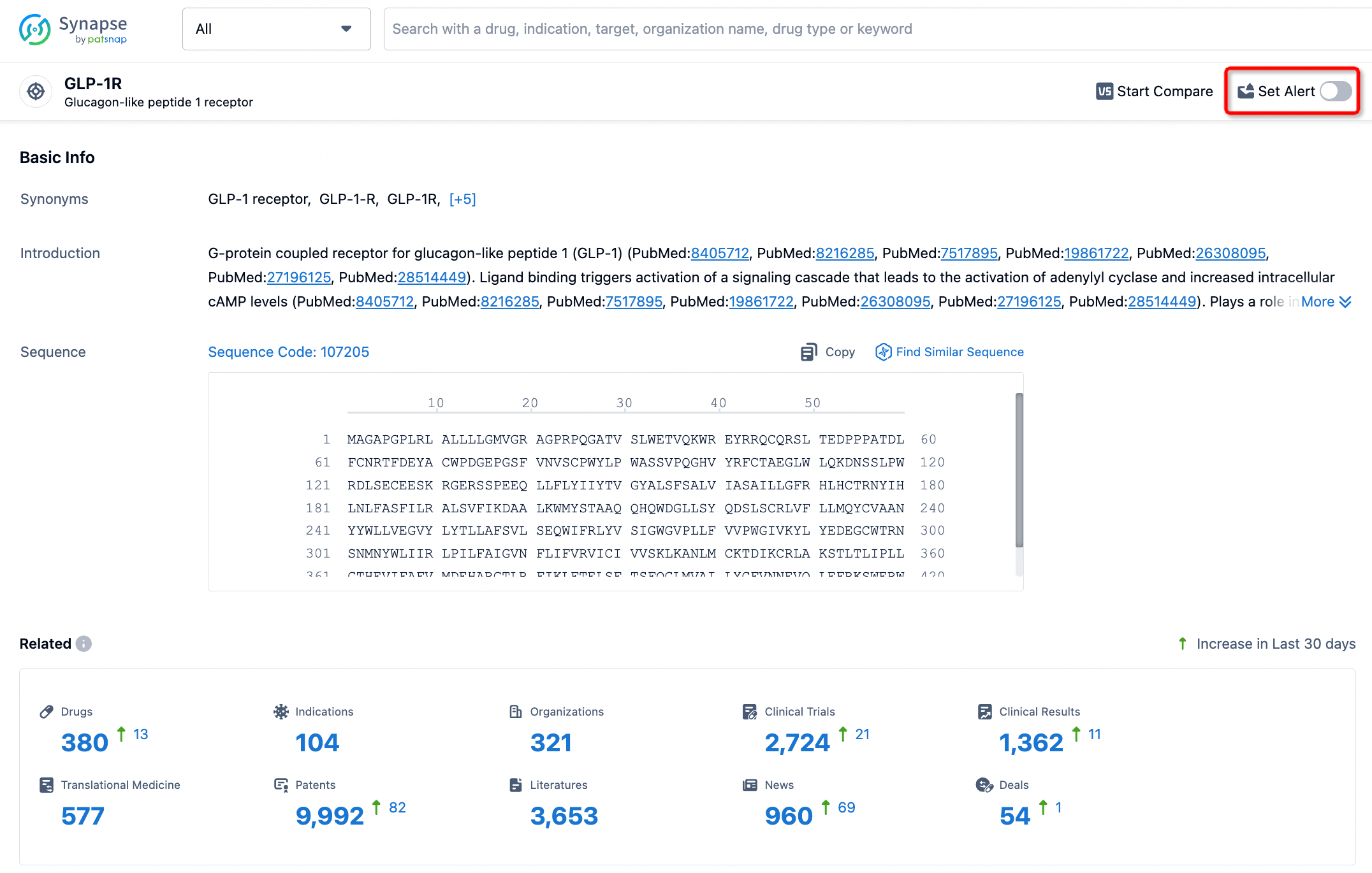
In the Synapse database, you can stay updated on the latest research and development advances of all targets. This service is accessible anytime and anywhere, with updates available daily or weekly. Use the "Set Alert" function to stay informed. Click on the image below to embark on a brand new journey of drug discovery!


AI Agents Built for Biopharma Breakthroughs
Accelerate discovery. Empower decisions. Transform outcomes.
Get started for free today!
Accelerate Strategic R&D decision making with Synapse, PatSnap’s AI-powered Connected Innovation Intelligence Platform Built for Life Sciences Professionals.
Start your data trial now!
Synapse data is also accessible to external entities via APIs or data packages. Empower better decisions with the latest in pharmaceutical intelligence.