Request Demo
What are PKCα stimulants and how do they work?
25 June 2024
Introduction to PKCα Stimulants
Protein Kinase C alpha (PKCα) is an enzyme that plays a critical role in a variety of cellular processes, including growth, differentiation, and apoptosis. It is part of the larger Protein Kinase C (PKC) family, which consists of serine/threonine kinases activated by signals such as increased concentrations of diacylglycerol (DAG) or calcium ions. PKCα is especially important due to its involvement in numerous physiological and pathological processes, including cardiovascular health, cancer, and neurological function. Stimulants of PKCα have garnered significant attention in the field of biomedical research for their potential therapeutic applications in treating various diseases.
How Do PKCα Stimulants Work?
PKCα stimulants work by activating the PKCα enzyme, thereby triggering a cascade of intracellular signaling pathways. Activation of PKCα typically occurs through the binding of DAG and calcium ions, which causes a conformational change in the enzyme, rendering it active. Once activated, PKCα translocates to the plasma membrane, where it can phosphorylate a variety of substrate proteins involved in vital cellular functions.
The activation mechanism of PKCα stimulants generally involves mimicking or enhancing the natural activators of the enzyme. For instance, some PKCα stimulants are designed to increase the levels of DAG in the cell, while others may raise intracellular calcium concentrations. There are also synthetic molecules that directly bind to and activate PKCα. By modulating the activity of PKCα, these stimulants can influence cellular processes in a highly targeted manner, which makes them promising candidates for therapeutic interventions.
What Are PKCα Stimulants Used For?
The therapeutic potential of PKCα stimulants spans a wide range of medical conditions due to the enzyme's involvement in diverse cellular processes. Below are some key areas where PKCα stimulants are currently being explored:
1. **Cardiovascular Diseases**: PKCα plays a significant role in cardiovascular health. It regulates cardiac contractility, vascular tone, and endothelial function. PKCα stimulants have been investigated for their potential to improve heart function in conditions such as heart failure and hypertension. By enhancing the activity of PKCα, these stimulants can help improve myocardial contractility and vascular compliance, offering a novel approach to treating cardiovascular diseases.
2. **Cancer**: The role of PKCα in cancer is complex and context-dependent. In some cancers, PKCα acts as a tumor suppressor, while in others, it promotes tumor growth. Stimulants of PKCα are under investigation for their ability to inhibit cancer cell proliferation and induce apoptosis in certain types of tumors. For instance, research has shown that activating PKCα can suppress the growth of glioblastoma cells, making PKCα stimulants a potential therapeutic option for this aggressive brain cancer.
3. **Neurological Disorders**: PKCα is involved in synaptic plasticity and neuronal signaling, making it a target for the treatment of neurological disorders such as Alzheimer's disease and schizophrenia. PKCα stimulants may enhance cognitive function and protect against neurodegeneration by promoting the survival and differentiation of neurons. This makes them a promising avenue for research in neurodegenerative and psychiatric conditions.
4. **Inflammation and Immune Response**: PKCα is also involved in regulating the immune response and inflammation. Stimulants of PKCα can modulate the activity of immune cells, potentially offering therapeutic benefits in autoimmune diseases and inflammatory conditions. By fine-tuning the immune response, PKCα stimulants could help manage diseases characterized by chronic inflammation.
In conclusion, PKCα stimulants represent a promising area of biomedical research with potential applications in treating a variety of diseases. By harnessing the ability to modulate PKCα activity, these compounds offer targeted therapeutic strategies aimed at improving human health. Continued research and clinical trials will be essential in fully understanding the therapeutic potential and safety profile of PKCα stimulants.
Protein Kinase C alpha (PKCα) is an enzyme that plays a critical role in a variety of cellular processes, including growth, differentiation, and apoptosis. It is part of the larger Protein Kinase C (PKC) family, which consists of serine/threonine kinases activated by signals such as increased concentrations of diacylglycerol (DAG) or calcium ions. PKCα is especially important due to its involvement in numerous physiological and pathological processes, including cardiovascular health, cancer, and neurological function. Stimulants of PKCα have garnered significant attention in the field of biomedical research for their potential therapeutic applications in treating various diseases.
How Do PKCα Stimulants Work?
PKCα stimulants work by activating the PKCα enzyme, thereby triggering a cascade of intracellular signaling pathways. Activation of PKCα typically occurs through the binding of DAG and calcium ions, which causes a conformational change in the enzyme, rendering it active. Once activated, PKCα translocates to the plasma membrane, where it can phosphorylate a variety of substrate proteins involved in vital cellular functions.
The activation mechanism of PKCα stimulants generally involves mimicking or enhancing the natural activators of the enzyme. For instance, some PKCα stimulants are designed to increase the levels of DAG in the cell, while others may raise intracellular calcium concentrations. There are also synthetic molecules that directly bind to and activate PKCα. By modulating the activity of PKCα, these stimulants can influence cellular processes in a highly targeted manner, which makes them promising candidates for therapeutic interventions.
What Are PKCα Stimulants Used For?
The therapeutic potential of PKCα stimulants spans a wide range of medical conditions due to the enzyme's involvement in diverse cellular processes. Below are some key areas where PKCα stimulants are currently being explored:
1. **Cardiovascular Diseases**: PKCα plays a significant role in cardiovascular health. It regulates cardiac contractility, vascular tone, and endothelial function. PKCα stimulants have been investigated for their potential to improve heart function in conditions such as heart failure and hypertension. By enhancing the activity of PKCα, these stimulants can help improve myocardial contractility and vascular compliance, offering a novel approach to treating cardiovascular diseases.
2. **Cancer**: The role of PKCα in cancer is complex and context-dependent. In some cancers, PKCα acts as a tumor suppressor, while in others, it promotes tumor growth. Stimulants of PKCα are under investigation for their ability to inhibit cancer cell proliferation and induce apoptosis in certain types of tumors. For instance, research has shown that activating PKCα can suppress the growth of glioblastoma cells, making PKCα stimulants a potential therapeutic option for this aggressive brain cancer.
3. **Neurological Disorders**: PKCα is involved in synaptic plasticity and neuronal signaling, making it a target for the treatment of neurological disorders such as Alzheimer's disease and schizophrenia. PKCα stimulants may enhance cognitive function and protect against neurodegeneration by promoting the survival and differentiation of neurons. This makes them a promising avenue for research in neurodegenerative and psychiatric conditions.
4. **Inflammation and Immune Response**: PKCα is also involved in regulating the immune response and inflammation. Stimulants of PKCα can modulate the activity of immune cells, potentially offering therapeutic benefits in autoimmune diseases and inflammatory conditions. By fine-tuning the immune response, PKCα stimulants could help manage diseases characterized by chronic inflammation.
In conclusion, PKCα stimulants represent a promising area of biomedical research with potential applications in treating a variety of diseases. By harnessing the ability to modulate PKCα activity, these compounds offer targeted therapeutic strategies aimed at improving human health. Continued research and clinical trials will be essential in fully understanding the therapeutic potential and safety profile of PKCα stimulants.
How to obtain the latest development progress of all targets?
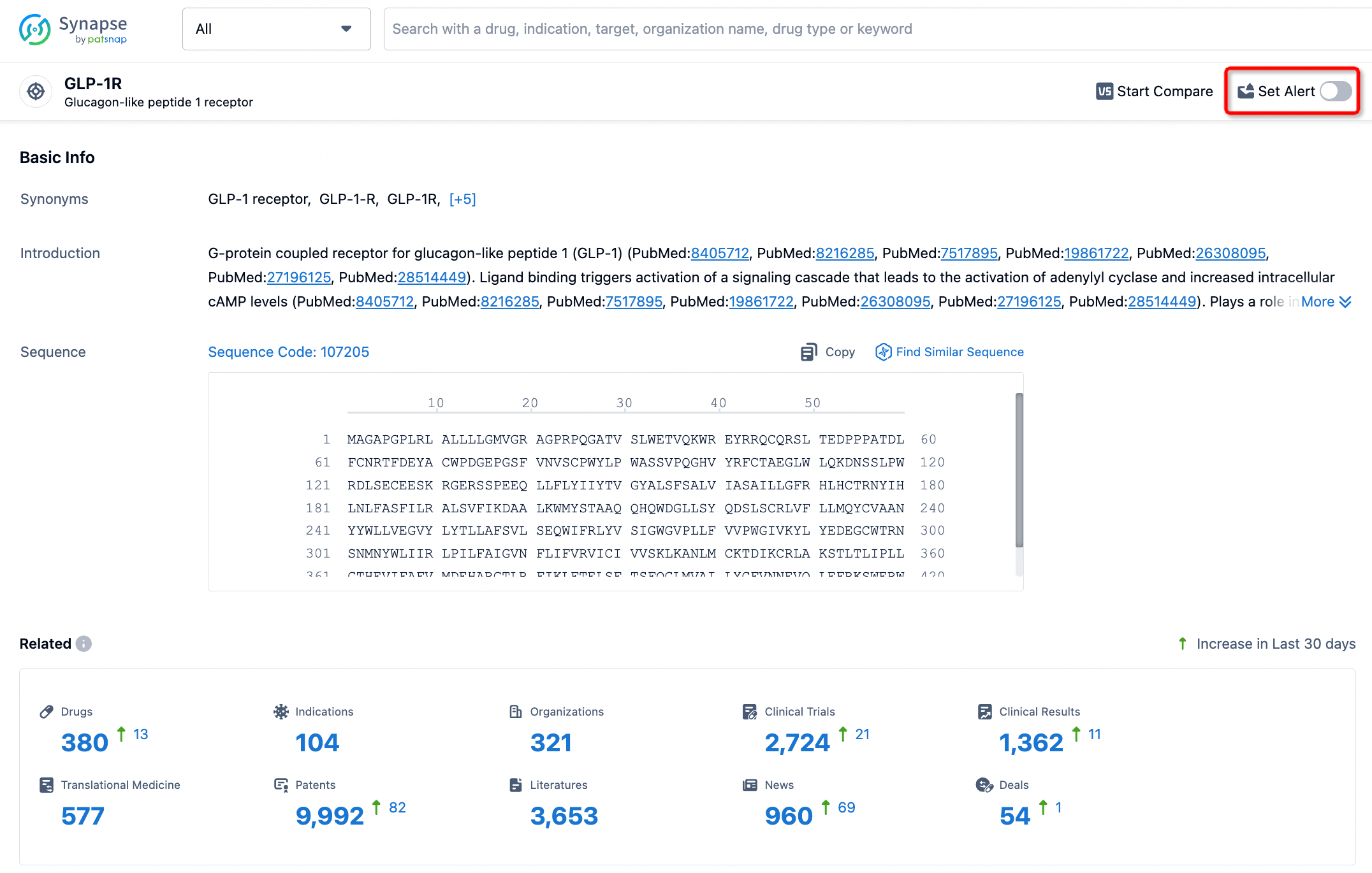
In the Synapse database, you can stay updated on the latest research and development advances of all targets. This service is accessible anytime and anywhere, with updates available daily or weekly. Use the "Set Alert" function to stay informed. Click on the image below to embark on a brand new journey of drug discovery!


AI Agents Built for Biopharma Breakthroughs
Accelerate discovery. Empower decisions. Transform outcomes.
Get started for free today!
Accelerate Strategic R&D decision making with Synapse, PatSnap’s AI-powered Connected Innovation Intelligence Platform Built for Life Sciences Professionals.
Start your data trial now!
Synapse data is also accessible to external entities via APIs or data packages. Empower better decisions with the latest in pharmaceutical intelligence.