Request Demo
What are PKCβ modulators and how do they work?
25 June 2024
Protein kinase C beta (PKCβ) modulators are emerging as promising agents in the therapeutic landscape due to their targeted approach in regulating various cellular functions. PKCβ, a serine/threonine kinase, is a member of the larger PKC family and plays a crucial role in numerous cellular processes, including proliferation, differentiation, and apoptosis. Given its significant involvement in various pathophysiological conditions, PKCβ has become a focal point for drug discovery and development. This blog aims to provide a comprehensive overview of PKCβ modulators, their mechanisms of action, and their current and potential therapeutic applications.
PKCβ modulators are compounds designed to specifically modulate the activity of the PKCβ isoenzyme. They can either inhibit or activate the enzyme, depending on the desired therapeutic outcome. The modulation of PKCβ activity involves intricate mechanisms that hinge on altering the enzyme's conformation, localization, and interaction with substrates or cofactors.
PKCβ exists in two isoforms, PKCβI and PKCβII, which differ in their regulatory domains and tissue distribution. The activation of PKCβ generally follows a cascade of events initiated by the binding of diacylglycerol (DAG) and calcium ions to the enzyme. This binding induces a conformational change that relocates PKCβ from the cytosol to the plasma membrane, where it becomes fully active. PKCβ modulators can intervene at various points in this activation process. For instance, inhibitors might block the binding sites for DAG or calcium, preventing the necessary conformational changes and subsequent activation. On the other hand, activators might mimic DAG, promoting PKCβ activation even in the absence of natural stimuli.
One of the key therapeutic areas where PKCβ modulators have shown potential is in the treatment of diabetic complications, particularly diabetic retinopathy. Diabetic retinopathy is a leading cause of blindness, characterized by damage to the retinal blood vessels. PKCβ activation has been implicated in this damage, making PKCβ inhibitors a logical therapeutic choice. By inhibiting PKCβ, these modulators can reduce vascular permeability and inflammation, thereby slowing the progression of retinal damage.
Beyond diabetic complications, PKCβ modulators are being explored in oncology. PKCβ is involved in cell proliferation and survival pathways, making its modulation a strategic target in cancer therapy. Inhibitors of PKCβ have demonstrated efficacy in preclinical models of various cancers, including lymphoma and multiple myeloma. These inhibitors can induce apoptosis and sensitize cancer cells to conventional chemotherapies, offering a potential combinatory approach to cancer treatment.
Inflammatory diseases represent another significant application of PKCβ modulators. Given PKCβ's role in the regulation of inflammatory cytokines, modulating its activity can have profound anti-inflammatory effects. In conditions such as rheumatoid arthritis and inflammatory bowel disease, PKCβ inhibitors can reduce the production of pro-inflammatory cytokines, thereby alleviating symptoms and improving patient outcomes.
Recent research has also highlighted the potential of PKCβ modulators in neurological disorders. PKCβ is involved in neuronal signaling and plasticity, and its dysregulation has been linked to conditions such as Alzheimer's disease and schizophrenia. Modulating PKCβ activity in the brain could help restore normal neuronal function and ameliorate symptoms associated with these disorders. However, given the complexity of the brain and the critical functions of PKCβ in normal physiology, this area of research is still in its infancy, and more studies are needed to fully understand the therapeutic potential and safety of PKCβ modulators in neurological conditions.
In conclusion, PKCβ modulators represent a versatile and promising class of therapeutic agents. By specifically targeting the PKCβ isoenzyme, these modulators can influence a wide range of cellular processes and pathological conditions. Whether in the context of diabetic complications, cancer, inflammation, or neurological disorders, PKCβ modulators offer a targeted approach that could lead to more effective and safer therapies. As research continues to unravel the complexities of PKCβ signaling and its involvement in disease, the therapeutic landscape for PKCβ modulators is likely to expand, offering new hope for patients with currently unmet medical needs.
PKCβ modulators are compounds designed to specifically modulate the activity of the PKCβ isoenzyme. They can either inhibit or activate the enzyme, depending on the desired therapeutic outcome. The modulation of PKCβ activity involves intricate mechanisms that hinge on altering the enzyme's conformation, localization, and interaction with substrates or cofactors.
PKCβ exists in two isoforms, PKCβI and PKCβII, which differ in their regulatory domains and tissue distribution. The activation of PKCβ generally follows a cascade of events initiated by the binding of diacylglycerol (DAG) and calcium ions to the enzyme. This binding induces a conformational change that relocates PKCβ from the cytosol to the plasma membrane, where it becomes fully active. PKCβ modulators can intervene at various points in this activation process. For instance, inhibitors might block the binding sites for DAG or calcium, preventing the necessary conformational changes and subsequent activation. On the other hand, activators might mimic DAG, promoting PKCβ activation even in the absence of natural stimuli.
One of the key therapeutic areas where PKCβ modulators have shown potential is in the treatment of diabetic complications, particularly diabetic retinopathy. Diabetic retinopathy is a leading cause of blindness, characterized by damage to the retinal blood vessels. PKCβ activation has been implicated in this damage, making PKCβ inhibitors a logical therapeutic choice. By inhibiting PKCβ, these modulators can reduce vascular permeability and inflammation, thereby slowing the progression of retinal damage.
Beyond diabetic complications, PKCβ modulators are being explored in oncology. PKCβ is involved in cell proliferation and survival pathways, making its modulation a strategic target in cancer therapy. Inhibitors of PKCβ have demonstrated efficacy in preclinical models of various cancers, including lymphoma and multiple myeloma. These inhibitors can induce apoptosis and sensitize cancer cells to conventional chemotherapies, offering a potential combinatory approach to cancer treatment.
Inflammatory diseases represent another significant application of PKCβ modulators. Given PKCβ's role in the regulation of inflammatory cytokines, modulating its activity can have profound anti-inflammatory effects. In conditions such as rheumatoid arthritis and inflammatory bowel disease, PKCβ inhibitors can reduce the production of pro-inflammatory cytokines, thereby alleviating symptoms and improving patient outcomes.
Recent research has also highlighted the potential of PKCβ modulators in neurological disorders. PKCβ is involved in neuronal signaling and plasticity, and its dysregulation has been linked to conditions such as Alzheimer's disease and schizophrenia. Modulating PKCβ activity in the brain could help restore normal neuronal function and ameliorate symptoms associated with these disorders. However, given the complexity of the brain and the critical functions of PKCβ in normal physiology, this area of research is still in its infancy, and more studies are needed to fully understand the therapeutic potential and safety of PKCβ modulators in neurological conditions.
In conclusion, PKCβ modulators represent a versatile and promising class of therapeutic agents. By specifically targeting the PKCβ isoenzyme, these modulators can influence a wide range of cellular processes and pathological conditions. Whether in the context of diabetic complications, cancer, inflammation, or neurological disorders, PKCβ modulators offer a targeted approach that could lead to more effective and safer therapies. As research continues to unravel the complexities of PKCβ signaling and its involvement in disease, the therapeutic landscape for PKCβ modulators is likely to expand, offering new hope for patients with currently unmet medical needs.
How to obtain the latest development progress of all targets?
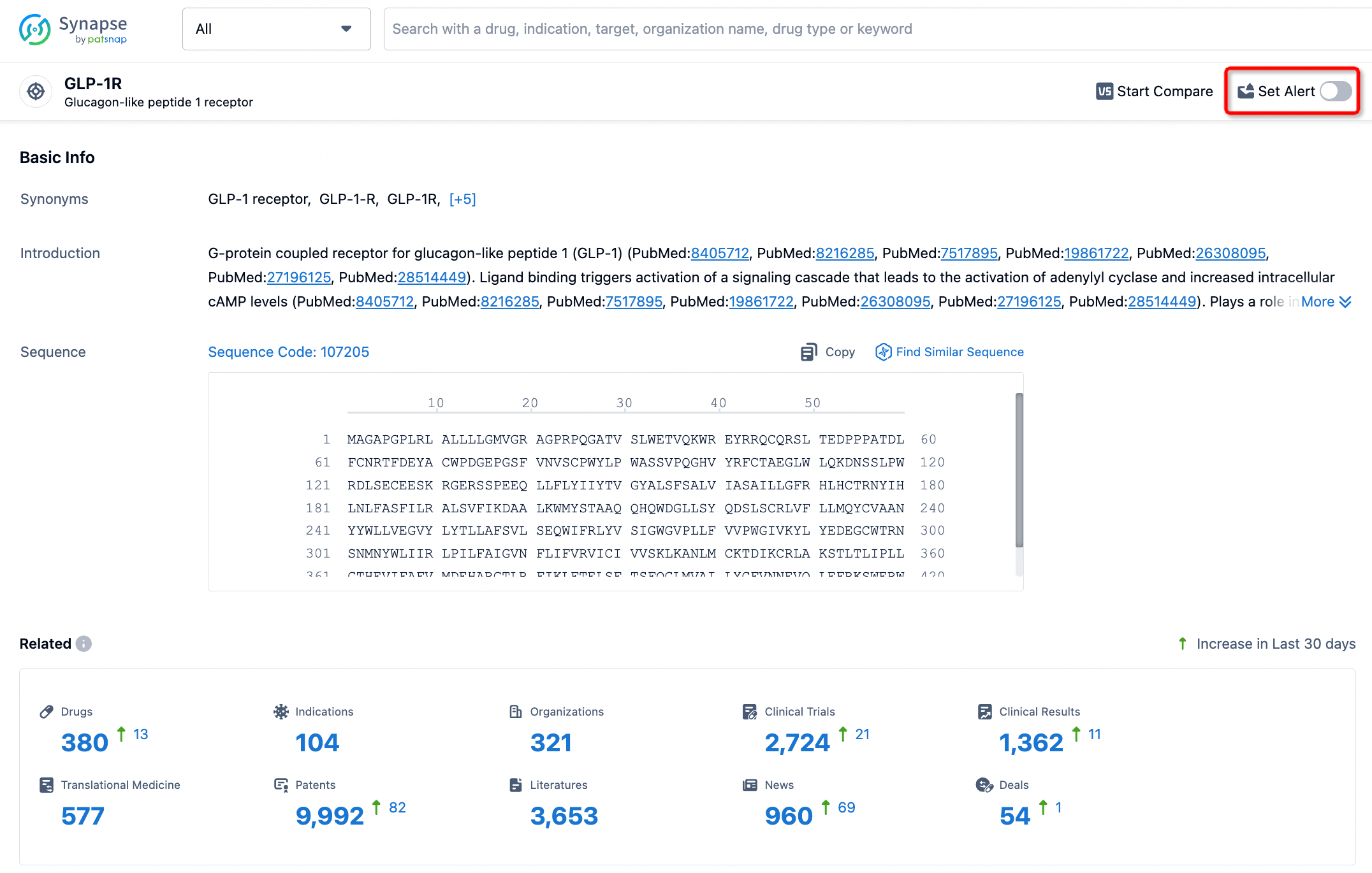
In the Synapse database, you can stay updated on the latest research and development advances of all targets. This service is accessible anytime and anywhere, with updates available daily or weekly. Use the "Set Alert" function to stay informed. Click on the image below to embark on a brand new journey of drug discovery!


Hiro LS Researcher
The AI Search Engine Built to Accelerate Biopharma Decisions
Search across billion-scale life sciences data to uncover signals, validate evidence, and act with confidence.
Ask any biopharma research question→
Get started for free today!
Accelerate Strategic R&D decision making with Synapse, Patsnap’s AI-powered Connected Innovation Intelligence Platform Built for Life Sciences Professionals.
Discover Synapse Data Servers
Synapse data is now integrated into the PatSnap LS Model Context Protocol (MCP) service. Customize your LLM agent now using our MCP server!