Request Demo
What are PKN3 inhibitors and how do they work?
25 June 2024
In the ongoing battle against various forms of cancer, researchers are continually seeking more effective treatments with fewer side effects. One promising area of investigation involves targeting specific proteins that play a critical role in cancer cell proliferation. Among these proteins, PKN3 has emerged as a noteworthy target. PKN3 inhibitors are currently being explored for their potential to combat cancer by disrupting the pathways that allow cancer cells to multiply and spread. This blog post will delve into what PKN3 inhibitors are, how they work, and their current and potential future applications.
PKN3, or Protein Kinase N3, is a member of the protein kinase family that is involved in various cellular processes. Kinases are enzymes that modify other proteins by chemically adding phosphate groups to them, a process known as phosphorylation. This modification can activate or deactivate target proteins, thus regulating various signaling pathways in the cell. PKN3, specifically, has been found to be heavily involved in pathways that regulate cell proliferation, migration, and survival—all of which are processes that cancer cells hijack to grow uncontrollably and spread to other parts of the body.
How do PKN3 inhibitors work? Essentially, these inhibitors aim to block the activity of the PKN3 enzyme, thereby interrupting the signaling pathways that contribute to cancer cell growth and survival. By inhibiting PKN3, these compounds can prevent the phosphorylation of downstream targets that are crucial for tumor cell proliferation and migration. This disruption can lead to the cessation of cancer cell growth and induce apoptosis, or programmed cell death, effectively reducing the tumor burden.
One of the key mechanisms by which PKN3 inhibitors exert their effects is through the inhibition of the PI3K/AKT pathway—a critical signaling pathway that promotes cell survival and growth. PKN3 is known to interact with this pathway, and its inhibition can lead to decreased AKT activation. AKT is a protein kinase that, when activated, promotes cell survival and growth; thus, its inhibition can result in reduced tumor cell viability. By targeting PKN3, researchers aim to indirectly downregulate this pathway and thwart cancer progression.
What are PKN3 inhibitors used for? The primary focus of PKN3 inhibitors is in the treatment of cancer. Research has shown that PKN3 is overexpressed in several types of cancer, including prostate, breast, and pancreatic cancers. This overexpression is often associated with poor prognosis and aggressive tumor behavior, making PKN3 a valuable target for therapeutic intervention.
Currently, PKN3 inhibitors are mostly in the preclinical and early clinical stages of development. Animal studies have shown promising results, with significant reductions in tumor size and metastasis in models treated with these inhibitors. For example, in prostate cancer models, PKN3 inhibitors have been shown to reduce tumor growth and prevent the spread of cancer cells to other tissues. Similarly, in breast cancer models, these inhibitors have demonstrated the ability to hinder tumor cell migration and invasion, potentially limiting the ability of the cancer to metastasize.
In addition to their potential in oncology, there is growing interest in exploring the role of PKN3 inhibitors in other diseases characterized by abnormal cell proliferation and migration. For instance, research is being conducted to investigate their potential application in fibrotic diseases, where excessive tissue growth leads to organ dysfunction. By targeting the same pathways involved in cancer, PKN3 inhibitors could offer new therapeutic avenues for these conditions as well.
However, it is important to note that while the early results are promising, much work remains to be done. Clinical trials are essential to determine the safety and efficacy of PKN3 inhibitors in humans. Potential side effects, optimal dosing regimens, and long-term outcomes need to be thoroughly investigated before these inhibitors can become a standard part of cancer treatment protocols.
In conclusion, PKN3 inhibitors represent a novel and promising approach in the fight against cancer. By targeting a key protein involved in cancer cell growth and survival, these inhibitors have the potential to offer more effective and targeted therapies for patients. As research progresses, we can hope to see these inhibitors move from the laboratory to the clinic, providing new hope for those battling this devastating disease.
PKN3, or Protein Kinase N3, is a member of the protein kinase family that is involved in various cellular processes. Kinases are enzymes that modify other proteins by chemically adding phosphate groups to them, a process known as phosphorylation. This modification can activate or deactivate target proteins, thus regulating various signaling pathways in the cell. PKN3, specifically, has been found to be heavily involved in pathways that regulate cell proliferation, migration, and survival—all of which are processes that cancer cells hijack to grow uncontrollably and spread to other parts of the body.
How do PKN3 inhibitors work? Essentially, these inhibitors aim to block the activity of the PKN3 enzyme, thereby interrupting the signaling pathways that contribute to cancer cell growth and survival. By inhibiting PKN3, these compounds can prevent the phosphorylation of downstream targets that are crucial for tumor cell proliferation and migration. This disruption can lead to the cessation of cancer cell growth and induce apoptosis, or programmed cell death, effectively reducing the tumor burden.
One of the key mechanisms by which PKN3 inhibitors exert their effects is through the inhibition of the PI3K/AKT pathway—a critical signaling pathway that promotes cell survival and growth. PKN3 is known to interact with this pathway, and its inhibition can lead to decreased AKT activation. AKT is a protein kinase that, when activated, promotes cell survival and growth; thus, its inhibition can result in reduced tumor cell viability. By targeting PKN3, researchers aim to indirectly downregulate this pathway and thwart cancer progression.
What are PKN3 inhibitors used for? The primary focus of PKN3 inhibitors is in the treatment of cancer. Research has shown that PKN3 is overexpressed in several types of cancer, including prostate, breast, and pancreatic cancers. This overexpression is often associated with poor prognosis and aggressive tumor behavior, making PKN3 a valuable target for therapeutic intervention.
Currently, PKN3 inhibitors are mostly in the preclinical and early clinical stages of development. Animal studies have shown promising results, with significant reductions in tumor size and metastasis in models treated with these inhibitors. For example, in prostate cancer models, PKN3 inhibitors have been shown to reduce tumor growth and prevent the spread of cancer cells to other tissues. Similarly, in breast cancer models, these inhibitors have demonstrated the ability to hinder tumor cell migration and invasion, potentially limiting the ability of the cancer to metastasize.
In addition to their potential in oncology, there is growing interest in exploring the role of PKN3 inhibitors in other diseases characterized by abnormal cell proliferation and migration. For instance, research is being conducted to investigate their potential application in fibrotic diseases, where excessive tissue growth leads to organ dysfunction. By targeting the same pathways involved in cancer, PKN3 inhibitors could offer new therapeutic avenues for these conditions as well.
However, it is important to note that while the early results are promising, much work remains to be done. Clinical trials are essential to determine the safety and efficacy of PKN3 inhibitors in humans. Potential side effects, optimal dosing regimens, and long-term outcomes need to be thoroughly investigated before these inhibitors can become a standard part of cancer treatment protocols.
In conclusion, PKN3 inhibitors represent a novel and promising approach in the fight against cancer. By targeting a key protein involved in cancer cell growth and survival, these inhibitors have the potential to offer more effective and targeted therapies for patients. As research progresses, we can hope to see these inhibitors move from the laboratory to the clinic, providing new hope for those battling this devastating disease.
How to obtain the latest development progress of all targets?
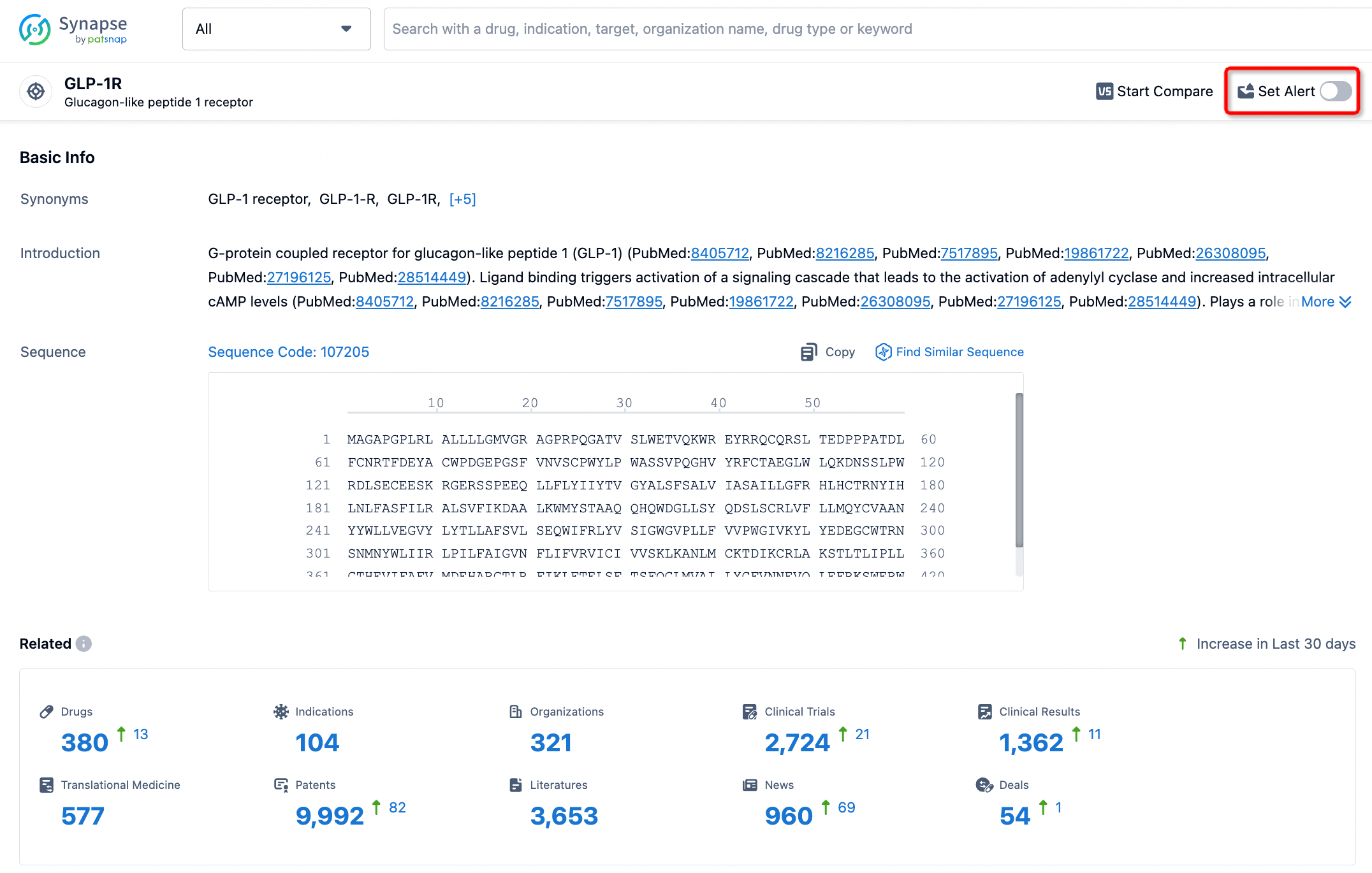
In the Synapse database, you can stay updated on the latest research and development advances of all targets. This service is accessible anytime and anywhere, with updates available daily or weekly. Use the "Set Alert" function to stay informed. Click on the image below to embark on a brand new journey of drug discovery!


AI Agents Built for Biopharma Breakthroughs
Accelerate discovery. Empower decisions. Transform outcomes.
Get started for free today!
Accelerate Strategic R&D decision making with Synapse, PatSnap’s AI-powered Connected Innovation Intelligence Platform Built for Life Sciences Professionals.
Start your data trial now!
Synapse data is also accessible to external entities via APIs or data packages. Empower better decisions with the latest in pharmaceutical intelligence.