Request Demo
What are PLAC1 inhibitors and how do they work?
25 June 2024
PLAC1 inhibitors are gaining significant traction in the field of oncology due to their promising potential in cancer treatment. PLAC1, or Placenta-Specific 1, is a protein highly expressed in various cancers but minimally present in normal tissues, making it an attractive target for cancer therapy. By understanding and leveraging PLAC1 inhibitors, researchers are paving the way for more targeted and effective treatments.
PLAC1 inhibitors work by specifically targeting the PLAC1 protein, which plays a crucial role in the proliferation and survival of cancer cells. The PLAC1 protein is typically involved in cellular processes that are critical for tumor growth and metastasis. By inhibiting PLAC1, these compounds can disrupt these processes, leading to reduced tumor growth and the potential for cancer cell death.
The mechanism of PLAC1 inhibitors involves several pathways. Primarily, these inhibitors can block the interaction between PLAC1 and other proteins that are essential for cell division and survival. For instance, PLAC1 is known to interact with signaling pathways such as the PI3K/Akt pathway, which is vital for cell growth and survival. By inhibiting this interaction, PLAC1 inhibitors can effectively stymie the growth signals within cancer cells.
Additionally, PLAC1 inhibitors can induce an immune response against the cancer cells. Since PLAC1 is an oncofetal antigen, it is recognized as foreign by the immune system when expressed in adult tissues. Inhibitors can enhance this immune recognition, leading to an increased immune attack on the cancer cells. This dual mechanism of direct inhibition and immune activation makes PLAC1 inhibitors a powerful tool in cancer therapy.
PLAC1 inhibitors are primarily used in the treatment of various types of cancers, particularly those that exhibit high levels of PLAC1 expression. These include breast cancer, lung cancer, and colorectal cancer, among others. In breast cancer, for example, studies have shown that PLAC1 expression is associated with aggressive tumor phenotypes and poor prognosis. By targeting PLAC1, inhibitors can potentially improve outcomes in patients with PLAC1-positive tumors.
In lung cancer, particularly non-small cell lung cancer (NSCLC), PLAC1 inhibitors have shown promise in preclinical studies. NSCLC patients often have limited treatment options, especially in advanced stages. PLAC1 inhibitors could provide a new avenue for targeted therapy, offering hope for better management of this challenging disease.
Colorectal cancer is another area where PLAC1 inhibitors are being explored. Given the high mortality rate associated with advanced colorectal cancer, new treatments are critically needed. PLAC1 inhibitors have demonstrated potential in reducing tumor size and inhibiting metastasis, making them a valuable addition to the therapeutic arsenal.
Beyond these specific cancers, the broad applicability of PLAC1 inhibitors lies in their ability to target a protein that is not widely expressed in normal tissues. This specificity reduces the likelihood of off-target effects and associated toxicities, which are common challenges in cancer treatment. The safety profile of PLAC1 inhibitors is thus a significant advantage, potentially allowing for higher doses and longer treatment durations.
In conclusion, PLAC1 inhibitors represent a promising frontier in the fight against cancer. By targeting a protein that is highly expressed in tumors but not in normal tissues, these inhibitors provide a highly specific and effective treatment option. Their ability to disrupt critical cancer cell processes and enhance immune responses positions them as a valuable tool in oncology. As research continues, the hope is that PLAC1 inhibitors will become a cornerstone of cancer therapy, offering new hope to patients with limited treatment options.
PLAC1 inhibitors work by specifically targeting the PLAC1 protein, which plays a crucial role in the proliferation and survival of cancer cells. The PLAC1 protein is typically involved in cellular processes that are critical for tumor growth and metastasis. By inhibiting PLAC1, these compounds can disrupt these processes, leading to reduced tumor growth and the potential for cancer cell death.
The mechanism of PLAC1 inhibitors involves several pathways. Primarily, these inhibitors can block the interaction between PLAC1 and other proteins that are essential for cell division and survival. For instance, PLAC1 is known to interact with signaling pathways such as the PI3K/Akt pathway, which is vital for cell growth and survival. By inhibiting this interaction, PLAC1 inhibitors can effectively stymie the growth signals within cancer cells.
Additionally, PLAC1 inhibitors can induce an immune response against the cancer cells. Since PLAC1 is an oncofetal antigen, it is recognized as foreign by the immune system when expressed in adult tissues. Inhibitors can enhance this immune recognition, leading to an increased immune attack on the cancer cells. This dual mechanism of direct inhibition and immune activation makes PLAC1 inhibitors a powerful tool in cancer therapy.
PLAC1 inhibitors are primarily used in the treatment of various types of cancers, particularly those that exhibit high levels of PLAC1 expression. These include breast cancer, lung cancer, and colorectal cancer, among others. In breast cancer, for example, studies have shown that PLAC1 expression is associated with aggressive tumor phenotypes and poor prognosis. By targeting PLAC1, inhibitors can potentially improve outcomes in patients with PLAC1-positive tumors.
In lung cancer, particularly non-small cell lung cancer (NSCLC), PLAC1 inhibitors have shown promise in preclinical studies. NSCLC patients often have limited treatment options, especially in advanced stages. PLAC1 inhibitors could provide a new avenue for targeted therapy, offering hope for better management of this challenging disease.
Colorectal cancer is another area where PLAC1 inhibitors are being explored. Given the high mortality rate associated with advanced colorectal cancer, new treatments are critically needed. PLAC1 inhibitors have demonstrated potential in reducing tumor size and inhibiting metastasis, making them a valuable addition to the therapeutic arsenal.
Beyond these specific cancers, the broad applicability of PLAC1 inhibitors lies in their ability to target a protein that is not widely expressed in normal tissues. This specificity reduces the likelihood of off-target effects and associated toxicities, which are common challenges in cancer treatment. The safety profile of PLAC1 inhibitors is thus a significant advantage, potentially allowing for higher doses and longer treatment durations.
In conclusion, PLAC1 inhibitors represent a promising frontier in the fight against cancer. By targeting a protein that is highly expressed in tumors but not in normal tissues, these inhibitors provide a highly specific and effective treatment option. Their ability to disrupt critical cancer cell processes and enhance immune responses positions them as a valuable tool in oncology. As research continues, the hope is that PLAC1 inhibitors will become a cornerstone of cancer therapy, offering new hope to patients with limited treatment options.
How to obtain the latest development progress of all targets?
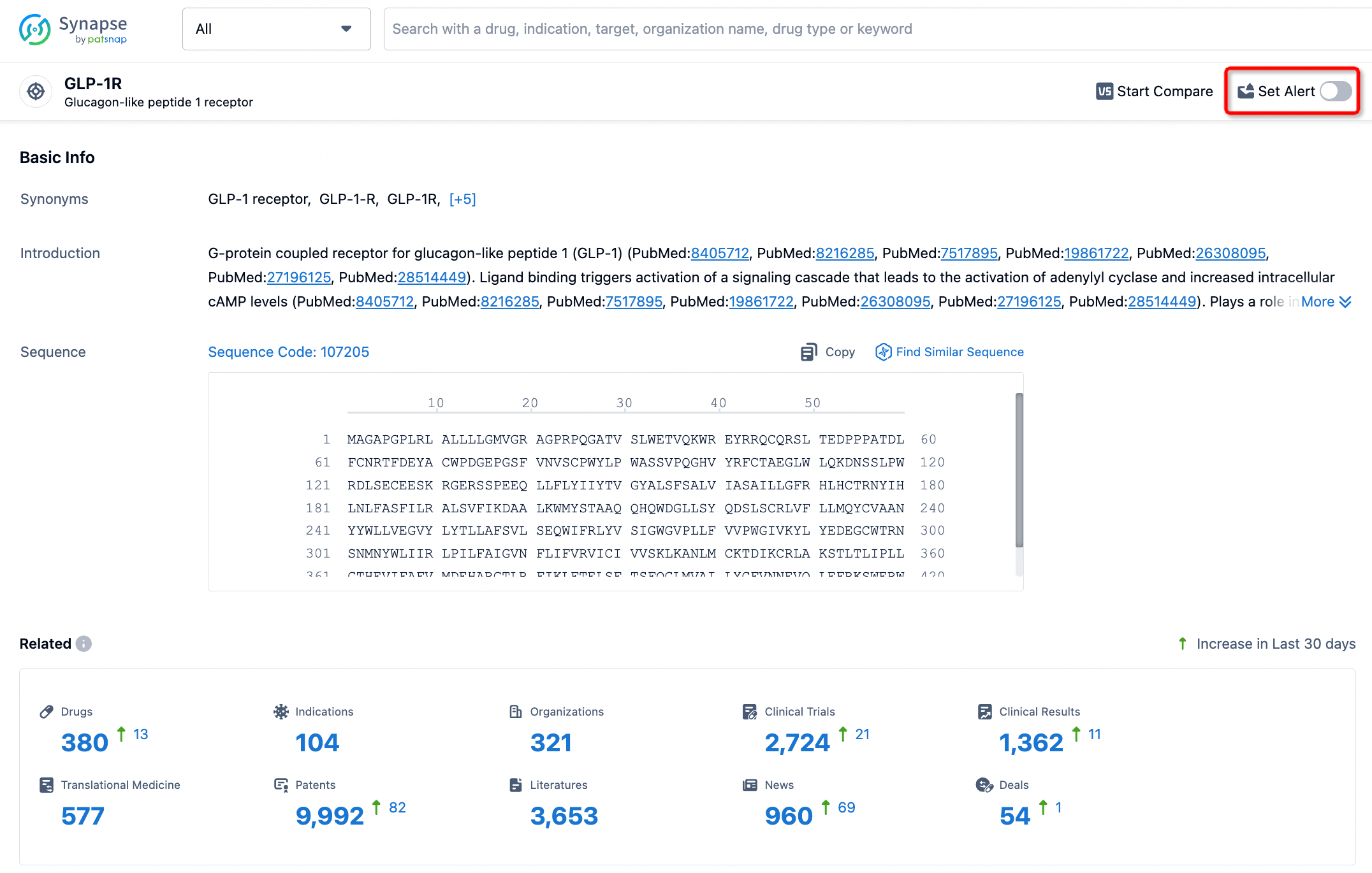
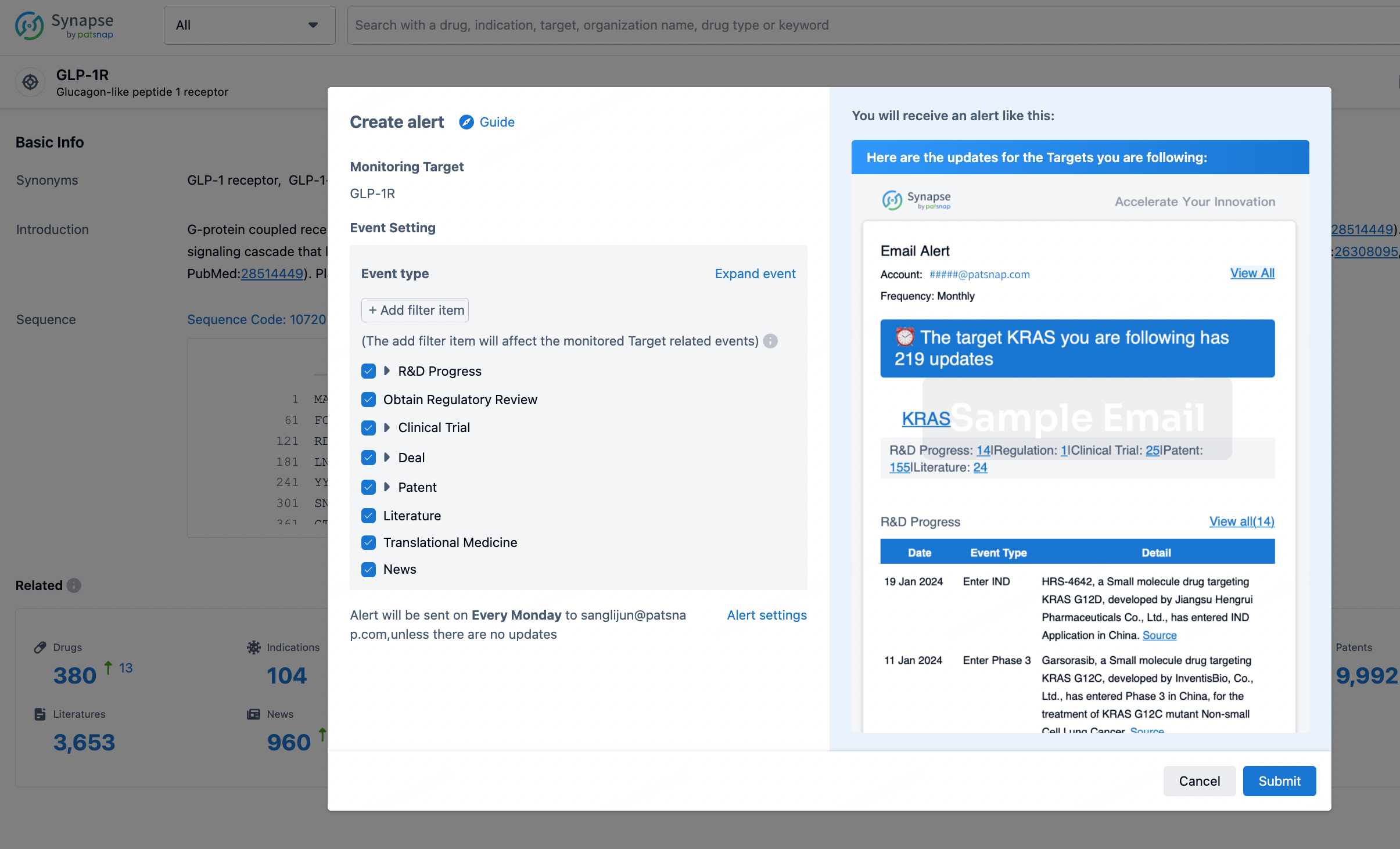
In the Synapse database, you can stay updated on the latest research and development advances of all targets. This service is accessible anytime and anywhere, with updates available daily or weekly. Use the "Set Alert" function to stay informed. Click on the image below to embark on a brand new journey of drug discovery!

AI Agents Built for Biopharma Breakthroughs
Accelerate discovery. Empower decisions. Transform outcomes.
Get started for free today!
Accelerate Strategic R&D decision making with Synapse, PatSnap’s AI-powered Connected Innovation Intelligence Platform Built for Life Sciences Professionals.
Start your data trial now!
Synapse data is also accessible to external entities via APIs or data packages. Empower better decisions with the latest in pharmaceutical intelligence.