Request Demo
What are PPARα inhibitors and how do they work?
21 June 2024
In the ever-evolving landscape of pharmaceutical research, PPARα inhibitors have emerged as a significant area of interest. PPARα, or peroxisome proliferator-activated receptor alpha, is a crucial protein that plays a pivotal role in the regulation of lipid metabolism and energy homeostasis. By understanding and manipulating this protein, scientists hope to develop therapies for a variety of metabolic disorders.
PPARα belongs to the nuclear receptor family of transcription factors, which are proteins that regulate the expression of specific genes. These receptors are activated by ligands, which are small molecules that bind to receptors and modulate their activity. PPARα, in particular, is activated by fatty acids and their derivatives. Once activated, PPARα binds to specific regions of DNA, known as PPAR response elements (PPREs), and regulates the expression of genes involved in fatty acid oxidation, lipid transport, and glucose metabolism. This regulation is essential for maintaining cellular energy balance and overall metabolic homeostasis.
PPARα inhibitors, on the other hand, work by preventing the activation of this receptor. These inhibitors can be small molecules or large biologics designed to block the interaction between PPARα and its ligands, thereby reducing the receptor's activity. By inhibiting PPARα, these compounds can alter the expression of a wide array of genes involved in metabolic processes. This modulation can help in correcting metabolic imbalances associated with various diseases.
One of the primary uses of PPARα inhibitors is in the treatment of metabolic disorders, particularly dyslipidemias. Dyslipidemias are conditions characterized by abnormal levels of lipids in the blood, which can lead to cardiovascular diseases. By inhibiting PPARα, these drugs can decrease the oxidation of fatty acids in the liver, thereby reducing the levels of harmful lipids in the bloodstream. This mechanism can effectively lower the risk of atherosclerosis and other cardiovascular complications.
Beyond dyslipidemias, PPARα inhibitors are also being explored for their potential in treating non-alcoholic fatty liver disease (NAFLD), a condition that is becoming increasingly prevalent worldwide. NAFLD is characterized by the accumulation of fat in the liver, which can lead to inflammation, fibrosis, and even liver cancer. By modulating lipid metabolism, PPARα inhibitors could potentially reduce hepatic steatosis and improve liver function in affected individuals.
Another promising application of PPARα inhibitors is in the realm of diabetes management. Type 2 diabetes is often associated with lipid abnormalities and insulin resistance. By inhibiting PPARα, these drugs may help improve insulin sensitivity and regulate blood glucose levels, offering a novel approach to diabetes treatment. Furthermore, PPARα inhibitors could complement existing antidiabetic therapies, providing a multifaceted strategy to combat the disease.
Inflammatory diseases represent another area where PPARα inhibitors hold potential. PPARα has been shown to play a role in the inflammatory response, and its inhibition could help modulate this process. Conditions such as inflammatory bowel disease (IBD) and rheumatoid arthritis could benefit from therapies targeting PPARα, as these diseases are characterized by chronic inflammation.
In oncology, the role of PPARα inhibitors is still under investigation. Some studies suggest that PPARα may be involved in the proliferation and survival of cancer cells. Therefore, inhibiting this receptor could potentially slow down tumor growth and enhance the efficacy of existing cancer treatments. However, more research is needed to fully understand the implications of PPARα inhibition in cancer therapy.
In conclusion, PPARα inhibitors represent a promising frontier in the treatment of various metabolic, inflammatory, and possibly oncological diseases. By targeting a key regulatory protein in lipid metabolism and energy homeostasis, these inhibitors offer a novel mechanism to correct metabolic imbalances and improve patient outcomes. As research continues to unfold, we may see an expanding role for PPARα inhibitors in clinical practice, providing new hope for patients suffering from a range of conditions.
PPARα belongs to the nuclear receptor family of transcription factors, which are proteins that regulate the expression of specific genes. These receptors are activated by ligands, which are small molecules that bind to receptors and modulate their activity. PPARα, in particular, is activated by fatty acids and their derivatives. Once activated, PPARα binds to specific regions of DNA, known as PPAR response elements (PPREs), and regulates the expression of genes involved in fatty acid oxidation, lipid transport, and glucose metabolism. This regulation is essential for maintaining cellular energy balance and overall metabolic homeostasis.
PPARα inhibitors, on the other hand, work by preventing the activation of this receptor. These inhibitors can be small molecules or large biologics designed to block the interaction between PPARα and its ligands, thereby reducing the receptor's activity. By inhibiting PPARα, these compounds can alter the expression of a wide array of genes involved in metabolic processes. This modulation can help in correcting metabolic imbalances associated with various diseases.
One of the primary uses of PPARα inhibitors is in the treatment of metabolic disorders, particularly dyslipidemias. Dyslipidemias are conditions characterized by abnormal levels of lipids in the blood, which can lead to cardiovascular diseases. By inhibiting PPARα, these drugs can decrease the oxidation of fatty acids in the liver, thereby reducing the levels of harmful lipids in the bloodstream. This mechanism can effectively lower the risk of atherosclerosis and other cardiovascular complications.
Beyond dyslipidemias, PPARα inhibitors are also being explored for their potential in treating non-alcoholic fatty liver disease (NAFLD), a condition that is becoming increasingly prevalent worldwide. NAFLD is characterized by the accumulation of fat in the liver, which can lead to inflammation, fibrosis, and even liver cancer. By modulating lipid metabolism, PPARα inhibitors could potentially reduce hepatic steatosis and improve liver function in affected individuals.
Another promising application of PPARα inhibitors is in the realm of diabetes management. Type 2 diabetes is often associated with lipid abnormalities and insulin resistance. By inhibiting PPARα, these drugs may help improve insulin sensitivity and regulate blood glucose levels, offering a novel approach to diabetes treatment. Furthermore, PPARα inhibitors could complement existing antidiabetic therapies, providing a multifaceted strategy to combat the disease.
Inflammatory diseases represent another area where PPARα inhibitors hold potential. PPARα has been shown to play a role in the inflammatory response, and its inhibition could help modulate this process. Conditions such as inflammatory bowel disease (IBD) and rheumatoid arthritis could benefit from therapies targeting PPARα, as these diseases are characterized by chronic inflammation.
In oncology, the role of PPARα inhibitors is still under investigation. Some studies suggest that PPARα may be involved in the proliferation and survival of cancer cells. Therefore, inhibiting this receptor could potentially slow down tumor growth and enhance the efficacy of existing cancer treatments. However, more research is needed to fully understand the implications of PPARα inhibition in cancer therapy.
In conclusion, PPARα inhibitors represent a promising frontier in the treatment of various metabolic, inflammatory, and possibly oncological diseases. By targeting a key regulatory protein in lipid metabolism and energy homeostasis, these inhibitors offer a novel mechanism to correct metabolic imbalances and improve patient outcomes. As research continues to unfold, we may see an expanding role for PPARα inhibitors in clinical practice, providing new hope for patients suffering from a range of conditions.
How to obtain the latest development progress of all targets?
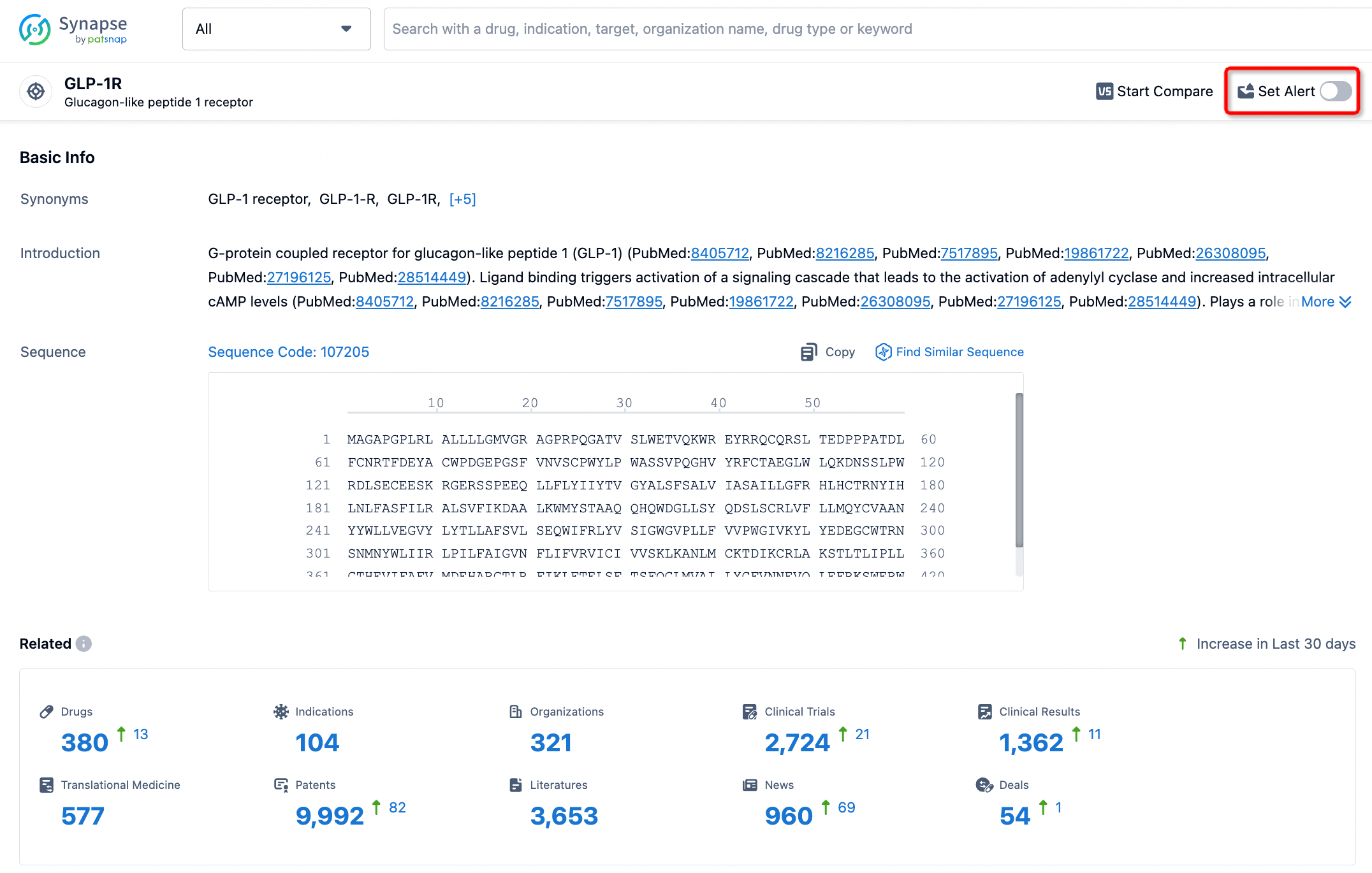
In the Synapse database, you can stay updated on the latest research and development advances of all targets. This service is accessible anytime and anywhere, with updates available daily or weekly. Use the "Set Alert" function to stay informed. Click on the image below to embark on a brand new journey of drug discovery!


AI Agents Built for Biopharma Breakthroughs
Accelerate discovery. Empower decisions. Transform outcomes.
Get started for free today!
Accelerate Strategic R&D decision making with Synapse, PatSnap’s AI-powered Connected Innovation Intelligence Platform Built for Life Sciences Professionals.
Start your data trial now!
Synapse data is also accessible to external entities via APIs or data packages. Empower better decisions with the latest in pharmaceutical intelligence.