Request Demo
What are PPARδ modulators and how do they work?
21 June 2024
Introduction to PPARδ modulators
Peroxisome proliferator-activated receptor delta (PPARδ) is a nuclear receptor that plays a crucial role in the regulation of genes involved in energy balance, lipid metabolism, and inflammation. PPARδ modulators, compounds that can either activate or inhibit this receptor, have garnered significant attention for their therapeutic potential in a variety of metabolic and inflammatory diseases. With the increasing prevalence of conditions such as obesity, diabetes, and cardiovascular diseases, understanding the function and application of PPARδ modulators is more relevant than ever.
How do PPARδ modulators work?
PPARδ is one of three isoforms of the PPAR family, which also includes PPARα and PPARγ. These receptors are ligand-activated transcription factors that regulate the expression of specific genes by binding to peroxisome proliferator response elements (PPREs) in the DNA. When a PPARδ modulator binds to the receptor, it induces a conformational change that allows the receptor to interact with coactivators or corepressors, thereby modulating the transcription of target genes.
PPARδ is predominantly expressed in tissues with high energy demands, such as skeletal muscle, adipose tissue, and the liver. Activation of PPARδ by agonists leads to a cascade of metabolic changes, including increased fatty acid oxidation, improved insulin sensitivity, and enhanced mitochondrial biogenesis. Conversely, inhibition of PPARδ can suppress these metabolic pathways, which may be beneficial in contexts where reduced lipid oxidation is desirable.
At a molecular level, PPARδ modulators influence the balance between energy storage and expenditure. For instance, PPARδ activation promotes the utilization of fatty acids over glucose, making it a potential target for improving metabolic flexibility. This shift can be particularly advantageous in conditions characterized by impaired lipid metabolism, such as obesity and type 2 diabetes. Additionally, PPARδ modulators have been shown to exert anti-inflammatory effects by downregulating the expression of pro-inflammatory cytokines, thereby offering potential benefits in inflammatory diseases.
What are PPARδ modulators used for?
Given their pivotal role in metabolic regulation, PPARδ modulators have been investigated for a variety of therapeutic applications. One of the most promising areas of research is their use in treating metabolic disorders. For example, PPARδ agonists have shown potential in managing obesity by promoting fat oxidation and increasing energy expenditure. In clinical trials, these compounds have demonstrated the ability to reduce body weight and improve insulin sensitivity, making them attractive candidates for the treatment of metabolic syndrome and type 2 diabetes.
Cardiovascular health is another area where PPARδ modulators hold promise. By enhancing lipid metabolism and reducing triglyceride levels, PPARδ agonists can help prevent the development of atherosclerosis, a leading cause of heart attacks and strokes. Additionally, the anti-inflammatory properties of PPARδ modulators can mitigate the chronic inflammation often associated with cardiovascular diseases, further reducing the risk of adverse cardiovascular events.
Muscle wasting and related conditions such as sarcopenia and cachexia may also benefit from PPARδ modulation. By promoting mitochondrial biogenesis and enhancing muscle endurance, PPARδ agonists can improve muscle function and reduce the progression of muscle degeneration. This could be particularly beneficial for elderly populations and individuals suffering from chronic illnesses that lead to muscle atrophy.
Beyond metabolic and cardiovascular applications, PPARδ modulators are being explored for their potential in treating inflammatory and autoimmune diseases. Conditions such as rheumatoid arthritis, inflammatory bowel disease, and multiple sclerosis are characterized by chronic inflammation and immune dysregulation. By modulating the expression of inflammatory cytokines, PPARδ inhibitors may offer a novel therapeutic approach for these debilitating diseases.
In conclusion, PPARδ modulators represent a versatile class of compounds with a wide range of potential therapeutic applications. Their ability to influence key metabolic pathways and exert anti-inflammatory effects makes them valuable candidates for the treatment of various metabolic, cardiovascular, and inflammatory diseases. As research continues to uncover the full extent of their benefits and mechanisms of action, PPARδ modulators may soon become integral components of modern medical therapy.
Peroxisome proliferator-activated receptor delta (PPARδ) is a nuclear receptor that plays a crucial role in the regulation of genes involved in energy balance, lipid metabolism, and inflammation. PPARδ modulators, compounds that can either activate or inhibit this receptor, have garnered significant attention for their therapeutic potential in a variety of metabolic and inflammatory diseases. With the increasing prevalence of conditions such as obesity, diabetes, and cardiovascular diseases, understanding the function and application of PPARδ modulators is more relevant than ever.
How do PPARδ modulators work?
PPARδ is one of three isoforms of the PPAR family, which also includes PPARα and PPARγ. These receptors are ligand-activated transcription factors that regulate the expression of specific genes by binding to peroxisome proliferator response elements (PPREs) in the DNA. When a PPARδ modulator binds to the receptor, it induces a conformational change that allows the receptor to interact with coactivators or corepressors, thereby modulating the transcription of target genes.
PPARδ is predominantly expressed in tissues with high energy demands, such as skeletal muscle, adipose tissue, and the liver. Activation of PPARδ by agonists leads to a cascade of metabolic changes, including increased fatty acid oxidation, improved insulin sensitivity, and enhanced mitochondrial biogenesis. Conversely, inhibition of PPARδ can suppress these metabolic pathways, which may be beneficial in contexts where reduced lipid oxidation is desirable.
At a molecular level, PPARδ modulators influence the balance between energy storage and expenditure. For instance, PPARδ activation promotes the utilization of fatty acids over glucose, making it a potential target for improving metabolic flexibility. This shift can be particularly advantageous in conditions characterized by impaired lipid metabolism, such as obesity and type 2 diabetes. Additionally, PPARδ modulators have been shown to exert anti-inflammatory effects by downregulating the expression of pro-inflammatory cytokines, thereby offering potential benefits in inflammatory diseases.
What are PPARδ modulators used for?
Given their pivotal role in metabolic regulation, PPARδ modulators have been investigated for a variety of therapeutic applications. One of the most promising areas of research is their use in treating metabolic disorders. For example, PPARδ agonists have shown potential in managing obesity by promoting fat oxidation and increasing energy expenditure. In clinical trials, these compounds have demonstrated the ability to reduce body weight and improve insulin sensitivity, making them attractive candidates for the treatment of metabolic syndrome and type 2 diabetes.
Cardiovascular health is another area where PPARδ modulators hold promise. By enhancing lipid metabolism and reducing triglyceride levels, PPARδ agonists can help prevent the development of atherosclerosis, a leading cause of heart attacks and strokes. Additionally, the anti-inflammatory properties of PPARδ modulators can mitigate the chronic inflammation often associated with cardiovascular diseases, further reducing the risk of adverse cardiovascular events.
Muscle wasting and related conditions such as sarcopenia and cachexia may also benefit from PPARδ modulation. By promoting mitochondrial biogenesis and enhancing muscle endurance, PPARδ agonists can improve muscle function and reduce the progression of muscle degeneration. This could be particularly beneficial for elderly populations and individuals suffering from chronic illnesses that lead to muscle atrophy.
Beyond metabolic and cardiovascular applications, PPARδ modulators are being explored for their potential in treating inflammatory and autoimmune diseases. Conditions such as rheumatoid arthritis, inflammatory bowel disease, and multiple sclerosis are characterized by chronic inflammation and immune dysregulation. By modulating the expression of inflammatory cytokines, PPARδ inhibitors may offer a novel therapeutic approach for these debilitating diseases.
In conclusion, PPARδ modulators represent a versatile class of compounds with a wide range of potential therapeutic applications. Their ability to influence key metabolic pathways and exert anti-inflammatory effects makes them valuable candidates for the treatment of various metabolic, cardiovascular, and inflammatory diseases. As research continues to uncover the full extent of their benefits and mechanisms of action, PPARδ modulators may soon become integral components of modern medical therapy.
How to obtain the latest development progress of all targets?
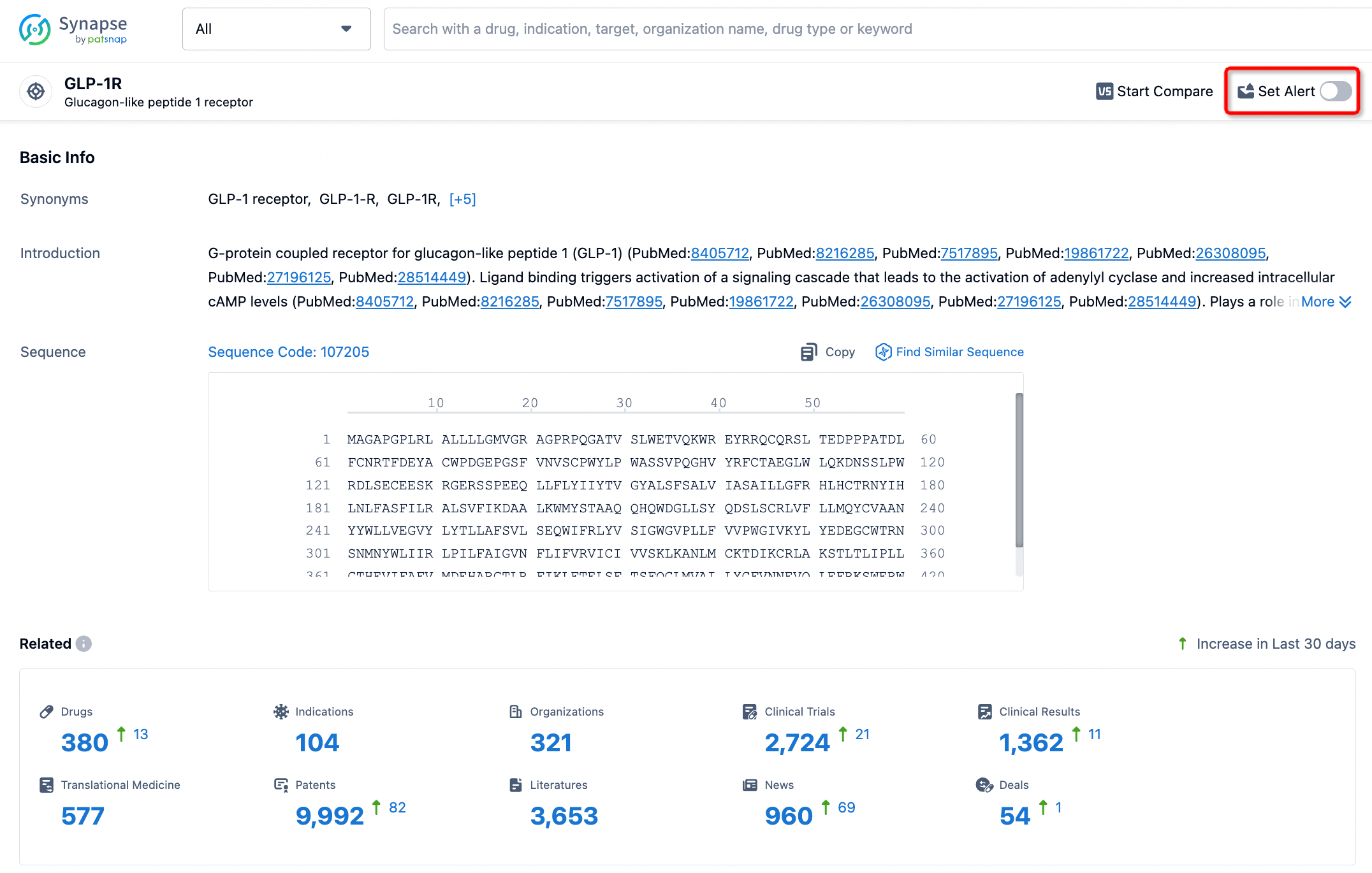
In the Synapse database, you can stay updated on the latest research and development advances of all targets. This service is accessible anytime and anywhere, with updates available daily or weekly. Use the "Set Alert" function to stay informed. Click on the image below to embark on a brand new journey of drug discovery!


Hiro LS Researcher
The AI Search Engine Built to Accelerate Biopharma Decisions
Search across billion-scale life sciences data to uncover signals, validate evidence, and act with confidence.
Ask any biopharma research question→
Get started for free today!
Accelerate Strategic R&D decision making with Synapse, Patsnap’s AI-powered Connected Innovation Intelligence Platform Built for Life Sciences Professionals.
Discover Synapse Data Servers
Synapse data is now integrated into the PatSnap LS Model Context Protocol (MCP) service. Customize your LLM agent now using our MCP server!