Request Demo
What are PRDX4 modulators and how do they work?
25 June 2024
Peroxiredoxin 4, commonly abbreviated as PRDX4, is an enzyme belonging to the peroxiredoxin family that plays a crucial role in cellular redox signaling and the detoxification of peroxides. This enzyme is predominantly found in the endoplasmic reticulum, where it mitigates oxidative stress by reducing hydrogen peroxide to water. Given the significant role of oxidative stress in various diseases, PRDX4 has emerged as a potential therapeutic target. This has led to the development of PRDX4 modulators, a new class of compounds designed to regulate the activity of this enzyme. In this post, we will delve into the mechanisms of PRDX4 modulators, their function, and their therapeutic applications.
PRDX4 modulators are designed to either enhance or inhibit the activity of the PRDX4 enzyme, depending on the therapeutic need. These modulators can be broadly classified into activators and inhibitors. Activators aim to boost the enzyme's efficiency in detoxifying peroxides, thereby reducing oxidative stress within cells. On the other hand, inhibitors are designed to suppress PRDX4 activity, which might be beneficial in conditions where excess reduction of peroxides could be detrimental.
Activators of PRDX4 typically work by stabilizing the enzyme's active form or enhancing its expression. This can be achieved through small molecules that bind to the enzyme and promote its catalytic efficiency. Additionally, gene therapy approaches are being explored to increase PRDX4 expression in specific tissues, thereby amplifying its antioxidative effects.
Inhibitors of PRDX4, conversely, function by blocking the enzyme's active site or downregulating its expression. Small molecules that can bind to critical residues in the active site of PRDX4 are often used to impede its function. RNA interference techniques are also being researched to knock down PRDX4 expression at the mRNA level, providing a more targeted approach to inhibition.
The primary therapeutic application of PRDX4 modulators lies in managing diseases associated with oxidative stress. Oxidative stress is a hallmark of numerous pathological conditions, including neurodegenerative diseases, cardiovascular disorders, and various forms of cancer. By modulating PRDX4 activity, researchers aim to either mitigate or exacerbate oxidative stress as needed for therapeutic benefit.
In the realm of neurodegenerative diseases, oxidative stress is known to contribute significantly to neuronal damage and disease progression. PRDX4 activators could potentially help in reducing oxidative damage in neurons, thereby slowing the progression of diseases like Alzheimer's and Parkinson's. Preclinical studies have shown promising results, with PRDX4 activation leading to improved neuronal survival and function.
Cardiovascular diseases also stand to benefit from PRDX4 modulators. Oxidative stress plays a critical role in the development and progression of atherosclerosis, hypertension, and heart failure. By activating PRDX4, it may be possible to reduce oxidative damage to blood vessels and cardiac tissue, thereby improving cardiovascular health. Clinical trials are currently underway to evaluate the efficacy of PRDX4 activators in patients with these conditions.
On the flip side, certain cancers may benefit from PRDX4 inhibitors. Tumor cells often exhibit high levels of oxidative stress, which they counteract by upregulating antioxidant enzymes like PRDX4. By inhibiting PRDX4, it may be possible to increase oxidative stress in tumor cells to a point where it becomes cytotoxic, thereby promoting cancer cell death. This approach is being explored in conjunction with traditional chemotherapy and radiation therapy to enhance their efficacy.
In conclusion, PRDX4 modulators represent a promising avenue for therapeutic intervention in a wide range of diseases characterized by oxidative stress. Whether used to activate or inhibit PRDX4, these modulators offer a targeted approach to managing oxidative balance within cells. As research continues to advance, we can expect to see more refined and effective PRDX4 modulators making their way into clinical practice, heralding a new era in the treatment of oxidative stress-related diseases.
PRDX4 modulators are designed to either enhance or inhibit the activity of the PRDX4 enzyme, depending on the therapeutic need. These modulators can be broadly classified into activators and inhibitors. Activators aim to boost the enzyme's efficiency in detoxifying peroxides, thereby reducing oxidative stress within cells. On the other hand, inhibitors are designed to suppress PRDX4 activity, which might be beneficial in conditions where excess reduction of peroxides could be detrimental.
Activators of PRDX4 typically work by stabilizing the enzyme's active form or enhancing its expression. This can be achieved through small molecules that bind to the enzyme and promote its catalytic efficiency. Additionally, gene therapy approaches are being explored to increase PRDX4 expression in specific tissues, thereby amplifying its antioxidative effects.
Inhibitors of PRDX4, conversely, function by blocking the enzyme's active site or downregulating its expression. Small molecules that can bind to critical residues in the active site of PRDX4 are often used to impede its function. RNA interference techniques are also being researched to knock down PRDX4 expression at the mRNA level, providing a more targeted approach to inhibition.
The primary therapeutic application of PRDX4 modulators lies in managing diseases associated with oxidative stress. Oxidative stress is a hallmark of numerous pathological conditions, including neurodegenerative diseases, cardiovascular disorders, and various forms of cancer. By modulating PRDX4 activity, researchers aim to either mitigate or exacerbate oxidative stress as needed for therapeutic benefit.
In the realm of neurodegenerative diseases, oxidative stress is known to contribute significantly to neuronal damage and disease progression. PRDX4 activators could potentially help in reducing oxidative damage in neurons, thereby slowing the progression of diseases like Alzheimer's and Parkinson's. Preclinical studies have shown promising results, with PRDX4 activation leading to improved neuronal survival and function.
Cardiovascular diseases also stand to benefit from PRDX4 modulators. Oxidative stress plays a critical role in the development and progression of atherosclerosis, hypertension, and heart failure. By activating PRDX4, it may be possible to reduce oxidative damage to blood vessels and cardiac tissue, thereby improving cardiovascular health. Clinical trials are currently underway to evaluate the efficacy of PRDX4 activators in patients with these conditions.
On the flip side, certain cancers may benefit from PRDX4 inhibitors. Tumor cells often exhibit high levels of oxidative stress, which they counteract by upregulating antioxidant enzymes like PRDX4. By inhibiting PRDX4, it may be possible to increase oxidative stress in tumor cells to a point where it becomes cytotoxic, thereby promoting cancer cell death. This approach is being explored in conjunction with traditional chemotherapy and radiation therapy to enhance their efficacy.
In conclusion, PRDX4 modulators represent a promising avenue for therapeutic intervention in a wide range of diseases characterized by oxidative stress. Whether used to activate or inhibit PRDX4, these modulators offer a targeted approach to managing oxidative balance within cells. As research continues to advance, we can expect to see more refined and effective PRDX4 modulators making their way into clinical practice, heralding a new era in the treatment of oxidative stress-related diseases.
How to obtain the latest development progress of all targets?
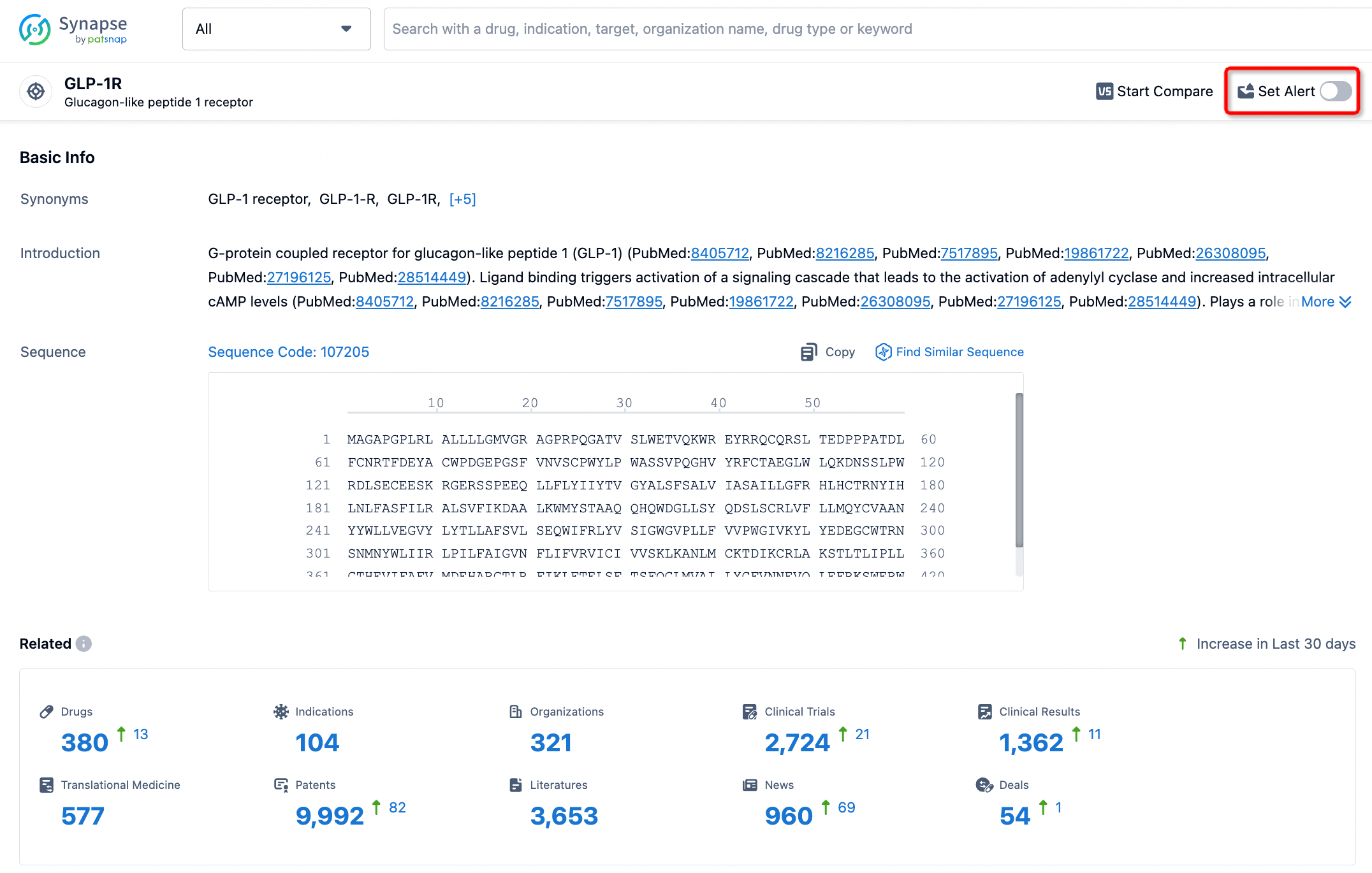
In the Synapse database, you can stay updated on the latest research and development advances of all targets. This service is accessible anytime and anywhere, with updates available daily or weekly. Use the "Set Alert" function to stay informed. Click on the image below to embark on a brand new journey of drug discovery!

AI Agents Built for Biopharma Breakthroughs
Accelerate discovery. Empower decisions. Transform outcomes.
Get started for free today!
Accelerate Strategic R&D decision making with Synapse, PatSnap’s AI-powered Connected Innovation Intelligence Platform Built for Life Sciences Professionals.
Start your data trial now!
Synapse data is also accessible to external entities via APIs or data packages. Empower better decisions with the latest in pharmaceutical intelligence.