Request Demo
What are Protein S100-A4 modulators and how do they work?
26 June 2024
Protein S100-A4, also known as metastasin, is a small calcium-binding protein that belongs to the S100 family. These proteins have been implicated in various intracellular and extracellular functions, including regulation of cell cycle progression and differentiation. S100-A4, in particular, has garnered significant attention due to its involvement in tumor progression and metastasis. Recent advancements in biomedical research have led to the development of Protein S100-A4 modulators, which are compounds designed to influence the activity or expression of this protein. These modulators hold promise for therapeutic applications in cancer and other diseases characterized by aberrant S100-A4 activity.
Protein S100-A4 modulators work by interfering with the protein’s ability to bind calcium and other target molecules, thereby disrupting its normal function. S100-A4 typically exerts its effects through interactions with various intracellular partners, such as cytoskeletal components and transcription factors. By binding to these partners, S100-A4 can influence cell motility, invasion, and adhesion—key processes in cancer metastasis. Modulators can inhibit these interactions, thereby reducing the protein’s ability to promote metastasis.
Calcium is essential for the proper functioning of S100-A4. When calcium binds to S100-A4, it undergoes a conformational change that enables it to interact with its target molecules. Some modulators work by chelating calcium, effectively preventing S100-A4 from adopting its active form. Others may directly bind to S100-A4, blocking its interaction with target proteins. Additionally, some modulators are designed to reduce the expression of S100-A4 at the genetic level, using techniques such as RNA interference or CRISPR-based gene editing.
The therapeutic potential of Protein S100-A4 modulators is most prominently seen in the field of oncology. Overexpression of S100-A4 has been linked to poor prognosis in various cancers, including breast, colon, and pancreatic cancers. By inhibiting the activity of S100-A4, these modulators could potentially reduce tumor invasiveness and metastatic spread, improving patient outcomes. Preclinical studies have shown promising results, with some modulators demonstrating the ability to significantly reduce metastasis in animal models.
Apart from cancer, Protein S100-A4 modulators are also being explored for their potential in treating fibrotic diseases. S100-A4 is involved in the regulation of extracellular matrix components and has been implicated in the development of fibrosis in organs such as the liver, lungs, and kidneys. By modulating the activity of S100-A4, it may be possible to reduce the fibrotic response and preserve organ function in affected individuals.
Inflammatory diseases represent another area where Protein S100-A4 modulators may have therapeutic applications. S100-A4 is known to play a role in the inflammatory response, and its overexpression has been observed in conditions such as rheumatoid arthritis and inflammatory bowel disease. Modulating the activity of S100-A4 could help to alleviate inflammation and improve symptoms in these conditions.
Despite the promising potential, the development of Protein S100-A4 modulators is still in its early stages. Challenges such as specificity, potential off-target effects, and delivery mechanisms need to be addressed before these modulators can be widely used in clinical settings. However, the ongoing research and advancements in biotechnology offer hope that these challenges can be overcome, paving the way for new and effective treatments for a variety of diseases.
In summary, Protein S100-A4 modulators represent a promising area of research with potential applications in cancer, fibrotic diseases, and inflammatory conditions. By targeting the activity and expression of S100-A4, these modulators offer a novel therapeutic approach that could improve outcomes for patients with diseases characterized by aberrant S100-A4 activity. As research continues to advance, it is hoped that these promising compounds will eventually make their way into clinical practice, offering new hope for patients.
Protein S100-A4 modulators work by interfering with the protein’s ability to bind calcium and other target molecules, thereby disrupting its normal function. S100-A4 typically exerts its effects through interactions with various intracellular partners, such as cytoskeletal components and transcription factors. By binding to these partners, S100-A4 can influence cell motility, invasion, and adhesion—key processes in cancer metastasis. Modulators can inhibit these interactions, thereby reducing the protein’s ability to promote metastasis.
Calcium is essential for the proper functioning of S100-A4. When calcium binds to S100-A4, it undergoes a conformational change that enables it to interact with its target molecules. Some modulators work by chelating calcium, effectively preventing S100-A4 from adopting its active form. Others may directly bind to S100-A4, blocking its interaction with target proteins. Additionally, some modulators are designed to reduce the expression of S100-A4 at the genetic level, using techniques such as RNA interference or CRISPR-based gene editing.
The therapeutic potential of Protein S100-A4 modulators is most prominently seen in the field of oncology. Overexpression of S100-A4 has been linked to poor prognosis in various cancers, including breast, colon, and pancreatic cancers. By inhibiting the activity of S100-A4, these modulators could potentially reduce tumor invasiveness and metastatic spread, improving patient outcomes. Preclinical studies have shown promising results, with some modulators demonstrating the ability to significantly reduce metastasis in animal models.
Apart from cancer, Protein S100-A4 modulators are also being explored for their potential in treating fibrotic diseases. S100-A4 is involved in the regulation of extracellular matrix components and has been implicated in the development of fibrosis in organs such as the liver, lungs, and kidneys. By modulating the activity of S100-A4, it may be possible to reduce the fibrotic response and preserve organ function in affected individuals.
Inflammatory diseases represent another area where Protein S100-A4 modulators may have therapeutic applications. S100-A4 is known to play a role in the inflammatory response, and its overexpression has been observed in conditions such as rheumatoid arthritis and inflammatory bowel disease. Modulating the activity of S100-A4 could help to alleviate inflammation and improve symptoms in these conditions.
Despite the promising potential, the development of Protein S100-A4 modulators is still in its early stages. Challenges such as specificity, potential off-target effects, and delivery mechanisms need to be addressed before these modulators can be widely used in clinical settings. However, the ongoing research and advancements in biotechnology offer hope that these challenges can be overcome, paving the way for new and effective treatments for a variety of diseases.
In summary, Protein S100-A4 modulators represent a promising area of research with potential applications in cancer, fibrotic diseases, and inflammatory conditions. By targeting the activity and expression of S100-A4, these modulators offer a novel therapeutic approach that could improve outcomes for patients with diseases characterized by aberrant S100-A4 activity. As research continues to advance, it is hoped that these promising compounds will eventually make their way into clinical practice, offering new hope for patients.
How to obtain the latest development progress of all targets?
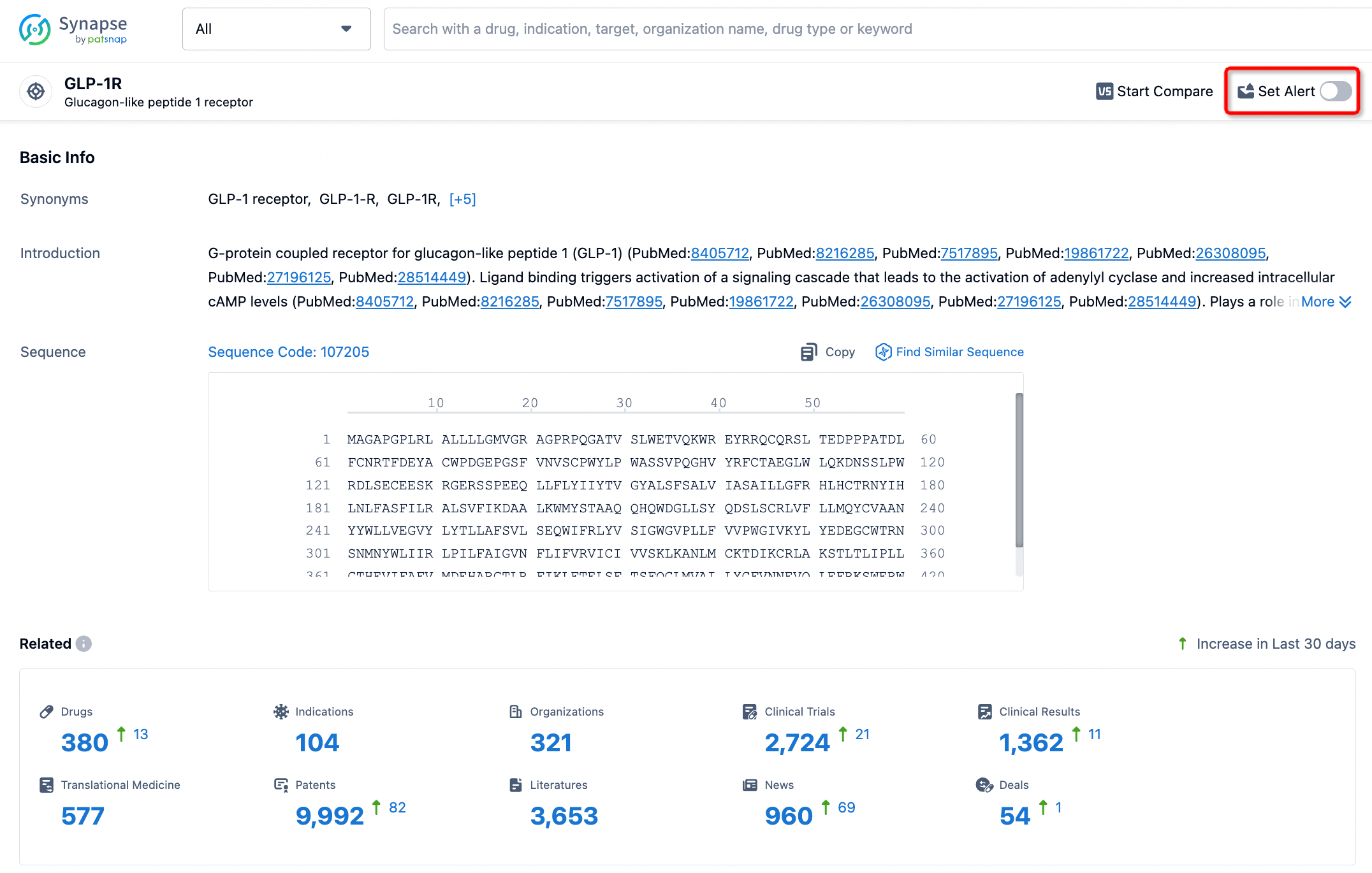
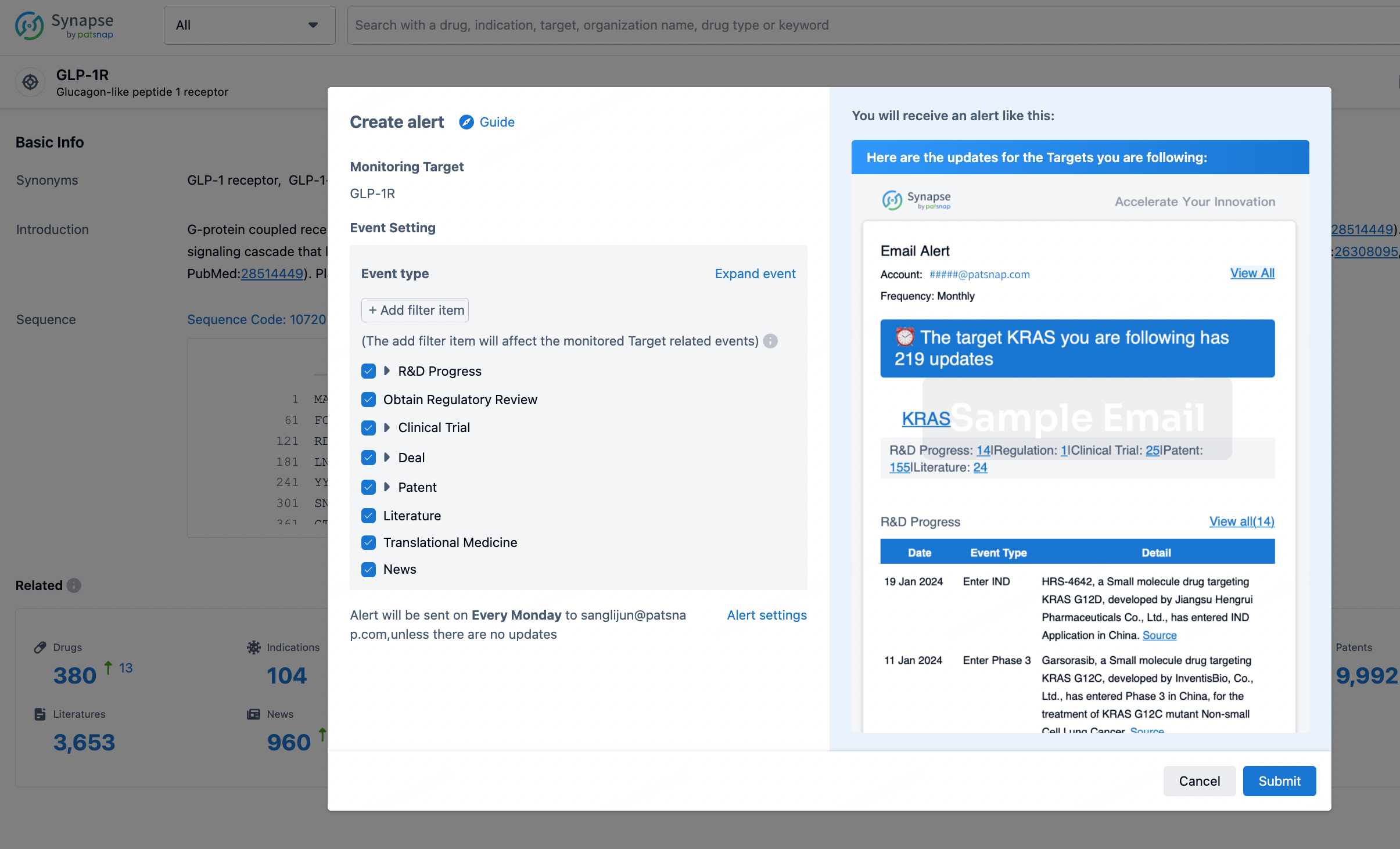
In the Synapse database, you can stay updated on the latest research and development advances of all targets. This service is accessible anytime and anywhere, with updates available daily or weekly. Use the "Set Alert" function to stay informed. Click on the image below to embark on a brand new journey of drug discovery!

Hiro LS Researcher
The AI Search Engine Built to Accelerate Biopharma Decisions
Search across billion-scale life sciences data to uncover signals, validate evidence, and act with confidence.
Ask any biopharma research question→
Get started for free today!
Accelerate Strategic R&D decision making with Synapse, Patsnap’s AI-powered Connected Innovation Intelligence Platform Built for Life Sciences Professionals.
Discover Synapse Data Servers
Synapse data is now integrated into the PatSnap LS Model Context Protocol (MCP) service. Customize your LLM agent now using our MCP server!