Request Demo
What are RAD52 modulators and how do they work?
25 June 2024
In the intricate world of cellular biology, DNA repair mechanisms are essential for maintaining genomic stability and preventing diseases like cancer. One key player in this complex system is RAD52, a protein involved in the repair of DNA double-strand breaks. RAD52 modulators, compounds that enhance or inhibit the activity of RAD52, have emerged as promising tools for research and therapeutic interventions. This blog post will delve into the mechanisms of RAD52 modulators, their functions, and their applications.
RAD52 is a protein that plays a significant role in homologous recombination, a critical pathway for repairing DNA double-strand breaks. These breaks can occur due to various factors, including radiation, chemicals, and natural cellular processes. RAD52 facilitates the annealing of complementary single-stranded DNA, promoting the formation of joint molecules necessary for accurate DNA repair. RAD52 modulators, therefore, are designed to influence this protein's activity, either enhancing or inhibiting its function to achieve desired outcomes.
RAD52 modulators work by binding to the RAD52 protein, altering its conformation and, consequently, its activity. There are two main types of RAD52 modulators: activators and inhibitors. Activators enhance RAD52 activity, promoting efficient DNA repair. They achieve this by stabilizing the protein structure, increasing its affinity for single-stranded DNA, or facilitating the interaction between RAD52 and other repair proteins.
On the other hand, inhibitors decrease RAD52 activity. These compounds can work by various mechanisms, such as competing with single-stranded DNA for binding sites on RAD52, inducing conformational changes that reduce its affinity for DNA, or disrupting the formation of RAD52 oligomers, which are necessary for its function. By inhibiting RAD52, these modulators can prevent the repair of DNA damage selectively, potentially making cancer cells more susceptible to treatments like radiation or chemotherapy, which induce DNA damage.
RAD52 modulators have diverse applications in both basic research and clinical settings. In research, they are invaluable tools for studying the DNA repair pathways and understanding the role of RAD52 in maintaining genomic integrity. By using these modulators, scientists can dissect the specific functions of RAD52 and its interactions with other proteins, providing insights into the fundamental processes of DNA repair.
In a clinical context, RAD52 modulators hold significant promise for cancer therapy. Many cancer cells rely heavily on homologous recombination for survival, especially those deficient in other repair pathways like BRCA1 or BRCA2. In such cases, RAD52 becomes a critical player in the repair of DNA damage. Inhibiting RAD52 in these cells can lead to the accumulation of unrepaired DNA damage, ultimately causing cell death. This approach is particularly effective in targeting cancer cells while sparing healthy cells, which typically have redundant DNA repair mechanisms.
Furthermore, RAD52 modulators can be used in combination with other treatments to enhance their efficacy. For instance, combining RAD52 inhibitors with DNA-damaging agents such as radiation or certain chemotherapeutic drugs can create a synergistic effect, increasing the overall treatment effectiveness. This strategy can potentially lower the required doses of these agents, reducing side effects and improving patient outcomes.
In addition to cancer therapy, RAD52 modulators have potential applications in treating other diseases involving DNA repair deficiencies. For example, targeting RAD52 could be beneficial in certain neurodegenerative disorders where DNA damage accumulates over time, contributing to disease progression. By modulating RAD52 activity, it may be possible to enhance the repair of DNA damage and slow down disease progression.
In conclusion, RAD52 modulators represent a powerful tool in the arsenal of DNA repair research and therapeutic development. By influencing the activity of RAD52, these compounds offer valuable insights into the mechanisms of DNA repair and hold promise for treating a range of diseases, particularly cancer. As research in this field advances, RAD52 modulators may become integral to precision medicine approaches, providing targeted and effective treatments for patients.
RAD52 is a protein that plays a significant role in homologous recombination, a critical pathway for repairing DNA double-strand breaks. These breaks can occur due to various factors, including radiation, chemicals, and natural cellular processes. RAD52 facilitates the annealing of complementary single-stranded DNA, promoting the formation of joint molecules necessary for accurate DNA repair. RAD52 modulators, therefore, are designed to influence this protein's activity, either enhancing or inhibiting its function to achieve desired outcomes.
RAD52 modulators work by binding to the RAD52 protein, altering its conformation and, consequently, its activity. There are two main types of RAD52 modulators: activators and inhibitors. Activators enhance RAD52 activity, promoting efficient DNA repair. They achieve this by stabilizing the protein structure, increasing its affinity for single-stranded DNA, or facilitating the interaction between RAD52 and other repair proteins.
On the other hand, inhibitors decrease RAD52 activity. These compounds can work by various mechanisms, such as competing with single-stranded DNA for binding sites on RAD52, inducing conformational changes that reduce its affinity for DNA, or disrupting the formation of RAD52 oligomers, which are necessary for its function. By inhibiting RAD52, these modulators can prevent the repair of DNA damage selectively, potentially making cancer cells more susceptible to treatments like radiation or chemotherapy, which induce DNA damage.
RAD52 modulators have diverse applications in both basic research and clinical settings. In research, they are invaluable tools for studying the DNA repair pathways and understanding the role of RAD52 in maintaining genomic integrity. By using these modulators, scientists can dissect the specific functions of RAD52 and its interactions with other proteins, providing insights into the fundamental processes of DNA repair.
In a clinical context, RAD52 modulators hold significant promise for cancer therapy. Many cancer cells rely heavily on homologous recombination for survival, especially those deficient in other repair pathways like BRCA1 or BRCA2. In such cases, RAD52 becomes a critical player in the repair of DNA damage. Inhibiting RAD52 in these cells can lead to the accumulation of unrepaired DNA damage, ultimately causing cell death. This approach is particularly effective in targeting cancer cells while sparing healthy cells, which typically have redundant DNA repair mechanisms.
Furthermore, RAD52 modulators can be used in combination with other treatments to enhance their efficacy. For instance, combining RAD52 inhibitors with DNA-damaging agents such as radiation or certain chemotherapeutic drugs can create a synergistic effect, increasing the overall treatment effectiveness. This strategy can potentially lower the required doses of these agents, reducing side effects and improving patient outcomes.
In addition to cancer therapy, RAD52 modulators have potential applications in treating other diseases involving DNA repair deficiencies. For example, targeting RAD52 could be beneficial in certain neurodegenerative disorders where DNA damage accumulates over time, contributing to disease progression. By modulating RAD52 activity, it may be possible to enhance the repair of DNA damage and slow down disease progression.
In conclusion, RAD52 modulators represent a powerful tool in the arsenal of DNA repair research and therapeutic development. By influencing the activity of RAD52, these compounds offer valuable insights into the mechanisms of DNA repair and hold promise for treating a range of diseases, particularly cancer. As research in this field advances, RAD52 modulators may become integral to precision medicine approaches, providing targeted and effective treatments for patients.
How to obtain the latest development progress of all targets?
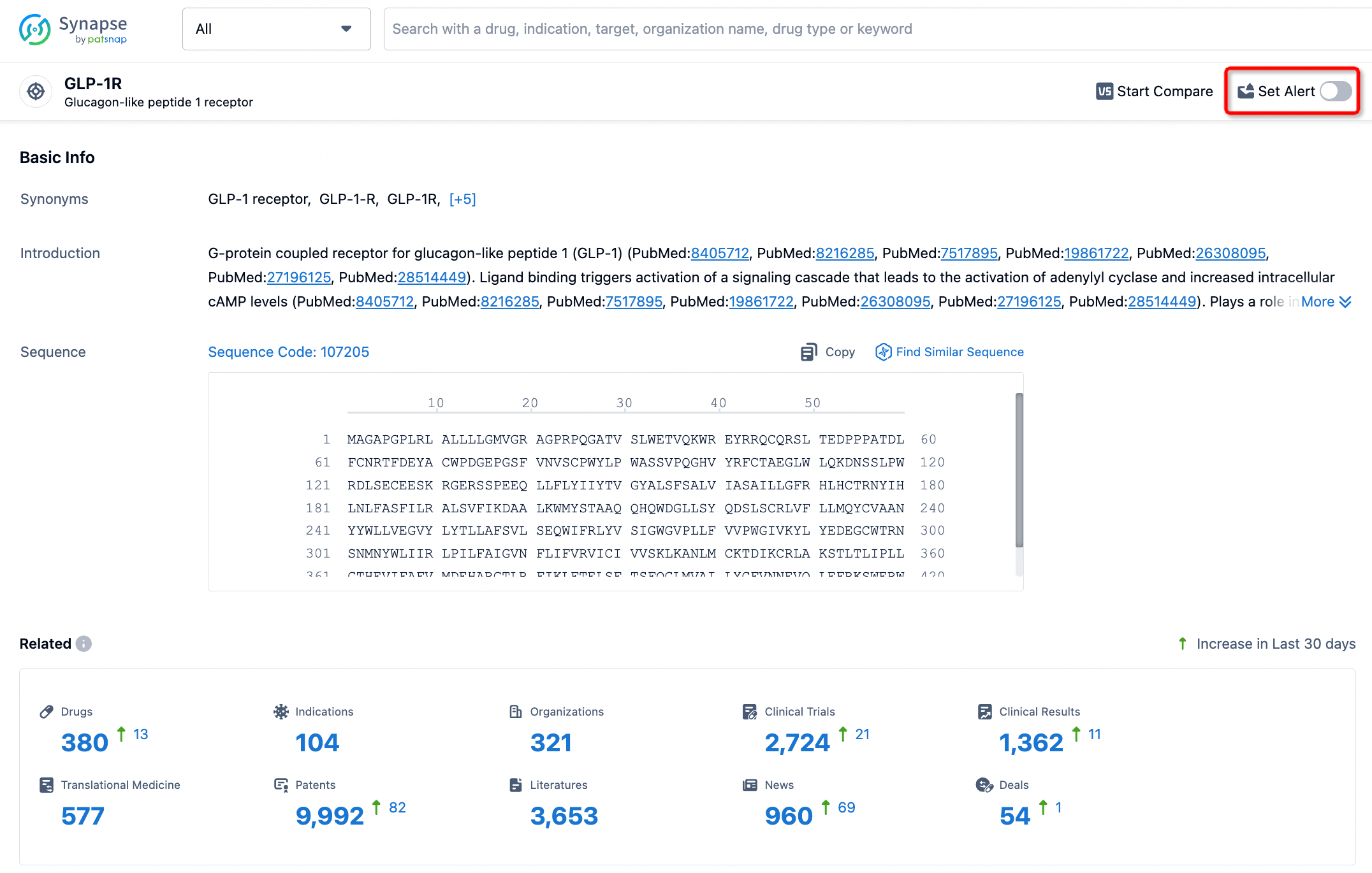
In the Synapse database, you can stay updated on the latest research and development advances of all targets. This service is accessible anytime and anywhere, with updates available daily or weekly. Use the "Set Alert" function to stay informed. Click on the image below to embark on a brand new journey of drug discovery!

AI Agents Built for Biopharma Breakthroughs
Accelerate discovery. Empower decisions. Transform outcomes.
Get started for free today!
Accelerate Strategic R&D decision making with Synapse, PatSnap’s AI-powered Connected Innovation Intelligence Platform Built for Life Sciences Professionals.
Start your data trial now!
Synapse data is also accessible to external entities via APIs or data packages. Empower better decisions with the latest in pharmaceutical intelligence.