Request Demo
What are Respiratory syncytial virus F protein inhibitors and how do they work?
21 June 2024
Respiratory syncytial virus (RSV) is a common and highly contagious virus that primarily affects the respiratory tract. It is a leading cause of respiratory infections in infants and young children, often resulting in bronchiolitis and pneumonia. Despite its prevalence, there is no specific antiviral treatment approved for RSV, and management typically involves supportive care. However, advances in medical research have led to the development of RSV F protein inhibitors, which offer a promising new strategy for combating this virus.
RSV has a complex life cycle, and one of its key components is the fusion (F) protein. The F protein plays a critical role in the virus's ability to infect host cells. It facilitates the fusion of the viral membrane with the membrane of the host cell, allowing the viral genetic material to enter the host cell and initiate infection. By targeting and inhibiting this protein, researchers aim to block the virus's entry into host cells, thereby preventing infection and reducing the severity of the disease.
RSV F protein inhibitors work by binding to the F protein and preventing its conformational changes required for membrane fusion. The F protein undergoes significant structural rearrangements during the fusion process. Inhibitors are designed to stabilize the protein in its prefusion state, a form in which it cannot mediate the fusion of the viral and host cell membranes. By locking the F protein in this inactive state, the inhibitors effectively block the virus's ability to infect new cells, curtailing the spread of the virus within the host.
These inhibitors are typically small molecules or peptides that have been meticulously designed through a combination of high-throughput screening, structural biology, and medicinal chemistry. Some promising candidates have demonstrated the ability to neutralize RSV in cell culture and animal models, showing a significant reduction in viral load and improvement in clinical symptoms.
Respiratory syncytial virus F protein inhibitors are primarily used for the treatment and prevention of RSV infections. This is particularly important for high-risk populations, such as premature infants, children with congenital heart disease, and immunocompromised individuals. These groups are more susceptible to severe RSV-related complications, and effective antiviral treatments could mitigate the risk of hospitalization and long-term health issues.
The use of F protein inhibitors also extends to potential prophylactic applications. By administering these inhibitors to individuals during RSV season or in environments where the virus is prevalent, it may be possible to prevent the onset of infection altogether. This approach could be especially beneficial in neonatal intensive care units, daycare centers, and nursing homes, where the virus can spread rapidly and cause significant morbidity.
Another area of interest is the combination of F protein inhibitors with other antiviral agents or immunotherapies. For instance, pairing these inhibitors with monoclonal antibodies targeting different viral proteins could provide a synergistic effect, enhancing the overall antiviral response. This multi-target strategy could be particularly effective in overcoming viral resistance and ensuring a robust defense against RSV.
In addition, researchers are exploring the potential for F protein inhibitors to serve as complementary treatments alongside vaccines. While vaccines are a cornerstone of infectious disease prevention, their efficacy can vary among different populations. F protein inhibitors could provide an added layer of protection, especially in individuals who do not mount an adequate immune response to vaccination.
In conclusion, Respiratory syncytial virus F protein inhibitors represent a significant advancement in the fight against RSV. By targeting a critical component of the virus's infection mechanism, these inhibitors offer a targeted and effective means of preventing and treating RSV infections. Continued research and clinical development hold the promise of bringing these innovative treatments to market, potentially transforming the management of RSV and improving outcomes for those most vulnerable to this pervasive virus.
RSV has a complex life cycle, and one of its key components is the fusion (F) protein. The F protein plays a critical role in the virus's ability to infect host cells. It facilitates the fusion of the viral membrane with the membrane of the host cell, allowing the viral genetic material to enter the host cell and initiate infection. By targeting and inhibiting this protein, researchers aim to block the virus's entry into host cells, thereby preventing infection and reducing the severity of the disease.
RSV F protein inhibitors work by binding to the F protein and preventing its conformational changes required for membrane fusion. The F protein undergoes significant structural rearrangements during the fusion process. Inhibitors are designed to stabilize the protein in its prefusion state, a form in which it cannot mediate the fusion of the viral and host cell membranes. By locking the F protein in this inactive state, the inhibitors effectively block the virus's ability to infect new cells, curtailing the spread of the virus within the host.
These inhibitors are typically small molecules or peptides that have been meticulously designed through a combination of high-throughput screening, structural biology, and medicinal chemistry. Some promising candidates have demonstrated the ability to neutralize RSV in cell culture and animal models, showing a significant reduction in viral load and improvement in clinical symptoms.
Respiratory syncytial virus F protein inhibitors are primarily used for the treatment and prevention of RSV infections. This is particularly important for high-risk populations, such as premature infants, children with congenital heart disease, and immunocompromised individuals. These groups are more susceptible to severe RSV-related complications, and effective antiviral treatments could mitigate the risk of hospitalization and long-term health issues.
The use of F protein inhibitors also extends to potential prophylactic applications. By administering these inhibitors to individuals during RSV season or in environments where the virus is prevalent, it may be possible to prevent the onset of infection altogether. This approach could be especially beneficial in neonatal intensive care units, daycare centers, and nursing homes, where the virus can spread rapidly and cause significant morbidity.
Another area of interest is the combination of F protein inhibitors with other antiviral agents or immunotherapies. For instance, pairing these inhibitors with monoclonal antibodies targeting different viral proteins could provide a synergistic effect, enhancing the overall antiviral response. This multi-target strategy could be particularly effective in overcoming viral resistance and ensuring a robust defense against RSV.
In addition, researchers are exploring the potential for F protein inhibitors to serve as complementary treatments alongside vaccines. While vaccines are a cornerstone of infectious disease prevention, their efficacy can vary among different populations. F protein inhibitors could provide an added layer of protection, especially in individuals who do not mount an adequate immune response to vaccination.
In conclusion, Respiratory syncytial virus F protein inhibitors represent a significant advancement in the fight against RSV. By targeting a critical component of the virus's infection mechanism, these inhibitors offer a targeted and effective means of preventing and treating RSV infections. Continued research and clinical development hold the promise of bringing these innovative treatments to market, potentially transforming the management of RSV and improving outcomes for those most vulnerable to this pervasive virus.
How to obtain the latest development progress of all targets?
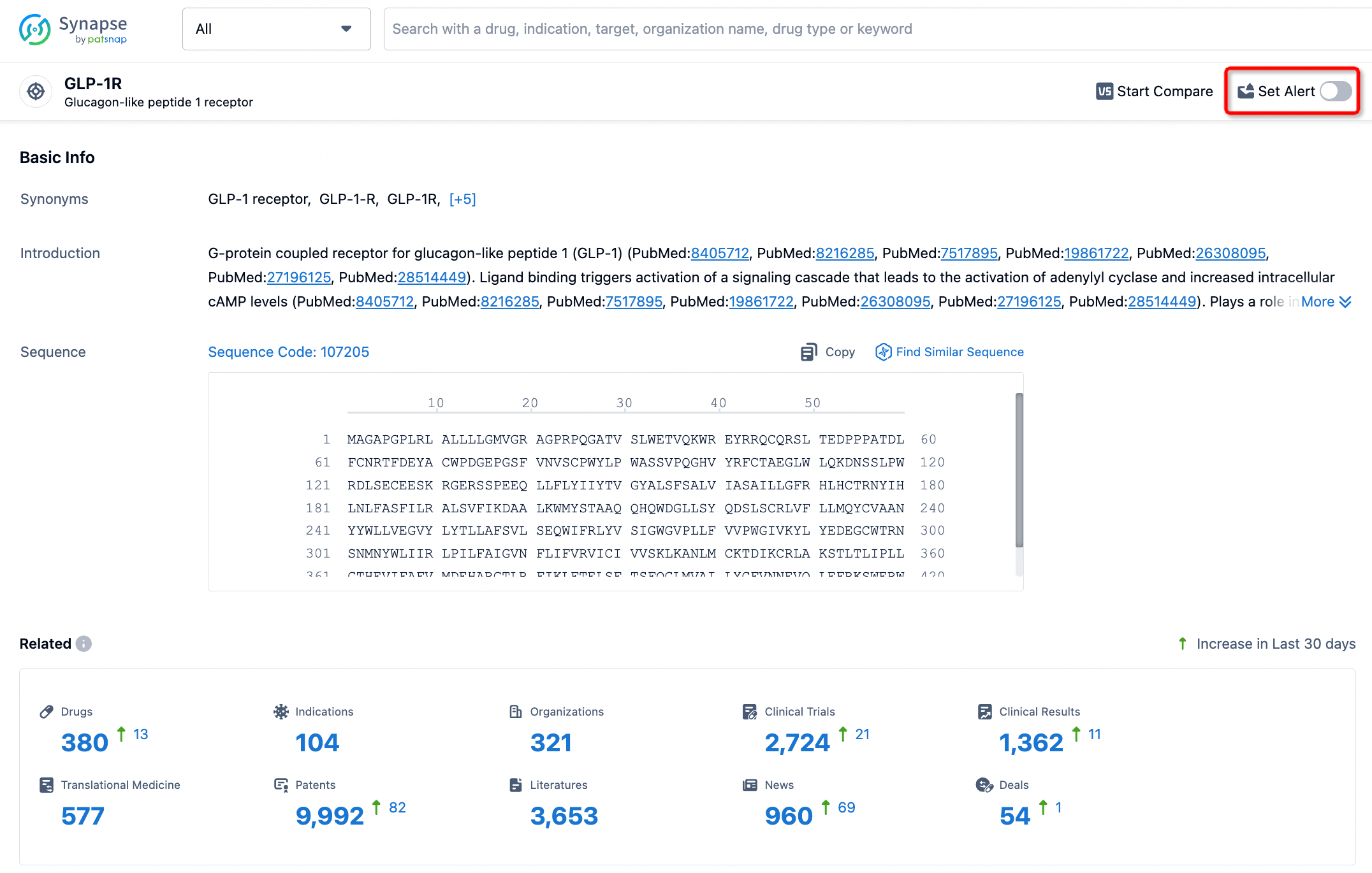
In the Synapse database, you can stay updated on the latest research and development advances of all targets. This service is accessible anytime and anywhere, with updates available daily or weekly. Use the "Set Alert" function to stay informed. Click on the image below to embark on a brand new journey of drug discovery!


AI Agents Built for Biopharma Breakthroughs
Accelerate discovery. Empower decisions. Transform outcomes.
Get started for free today!
Accelerate Strategic R&D decision making with Synapse, PatSnap’s AI-powered Connected Innovation Intelligence Platform Built for Life Sciences Professionals.
Start your data trial now!
Synapse data is also accessible to external entities via APIs or data packages. Empower better decisions with the latest in pharmaceutical intelligence.