Request Demo
What are RORα stimulants and how do they work?
25 June 2024
In recent years, the field of pharmacology has seen a surge in interest surrounding a group of compounds known as RORα stimulants. These fascinating molecules have shown promise in a variety of therapeutic areas, providing hope for conditions that have long eluded effective treatment. In this blog post, we'll explore what RORα stimulants are, how they function within the body, and the potential applications for these innovative compounds.
RORα, or Retinoic Acid Receptor-related Orphan Receptor alpha, is a member of the nuclear receptor superfamily. These nuclear receptors are transcription factors that regulate gene expression in response to specific ligands. RORα, in particular, plays a crucial role in several physiological processes, including circadian rhythm regulation, lipid metabolism, and inflammation. RORα stimulants are compounds that activate these receptors, thereby modulating the expression of target genes and influencing various biological pathways.
How do RORα stimulants work? The mechanism of action of RORα stimulants involves their ability to bind to the RORα receptors and promote their activity. In a typical scenario, RORα is activated by endogenous ligands such as oxysterols, which are oxygenated derivatives of cholesterol. When these ligands bind to RORα, they induce a conformational change in the receptor, enabling it to interact with specific DNA sequences known as ROR response elements (ROREs). This interaction leads to the recruitment of co-activators or co-repressors, which in turn modulate the transcription of target genes.
RORα stimulants mimic the action of natural ligands by binding to the RORα receptor and enhancing its activity. By doing so, they can either upregulate or downregulate the expression of genes involved in key physiological processes. This ability to modulate gene expression makes RORα stimulants a powerful tool for influencing various biological pathways and treating a range of diseases.
One of the most exciting areas of research involving RORα stimulants is their potential use in treating metabolic disorders. RORα plays a significant role in regulating lipid metabolism, and dysregulation of this pathway is a hallmark of conditions such as obesity, diabetes, and non-alcoholic fatty liver disease (NAFLD). By activating RORα, stimulants can help restore normal lipid metabolism, reduce fat accumulation, and improve insulin sensitivity, offering a promising therapeutic approach for these metabolic disorders.
Another promising application of RORα stimulants is in the treatment of inflammatory diseases. RORα is known to modulate the expression of genes involved in the inflammatory response, and its dysregulation has been linked to conditions such as rheumatoid arthritis, multiple sclerosis, and inflammatory bowel disease. By targeting RORα, stimulants can help reduce inflammation and alleviate symptoms in patients suffering from these chronic inflammatory conditions.
Beyond metabolic and inflammatory diseases, RORα stimulants have also shown potential in the field of oncology. RORα has been found to play a role in regulating cell proliferation and apoptosis, and its dysregulation has been implicated in various types of cancer. By modulating RORα activity, stimulants can potentially inhibit tumor growth and enhance the effectiveness of existing cancer therapies.
Moreover, RORα stimulants have been explored for their potential neuroprotective effects. RORα is expressed in the brain and has been implicated in the regulation of neuroinflammation and neurodegeneration. Preclinical studies have shown that RORα stimulants can protect against neuronal damage and improve cognitive function in models of neurodegenerative diseases such as Alzheimer's and Parkinson's. While more research is needed to fully understand their potential in this area, these findings offer hope for new treatments for these devastating conditions.
In conclusion, RORα stimulants represent a promising class of compounds with the potential to revolutionize the treatment of a wide range of diseases. By targeting the RORα receptor and modulating gene expression, these stimulants can influence key physiological pathways and offer new therapeutic options for metabolic disorders, inflammatory diseases, cancer, and neurodegenerative conditions. As research in this field continues to advance, we can look forward to exciting developments and new possibilities for improving human health.
RORα, or Retinoic Acid Receptor-related Orphan Receptor alpha, is a member of the nuclear receptor superfamily. These nuclear receptors are transcription factors that regulate gene expression in response to specific ligands. RORα, in particular, plays a crucial role in several physiological processes, including circadian rhythm regulation, lipid metabolism, and inflammation. RORα stimulants are compounds that activate these receptors, thereby modulating the expression of target genes and influencing various biological pathways.
How do RORα stimulants work? The mechanism of action of RORα stimulants involves their ability to bind to the RORα receptors and promote their activity. In a typical scenario, RORα is activated by endogenous ligands such as oxysterols, which are oxygenated derivatives of cholesterol. When these ligands bind to RORα, they induce a conformational change in the receptor, enabling it to interact with specific DNA sequences known as ROR response elements (ROREs). This interaction leads to the recruitment of co-activators or co-repressors, which in turn modulate the transcription of target genes.
RORα stimulants mimic the action of natural ligands by binding to the RORα receptor and enhancing its activity. By doing so, they can either upregulate or downregulate the expression of genes involved in key physiological processes. This ability to modulate gene expression makes RORα stimulants a powerful tool for influencing various biological pathways and treating a range of diseases.
One of the most exciting areas of research involving RORα stimulants is their potential use in treating metabolic disorders. RORα plays a significant role in regulating lipid metabolism, and dysregulation of this pathway is a hallmark of conditions such as obesity, diabetes, and non-alcoholic fatty liver disease (NAFLD). By activating RORα, stimulants can help restore normal lipid metabolism, reduce fat accumulation, and improve insulin sensitivity, offering a promising therapeutic approach for these metabolic disorders.
Another promising application of RORα stimulants is in the treatment of inflammatory diseases. RORα is known to modulate the expression of genes involved in the inflammatory response, and its dysregulation has been linked to conditions such as rheumatoid arthritis, multiple sclerosis, and inflammatory bowel disease. By targeting RORα, stimulants can help reduce inflammation and alleviate symptoms in patients suffering from these chronic inflammatory conditions.
Beyond metabolic and inflammatory diseases, RORα stimulants have also shown potential in the field of oncology. RORα has been found to play a role in regulating cell proliferation and apoptosis, and its dysregulation has been implicated in various types of cancer. By modulating RORα activity, stimulants can potentially inhibit tumor growth and enhance the effectiveness of existing cancer therapies.
Moreover, RORα stimulants have been explored for their potential neuroprotective effects. RORα is expressed in the brain and has been implicated in the regulation of neuroinflammation and neurodegeneration. Preclinical studies have shown that RORα stimulants can protect against neuronal damage and improve cognitive function in models of neurodegenerative diseases such as Alzheimer's and Parkinson's. While more research is needed to fully understand their potential in this area, these findings offer hope for new treatments for these devastating conditions.
In conclusion, RORα stimulants represent a promising class of compounds with the potential to revolutionize the treatment of a wide range of diseases. By targeting the RORα receptor and modulating gene expression, these stimulants can influence key physiological pathways and offer new therapeutic options for metabolic disorders, inflammatory diseases, cancer, and neurodegenerative conditions. As research in this field continues to advance, we can look forward to exciting developments and new possibilities for improving human health.
How to obtain the latest development progress of all targets?
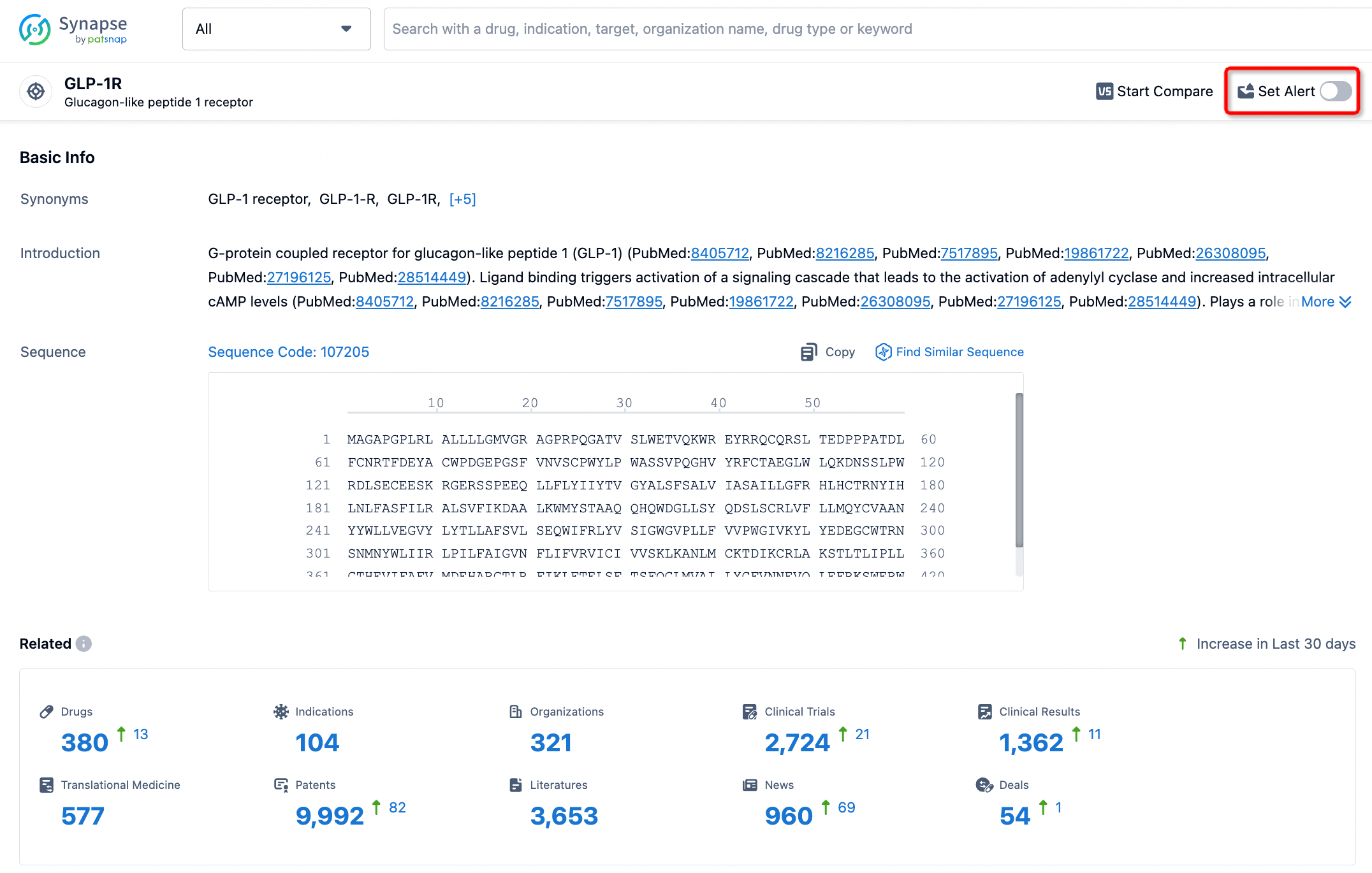
In the Synapse database, you can stay updated on the latest research and development advances of all targets. This service is accessible anytime and anywhere, with updates available daily or weekly. Use the "Set Alert" function to stay informed. Click on the image below to embark on a brand new journey of drug discovery!


AI Agents Built for Biopharma Breakthroughs
Accelerate discovery. Empower decisions. Transform outcomes.
Get started for free today!
Accelerate Strategic R&D decision making with Synapse, PatSnap’s AI-powered Connected Innovation Intelligence Platform Built for Life Sciences Professionals.
Start your data trial now!
Synapse data is also accessible to external entities via APIs or data packages. Empower better decisions with the latest in pharmaceutical intelligence.