Request Demo
What are RXRG gene modulators and how do they work?
26 June 2024
The RXRG gene, or Retinoid X Receptor Gamma gene, plays a crucial role in regulating various aspects of cellular activity and metabolism. It belongs to the nuclear receptor family of intracellular transcription factors. RXRG gene modulators are compounds or molecules that can influence the activity of these receptors, leading to diverse biological effects. In this blog post, we will delve into what RXRG gene modulators are, how they function, and their potential applications in medicine and research.
RXRG gene modulators are specialized compounds that target the Retinoid X Receptor Gamma (RXRG) to modulate its activity. The RXRG protein forms heterodimers with other nuclear receptors such as retinoic acid receptors (RARs) and peroxisome proliferator-activated receptors (PPARs). These heterodimers then bind to specific DNA sequences to regulate gene expression. By influencing the activity of RXRG, modulators can impact various physiological processes, including cell differentiation, lipid metabolism, and the immune response.
To understand how RXRG gene modulators work, it is essential to comprehend the mechanism by which RXRG receptors function. The RXRG receptor, once bound with a ligand or modulator, undergoes a conformational change that allows it to interact with coactivators or corepressors. This interaction leads to the transcriptional activation or repression of target genes. RXRG modulators can either activate or inhibit these receptors, depending on their nature. Agonists are modulators that activate the receptor, leading to increased gene transcription, while antagonists inhibit receptor activity, resulting in decreased gene transcription.
Selective RXRG modulators (SRMs) are a subset of RXRG modulators that exhibit specificity for the RXRG receptor without significantly affecting other retinoid X receptors (RXRs). These SRMs are particularly valuable in research and therapeutic contexts because they offer targeted modulation with fewer off-target effects.
RXRG gene modulators have shown promise in a variety of clinical and research settings. One of the primary areas of interest is in the treatment of metabolic disorders, including obesity, diabetes, and dyslipidemia. RXRG plays a vital role in regulating lipid metabolism and glucose homeostasis. By modulating this receptor, it is possible to influence these metabolic pathways, offering potential therapeutic benefits for individuals suffering from metabolic syndrome and related conditions.
In addition to metabolic disorders, RXRG gene modulators have potential applications in cancer therapy. The RXRG receptor is involved in cell differentiation and apoptosis, processes that are often dysregulated in cancer. By targeting RXRG with specific modulators, it is possible to influence the growth and survival of cancer cells. Preclinical studies have shown that RXRG agonists can inhibit the proliferation of certain cancer cell lines, making them a promising avenue for the development of new cancer treatments.
Moreover, RXRG gene modulators have potential applications in neurodegenerative diseases. RXRG receptors are expressed in the central nervous system and are involved in regulating neuroinflammation and neuronal survival. By modulating RXRG activity, it may be possible to develop treatments that protect against neurodegenerative processes, offering hope for conditions such as Alzheimer’s disease and Parkinson’s disease.
The exploration of RXRG gene modulators also extends to regenerative medicine and tissue engineering. RXRG receptors are involved in cellular differentiation and tissue regeneration. By harnessing the power of RXRG modulators, researchers aim to develop strategies to promote tissue repair and regeneration, which could have applications in wound healing, organ transplantation, and regenerative therapies.
In conclusion, RXRG gene modulators represent a versatile and promising class of compounds with potential applications across a broad spectrum of medical and research fields. By targeting the RXRG receptor, these modulators can influence key physiological processes, offering new avenues for the treatment of metabolic disorders, cancer, neurodegenerative diseases, and more. As research continues to uncover the full potential of RXRG modulators, it is likely that we will see significant advancements in both our understanding and our ability to manipulate this critical receptor for therapeutic benefit.
RXRG gene modulators are specialized compounds that target the Retinoid X Receptor Gamma (RXRG) to modulate its activity. The RXRG protein forms heterodimers with other nuclear receptors such as retinoic acid receptors (RARs) and peroxisome proliferator-activated receptors (PPARs). These heterodimers then bind to specific DNA sequences to regulate gene expression. By influencing the activity of RXRG, modulators can impact various physiological processes, including cell differentiation, lipid metabolism, and the immune response.
To understand how RXRG gene modulators work, it is essential to comprehend the mechanism by which RXRG receptors function. The RXRG receptor, once bound with a ligand or modulator, undergoes a conformational change that allows it to interact with coactivators or corepressors. This interaction leads to the transcriptional activation or repression of target genes. RXRG modulators can either activate or inhibit these receptors, depending on their nature. Agonists are modulators that activate the receptor, leading to increased gene transcription, while antagonists inhibit receptor activity, resulting in decreased gene transcription.
Selective RXRG modulators (SRMs) are a subset of RXRG modulators that exhibit specificity for the RXRG receptor without significantly affecting other retinoid X receptors (RXRs). These SRMs are particularly valuable in research and therapeutic contexts because they offer targeted modulation with fewer off-target effects.
RXRG gene modulators have shown promise in a variety of clinical and research settings. One of the primary areas of interest is in the treatment of metabolic disorders, including obesity, diabetes, and dyslipidemia. RXRG plays a vital role in regulating lipid metabolism and glucose homeostasis. By modulating this receptor, it is possible to influence these metabolic pathways, offering potential therapeutic benefits for individuals suffering from metabolic syndrome and related conditions.
In addition to metabolic disorders, RXRG gene modulators have potential applications in cancer therapy. The RXRG receptor is involved in cell differentiation and apoptosis, processes that are often dysregulated in cancer. By targeting RXRG with specific modulators, it is possible to influence the growth and survival of cancer cells. Preclinical studies have shown that RXRG agonists can inhibit the proliferation of certain cancer cell lines, making them a promising avenue for the development of new cancer treatments.
Moreover, RXRG gene modulators have potential applications in neurodegenerative diseases. RXRG receptors are expressed in the central nervous system and are involved in regulating neuroinflammation and neuronal survival. By modulating RXRG activity, it may be possible to develop treatments that protect against neurodegenerative processes, offering hope for conditions such as Alzheimer’s disease and Parkinson’s disease.
The exploration of RXRG gene modulators also extends to regenerative medicine and tissue engineering. RXRG receptors are involved in cellular differentiation and tissue regeneration. By harnessing the power of RXRG modulators, researchers aim to develop strategies to promote tissue repair and regeneration, which could have applications in wound healing, organ transplantation, and regenerative therapies.
In conclusion, RXRG gene modulators represent a versatile and promising class of compounds with potential applications across a broad spectrum of medical and research fields. By targeting the RXRG receptor, these modulators can influence key physiological processes, offering new avenues for the treatment of metabolic disorders, cancer, neurodegenerative diseases, and more. As research continues to uncover the full potential of RXRG modulators, it is likely that we will see significant advancements in both our understanding and our ability to manipulate this critical receptor for therapeutic benefit.
How to obtain the latest development progress of all targets?
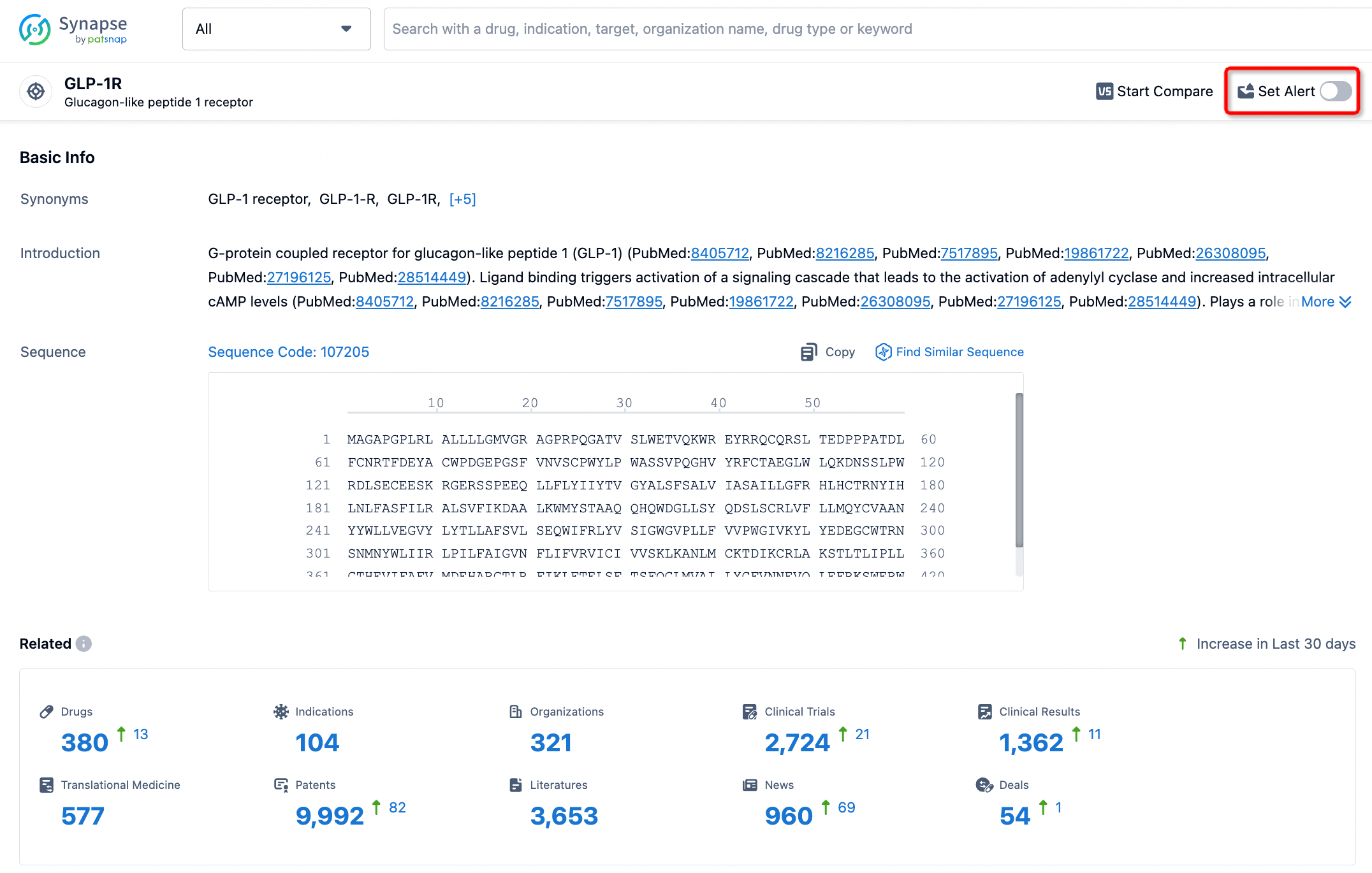
In the Synapse database, you can stay updated on the latest research and development advances of all targets. This service is accessible anytime and anywhere, with updates available daily or weekly. Use the "Set Alert" function to stay informed. Click on the image below to embark on a brand new journey of drug discovery!


AI Agents Built for Biopharma Breakthroughs
Accelerate discovery. Empower decisions. Transform outcomes.
Get started for free today!
Accelerate Strategic R&D decision making with Synapse, PatSnap’s AI-powered Connected Innovation Intelligence Platform Built for Life Sciences Professionals.
Start your data trial now!
Synapse data is also accessible to external entities via APIs or data packages. Empower better decisions with the latest in pharmaceutical intelligence.