Request Demo
What are S1PR2 modulators and how do they work?
25 June 2024
In the realm of pharmacology and therapeutic interventions, S1PR2 modulators have emerged as a significant area of interest. These modulators interact with the S1PR2 receptor, one of the five subtypes of the sphingosine-1-phosphate receptor (S1PR) family. The S1PR family plays a crucial role in various physiological processes, including immune response, cardiovascular function, and cellular growth and survival. Understanding the mechanisms and applications of S1PR2 modulators can provide valuable insights into their potential therapeutic benefits.
S1PR2 modulators function by binding to the S1PR2 receptor, thereby influencing its activity. The S1PR2 receptor is a G-protein-coupled receptor (GPCR) that is activated by its ligand, sphingosine-1-phosphate (S1P), a bioactive lipid mediator. Upon activation, S1PR2 can trigger various intracellular signaling pathways, including those involving Rho GTPases, phospholipase C (PLC), and protein kinase C (PKC). These pathways are instrumental in regulating cell migration, vascular integrity, and immune cell trafficking.
The modulation of S1PR2 activity can either be agonistic or antagonistic. Agonists mimic the action of S1P by activating the receptor, while antagonists block the receptor's activity, preventing S1P from exerting its effects. The therapeutic outcomes of S1PR2 modulation depend on the specific pathway and cellular context involved. For instance, in the context of immune response, S1PR2 activation can lead to the suppression of immune cell migration, which may be beneficial in inflammatory and autoimmune diseases.
S1PR2 modulators have been explored for their potential use in a variety of medical conditions. One of the primary areas of research is in the treatment of immune-mediated diseases. By influencing immune cell trafficking and function, S1PR2 modulators can help manage conditions such as multiple sclerosis (MS), rheumatoid arthritis, and inflammatory bowel disease (IBD). In MS, for example, the modulation of S1PR2 activity can reduce the migration of autoreactive lymphocytes into the central nervous system, thereby mitigating the inflammatory damage that characterizes the disease.
In addition to their role in immune regulation, S1PR2 modulators have shown promise in cardiovascular diseases. The S1PR2 receptor is involved in maintaining vascular integrity and endothelial cell function. Dysregulation of S1PR2 signaling can contribute to conditions such as atherosclerosis, hypertension, and stroke. By modulating S1PR2 activity, it may be possible to restore vascular homeostasis and prevent the progression of these cardiovascular conditions.
Another exciting area of research involves the use of S1PR2 modulators in cancer therapy. S1PR2 signaling has been implicated in various aspects of tumor biology, including cell proliferation, migration, and angiogenesis. By targeting S1PR2, it is possible to impair tumor growth and metastasis. For instance, S1PR2 antagonists have been shown to inhibit the invasive properties of certain cancer cell types, making them a potential adjuvant therapy in oncology.
Moreover, S1PR2 modulators are being investigated for their neuroprotective effects. In neurodegenerative diseases such as Alzheimer's and Parkinson's disease, S1PR2 signaling may play a role in neuronal survival and inflammation. Modulating S1PR2 activity could offer a new avenue for protecting neurons from degeneration and improving neurological outcomes.
In conclusion, S1PR2 modulators represent a versatile and promising class of therapeutic agents with the potential to address a wide range of diseases. By understanding the mechanisms through which they operate and the pathways they influence, researchers and clinicians can better harness their potential in clinical settings. As research continues to uncover the complexities of S1PR2 signaling, the development of targeted modulators could lead to novel treatments for autoimmune diseases, cardiovascular conditions, cancer, and neurodegenerative disorders. The future of S1PR2 modulators in medicine is indeed a compelling prospect, holding the promise of improved therapeutic strategies and patient outcomes.
S1PR2 modulators function by binding to the S1PR2 receptor, thereby influencing its activity. The S1PR2 receptor is a G-protein-coupled receptor (GPCR) that is activated by its ligand, sphingosine-1-phosphate (S1P), a bioactive lipid mediator. Upon activation, S1PR2 can trigger various intracellular signaling pathways, including those involving Rho GTPases, phospholipase C (PLC), and protein kinase C (PKC). These pathways are instrumental in regulating cell migration, vascular integrity, and immune cell trafficking.
The modulation of S1PR2 activity can either be agonistic or antagonistic. Agonists mimic the action of S1P by activating the receptor, while antagonists block the receptor's activity, preventing S1P from exerting its effects. The therapeutic outcomes of S1PR2 modulation depend on the specific pathway and cellular context involved. For instance, in the context of immune response, S1PR2 activation can lead to the suppression of immune cell migration, which may be beneficial in inflammatory and autoimmune diseases.
S1PR2 modulators have been explored for their potential use in a variety of medical conditions. One of the primary areas of research is in the treatment of immune-mediated diseases. By influencing immune cell trafficking and function, S1PR2 modulators can help manage conditions such as multiple sclerosis (MS), rheumatoid arthritis, and inflammatory bowel disease (IBD). In MS, for example, the modulation of S1PR2 activity can reduce the migration of autoreactive lymphocytes into the central nervous system, thereby mitigating the inflammatory damage that characterizes the disease.
In addition to their role in immune regulation, S1PR2 modulators have shown promise in cardiovascular diseases. The S1PR2 receptor is involved in maintaining vascular integrity and endothelial cell function. Dysregulation of S1PR2 signaling can contribute to conditions such as atherosclerosis, hypertension, and stroke. By modulating S1PR2 activity, it may be possible to restore vascular homeostasis and prevent the progression of these cardiovascular conditions.
Another exciting area of research involves the use of S1PR2 modulators in cancer therapy. S1PR2 signaling has been implicated in various aspects of tumor biology, including cell proliferation, migration, and angiogenesis. By targeting S1PR2, it is possible to impair tumor growth and metastasis. For instance, S1PR2 antagonists have been shown to inhibit the invasive properties of certain cancer cell types, making them a potential adjuvant therapy in oncology.
Moreover, S1PR2 modulators are being investigated for their neuroprotective effects. In neurodegenerative diseases such as Alzheimer's and Parkinson's disease, S1PR2 signaling may play a role in neuronal survival and inflammation. Modulating S1PR2 activity could offer a new avenue for protecting neurons from degeneration and improving neurological outcomes.
In conclusion, S1PR2 modulators represent a versatile and promising class of therapeutic agents with the potential to address a wide range of diseases. By understanding the mechanisms through which they operate and the pathways they influence, researchers and clinicians can better harness their potential in clinical settings. As research continues to uncover the complexities of S1PR2 signaling, the development of targeted modulators could lead to novel treatments for autoimmune diseases, cardiovascular conditions, cancer, and neurodegenerative disorders. The future of S1PR2 modulators in medicine is indeed a compelling prospect, holding the promise of improved therapeutic strategies and patient outcomes.
How to obtain the latest development progress of all targets?
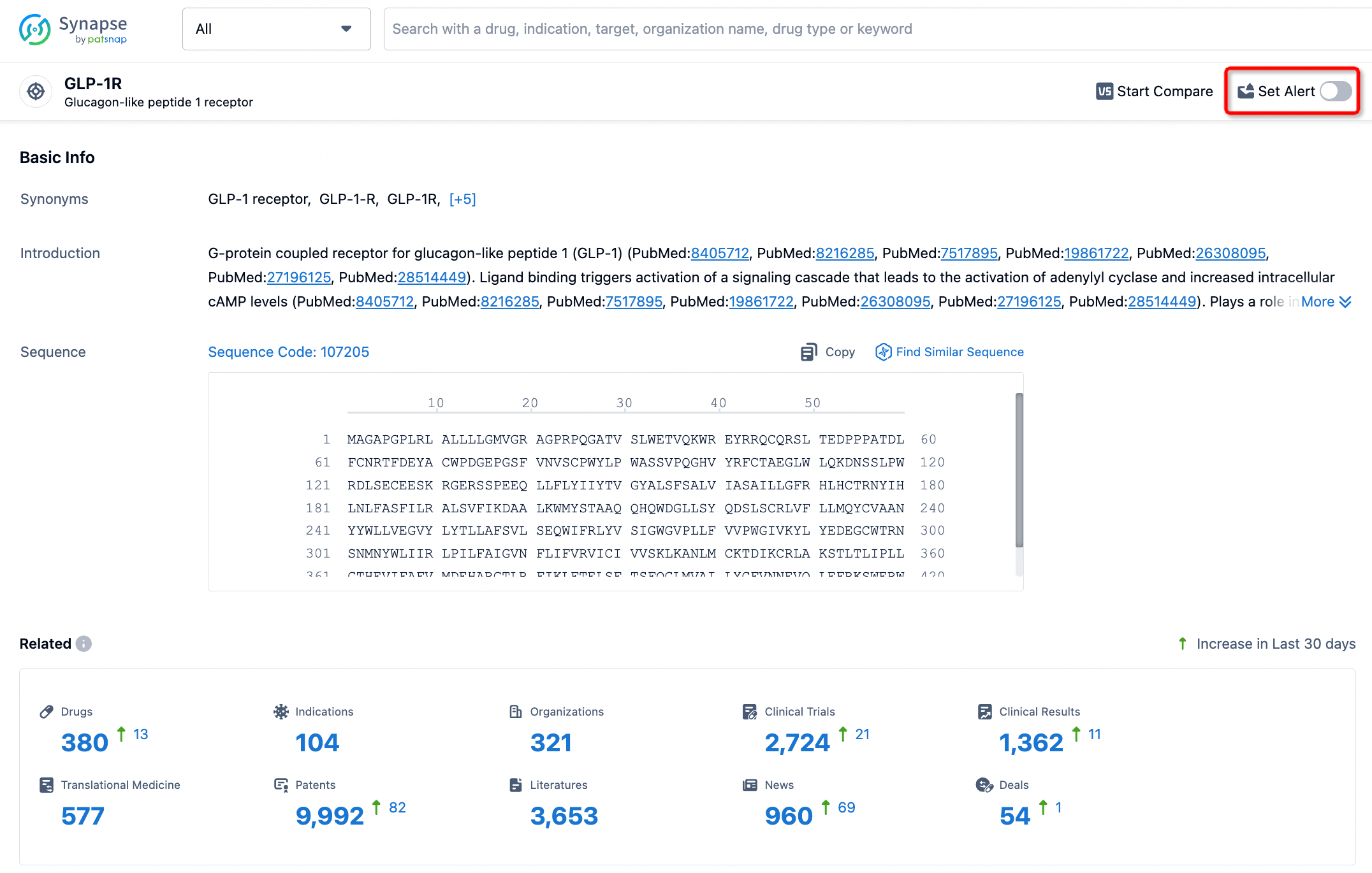
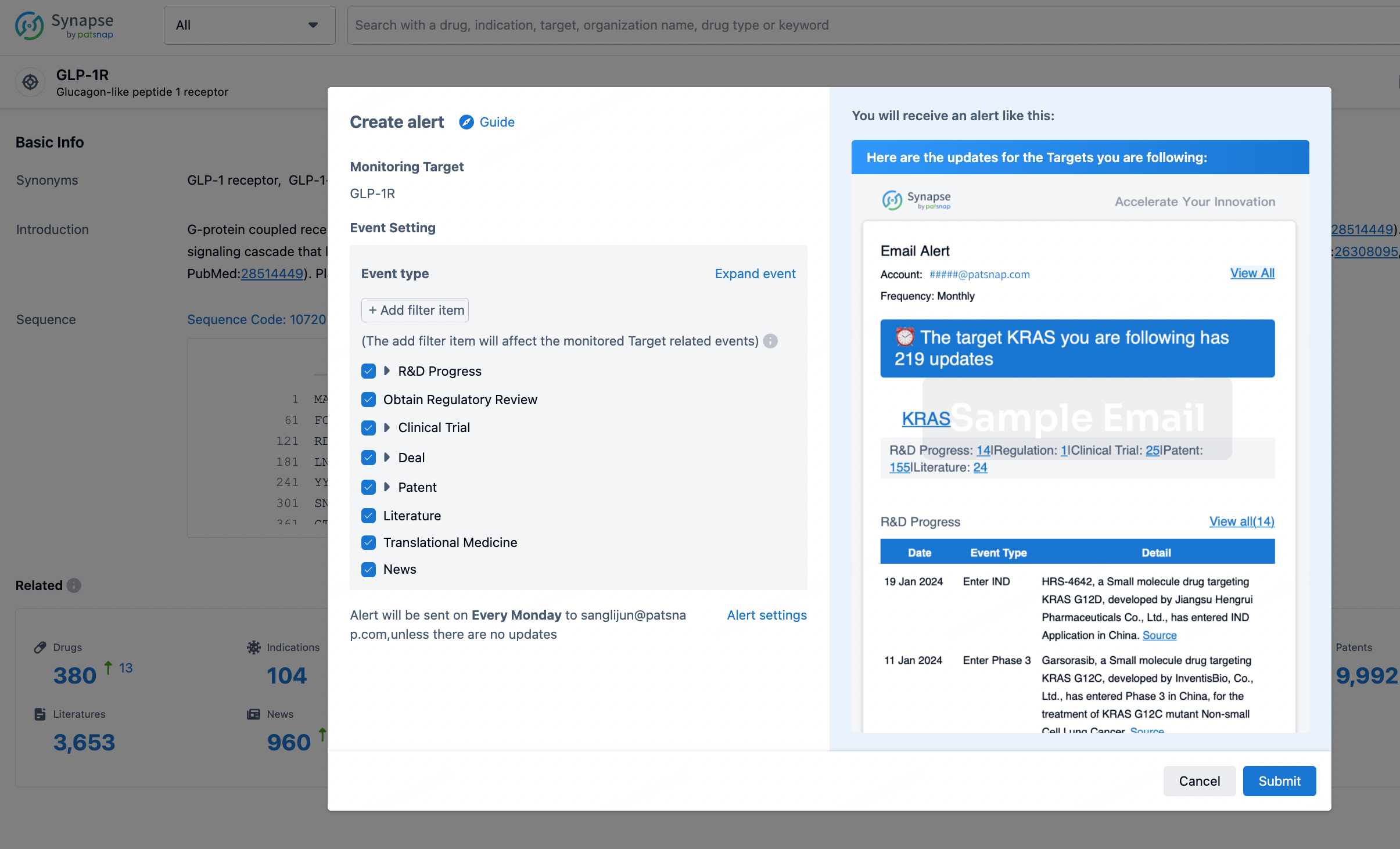
In the Synapse database, you can stay updated on the latest research and development advances of all targets. This service is accessible anytime and anywhere, with updates available daily or weekly. Use the "Set Alert" function to stay informed. Click on the image below to embark on a brand new journey of drug discovery!
Hiro LS Researcher
The AI Search Engine Built to Accelerate Biopharma Decisions
Search across billion-scale life sciences data to uncover signals, validate evidence, and act with confidence.
Ask any biopharma research question→
Get started for free today!
Accelerate Strategic R&D decision making with Synapse, Patsnap’s AI-powered Connected Innovation Intelligence Platform Built for Life Sciences Professionals.
Discover Synapse Data Servers
Synapse data is now integrated into the PatSnap LS Model Context Protocol (MCP) service. Customize your LLM agent now using our MCP server!