Request Demo
What are SFRP4 modulators and how do they work?
25 June 2024
In the realm of biomedical research and therapeutic development, the Wnt signaling pathway has gained considerable attention due to its crucial role in various cellular processes, including proliferation, differentiation, and apoptosis. One of the key elements within this complex pathway is the Secreted Frizzled-Related Protein 4 (SFRP4), a modulator that can influence Wnt signaling. Understanding and manipulating SFRP4 offers promising avenues for treating a range of diseases, from cancer to metabolic disorders. This blog post delves into what SFRP4 modulators are, how they function, and their potential applications.
SFRP4 is a member of the SFRP family, which consists of proteins that antagonize Wnt signaling by binding to Wnt ligands, thereby preventing them from interacting with their Frizzled receptors. This modulation is crucial because the Wnt signaling pathway is intricately involved in the regulation of cell fate and tissue homeostasis. When the pathway is dysregulated, it can lead to various pathological conditions, including cancer, fibrosis, and metabolic disorders.
Modulators of SFRP4 can be either activators or inhibitors, and their primary function is to regulate the availability and activity of SFRP4. Activators enhance the activity or expression of SFRP4, thereby inhibiting the Wnt signaling pathway. In contrast, inhibitors reduce the activity or expression of SFRP4, leading to increased Wnt signaling. These modulators can be small molecules, peptides, or even genetic approaches such as siRNA or CRISPR-based systems.
The action mechanism of SFRP4 modulators hinges on their ability to influence the interaction between SFRP4 and Wnt ligands. Activators of SFRP4 increase its expression or binding affinity to Wnt proteins, effectively sequestering these ligands and preventing them from activating the Frizzled receptors. This inhibition can downregulate the Wnt/β-catenin pathway, which is often overactive in cancerous cells, thereby suppressing tumor growth and proliferation.
On the other hand, inhibitors of SFRP4 decrease its activity or expression, allowing more Wnt ligands to bind to Frizzled receptors. This activation can be beneficial in scenarios where enhanced Wnt signaling is required, such as in tissue regeneration and repair. For instance, during wound healing, increased Wnt signaling can promote cell proliferation and migration, facilitating faster recovery.
SFRP4 modulators have shown potential in a wide array of therapeutic applications. One of the most extensively studied areas is cancer treatment. Overexpression of SFRP4 has been observed in various types of cancer, including breast, prostate, and colorectal cancers. By using SFRP4 activators to inhibit Wnt signaling, researchers aim to reduce tumor growth and metastasis. Clinical trials are ongoing to evaluate the efficacy of these modulators in cancer therapy, with some showing promising results.
Another significant application of SFRP4 modulators is in the treatment of metabolic disorders such as diabetes and obesity. SFRP4 has been implicated in the regulation of insulin secretion and adipogenesis. Modulating SFRP4 activity can help in restoring normal metabolic functions. For example, inhibiting SFRP4 in diabetic patients can potentially improve insulin sensitivity and glucose homeostasis, offering a novel approach to diabetes management.
SFRP4 modulators also hold promise in regenerative medicine. Enhancing Wnt signaling through SFRP4 inhibition can accelerate tissue repair and regeneration. This approach is being explored for treating conditions like osteoarthritis, where cartilage repair is crucial, and in wound healing, where rapid tissue regeneration is needed.
In summary, SFRP4 modulators represent a versatile and potent tool in the field of therapeutic development. By understanding and leveraging the modulatory effects of SFRP4 on the Wnt signaling pathway, researchers and clinicians can devise targeted treatment strategies for a variety of diseases. As research continues to uncover the intricate dynamics of SFRP4 and its role in different pathological conditions, the therapeutic potential of SFRP4 modulators is poised to expand, offering hope for more effective and personalized medical interventions.
SFRP4 is a member of the SFRP family, which consists of proteins that antagonize Wnt signaling by binding to Wnt ligands, thereby preventing them from interacting with their Frizzled receptors. This modulation is crucial because the Wnt signaling pathway is intricately involved in the regulation of cell fate and tissue homeostasis. When the pathway is dysregulated, it can lead to various pathological conditions, including cancer, fibrosis, and metabolic disorders.
Modulators of SFRP4 can be either activators or inhibitors, and their primary function is to regulate the availability and activity of SFRP4. Activators enhance the activity or expression of SFRP4, thereby inhibiting the Wnt signaling pathway. In contrast, inhibitors reduce the activity or expression of SFRP4, leading to increased Wnt signaling. These modulators can be small molecules, peptides, or even genetic approaches such as siRNA or CRISPR-based systems.
The action mechanism of SFRP4 modulators hinges on their ability to influence the interaction between SFRP4 and Wnt ligands. Activators of SFRP4 increase its expression or binding affinity to Wnt proteins, effectively sequestering these ligands and preventing them from activating the Frizzled receptors. This inhibition can downregulate the Wnt/β-catenin pathway, which is often overactive in cancerous cells, thereby suppressing tumor growth and proliferation.
On the other hand, inhibitors of SFRP4 decrease its activity or expression, allowing more Wnt ligands to bind to Frizzled receptors. This activation can be beneficial in scenarios where enhanced Wnt signaling is required, such as in tissue regeneration and repair. For instance, during wound healing, increased Wnt signaling can promote cell proliferation and migration, facilitating faster recovery.
SFRP4 modulators have shown potential in a wide array of therapeutic applications. One of the most extensively studied areas is cancer treatment. Overexpression of SFRP4 has been observed in various types of cancer, including breast, prostate, and colorectal cancers. By using SFRP4 activators to inhibit Wnt signaling, researchers aim to reduce tumor growth and metastasis. Clinical trials are ongoing to evaluate the efficacy of these modulators in cancer therapy, with some showing promising results.
Another significant application of SFRP4 modulators is in the treatment of metabolic disorders such as diabetes and obesity. SFRP4 has been implicated in the regulation of insulin secretion and adipogenesis. Modulating SFRP4 activity can help in restoring normal metabolic functions. For example, inhibiting SFRP4 in diabetic patients can potentially improve insulin sensitivity and glucose homeostasis, offering a novel approach to diabetes management.
SFRP4 modulators also hold promise in regenerative medicine. Enhancing Wnt signaling through SFRP4 inhibition can accelerate tissue repair and regeneration. This approach is being explored for treating conditions like osteoarthritis, where cartilage repair is crucial, and in wound healing, where rapid tissue regeneration is needed.
In summary, SFRP4 modulators represent a versatile and potent tool in the field of therapeutic development. By understanding and leveraging the modulatory effects of SFRP4 on the Wnt signaling pathway, researchers and clinicians can devise targeted treatment strategies for a variety of diseases. As research continues to uncover the intricate dynamics of SFRP4 and its role in different pathological conditions, the therapeutic potential of SFRP4 modulators is poised to expand, offering hope for more effective and personalized medical interventions.
How to obtain the latest development progress of all targets?
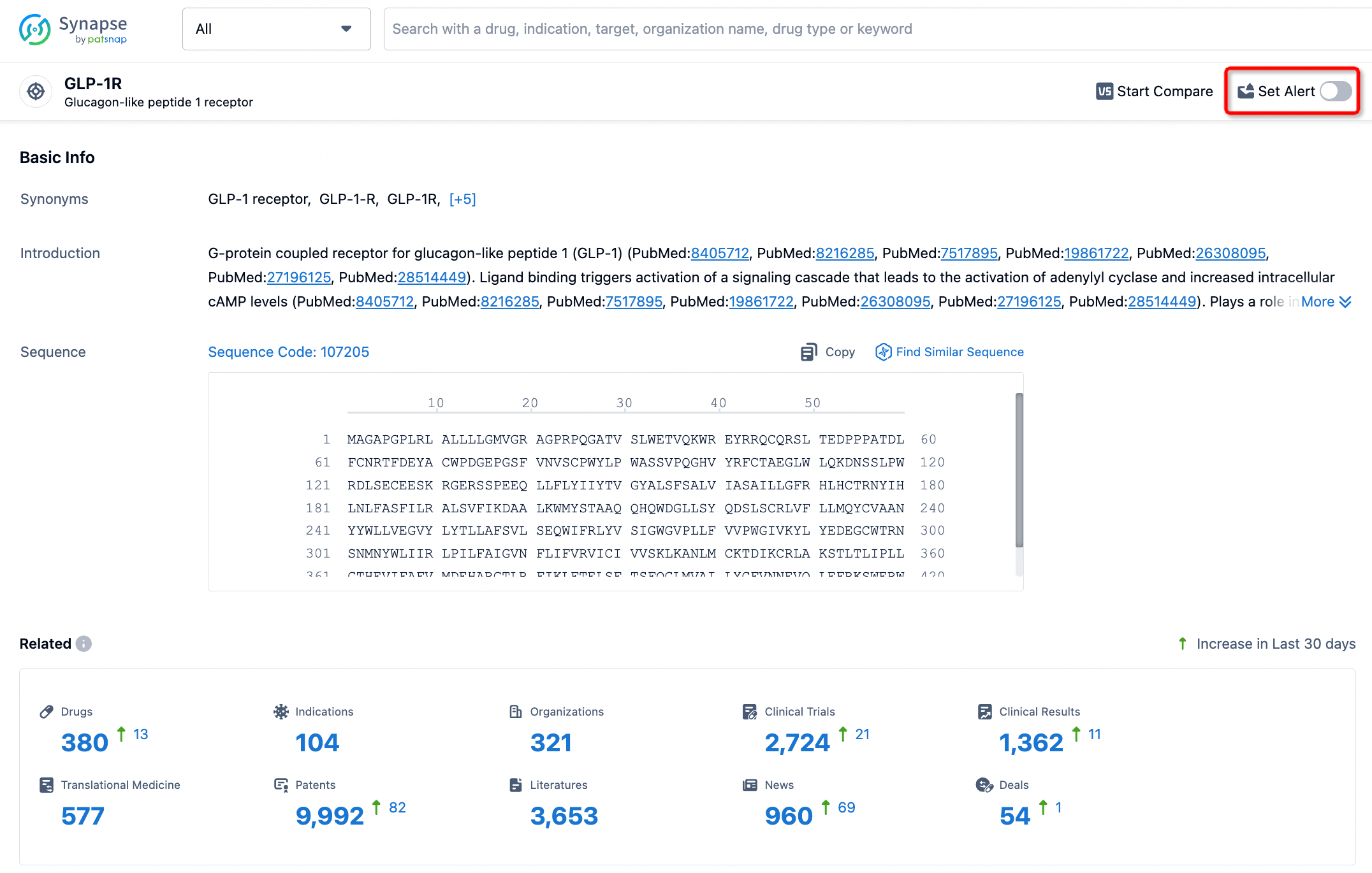
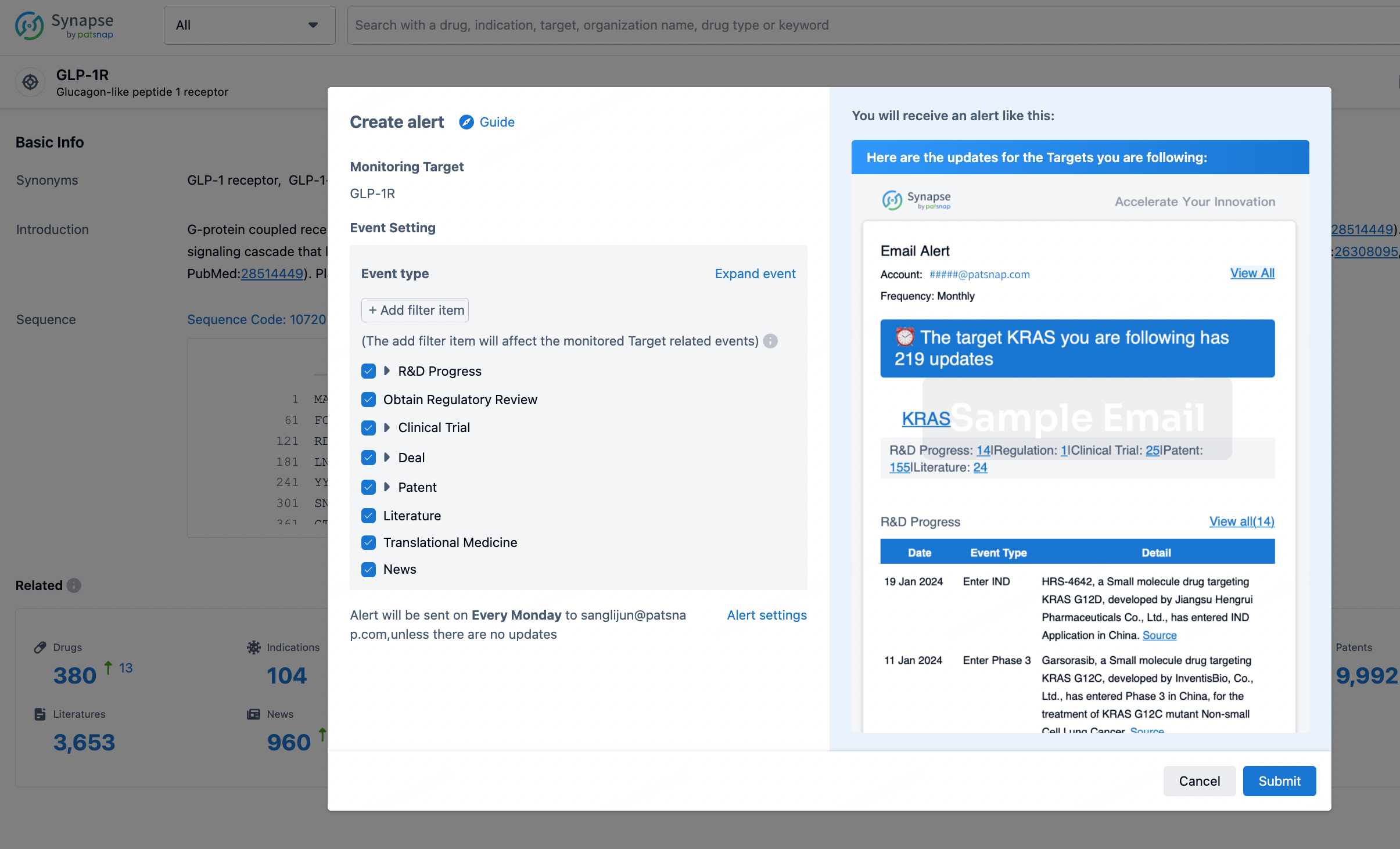
In the Synapse database, you can stay updated on the latest research and development advances of all targets. This service is accessible anytime and anywhere, with updates available daily or weekly. Use the "Set Alert" function to stay informed. Click on the image below to embark on a brand new journey of drug discovery!

Hiro LS Researcher
The AI Search Engine Built to Accelerate Biopharma Decisions
Search across billion-scale life sciences data to uncover signals, validate evidence, and act with confidence.
Ask any biopharma research question→
Get started for free today!
Accelerate Strategic R&D decision making with Synapse, Patsnap’s AI-powered Connected Innovation Intelligence Platform Built for Life Sciences Professionals.
Discover Synapse Data Servers
Synapse data is now integrated into the PatSnap LS Model Context Protocol (MCP) service. Customize your LLM agent now using our MCP server!