Request Demo
What are Siglec-15 inhibitors and how do they work?
21 June 2024
In the world of immunotherapy and cancer treatment, new discoveries are constantly being made to enhance the effectiveness of existing treatments and to develop novel therapeutic approaches. One such promising development is the study and application of Siglec-15 inhibitors. These inhibitors have shown potential in modulating the immune system to recognize and combat cancer cells more effectively.
Siglec-15 (Sialic acid-binding Immunoglobulin-like Lectin-15) is a transmembrane protein predominantly expressed on macrophages, dendritic cells, and certain types of cancer cells. It plays a crucial role in immune regulation, particularly in the context of the tumor microenvironment. The function of Siglec-15 is to interact with sialylated glycoproteins to modulate immune responses. In normal physiological conditions, this can help in limiting excessive immune reactions and maintaining homeostasis. However, in the context of cancer, Siglec-15 can be hijacked by tumor cells to evade immune surveillance.
Inhibiting Siglec-15 is a strategy aimed at disrupting this immune evasion mechanism. Siglec-15 inhibitors work by blocking the interaction between Siglec-15 and its ligands. This blockade can prevent the immunosuppressive signals from being transmitted, thereby reducing the inhibition of immune cells, particularly T cells and natural killer (NK) cells. By releasing these 'brakes' on the immune system, Siglec-15 inhibitors can potentially enhance the body's ability to recognize and attack cancer cells.
Moreover, Siglec-15 inhibitors can reprogram macrophages within the tumor microenvironment. Macrophages can often be polarized into a pro-tumoral (M2) phenotype, which supports tumor growth and suppresses anti-tumor immunity. By inhibiting Siglec-15, these macrophages can be reprogrammed towards an anti-tumoral (M1) phenotype, which actively participates in the destruction of cancer cells and the stimulation of an effective immune response.
Siglec-15 inhibitors are primarily being explored for their potential in treating various types of cancers. Preclinical studies have shown promising results in models of lung cancer, colorectal cancer, and other solid tumors. The rationale for using Siglec-15 inhibitors in cancer therapy is based on their ability to restore anti-tumor immunity and improve the efficacy of existing treatments, such as checkpoint inhibitors.
Checkpoint inhibitors, like those targeting PD-1/PD-L1 and CTLA-4, have revolutionized cancer treatment by reactivating exhausted T cells. However, not all patients respond to these treatments, and some tumors develop resistance over time. Siglec-15 inhibitors could be used in combination with checkpoint inhibitors to overcome these challenges. By targeting a different mechanism of immune suppression, Siglec-15 inhibitors offer a complementary approach that could enhance overall treatment efficacy.
Beyond oncology, Siglec-15 inhibitors may also have potential applications in other fields. For instance, in chronic infections where the immune system is compromised, modulating Siglec-15 activity could help bolster immune responses. Furthermore, in autoimmune diseases, where the immune system mistakenly attacks the body's own tissues, selectively targeting Siglec-15 could provide a way to reduce harmful immune activity without broadly suppressing the immune system.
The development of Siglec-15 inhibitors is still in its early stages, and ongoing clinical trials are necessary to fully understand their safety and efficacy. However, the initial data is encouraging, and the potential of these inhibitors to improve cancer treatment outcomes is significant. As research progresses, it is expected that Siglec-15 inhibitors will become an integral part of the immunotherapy arsenal, offering new hope to patients with challenging cancer types and potentially extending their benefits to other immune-related conditions.
In conclusion, Siglec-15 inhibitors represent a promising frontier in immunotherapy research. By targeting a unique mechanism of immune suppression, these inhibitors have the potential to enhance the body's natural defenses against cancer and other diseases. As our understanding of Siglec-15 and its role in immune regulation grows, so too does the potential for these inhibitors to transform the landscape of medical treatments.
Siglec-15 (Sialic acid-binding Immunoglobulin-like Lectin-15) is a transmembrane protein predominantly expressed on macrophages, dendritic cells, and certain types of cancer cells. It plays a crucial role in immune regulation, particularly in the context of the tumor microenvironment. The function of Siglec-15 is to interact with sialylated glycoproteins to modulate immune responses. In normal physiological conditions, this can help in limiting excessive immune reactions and maintaining homeostasis. However, in the context of cancer, Siglec-15 can be hijacked by tumor cells to evade immune surveillance.
Inhibiting Siglec-15 is a strategy aimed at disrupting this immune evasion mechanism. Siglec-15 inhibitors work by blocking the interaction between Siglec-15 and its ligands. This blockade can prevent the immunosuppressive signals from being transmitted, thereby reducing the inhibition of immune cells, particularly T cells and natural killer (NK) cells. By releasing these 'brakes' on the immune system, Siglec-15 inhibitors can potentially enhance the body's ability to recognize and attack cancer cells.
Moreover, Siglec-15 inhibitors can reprogram macrophages within the tumor microenvironment. Macrophages can often be polarized into a pro-tumoral (M2) phenotype, which supports tumor growth and suppresses anti-tumor immunity. By inhibiting Siglec-15, these macrophages can be reprogrammed towards an anti-tumoral (M1) phenotype, which actively participates in the destruction of cancer cells and the stimulation of an effective immune response.
Siglec-15 inhibitors are primarily being explored for their potential in treating various types of cancers. Preclinical studies have shown promising results in models of lung cancer, colorectal cancer, and other solid tumors. The rationale for using Siglec-15 inhibitors in cancer therapy is based on their ability to restore anti-tumor immunity and improve the efficacy of existing treatments, such as checkpoint inhibitors.
Checkpoint inhibitors, like those targeting PD-1/PD-L1 and CTLA-4, have revolutionized cancer treatment by reactivating exhausted T cells. However, not all patients respond to these treatments, and some tumors develop resistance over time. Siglec-15 inhibitors could be used in combination with checkpoint inhibitors to overcome these challenges. By targeting a different mechanism of immune suppression, Siglec-15 inhibitors offer a complementary approach that could enhance overall treatment efficacy.
Beyond oncology, Siglec-15 inhibitors may also have potential applications in other fields. For instance, in chronic infections where the immune system is compromised, modulating Siglec-15 activity could help bolster immune responses. Furthermore, in autoimmune diseases, where the immune system mistakenly attacks the body's own tissues, selectively targeting Siglec-15 could provide a way to reduce harmful immune activity without broadly suppressing the immune system.
The development of Siglec-15 inhibitors is still in its early stages, and ongoing clinical trials are necessary to fully understand their safety and efficacy. However, the initial data is encouraging, and the potential of these inhibitors to improve cancer treatment outcomes is significant. As research progresses, it is expected that Siglec-15 inhibitors will become an integral part of the immunotherapy arsenal, offering new hope to patients with challenging cancer types and potentially extending their benefits to other immune-related conditions.
In conclusion, Siglec-15 inhibitors represent a promising frontier in immunotherapy research. By targeting a unique mechanism of immune suppression, these inhibitors have the potential to enhance the body's natural defenses against cancer and other diseases. As our understanding of Siglec-15 and its role in immune regulation grows, so too does the potential for these inhibitors to transform the landscape of medical treatments.
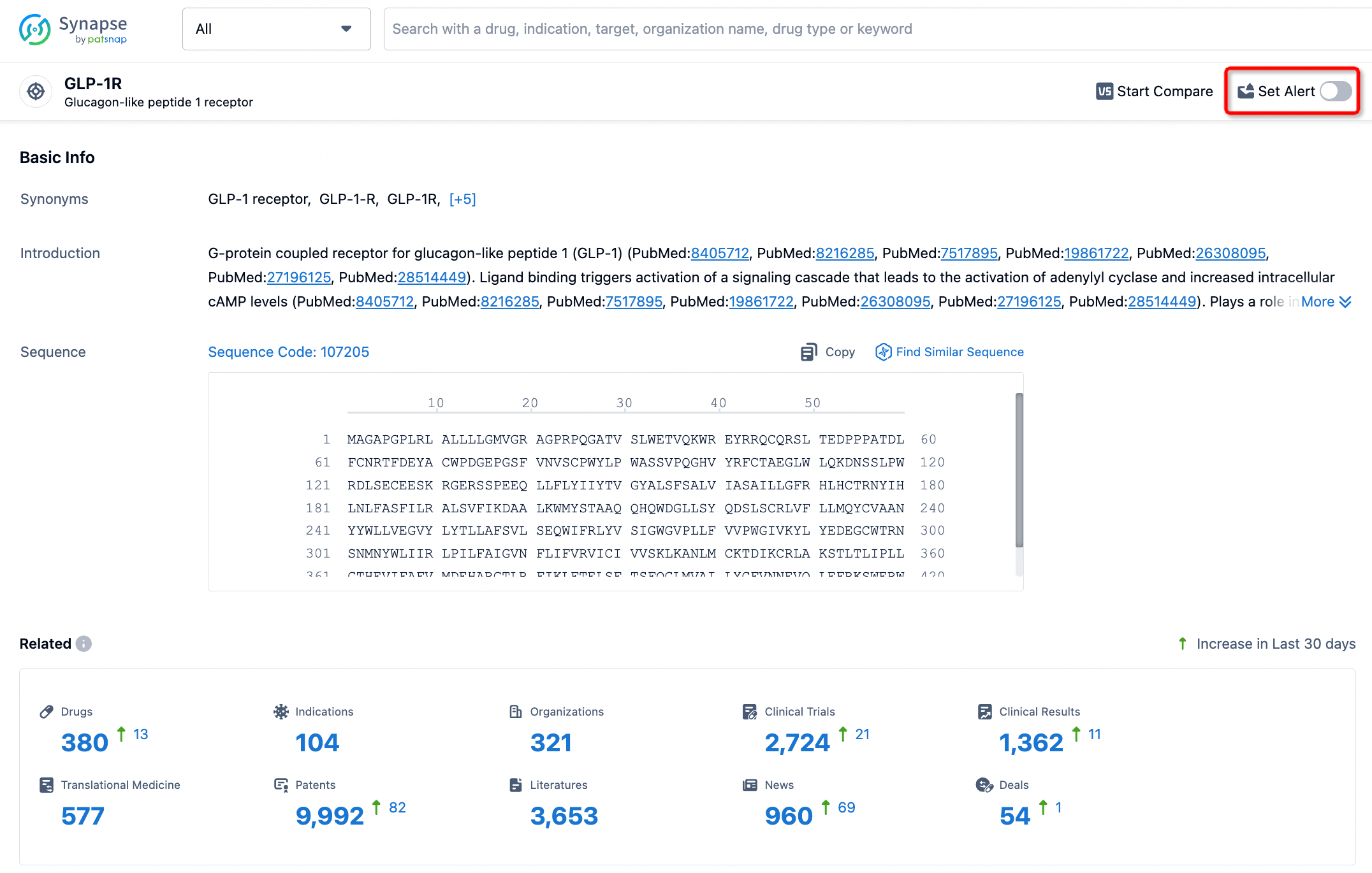
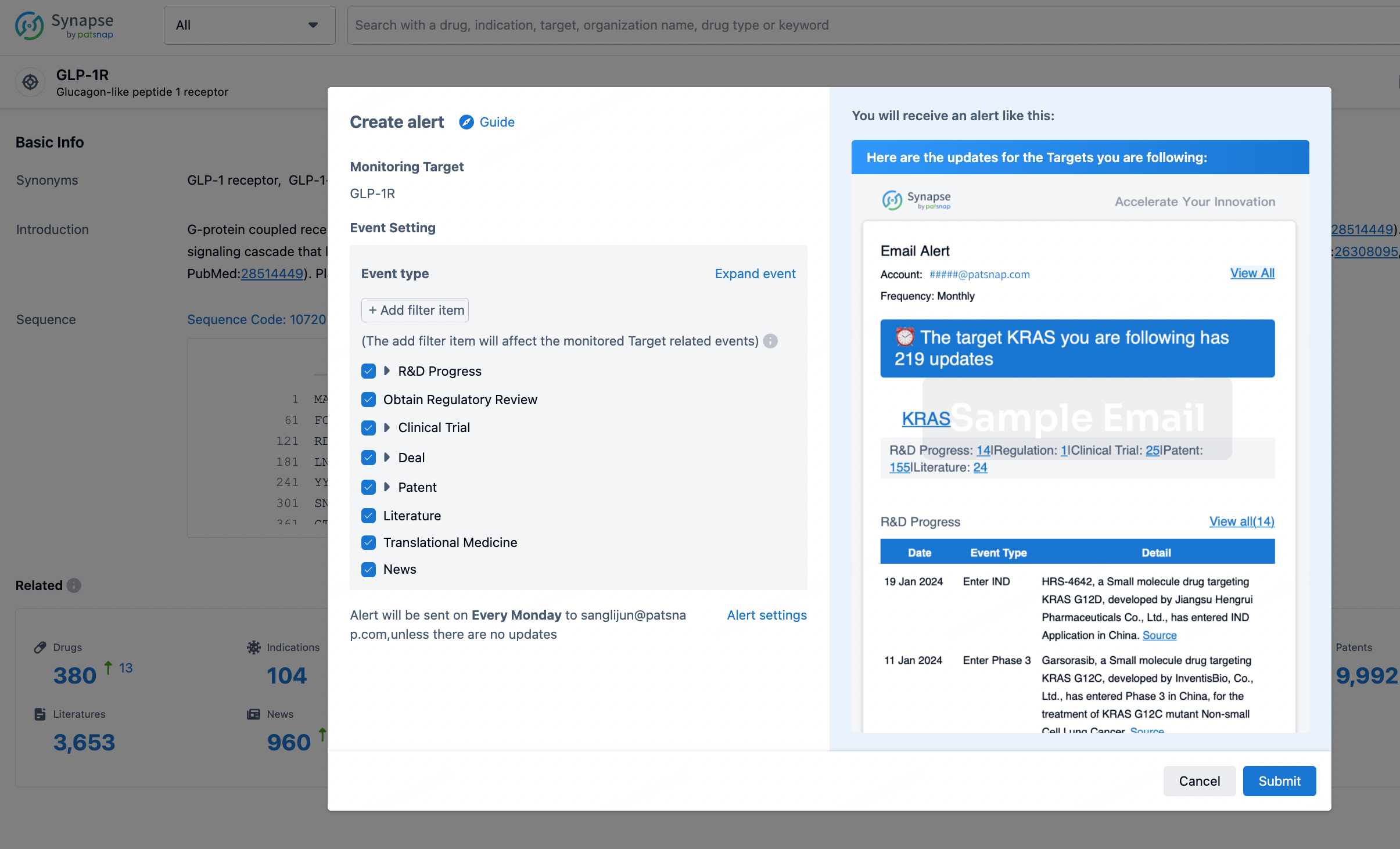
How to obtain the latest development progress of all targets?
In the Synapse database, you can stay updated on the latest research and development advances of all targets. This service is accessible anytime and anywhere, with updates available daily or weekly. Use the "Set Alert" function to stay informed. Click on the image below to embark on a brand new journey of drug discovery!

AI Agents Built for Biopharma Breakthroughs
Accelerate discovery. Empower decisions. Transform outcomes.
Get started for free today!
Accelerate Strategic R&D decision making with Synapse, PatSnap’s AI-powered Connected Innovation Intelligence Platform Built for Life Sciences Professionals.
Start your data trial now!
Synapse data is also accessible to external entities via APIs or data packages. Empower better decisions with the latest in pharmaceutical intelligence.