Request Demo
What are SIGLEC1 modulators and how do they work?
25 June 2024
SIGLEC1, also known as sialic acid-binding immunoglobulin-like lectin 1, is a member of the immunoglobulin superfamily primarily expressed on the surface of macrophages and dendritic cells. It plays a vital role in the immune system, particularly in the modulation of immune responses and cellular communication. In recent years, researchers have turned their attention to SIGLEC1 modulators, which can either inhibit or enhance the function of SIGLEC1, to explore their potential in therapeutic applications. This blog post provides an insightful overview of SIGLEC1 modulators, their mechanisms of action, and their potential uses.
SIGLEC1 modulators work by interacting with SIGLEC1 receptors on the surface of certain immune cells. SIGLEC1 itself is involved in recognizing sialylated glycoconjugates, which are molecules that play critical roles in cell-cell interactions and signaling processes. By binding to these sialylated structures, SIGLEC1 facilitates various immune functions, including the uptake of pathogens, antigen presentation, and the modulation of inflammatory responses.
There are two main types of SIGLEC1 modulators: agonists and antagonists. Agonists are compounds that enhance the function of SIGLEC1, thereby amplifying its immune-modulating effects. These can be beneficial in scenarios where a heightened immune response is necessary, such as in fighting infections or boosting vaccine efficacy. On the other hand, antagonists are compounds that inhibit SIGLEC1 activity. These modulators are valuable in conditions where dampening the immune response is desirable, such as in autoimmune diseases or chronic inflammatory conditions.
The precise mechanisms by which SIGLEC1 modulators operate can vary. For example, some modulators may directly bind to the SIGLEC1 receptor, altering its conformation and affecting its ability to interact with sialylated ligands. Others may work indirectly by affecting the signaling pathways downstream of SIGLEC1 engagement. Understanding these mechanisms is crucial for the development of effective therapeutic agents and requires extensive research and experimentation.
SIGLEC1 modulators have shown promise in a variety of medical applications, reflecting their versatility in modulating immune responses. One of the most exciting areas of research is their potential use in treating infectious diseases. By enhancing the function of SIGLEC1 through agonists, it may be possible to improve the body’s ability to recognize and clear pathogens. This could be particularly useful in combating viral infections, where a robust immune response is critical for controlling viral replication and spread.
In the realm of oncology, SIGLEC1 modulators are being explored for their potential to enhance anti-tumor immunity. Some tumors exploit immune checkpoints to evade detection by the immune system. By using SIGLEC1 agonists, it may be possible to boost the immune system’s ability to recognize and attack cancer cells, thereby improving the efficacy of immunotherapies.
Conversely, SIGLEC1 antagonists hold promise in the treatment of autoimmune diseases and chronic inflammatory disorders. In conditions like rheumatoid arthritis or lupus, the immune system mistakenly targets the body’s own tissues, leading to inflammation and tissue damage. By inhibiting SIGLEC1 function, it may be possible to reduce the aberrant immune activity and alleviate symptoms. Additionally, these antagonists could be beneficial in preventing transplant rejection by dampening the immune response against transplanted tissues or organs.
The potential applications of SIGLEC1 modulators extend beyond just infectious diseases, oncology, and autoimmune disorders. They are also being investigated for their roles in neuroinflammatory diseases, cardiovascular diseases, and metabolic disorders. As research progresses, it is likely that new uses for these modulators will continue to emerge, highlighting their broad therapeutic potential.
In conclusion, SIGLEC1 modulators represent a promising avenue for therapeutic intervention in a wide range of diseases. By modulating the activity of SIGLEC1, these compounds have the potential to enhance or inhibit immune responses, offering novel approaches to disease treatment and management. Continued research and development in this field are essential for unlocking the full potential of SIGLEC1 modulators and bringing new, effective therapies to patients in need.
SIGLEC1 modulators work by interacting with SIGLEC1 receptors on the surface of certain immune cells. SIGLEC1 itself is involved in recognizing sialylated glycoconjugates, which are molecules that play critical roles in cell-cell interactions and signaling processes. By binding to these sialylated structures, SIGLEC1 facilitates various immune functions, including the uptake of pathogens, antigen presentation, and the modulation of inflammatory responses.
There are two main types of SIGLEC1 modulators: agonists and antagonists. Agonists are compounds that enhance the function of SIGLEC1, thereby amplifying its immune-modulating effects. These can be beneficial in scenarios where a heightened immune response is necessary, such as in fighting infections or boosting vaccine efficacy. On the other hand, antagonists are compounds that inhibit SIGLEC1 activity. These modulators are valuable in conditions where dampening the immune response is desirable, such as in autoimmune diseases or chronic inflammatory conditions.
The precise mechanisms by which SIGLEC1 modulators operate can vary. For example, some modulators may directly bind to the SIGLEC1 receptor, altering its conformation and affecting its ability to interact with sialylated ligands. Others may work indirectly by affecting the signaling pathways downstream of SIGLEC1 engagement. Understanding these mechanisms is crucial for the development of effective therapeutic agents and requires extensive research and experimentation.
SIGLEC1 modulators have shown promise in a variety of medical applications, reflecting their versatility in modulating immune responses. One of the most exciting areas of research is their potential use in treating infectious diseases. By enhancing the function of SIGLEC1 through agonists, it may be possible to improve the body’s ability to recognize and clear pathogens. This could be particularly useful in combating viral infections, where a robust immune response is critical for controlling viral replication and spread.
In the realm of oncology, SIGLEC1 modulators are being explored for their potential to enhance anti-tumor immunity. Some tumors exploit immune checkpoints to evade detection by the immune system. By using SIGLEC1 agonists, it may be possible to boost the immune system’s ability to recognize and attack cancer cells, thereby improving the efficacy of immunotherapies.
Conversely, SIGLEC1 antagonists hold promise in the treatment of autoimmune diseases and chronic inflammatory disorders. In conditions like rheumatoid arthritis or lupus, the immune system mistakenly targets the body’s own tissues, leading to inflammation and tissue damage. By inhibiting SIGLEC1 function, it may be possible to reduce the aberrant immune activity and alleviate symptoms. Additionally, these antagonists could be beneficial in preventing transplant rejection by dampening the immune response against transplanted tissues or organs.
The potential applications of SIGLEC1 modulators extend beyond just infectious diseases, oncology, and autoimmune disorders. They are also being investigated for their roles in neuroinflammatory diseases, cardiovascular diseases, and metabolic disorders. As research progresses, it is likely that new uses for these modulators will continue to emerge, highlighting their broad therapeutic potential.
In conclusion, SIGLEC1 modulators represent a promising avenue for therapeutic intervention in a wide range of diseases. By modulating the activity of SIGLEC1, these compounds have the potential to enhance or inhibit immune responses, offering novel approaches to disease treatment and management. Continued research and development in this field are essential for unlocking the full potential of SIGLEC1 modulators and bringing new, effective therapies to patients in need.
How to obtain the latest development progress of all targets?
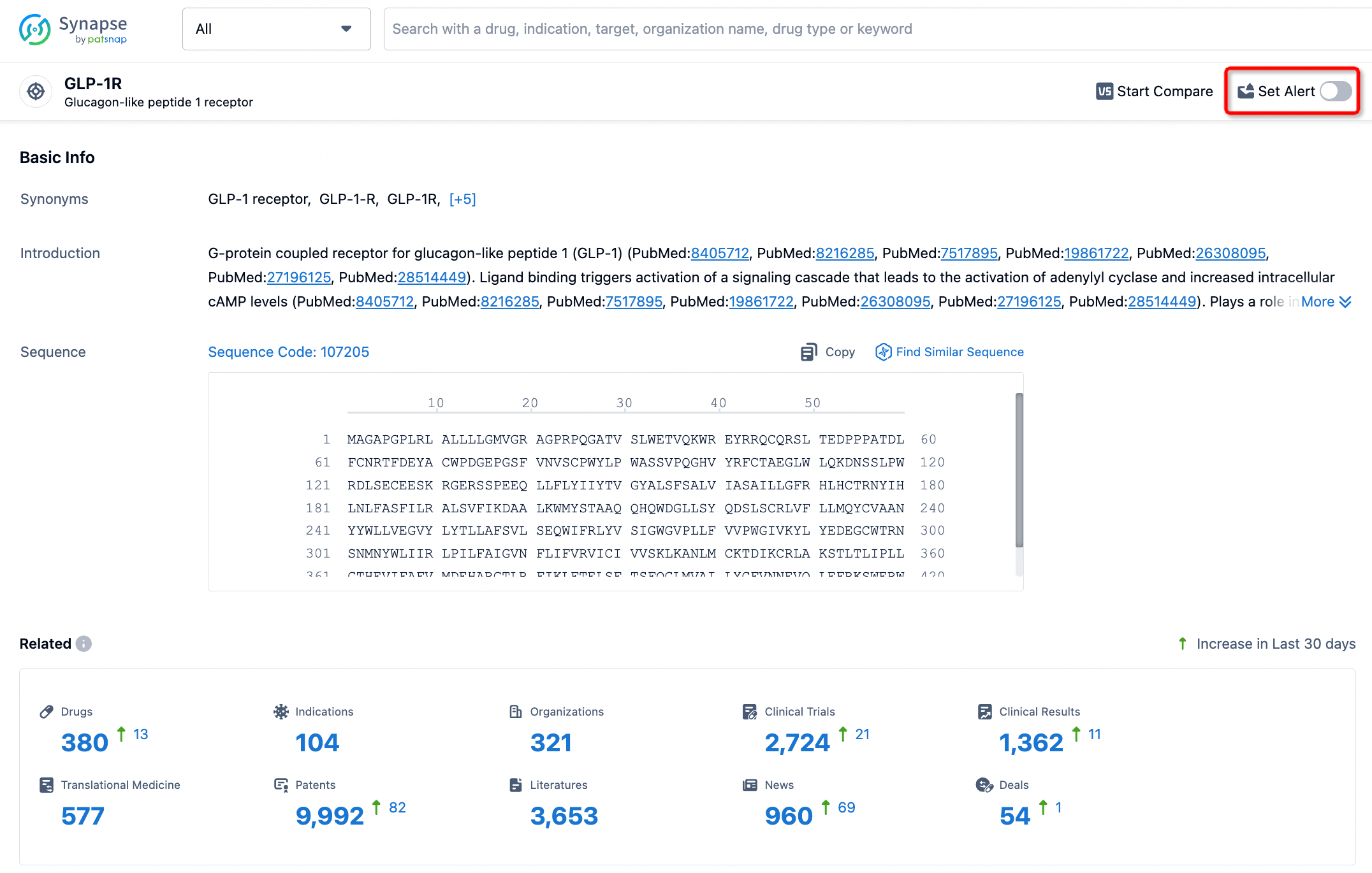
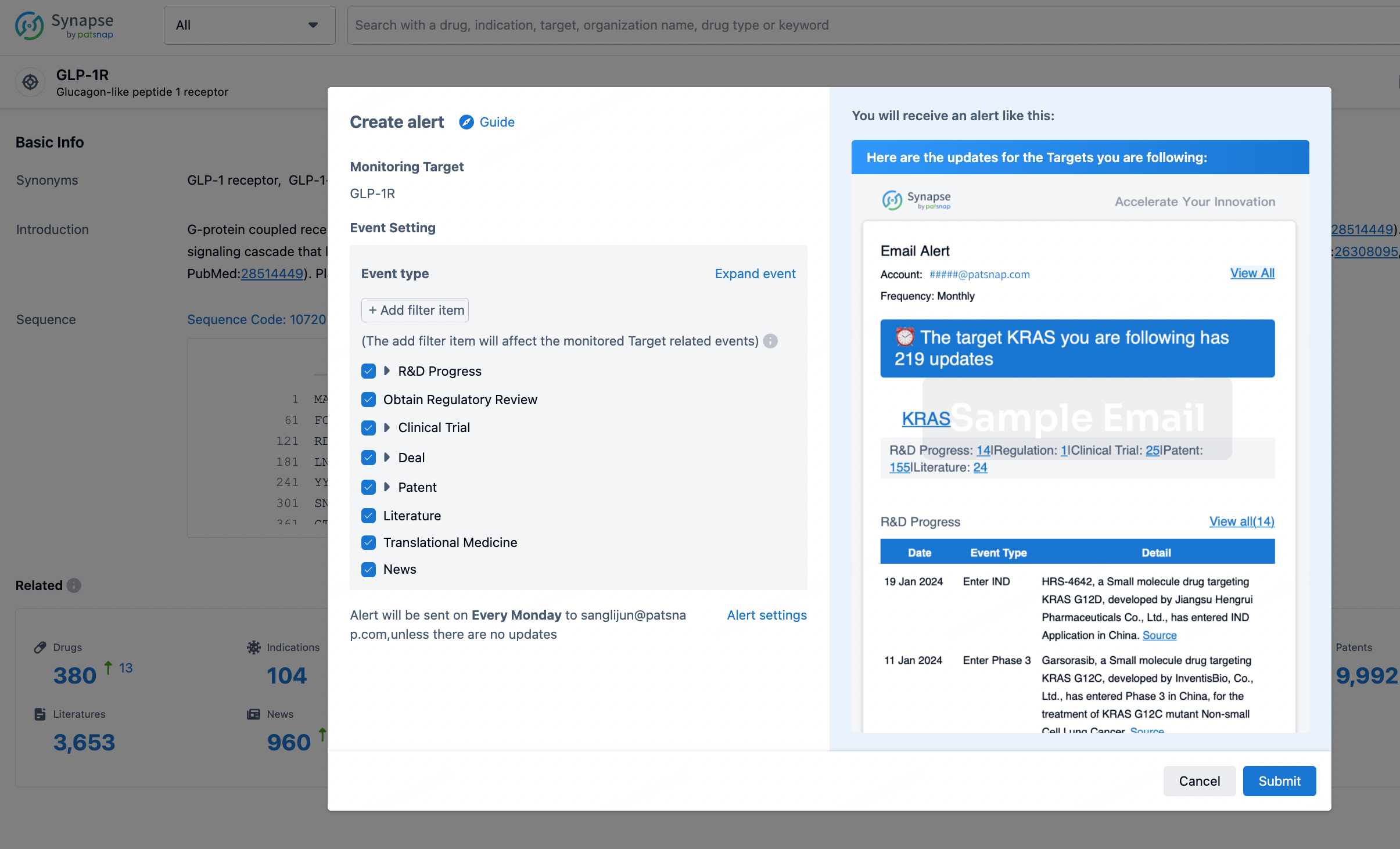
In the Synapse database, you can stay updated on the latest research and development advances of all targets. This service is accessible anytime and anywhere, with updates available daily or weekly. Use the "Set Alert" function to stay informed. Click on the image below to embark on a brand new journey of drug discovery!

AI Agents Built for Biopharma Breakthroughs
Accelerate discovery. Empower decisions. Transform outcomes.
Get started for free today!
Accelerate Strategic R&D decision making with Synapse, PatSnap’s AI-powered Connected Innovation Intelligence Platform Built for Life Sciences Professionals.
Start your data trial now!
Synapse data is also accessible to external entities via APIs or data packages. Empower better decisions with the latest in pharmaceutical intelligence.