Request Demo
What are SIRPα modulators and how do they work?
21 June 2024
Signal Regulatory Protein Alpha (SIRPα) modulators are emerging as a significant area of interest in the field of immuno-oncology. These modulators have shown great potential in regulating immune responses, particularly in the context of cancer therapy. Understanding how SIRPα modulators work, and their applications, can provide valuable insights into their role and future prospects in medical science.
SIRPα is a transmembrane protein predominantly expressed on myeloid cells like macrophages and dendritic cells. It plays a crucial role in the immune system by serving as a negative regulator of phagocytosis. When SIRPα binds to its ligand CD47, commonly referred to as the "don't eat me" signal, it sends an inhibitory signal to macrophages, preventing them from engulfing and destroying the cell expressing CD47. This mechanism is vital for maintaining self-tolerance and preventing autoimmunity. However, cancer cells often exploit this pathway by overexpressing CD47, thereby evading immune surveillance and destruction.
SIRPα modulators work by disrupting the interaction between SIRPα and CD47. This disruption can be achieved through various strategies, such as antibodies that block the CD47 binding site on SIRPα or small molecules that inhibit the binding interaction. By preventing CD47 from engaging with SIRPα, these modulators effectively disable the "don't eat me" signal, allowing macrophages and other phagocytic cells to recognize and destroy cancer cells. Additionally, this disruption can also enhance the presentation of tumor antigens to T cells, further amplifying the anti-tumor immune response.
The primary application of SIRPα modulators is in cancer therapy. By harnessing the body's innate immune system to target and eliminate cancer cells, SIRPα modulators offer a promising approach to treating various types of cancer. Clinical trials have demonstrated the potential of SIRPα modulators in improving outcomes for patients with solid tumors and hematologic malignancies. These modulators can be used as monotherapies or in combination with other immunotherapies, such as checkpoint inhibitors, to enhance their efficacy.
One of the key advantages of SIRPα modulators is their ability to target a broad range of cancers. Since many tumors overexpress CD47 to evade the immune system, SIRPα modulators can be effective against multiple cancer types. Moreover, their mechanism of action is distinct from that of other immunotherapies, such as PD-1/PD-L1 inhibitors, which target T cell activation. This uniqueness allows SIRPα modulators to be combined with other therapies, potentially leading to synergistic effects and improved patient outcomes.
In addition to cancer therapy, SIRPα modulators have potential applications in other areas of medicine. For instance, they could be used to treat autoimmune diseases, such as systemic lupus erythematosus (SLE) and rheumatoid arthritis, by modulating the activity of macrophages and dendritic cells. Furthermore, SIRPα modulators may also play a role in regenerative medicine by promoting tissue repair and regeneration through the targeted modulation of immune responses.
However, despite their promising potential, there are several challenges that need to be addressed before SIRPα modulators can become widely used in clinical practice. One major concern is the potential for off-target effects and unintended immune activation, which could lead to adverse events or autoimmune reactions. Additionally, the development of resistance mechanisms by cancer cells may limit the long-term efficacy of SIRPα modulators. Ongoing research is focused on understanding these challenges and developing strategies to overcome them.
In conclusion, SIRPα modulators represent a novel and promising approach to cancer therapy and potentially other medical applications. By disrupting the SIRPα-CD47 interaction, these modulators can enhance the body's innate immune response against cancer cells, offering hope for improved treatment outcomes. While challenges remain, continued research and clinical development hold the promise of unlocking the full potential of SIRPα modulators in the fight against cancer and other diseases.
SIRPα is a transmembrane protein predominantly expressed on myeloid cells like macrophages and dendritic cells. It plays a crucial role in the immune system by serving as a negative regulator of phagocytosis. When SIRPα binds to its ligand CD47, commonly referred to as the "don't eat me" signal, it sends an inhibitory signal to macrophages, preventing them from engulfing and destroying the cell expressing CD47. This mechanism is vital for maintaining self-tolerance and preventing autoimmunity. However, cancer cells often exploit this pathway by overexpressing CD47, thereby evading immune surveillance and destruction.
SIRPα modulators work by disrupting the interaction between SIRPα and CD47. This disruption can be achieved through various strategies, such as antibodies that block the CD47 binding site on SIRPα or small molecules that inhibit the binding interaction. By preventing CD47 from engaging with SIRPα, these modulators effectively disable the "don't eat me" signal, allowing macrophages and other phagocytic cells to recognize and destroy cancer cells. Additionally, this disruption can also enhance the presentation of tumor antigens to T cells, further amplifying the anti-tumor immune response.
The primary application of SIRPα modulators is in cancer therapy. By harnessing the body's innate immune system to target and eliminate cancer cells, SIRPα modulators offer a promising approach to treating various types of cancer. Clinical trials have demonstrated the potential of SIRPα modulators in improving outcomes for patients with solid tumors and hematologic malignancies. These modulators can be used as monotherapies or in combination with other immunotherapies, such as checkpoint inhibitors, to enhance their efficacy.
One of the key advantages of SIRPα modulators is their ability to target a broad range of cancers. Since many tumors overexpress CD47 to evade the immune system, SIRPα modulators can be effective against multiple cancer types. Moreover, their mechanism of action is distinct from that of other immunotherapies, such as PD-1/PD-L1 inhibitors, which target T cell activation. This uniqueness allows SIRPα modulators to be combined with other therapies, potentially leading to synergistic effects and improved patient outcomes.
In addition to cancer therapy, SIRPα modulators have potential applications in other areas of medicine. For instance, they could be used to treat autoimmune diseases, such as systemic lupus erythematosus (SLE) and rheumatoid arthritis, by modulating the activity of macrophages and dendritic cells. Furthermore, SIRPα modulators may also play a role in regenerative medicine by promoting tissue repair and regeneration through the targeted modulation of immune responses.
However, despite their promising potential, there are several challenges that need to be addressed before SIRPα modulators can become widely used in clinical practice. One major concern is the potential for off-target effects and unintended immune activation, which could lead to adverse events or autoimmune reactions. Additionally, the development of resistance mechanisms by cancer cells may limit the long-term efficacy of SIRPα modulators. Ongoing research is focused on understanding these challenges and developing strategies to overcome them.
In conclusion, SIRPα modulators represent a novel and promising approach to cancer therapy and potentially other medical applications. By disrupting the SIRPα-CD47 interaction, these modulators can enhance the body's innate immune response against cancer cells, offering hope for improved treatment outcomes. While challenges remain, continued research and clinical development hold the promise of unlocking the full potential of SIRPα modulators in the fight against cancer and other diseases.
How to obtain the latest development progress of all targets?
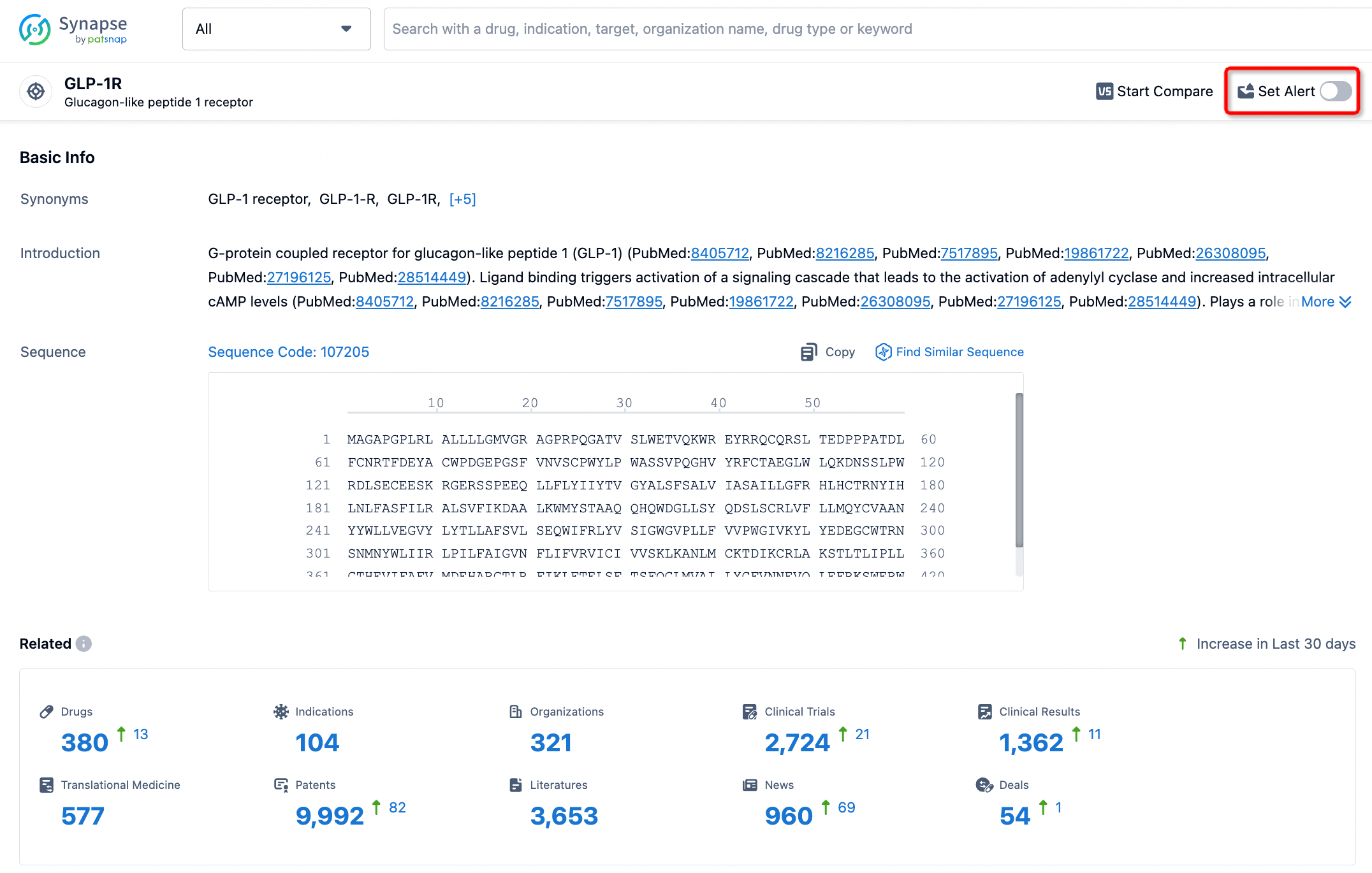
In the Synapse database, you can stay updated on the latest research and development advances of all targets. This service is accessible anytime and anywhere, with updates available daily or weekly. Use the "Set Alert" function to stay informed. Click on the image below to embark on a brand new journey of drug discovery!


Hiro LS Researcher
The AI Search Engine Built to Accelerate Biopharma Decisions
Search across billion-scale life sciences data to uncover signals, validate evidence, and act with confidence.
Ask any biopharma research question→
Get started for free today!
Accelerate Strategic R&D decision making with Synapse, Patsnap’s AI-powered Connected Innovation Intelligence Platform Built for Life Sciences Professionals.
Discover Synapse Data Servers
Synapse data is now integrated into the PatSnap LS Model Context Protocol (MCP) service. Customize your LLM agent now using our MCP server!