Request Demo
What are SOD1 gene inhibitors and how do they work?
21 June 2024
The quest to understand and combat various neurodegenerative diseases has led scientists to investigate a myriad of genetic components and molecular pathways. One such genetic focus is the SOD1 gene, which encodes the enzyme superoxide dismutase 1. This enzyme plays a crucial role in managing oxidative stress within cells. However, mutations in the SOD1 gene have been implicated in several neurodegenerative conditions, most notably Amyotrophic Lateral Sclerosis (ALS). This discovery has spurred substantial interest in the development of SOD1 gene inhibitors. Such inhibitors hold promise as therapeutic agents, potentially altering the course of devastating diseases.
SOD1 gene inhibitors operate by targeting the SOD1 enzyme and reducing its activity or expression. Superoxide dismutase 1 is responsible for converting superoxide radicals, which are toxic byproducts of cellular metabolism, into less harmful molecules like hydrogen peroxide and oxygen. While the normal function of SOD1 is protective, its mutated forms can lead to toxic gain-of-function effects, including protein misfolding and aggregation, which contribute to neuronal death.
Inhibitors of the SOD1 gene are designed to mitigate these effects through various mechanisms. Some inhibitors aim to reduce the expression of the defective SOD1 protein at the genetic level, employing technologies such as antisense oligonucleotides (ASOs) or RNA interference (RNAi). These technologies work by binding to SOD1 mRNA transcripts, preventing their translation into harmful proteins. Other inhibitors focus on small molecules that can bind directly to the mutated SOD1 protein, stabilizing its structure or preventing its aggregation.
The development of these inhibitors involves intricate research and numerous approaches. For instance, high-throughput screening methods allow researchers to identify potential small molecule inhibitors from vast chemical libraries. Structural biology techniques, such as X-ray crystallography or cryo-electron microscopy, provide insights into the enzyme's configuration, facilitating the design of molecules that can block its toxic forms effectively. Additionally, computational modeling aids in predicting how these inhibitors will interact with the SOD1 protein, guiding further refinement and testing.
SOD1 gene inhibitors are primarily investigated for their potential in treating ALS, a progressive neurodegenerative disease characterized by the loss of motor neurons. Approximately 20% of familial ALS cases are linked to mutations in the SOD1 gene. These mutations result in the accumulation of misfolded SOD1 proteins, which form aggregates that are toxic to neurons. By inhibiting the production or aggregation of mutated SOD1, these therapeutic agents aim to slow or halt the progression of ALS.
Beyond ALS, there is growing interest in the potential applications of SOD1 gene inhibitors in other neurodegenerative disorders. For instance, oxidative stress and protein misfolding are common pathological features in diseases such as Alzheimer's and Parkinson's. Although SOD1 mutations are not primary causes in these diseases, the principles underlying SOD1 inhibition might be extrapolated to develop therapies targeting similar pathogenic mechanisms.
Moreover, the therapeutic strategies developed for SOD1-related conditions could have broader implications for treating other genetic diseases. The technologies used to inhibit SOD1—such as ASOs and RNAi—are versatile and can be adapted to target different genes implicated in various disorders. Thus, advancements in SOD1 inhibitors could pave the way for novel treatments in a range of genetic diseases beyond neurodegenerative conditions.
In conclusion, SOD1 gene inhibitors represent a promising frontier in the treatment of neurodegenerative diseases, particularly ALS. These inhibitors work by targeting the defective SOD1 protein, reducing its toxic effects on neurons. Through sophisticated technologies and innovative research approaches, scientists are working to develop effective SOD1 inhibitors that could potentially alter the trajectory of ALS and other related disorders. As our understanding of the SOD1 gene and its role in disease continues to grow, so too does the potential for groundbreaking therapies that could bring hope to countless individuals affected by these devastating conditions.
SOD1 gene inhibitors operate by targeting the SOD1 enzyme and reducing its activity or expression. Superoxide dismutase 1 is responsible for converting superoxide radicals, which are toxic byproducts of cellular metabolism, into less harmful molecules like hydrogen peroxide and oxygen. While the normal function of SOD1 is protective, its mutated forms can lead to toxic gain-of-function effects, including protein misfolding and aggregation, which contribute to neuronal death.
Inhibitors of the SOD1 gene are designed to mitigate these effects through various mechanisms. Some inhibitors aim to reduce the expression of the defective SOD1 protein at the genetic level, employing technologies such as antisense oligonucleotides (ASOs) or RNA interference (RNAi). These technologies work by binding to SOD1 mRNA transcripts, preventing their translation into harmful proteins. Other inhibitors focus on small molecules that can bind directly to the mutated SOD1 protein, stabilizing its structure or preventing its aggregation.
The development of these inhibitors involves intricate research and numerous approaches. For instance, high-throughput screening methods allow researchers to identify potential small molecule inhibitors from vast chemical libraries. Structural biology techniques, such as X-ray crystallography or cryo-electron microscopy, provide insights into the enzyme's configuration, facilitating the design of molecules that can block its toxic forms effectively. Additionally, computational modeling aids in predicting how these inhibitors will interact with the SOD1 protein, guiding further refinement and testing.
SOD1 gene inhibitors are primarily investigated for their potential in treating ALS, a progressive neurodegenerative disease characterized by the loss of motor neurons. Approximately 20% of familial ALS cases are linked to mutations in the SOD1 gene. These mutations result in the accumulation of misfolded SOD1 proteins, which form aggregates that are toxic to neurons. By inhibiting the production or aggregation of mutated SOD1, these therapeutic agents aim to slow or halt the progression of ALS.
Beyond ALS, there is growing interest in the potential applications of SOD1 gene inhibitors in other neurodegenerative disorders. For instance, oxidative stress and protein misfolding are common pathological features in diseases such as Alzheimer's and Parkinson's. Although SOD1 mutations are not primary causes in these diseases, the principles underlying SOD1 inhibition might be extrapolated to develop therapies targeting similar pathogenic mechanisms.
Moreover, the therapeutic strategies developed for SOD1-related conditions could have broader implications for treating other genetic diseases. The technologies used to inhibit SOD1—such as ASOs and RNAi—are versatile and can be adapted to target different genes implicated in various disorders. Thus, advancements in SOD1 inhibitors could pave the way for novel treatments in a range of genetic diseases beyond neurodegenerative conditions.
In conclusion, SOD1 gene inhibitors represent a promising frontier in the treatment of neurodegenerative diseases, particularly ALS. These inhibitors work by targeting the defective SOD1 protein, reducing its toxic effects on neurons. Through sophisticated technologies and innovative research approaches, scientists are working to develop effective SOD1 inhibitors that could potentially alter the trajectory of ALS and other related disorders. As our understanding of the SOD1 gene and its role in disease continues to grow, so too does the potential for groundbreaking therapies that could bring hope to countless individuals affected by these devastating conditions.
How to obtain the latest development progress of all targets?
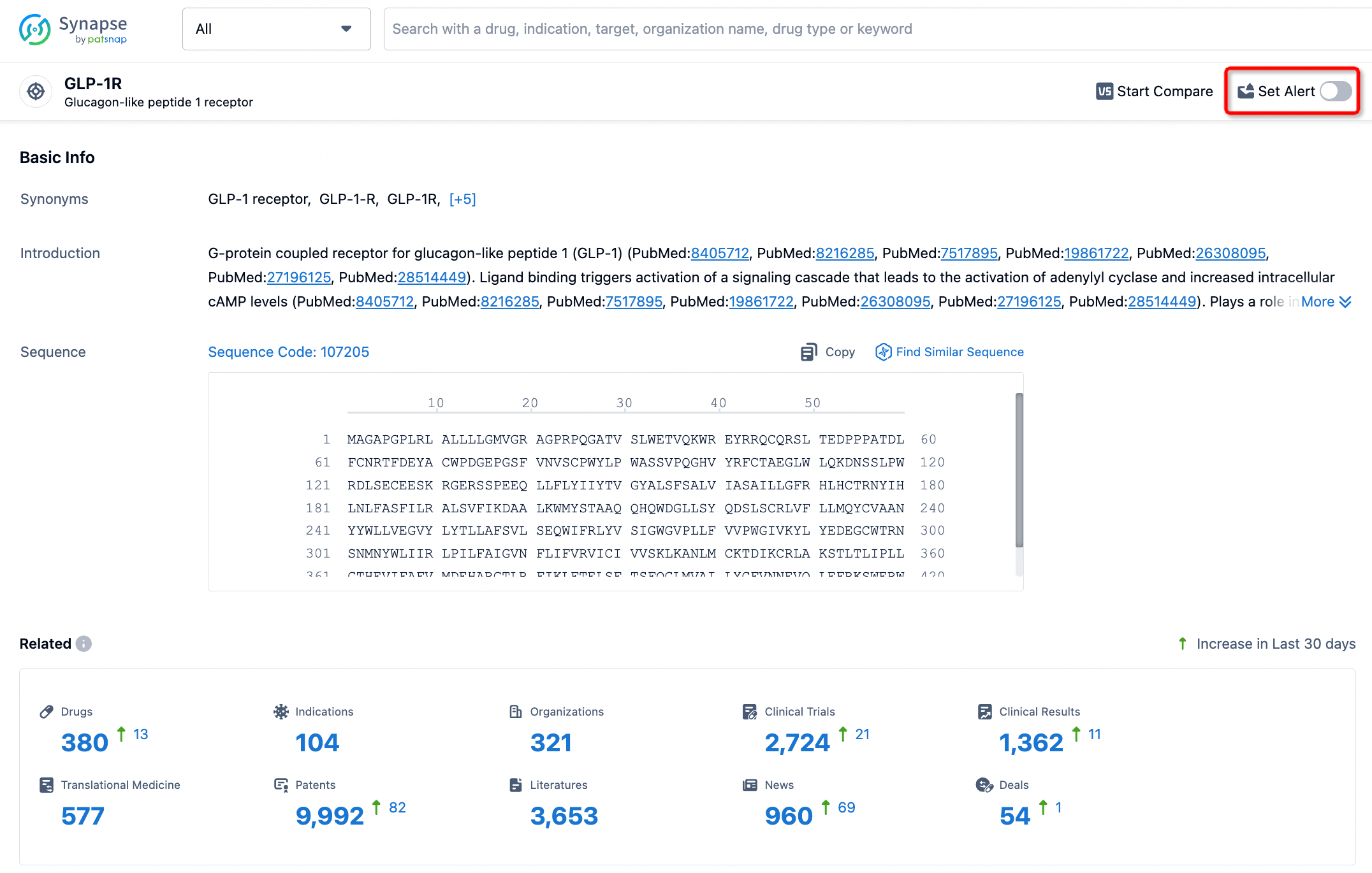
In the Synapse database, you can stay updated on the latest research and development advances of all targets. This service is accessible anytime and anywhere, with updates available daily or weekly. Use the "Set Alert" function to stay informed. Click on the image below to embark on a brand new journey of drug discovery!


AI Agents Built for Biopharma Breakthroughs
Accelerate discovery. Empower decisions. Transform outcomes.
Get started for free today!
Accelerate Strategic R&D decision making with Synapse, PatSnap’s AI-powered Connected Innovation Intelligence Platform Built for Life Sciences Professionals.
Start your data trial now!
Synapse data is also accessible to external entities via APIs or data packages. Empower better decisions with the latest in pharmaceutical intelligence.