Request Demo
What are STEAP2 inhibitors and how do they work?
25 June 2024
Introduction to STEAP2 Inhibitors
Six-transmembrane epithelial antigen of the prostate 2 (STEAP2) is a protein that has garnered significant interest in recent years due to its role in various physiological processes and its implications in certain diseases, particularly cancer. STEAP2 is a member of the STEAP family of metalloreductases, proteins that play pivotal roles in reducing metal ions, such as iron and copper, which are essential for numerous cellular activities. The development of STEAP2 inhibitors represents a promising avenue for therapeutic intervention, especially in conditions where STEAP2 activity is dysregulated.
How Do STEAP2 Inhibitors Work?
To understand how STEAP2 inhibitors work, it is essential to first comprehend the function of STEAP2 itself. STEAP2 is involved in the reduction of metal ions, which are subsequently transported into cells through specific channels. This process is critical for maintaining cellular homeostasis and supporting various biological functions, including DNA synthesis, respiration, and cellular metabolism. However, in certain pathological conditions, such as cancer, STEAP2 activity is upregulated, leading to an increased influx of metal ions that can fuel the rapid proliferation of malignant cells.
STEAP2 inhibitors are designed to bind to the active sites of the STEAP2 protein, thereby blocking its reductase activity. By inhibiting the reduction of metal ions, these inhibitors can effectively decrease the availability of essential metals within the cell. This, in turn, can disrupt the metabolic processes that are crucial for the growth and survival of diseased cells, particularly cancer cells. The inhibition of STEAP2 can also induce oxidative stress within the cell, leading to apoptosis or programmed cell death, thereby reducing tumor growth and progression.
What Are STEAP2 Inhibitors Used For?
The primary focus of research on STEAP2 inhibitors has been in the field of oncology. STEAP2 is highly expressed in several types of cancers, including prostate cancer, bladder cancer, and colorectal cancer. By targeting STEAP2, researchers hope to develop novel therapies that can selectively kill cancer cells while sparing normal, healthy cells. Preclinical studies have shown promising results, with STEAP2 inhibitors demonstrating the ability to reduce tumor size and slow the progression of cancer in animal models. These findings have paved the way for clinical trials to evaluate the safety and efficacy of STEAP2 inhibitors in human patients.
Beyond oncology, there is potential for STEAP2 inhibitors to be used in other medical conditions where metal ion dysregulation plays a role. For instance, neurodegenerative diseases, such as Alzheimer's and Parkinson's, are characterized by abnormal metal ion accumulation in the brain. Although research in this area is still in its early stages, STEAP2 inhibitors could potentially be explored as a therapeutic option to restore metal ion balance and mitigate the progression of these diseases.
Additionally, STEAP2 inhibitors may have applications in the treatment of infectious diseases. Certain pathogens, such as bacteria and parasites, rely on metal ions for their growth and replication. By inhibiting STEAP2, it may be possible to deprive these pathogens of the essential metals they need, thereby limiting their ability to cause infection. This approach could be particularly valuable in addressing antibiotic-resistant strains of bacteria, which pose a growing threat to global public health.
In conclusion, STEAP2 inhibitors represent a promising area of research with the potential to impact a wide range of medical conditions. By targeting the metalloreductase activity of STEAP2, these inhibitors can disrupt essential cellular processes in diseased cells, offering a novel therapeutic strategy. While much work remains to be done, the ongoing research and clinical trials hold the promise of new and effective treatments for cancer, neurodegenerative diseases, and infectious diseases in the future. As our understanding of STEAP2 and its inhibitors continues to evolve, so too will the potential for innovative therapies that can improve patient outcomes and quality of life.
Six-transmembrane epithelial antigen of the prostate 2 (STEAP2) is a protein that has garnered significant interest in recent years due to its role in various physiological processes and its implications in certain diseases, particularly cancer. STEAP2 is a member of the STEAP family of metalloreductases, proteins that play pivotal roles in reducing metal ions, such as iron and copper, which are essential for numerous cellular activities. The development of STEAP2 inhibitors represents a promising avenue for therapeutic intervention, especially in conditions where STEAP2 activity is dysregulated.
How Do STEAP2 Inhibitors Work?
To understand how STEAP2 inhibitors work, it is essential to first comprehend the function of STEAP2 itself. STEAP2 is involved in the reduction of metal ions, which are subsequently transported into cells through specific channels. This process is critical for maintaining cellular homeostasis and supporting various biological functions, including DNA synthesis, respiration, and cellular metabolism. However, in certain pathological conditions, such as cancer, STEAP2 activity is upregulated, leading to an increased influx of metal ions that can fuel the rapid proliferation of malignant cells.
STEAP2 inhibitors are designed to bind to the active sites of the STEAP2 protein, thereby blocking its reductase activity. By inhibiting the reduction of metal ions, these inhibitors can effectively decrease the availability of essential metals within the cell. This, in turn, can disrupt the metabolic processes that are crucial for the growth and survival of diseased cells, particularly cancer cells. The inhibition of STEAP2 can also induce oxidative stress within the cell, leading to apoptosis or programmed cell death, thereby reducing tumor growth and progression.
What Are STEAP2 Inhibitors Used For?
The primary focus of research on STEAP2 inhibitors has been in the field of oncology. STEAP2 is highly expressed in several types of cancers, including prostate cancer, bladder cancer, and colorectal cancer. By targeting STEAP2, researchers hope to develop novel therapies that can selectively kill cancer cells while sparing normal, healthy cells. Preclinical studies have shown promising results, with STEAP2 inhibitors demonstrating the ability to reduce tumor size and slow the progression of cancer in animal models. These findings have paved the way for clinical trials to evaluate the safety and efficacy of STEAP2 inhibitors in human patients.
Beyond oncology, there is potential for STEAP2 inhibitors to be used in other medical conditions where metal ion dysregulation plays a role. For instance, neurodegenerative diseases, such as Alzheimer's and Parkinson's, are characterized by abnormal metal ion accumulation in the brain. Although research in this area is still in its early stages, STEAP2 inhibitors could potentially be explored as a therapeutic option to restore metal ion balance and mitigate the progression of these diseases.
Additionally, STEAP2 inhibitors may have applications in the treatment of infectious diseases. Certain pathogens, such as bacteria and parasites, rely on metal ions for their growth and replication. By inhibiting STEAP2, it may be possible to deprive these pathogens of the essential metals they need, thereby limiting their ability to cause infection. This approach could be particularly valuable in addressing antibiotic-resistant strains of bacteria, which pose a growing threat to global public health.
In conclusion, STEAP2 inhibitors represent a promising area of research with the potential to impact a wide range of medical conditions. By targeting the metalloreductase activity of STEAP2, these inhibitors can disrupt essential cellular processes in diseased cells, offering a novel therapeutic strategy. While much work remains to be done, the ongoing research and clinical trials hold the promise of new and effective treatments for cancer, neurodegenerative diseases, and infectious diseases in the future. As our understanding of STEAP2 and its inhibitors continues to evolve, so too will the potential for innovative therapies that can improve patient outcomes and quality of life.
How to obtain the latest development progress of all targets?
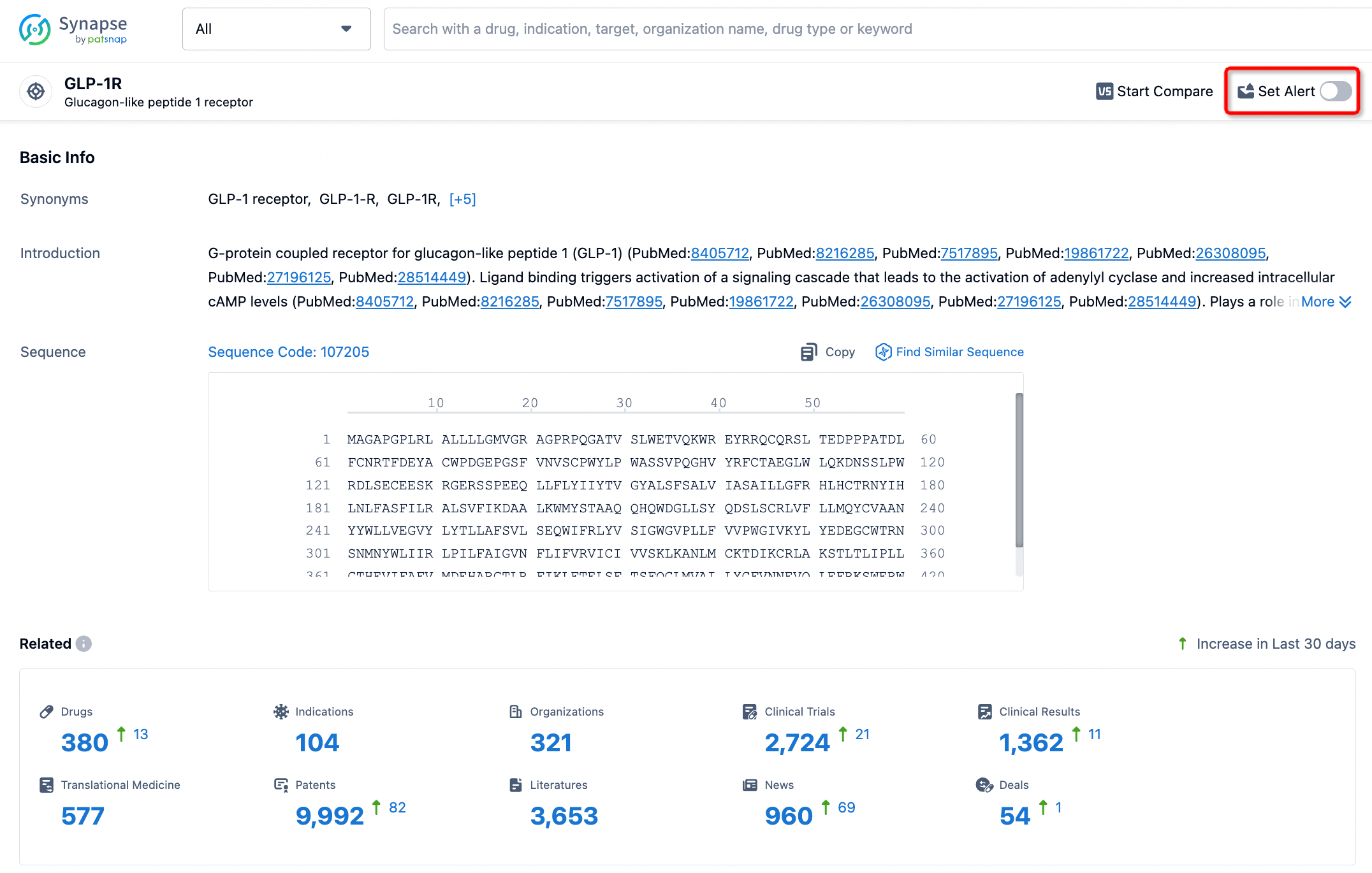
In the Synapse database, you can stay updated on the latest research and development advances of all targets. This service is accessible anytime and anywhere, with updates available daily or weekly. Use the "Set Alert" function to stay informed. Click on the image below to embark on a brand new journey of drug discovery!


Hiro LS Researcher
The AI Search Engine Built to Accelerate Biopharma Decisions
Search across billion-scale life sciences data to uncover signals, validate evidence, and act with confidence.
Ask any biopharma research question→
Get started for free today!
Accelerate Strategic R&D decision making with Synapse, Patsnap’s AI-powered Connected Innovation Intelligence Platform Built for Life Sciences Professionals.
Discover Synapse Data Servers
Synapse data is now integrated into the PatSnap LS Model Context Protocol (MCP) service. Customize your LLM agent now using our MCP server!