Request Demo
What are SYPL1 modulators and how do they work?
25 June 2024
In the ever-expanding field of molecular biology and pharmacology, the study of specific modulators has gained significant traction due to their potential in treating various diseases. One such promising area of research involves SYPL1 modulators. But what exactly are SYPL1 modulators, how do they function, and what potential applications do they have? Let’s delve into these questions to better understand their importance in modern medicine.
SYPL1, or Synaptophysin-Like 1, is a protein that belongs to the synaptophysin family. This family of proteins is primarily involved in the regulation of vesicle trafficking and neurotransmitter release in neurons. The SYPL1 protein is specifically linked to the regulation of synaptic vesicle cycling and is found in various tissues, including the brain, pancreas, and adrenal glands. Given its crucial role in cellular processes, researchers have begun to explore how modulating SYPL1 activity can offer therapeutic benefits.
SYPL1 modulators are compounds or molecules designed to influence the activity or expression of the SYPL1 protein. These modulators can either enhance or inhibit the function of SYPL1, thereby affecting the downstream pathways it controls. But how exactly do these modulators work?
SYPL1 modulators operate through various mechanisms, depending on whether they are activators or inhibitors. Activators of SYPL1 may enhance the protein’s ability to regulate vesicle trafficking, thereby increasing neurotransmitter release in neurons or hormone release in endocrine cells. On the other hand, inhibitors can dampen SYPL1 activity, reducing these processes. The precise mechanism of action often involves binding to the SYPL1 protein itself or interacting with the cellular machinery that regulates SYPL1 expression and function.
For instance, small-molecule modulators may bind directly to the SYPL1 protein, altering its conformation and thereby changing its activity. Alternatively, these modulators may interact with signaling pathways that control the synthesis and degradation of SYPL1, thus influencing its levels within the cell. The exact mechanism can vary depending on the specific modulator and the cellular context in which it is used.
Understanding the working mechanism of SYPL1 modulators is crucial for their application in therapeutic settings. So, what are the potential uses of these modulators?
One of the most promising areas for SYPL1 modulators is in the treatment of neurological disorders. Given SYPL1’s role in neurotransmitter release, modulating its activity could offer new avenues for treating conditions like epilepsy, schizophrenia, and depression. For example, enhancing SYPL1 activity could potentially improve synaptic function in neurodegenerative diseases like Alzheimer’s, where synaptic loss is a major pathological feature.
Another important application is in the realm of endocrinology. SYPL1 is expressed in the pancreas and adrenal glands, where it is involved in the secretion of hormones like insulin and adrenaline. Modulating SYPL1 activity could, therefore, offer new treatments for metabolic disorders such as diabetes and conditions related to adrenal gland dysfunction.
Beyond these applications, SYPL1 modulators are also being explored for their potential in cancer treatment. Recent studies have suggested that SYPL1 may play a role in tumor progression and metastasis in certain cancers. By modulating SYPL1 activity, researchers hope to develop new strategies for inhibiting cancer cell growth and spread.
In conclusion, SYPL1 modulators represent a fascinating and promising area of research with potential applications across multiple fields of medicine. By understanding how these modulators work and exploring their therapeutic uses, scientists hope to develop novel treatments for a range of diseases. While much work remains to be done, the future looks bright for the development of SYPL1-targeted therapies. As research progresses, we can expect to see exciting advancements that could significantly impact the treatment of neurological disorders, metabolic diseases, and cancer.
SYPL1, or Synaptophysin-Like 1, is a protein that belongs to the synaptophysin family. This family of proteins is primarily involved in the regulation of vesicle trafficking and neurotransmitter release in neurons. The SYPL1 protein is specifically linked to the regulation of synaptic vesicle cycling and is found in various tissues, including the brain, pancreas, and adrenal glands. Given its crucial role in cellular processes, researchers have begun to explore how modulating SYPL1 activity can offer therapeutic benefits.
SYPL1 modulators are compounds or molecules designed to influence the activity or expression of the SYPL1 protein. These modulators can either enhance or inhibit the function of SYPL1, thereby affecting the downstream pathways it controls. But how exactly do these modulators work?
SYPL1 modulators operate through various mechanisms, depending on whether they are activators or inhibitors. Activators of SYPL1 may enhance the protein’s ability to regulate vesicle trafficking, thereby increasing neurotransmitter release in neurons or hormone release in endocrine cells. On the other hand, inhibitors can dampen SYPL1 activity, reducing these processes. The precise mechanism of action often involves binding to the SYPL1 protein itself or interacting with the cellular machinery that regulates SYPL1 expression and function.
For instance, small-molecule modulators may bind directly to the SYPL1 protein, altering its conformation and thereby changing its activity. Alternatively, these modulators may interact with signaling pathways that control the synthesis and degradation of SYPL1, thus influencing its levels within the cell. The exact mechanism can vary depending on the specific modulator and the cellular context in which it is used.
Understanding the working mechanism of SYPL1 modulators is crucial for their application in therapeutic settings. So, what are the potential uses of these modulators?
One of the most promising areas for SYPL1 modulators is in the treatment of neurological disorders. Given SYPL1’s role in neurotransmitter release, modulating its activity could offer new avenues for treating conditions like epilepsy, schizophrenia, and depression. For example, enhancing SYPL1 activity could potentially improve synaptic function in neurodegenerative diseases like Alzheimer’s, where synaptic loss is a major pathological feature.
Another important application is in the realm of endocrinology. SYPL1 is expressed in the pancreas and adrenal glands, where it is involved in the secretion of hormones like insulin and adrenaline. Modulating SYPL1 activity could, therefore, offer new treatments for metabolic disorders such as diabetes and conditions related to adrenal gland dysfunction.
Beyond these applications, SYPL1 modulators are also being explored for their potential in cancer treatment. Recent studies have suggested that SYPL1 may play a role in tumor progression and metastasis in certain cancers. By modulating SYPL1 activity, researchers hope to develop new strategies for inhibiting cancer cell growth and spread.
In conclusion, SYPL1 modulators represent a fascinating and promising area of research with potential applications across multiple fields of medicine. By understanding how these modulators work and exploring their therapeutic uses, scientists hope to develop novel treatments for a range of diseases. While much work remains to be done, the future looks bright for the development of SYPL1-targeted therapies. As research progresses, we can expect to see exciting advancements that could significantly impact the treatment of neurological disorders, metabolic diseases, and cancer.
How to obtain the latest development progress of all targets?
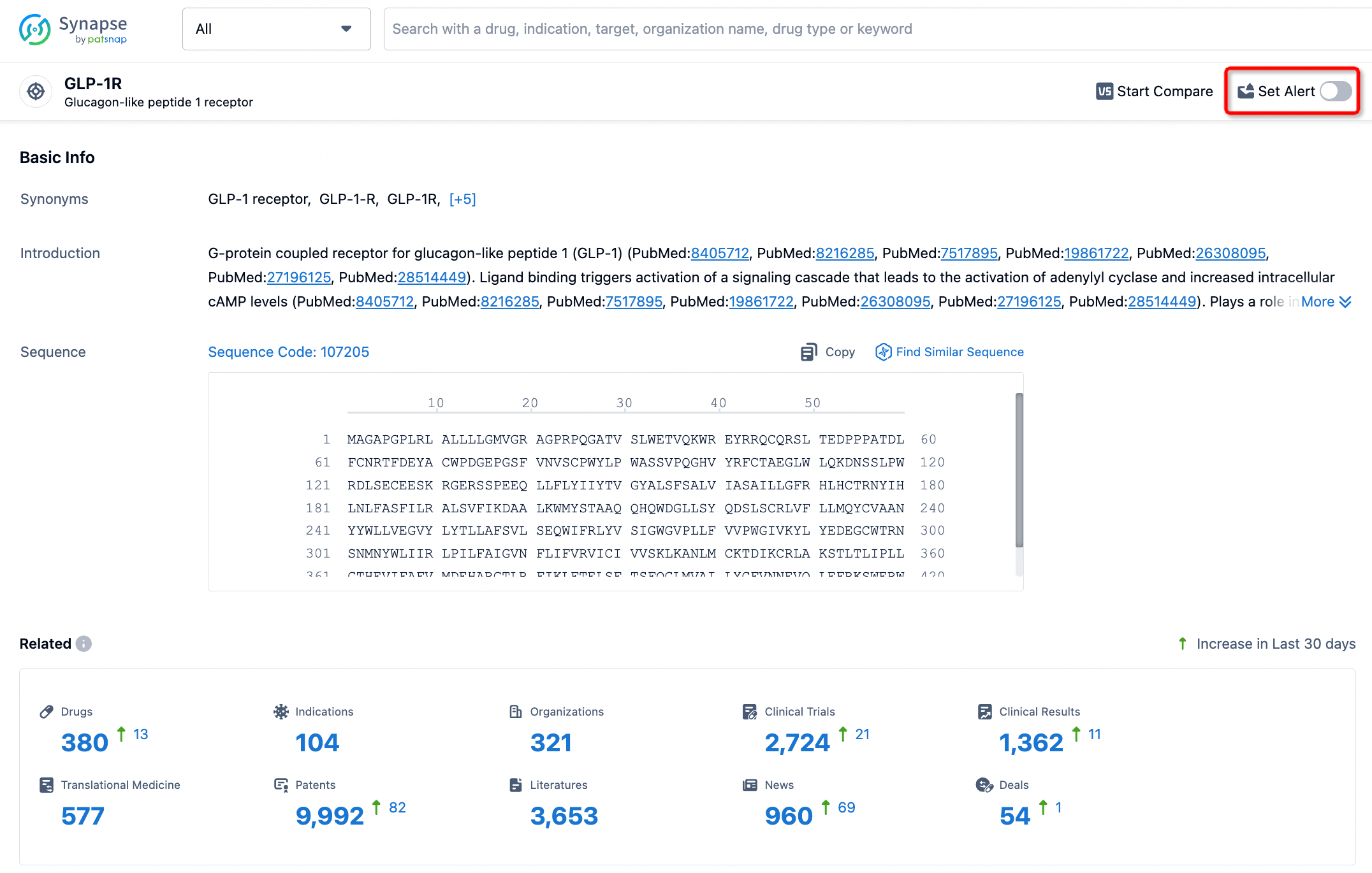
In the Synapse database, you can stay updated on the latest research and development advances of all targets. This service is accessible anytime and anywhere, with updates available daily or weekly. Use the "Set Alert" function to stay informed. Click on the image below to embark on a brand new journey of drug discovery!


Hiro LS Researcher
The AI Search Engine Built to Accelerate Biopharma Decisions
Search across billion-scale life sciences data to uncover signals, validate evidence, and act with confidence.
Ask any biopharma research question→
Get started for free today!
Accelerate Strategic R&D decision making with Synapse, Patsnap’s AI-powered Connected Innovation Intelligence Platform Built for Life Sciences Professionals.
Discover Synapse Data Servers
Synapse data is now integrated into the PatSnap LS Model Context Protocol (MCP) service. Customize your LLM agent now using our MCP server!