Request Demo
What are TCRDV2 inhibitors and how do they work?
21 June 2024
TCRDV2 inhibitors have emerged as a significant area of interest in immunology and therapeutic development. These inhibitors target the T-cell receptor delta variable 2 (TCRDV2) chain, which is primarily expressed on a subset of gamma-delta T cells. Gamma-delta T cells play crucial roles in immune responses, particularly in recognizing and eliminating cancer cells and infected cells. By understanding the mechanisms, applications, and potential benefits of TCRDV2 inhibitors, researchers and clinicians can better appreciate their significance in modern medicine.
TCRDV2 inhibitors operate by selectively binding to the TCRDV2 chain on gamma-delta T cells. The TCRDV2 chain is part of the T-cell receptor complex, which recognizes antigens presented by other cells. Unlike the more common alpha-beta T cells, gamma-delta T cells do not rely on major histocompatibility complex (MHC) molecules for antigen recognition. This unique capability allows gamma-delta T cells to respond to a wide range of antigens, including those presented by stressed or transformed cells, such as tumor cells.
The mechanism of action of TCRDV2 inhibitors involves the modulation of TCRDV2 signaling pathways. When TCRDV2 inhibitors bind to the TCRDV2 chain, they can either block or modify the receptor's interaction with its ligands. This interaction alteration can impede the activation and proliferation of gamma-delta T cells, thereby modulating the immune response. By targeting TCRDV2, these inhibitors can influence gamma-delta T cell function and activity, which can be beneficial in various clinical scenarios.
One of the primary uses of TCRDV2 inhibitors is in the treatment of certain cancers. Gamma-delta T cells are known for their cytotoxic activity against tumor cells. By inhibiting TCRDV2, researchers aim to potentiate the anti-tumor response of these cells. In some cases, TCRDV2 inhibitors can enhance the effectiveness of existing cancer therapies, such as chemotherapy and radiation therapy, by promoting a more robust immune response against cancer cells. Additionally, TCRDV2 inhibitors are being explored as standalone treatments for specific types of cancers, including hematological malignancies and solid tumors.
Beyond cancer therapy, TCRDV2 inhibitors have potential applications in autoimmune diseases and inflammatory conditions. Gamma-delta T cells are involved in the regulation of immune responses and can contribute to the pathology of autoimmune diseases. By modulating the activity of gamma-delta T cells through TCRDV2 inhibition, it may be possible to ameliorate the symptoms of autoimmune disorders, such as rheumatoid arthritis, multiple sclerosis, and inflammatory bowel disease. TCRDV2 inhibitors could help restore immune balance and reduce inflammation in these conditions.
Moreover, TCRDV2 inhibitors are being investigated for their potential role in infectious disease management. Gamma-delta T cells respond to a variety of pathogens, including bacteria, viruses, and parasites. By modulating gamma-delta T cell activity, TCRDV2 inhibitors could enhance the immune response to infections or prevent excessive immune activation that can lead to tissue damage. This dual capability makes TCRDV2 inhibitors a promising avenue for both enhancing host defense and controlling immune-mediated pathology in infectious diseases.
In conclusion, TCRDV2 inhibitors represent a versatile and promising class of therapeutic agents with potential applications across various medical fields. By targeting the TCRDV2 chain on gamma-delta T cells, these inhibitors can modulate immune responses in ways that benefit cancer treatment, autoimmune disease management, and infectious disease control. Continued research and clinical trials will be essential to fully understand the scope of their efficacy and safety, ultimately paving the way for new and innovative treatments that harness the power of the immune system.
TCRDV2 inhibitors operate by selectively binding to the TCRDV2 chain on gamma-delta T cells. The TCRDV2 chain is part of the T-cell receptor complex, which recognizes antigens presented by other cells. Unlike the more common alpha-beta T cells, gamma-delta T cells do not rely on major histocompatibility complex (MHC) molecules for antigen recognition. This unique capability allows gamma-delta T cells to respond to a wide range of antigens, including those presented by stressed or transformed cells, such as tumor cells.
The mechanism of action of TCRDV2 inhibitors involves the modulation of TCRDV2 signaling pathways. When TCRDV2 inhibitors bind to the TCRDV2 chain, they can either block or modify the receptor's interaction with its ligands. This interaction alteration can impede the activation and proliferation of gamma-delta T cells, thereby modulating the immune response. By targeting TCRDV2, these inhibitors can influence gamma-delta T cell function and activity, which can be beneficial in various clinical scenarios.
One of the primary uses of TCRDV2 inhibitors is in the treatment of certain cancers. Gamma-delta T cells are known for their cytotoxic activity against tumor cells. By inhibiting TCRDV2, researchers aim to potentiate the anti-tumor response of these cells. In some cases, TCRDV2 inhibitors can enhance the effectiveness of existing cancer therapies, such as chemotherapy and radiation therapy, by promoting a more robust immune response against cancer cells. Additionally, TCRDV2 inhibitors are being explored as standalone treatments for specific types of cancers, including hematological malignancies and solid tumors.
Beyond cancer therapy, TCRDV2 inhibitors have potential applications in autoimmune diseases and inflammatory conditions. Gamma-delta T cells are involved in the regulation of immune responses and can contribute to the pathology of autoimmune diseases. By modulating the activity of gamma-delta T cells through TCRDV2 inhibition, it may be possible to ameliorate the symptoms of autoimmune disorders, such as rheumatoid arthritis, multiple sclerosis, and inflammatory bowel disease. TCRDV2 inhibitors could help restore immune balance and reduce inflammation in these conditions.
Moreover, TCRDV2 inhibitors are being investigated for their potential role in infectious disease management. Gamma-delta T cells respond to a variety of pathogens, including bacteria, viruses, and parasites. By modulating gamma-delta T cell activity, TCRDV2 inhibitors could enhance the immune response to infections or prevent excessive immune activation that can lead to tissue damage. This dual capability makes TCRDV2 inhibitors a promising avenue for both enhancing host defense and controlling immune-mediated pathology in infectious diseases.
In conclusion, TCRDV2 inhibitors represent a versatile and promising class of therapeutic agents with potential applications across various medical fields. By targeting the TCRDV2 chain on gamma-delta T cells, these inhibitors can modulate immune responses in ways that benefit cancer treatment, autoimmune disease management, and infectious disease control. Continued research and clinical trials will be essential to fully understand the scope of their efficacy and safety, ultimately paving the way for new and innovative treatments that harness the power of the immune system.
How to obtain the latest development progress of all targets?
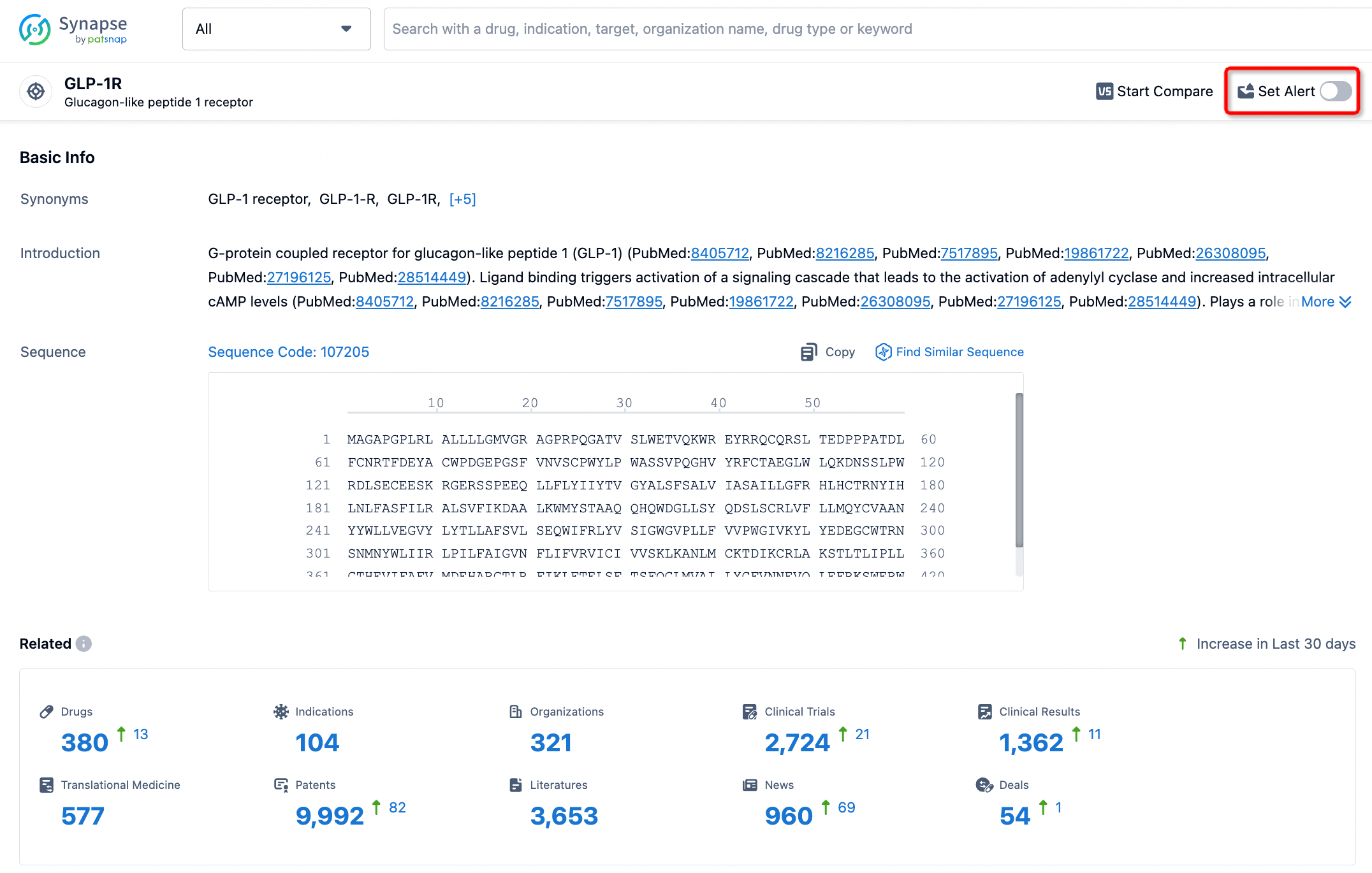
In the Synapse database, you can stay updated on the latest research and development advances of all targets. This service is accessible anytime and anywhere, with updates available daily or weekly. Use the "Set Alert" function to stay informed. Click on the image below to embark on a brand new journey of drug discovery!


AI Agents Built for Biopharma Breakthroughs
Accelerate discovery. Empower decisions. Transform outcomes.
Get started for free today!
Accelerate Strategic R&D decision making with Synapse, PatSnap’s AI-powered Connected Innovation Intelligence Platform Built for Life Sciences Professionals.
Start your data trial now!
Synapse data is also accessible to external entities via APIs or data packages. Empower better decisions with the latest in pharmaceutical intelligence.