Request Demo
What are TCRGV9 modulators and how do they work?
21 June 2024
In recent years, the field of immunotherapy has made significant strides, offering new hope in the treatment of various diseases, particularly cancer. One of the promising areas of research within immunotherapy involves the modulation of T-cell receptor gamma variable 9 (TCRGV9). Understanding how TCRGV9 modulators work and their potential applications can provide valuable insights into their therapeutic potential.
T-cell receptors (TCRs) are crucial components of the immune system, playing a key role in the recognition and elimination of pathogens and abnormal cells. TCRGV9 is a subtype of TCRs found on gamma-delta T cells, a unique subset of T cells that possess distinct properties compared to the more common alpha-beta T cells. Gamma-delta T cells are known for their rapid response to a wide range of antigens and their ability to recognize stress-induced molecules on infected or transformed cells, such as cancer cells. This makes them an attractive target for therapeutic intervention.
TCRGV9 modulators are agents designed to specifically target and influence the activity of TCRGV9-expressing gamma-delta T cells. These modulators can either enhance or inhibit the function of these cells, depending on the therapeutic goal. There are several mechanisms through which TCRGV9 modulators can work, including direct binding to the TCRGV9 complex, influencing the signaling pathways downstream of TCR engagement, or altering the expression of ligands that interact with TCRGV9.
One of the primary ways TCRGV9 modulators work is by direct activation of gamma-delta T cells. This activation can occur through the use of agonistic antibodies or small molecules that bind to the TCRGV9 complex, mimicking the natural ligands and triggering a response. Upon activation, gamma-delta T cells can exert cytotoxic effects on target cells, release cytokines that modulate the immune environment, and recruit other immune cells to the site of action. This robust response can be harnessed to target and eliminate cancer cells, making TCRGV9 modulators a promising approach in oncology.
Another mechanism of action for TCRGV9 modulators is the enhancement of gamma-delta T cell proliferation and survival. This can be achieved through the use of cytokines, such as interleukin-2 (IL-2) and interleukin-15 (IL-15), which promote the expansion and persistence of these cells. By increasing the number of functional gamma-delta T cells, TCRGV9 modulators can amplify the overall immune response against tumors or infected cells.
Conversely, in certain conditions where gamma-delta T cell activity may be detrimental, such as autoimmune diseases, TCRGV9 modulators can be used to inhibit their function. This inhibition can be achieved through the use of antagonistic antibodies or small molecules that block TCRGV9 signaling, thereby reducing the activation and proliferation of these cells. By dampening the immune response, TCRGV9 modulators can help alleviate the symptoms of autoimmune disorders and prevent tissue damage caused by excessive inflammation.
The potential applications of TCRGV9 modulators are diverse and span across several therapeutic areas. In oncology, these modulators hold promise as a novel class of immunotherapies that can target a wide range of cancers, including those that are resistant to traditional treatments. Preclinical studies have shown that TCRGV9 modulators can effectively reduce tumor growth and improve survival rates in animal models. Clinical trials are currently underway to evaluate their safety and efficacy in human patients, and early results are promising.
In addition to cancer, TCRGV9 modulators are being investigated for their potential in treating infectious diseases. Gamma-delta T cells play a crucial role in the early immune response to infections, and enhancing their activity through TCRGV9 modulation could provide a powerful tool in combating viral and bacterial pathogens. For example, TCRGV9 modulators could be used to boost the immune response in chronic infections like HIV or hepatitis, where the immune system is often exhausted and unable to effectively clear the infection.
Moreover, TCRGV9 modulators have potential applications in autoimmune diseases and inflammatory conditions. By selectively inhibiting gamma-delta T cell activity, these modulators could help restore immune balance and prevent the excessive immune responses that characterize autoimmune disorders.
In conclusion, TCRGV9 modulators represent a promising and versatile approach in immunotherapy, with potential applications in cancer, infectious diseases, and autoimmune conditions. As research in this area continues to advance, we can expect to see new and innovative therapies that leverage the unique properties of gamma-delta T cells to improve patient outcomes and revolutionize the treatment of various diseases.
T-cell receptors (TCRs) are crucial components of the immune system, playing a key role in the recognition and elimination of pathogens and abnormal cells. TCRGV9 is a subtype of TCRs found on gamma-delta T cells, a unique subset of T cells that possess distinct properties compared to the more common alpha-beta T cells. Gamma-delta T cells are known for their rapid response to a wide range of antigens and their ability to recognize stress-induced molecules on infected or transformed cells, such as cancer cells. This makes them an attractive target for therapeutic intervention.
TCRGV9 modulators are agents designed to specifically target and influence the activity of TCRGV9-expressing gamma-delta T cells. These modulators can either enhance or inhibit the function of these cells, depending on the therapeutic goal. There are several mechanisms through which TCRGV9 modulators can work, including direct binding to the TCRGV9 complex, influencing the signaling pathways downstream of TCR engagement, or altering the expression of ligands that interact with TCRGV9.
One of the primary ways TCRGV9 modulators work is by direct activation of gamma-delta T cells. This activation can occur through the use of agonistic antibodies or small molecules that bind to the TCRGV9 complex, mimicking the natural ligands and triggering a response. Upon activation, gamma-delta T cells can exert cytotoxic effects on target cells, release cytokines that modulate the immune environment, and recruit other immune cells to the site of action. This robust response can be harnessed to target and eliminate cancer cells, making TCRGV9 modulators a promising approach in oncology.
Another mechanism of action for TCRGV9 modulators is the enhancement of gamma-delta T cell proliferation and survival. This can be achieved through the use of cytokines, such as interleukin-2 (IL-2) and interleukin-15 (IL-15), which promote the expansion and persistence of these cells. By increasing the number of functional gamma-delta T cells, TCRGV9 modulators can amplify the overall immune response against tumors or infected cells.
Conversely, in certain conditions where gamma-delta T cell activity may be detrimental, such as autoimmune diseases, TCRGV9 modulators can be used to inhibit their function. This inhibition can be achieved through the use of antagonistic antibodies or small molecules that block TCRGV9 signaling, thereby reducing the activation and proliferation of these cells. By dampening the immune response, TCRGV9 modulators can help alleviate the symptoms of autoimmune disorders and prevent tissue damage caused by excessive inflammation.
The potential applications of TCRGV9 modulators are diverse and span across several therapeutic areas. In oncology, these modulators hold promise as a novel class of immunotherapies that can target a wide range of cancers, including those that are resistant to traditional treatments. Preclinical studies have shown that TCRGV9 modulators can effectively reduce tumor growth and improve survival rates in animal models. Clinical trials are currently underway to evaluate their safety and efficacy in human patients, and early results are promising.
In addition to cancer, TCRGV9 modulators are being investigated for their potential in treating infectious diseases. Gamma-delta T cells play a crucial role in the early immune response to infections, and enhancing their activity through TCRGV9 modulation could provide a powerful tool in combating viral and bacterial pathogens. For example, TCRGV9 modulators could be used to boost the immune response in chronic infections like HIV or hepatitis, where the immune system is often exhausted and unable to effectively clear the infection.
Moreover, TCRGV9 modulators have potential applications in autoimmune diseases and inflammatory conditions. By selectively inhibiting gamma-delta T cell activity, these modulators could help restore immune balance and prevent the excessive immune responses that characterize autoimmune disorders.
In conclusion, TCRGV9 modulators represent a promising and versatile approach in immunotherapy, with potential applications in cancer, infectious diseases, and autoimmune conditions. As research in this area continues to advance, we can expect to see new and innovative therapies that leverage the unique properties of gamma-delta T cells to improve patient outcomes and revolutionize the treatment of various diseases.
How to obtain the latest development progress of all targets?
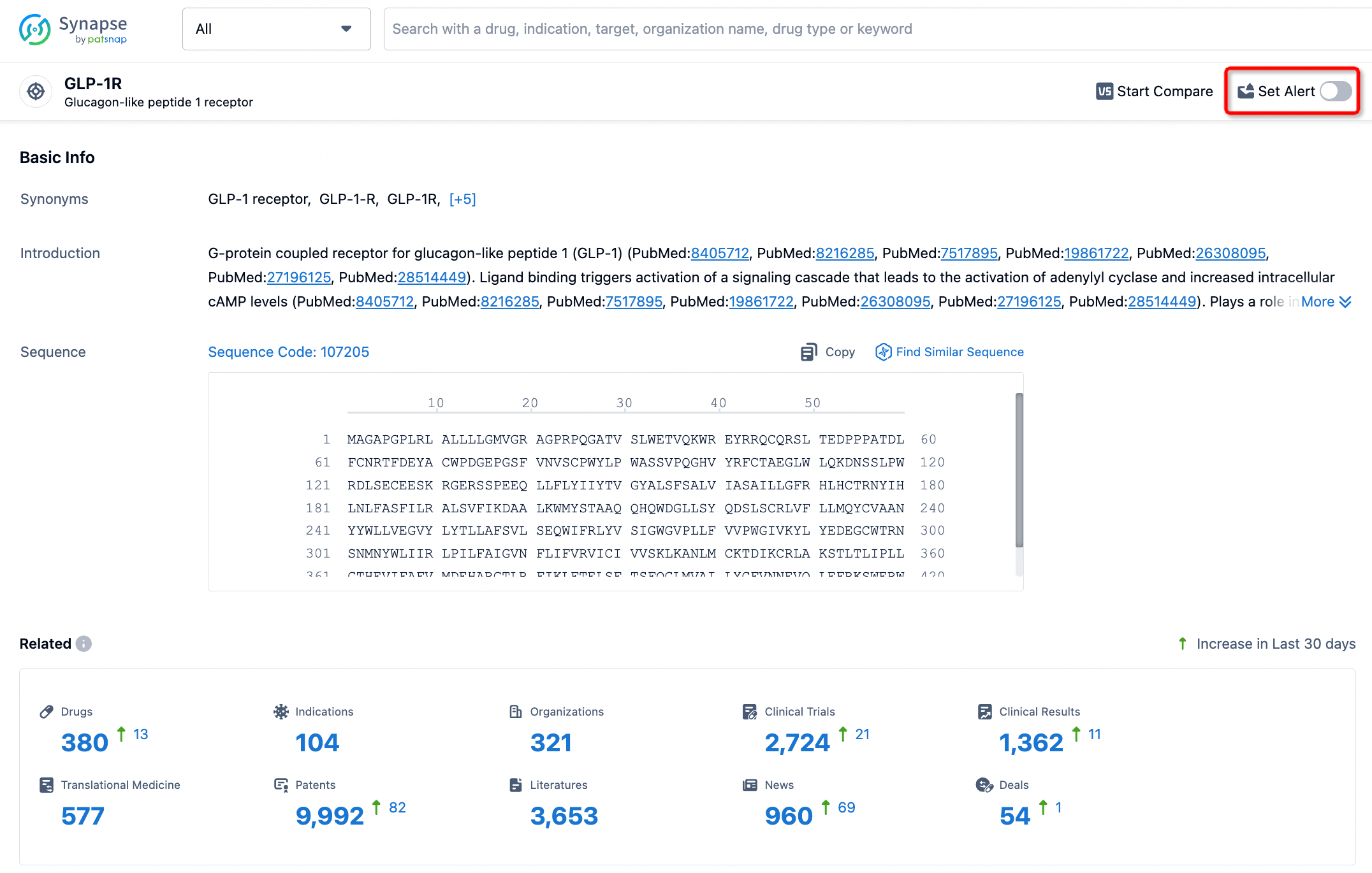
In the Synapse database, you can stay updated on the latest research and development advances of all targets. This service is accessible anytime and anywhere, with updates available daily or weekly. Use the "Set Alert" function to stay informed. Click on the image below to embark on a brand new journey of drug discovery!


AI Agents Built for Biopharma Breakthroughs
Accelerate discovery. Empower decisions. Transform outcomes.
Get started for free today!
Accelerate Strategic R&D decision making with Synapse, PatSnap’s AI-powered Connected Innovation Intelligence Platform Built for Life Sciences Professionals.
Start your data trial now!
Synapse data is also accessible to external entities via APIs or data packages. Empower better decisions with the latest in pharmaceutical intelligence.