Request Demo
What are TRAIL receptor modulators and how do they work?
26 June 2024
TRAIL receptor modulators have emerged as a promising avenue in the field of cancer therapy and immunology, showcasing remarkable potential in the fight against various malignancies. Tumor necrosis factor-related apoptosis-inducing ligand (TRAIL) and its receptors play a pivotal role in the regulation of cell death, making them attractive targets for therapeutic intervention. This blog post delves into the intricacies of TRAIL receptor modulators, their mechanisms of action, and their diverse applications in modern medicine.
TRAIL, a member of the tumor necrosis factor (TNF) superfamily, exerts its effects through interaction with specific death receptors on the surface of target cells. These receptors, primarily DR4 (TRAIL-R1) and DR5 (TRAIL-R2), initiate a cascade of intracellular events leading to apoptosis, or programmed cell death. The ability of TRAIL to selectively induce apoptosis in cancer cells while sparing normal cells provides a unique advantage over traditional chemotherapy, which often affects both healthy and malignant tissues.
Upon binding to its receptors, TRAIL triggers the formation of a death-inducing signaling complex (DISC). This complex facilitates the activation of caspases, a family of protease enzymes that play a crucial role in the execution phase of apoptosis. Caspase-8, one of the initiator caspases activated by the DISC, subsequently activates downstream effector caspases such as caspase-3, -6, and -7. These effector caspases orchestrate the dismantling of cellular components, culminating in cell death.
TRAIL receptor modulators can enhance or inhibit the TRAIL-mediated apoptotic pathway. Agonistic antibodies or recombinant TRAIL proteins mimic the natural ligand, binding to death receptors and promoting apoptosis. This approach is particularly beneficial in targeting cancer cells that express high levels of TRAIL receptors. Conversely, antagonistic antibodies or small molecule inhibitors can block the interaction between TRAIL and its receptors, preventing unwanted cell death in certain pathological conditions.
One of the most compelling applications of TRAIL receptor modulators lies in cancer therapy. Preclinical studies and clinical trials have demonstrated the efficacy of TRAIL-based treatments in inducing apoptosis in a wide range of cancer cells, including those resistant to conventional therapies. Moreover, TRAIL receptor modulators can be used in combination with other therapeutic agents to enhance their anticancer effects. For instance, combining TRAIL with chemotherapy or targeted therapies has shown synergistic effects, increasing the susceptibility of cancer cells to apoptosis and reducing tumor growth.
Beyond oncology, TRAIL receptor modulators have also shown promise in immunotherapy. By modulating the TRAIL pathway, researchers aim to enhance the body's immune response against tumors. TRAIL can be used to activate immune cells such as natural killer (NK) cells and cytotoxic T lymphocytes (CTLs), which play a crucial role in identifying and eliminating cancer cells. This immunomodulatory effect holds great potential for developing novel cancer immunotherapies.
Moreover, TRAIL receptor modulators are being explored for their potential in treating autoimmune diseases and chronic inflammatory conditions. In autoimmune diseases, the immune system mistakenly attacks healthy tissues, leading to inflammation and tissue damage. By selectively inducing apoptosis in autoreactive immune cells, TRAIL receptor modulators can help restore immune tolerance and alleviate symptoms in conditions such as rheumatoid arthritis and multiple sclerosis.
In addition to their therapeutic applications, TRAIL receptor modulators are valuable tools in research. They provide insights into the mechanisms of apoptosis and contribute to our understanding of various diseases. By studying the TRAIL pathway and its modulation, researchers can uncover new targets for drug development and design more effective treatments.
In conclusion, TRAIL receptor modulators represent a promising class of therapeutic agents with diverse applications in cancer therapy, immunotherapy, and autoimmune disease management. Their ability to selectively induce apoptosis in cancer cells while sparing normal cells makes them an attractive alternative to traditional treatments. As research continues to unravel the complexities of the TRAIL pathway, we can anticipate the development of novel and more effective therapies that harness the power of TRAIL receptor modulators.
TRAIL, a member of the tumor necrosis factor (TNF) superfamily, exerts its effects through interaction with specific death receptors on the surface of target cells. These receptors, primarily DR4 (TRAIL-R1) and DR5 (TRAIL-R2), initiate a cascade of intracellular events leading to apoptosis, or programmed cell death. The ability of TRAIL to selectively induce apoptosis in cancer cells while sparing normal cells provides a unique advantage over traditional chemotherapy, which often affects both healthy and malignant tissues.
Upon binding to its receptors, TRAIL triggers the formation of a death-inducing signaling complex (DISC). This complex facilitates the activation of caspases, a family of protease enzymes that play a crucial role in the execution phase of apoptosis. Caspase-8, one of the initiator caspases activated by the DISC, subsequently activates downstream effector caspases such as caspase-3, -6, and -7. These effector caspases orchestrate the dismantling of cellular components, culminating in cell death.
TRAIL receptor modulators can enhance or inhibit the TRAIL-mediated apoptotic pathway. Agonistic antibodies or recombinant TRAIL proteins mimic the natural ligand, binding to death receptors and promoting apoptosis. This approach is particularly beneficial in targeting cancer cells that express high levels of TRAIL receptors. Conversely, antagonistic antibodies or small molecule inhibitors can block the interaction between TRAIL and its receptors, preventing unwanted cell death in certain pathological conditions.
One of the most compelling applications of TRAIL receptor modulators lies in cancer therapy. Preclinical studies and clinical trials have demonstrated the efficacy of TRAIL-based treatments in inducing apoptosis in a wide range of cancer cells, including those resistant to conventional therapies. Moreover, TRAIL receptor modulators can be used in combination with other therapeutic agents to enhance their anticancer effects. For instance, combining TRAIL with chemotherapy or targeted therapies has shown synergistic effects, increasing the susceptibility of cancer cells to apoptosis and reducing tumor growth.
Beyond oncology, TRAIL receptor modulators have also shown promise in immunotherapy. By modulating the TRAIL pathway, researchers aim to enhance the body's immune response against tumors. TRAIL can be used to activate immune cells such as natural killer (NK) cells and cytotoxic T lymphocytes (CTLs), which play a crucial role in identifying and eliminating cancer cells. This immunomodulatory effect holds great potential for developing novel cancer immunotherapies.
Moreover, TRAIL receptor modulators are being explored for their potential in treating autoimmune diseases and chronic inflammatory conditions. In autoimmune diseases, the immune system mistakenly attacks healthy tissues, leading to inflammation and tissue damage. By selectively inducing apoptosis in autoreactive immune cells, TRAIL receptor modulators can help restore immune tolerance and alleviate symptoms in conditions such as rheumatoid arthritis and multiple sclerosis.
In addition to their therapeutic applications, TRAIL receptor modulators are valuable tools in research. They provide insights into the mechanisms of apoptosis and contribute to our understanding of various diseases. By studying the TRAIL pathway and its modulation, researchers can uncover new targets for drug development and design more effective treatments.
In conclusion, TRAIL receptor modulators represent a promising class of therapeutic agents with diverse applications in cancer therapy, immunotherapy, and autoimmune disease management. Their ability to selectively induce apoptosis in cancer cells while sparing normal cells makes them an attractive alternative to traditional treatments. As research continues to unravel the complexities of the TRAIL pathway, we can anticipate the development of novel and more effective therapies that harness the power of TRAIL receptor modulators.
How to obtain the latest development progress of all targets?
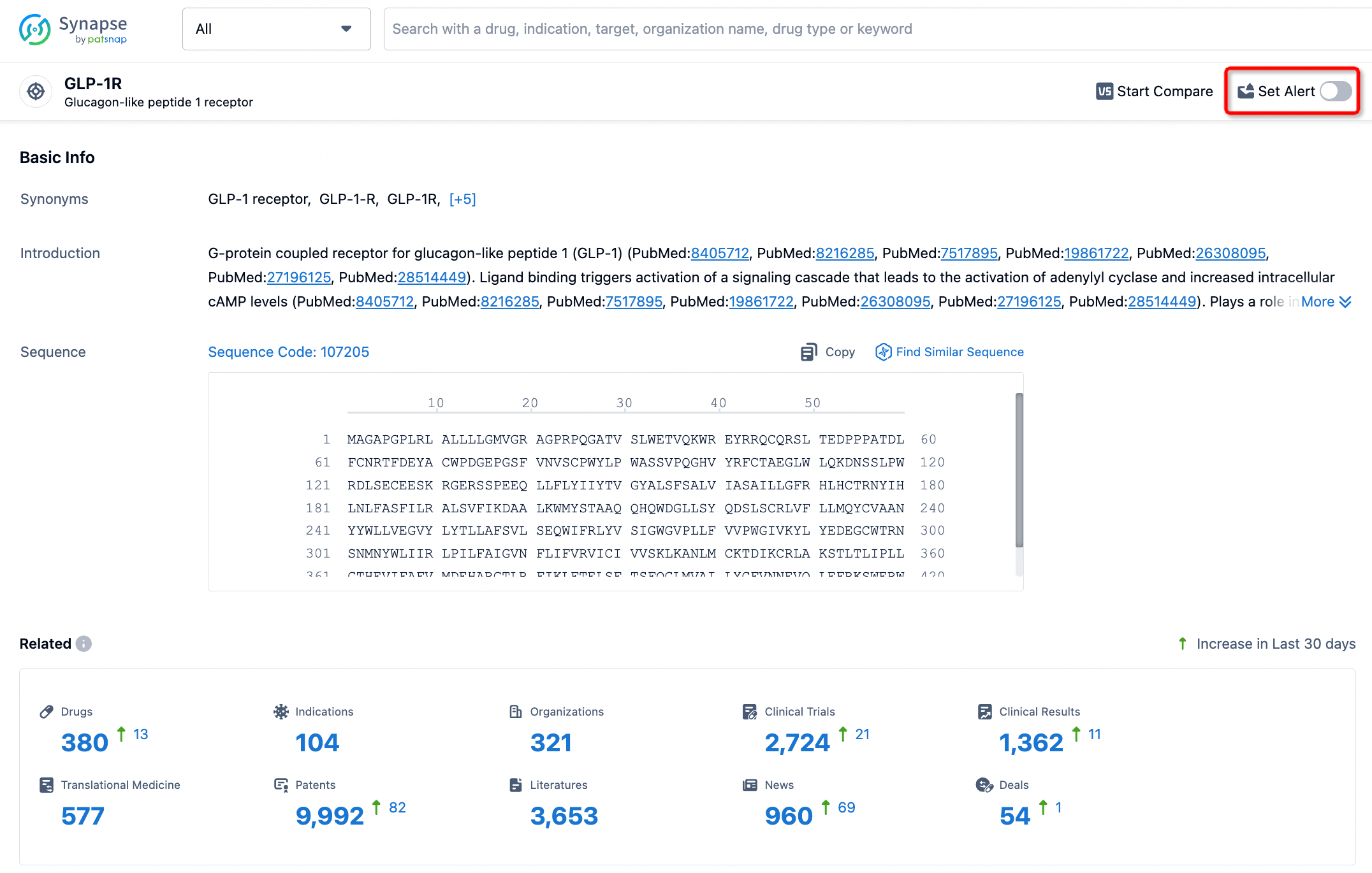
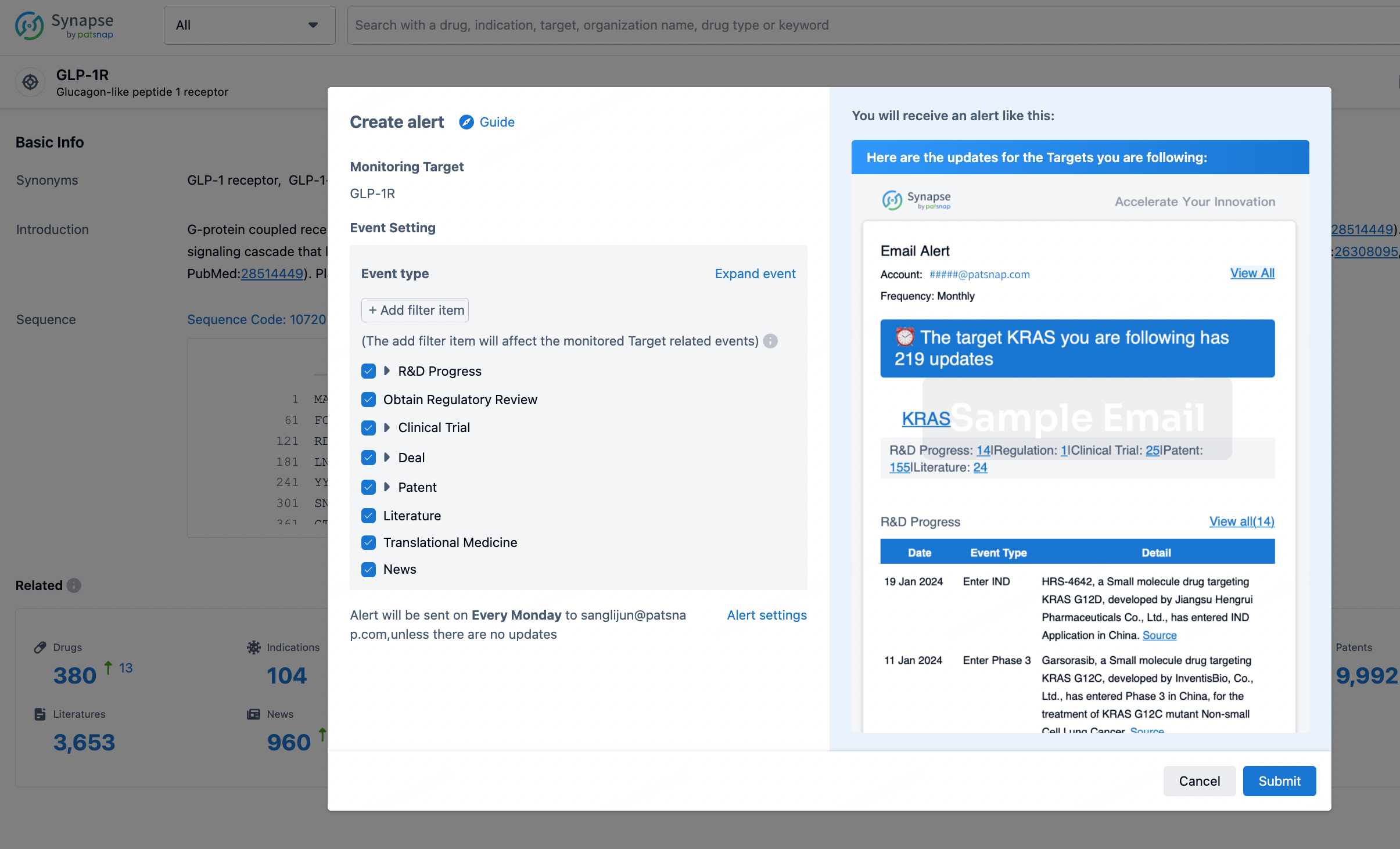
In the Synapse database, you can stay updated on the latest research and development advances of all targets. This service is accessible anytime and anywhere, with updates available daily or weekly. Use the "Set Alert" function to stay informed. Click on the image below to embark on a brand new journey of drug discovery!
AI Agents Built for Biopharma Breakthroughs
Accelerate discovery. Empower decisions. Transform outcomes.
Get started for free today!
Accelerate Strategic R&D decision making with Synapse, PatSnap’s AI-powered Connected Innovation Intelligence Platform Built for Life Sciences Professionals.
Start your data trial now!
Synapse data is also accessible to external entities via APIs or data packages. Empower better decisions with the latest in pharmaceutical intelligence.