Request Demo
What are Transglutaminases modulators and how do they work?
26 June 2024
Transglutaminases are enzymes that play a crucial role in various biological processes by catalyzing the formation of covalent bonds between proteins. These enzymes are central to numerous physiological functions, including blood clotting, skin formation, wound healing, and the stabilization of extracellular matrix proteins. Due to their significant role in these processes, transglutaminases have become a focal point in the study of various diseases and therapeutic interventions. One of the emerging areas of research involves transglutaminases modulators—substances that can either enhance or inhibit the activity of these enzymes. This blog post delves into what transglutaminases modulators are, how they work, and their potential applications.
Transglutaminases modulators are compounds or molecules that specifically target and alter the activity of transglutaminases. These modulators can be broadly classified into inhibitors and activators. Inhibitors reduce the activity of transglutaminases, while activators enhance their activity. The interest in modulating transglutaminase function stems from the enzyme's involvement in critical biological processes and its association with various diseases. For example, excessive transglutaminase activity has been linked to conditions like celiac disease, neurodegenerative diseases, and certain cancers. Conversely, insufficient activity might impair wound healing and tissue regeneration.
The modulation of transglutaminase activity can be achieved through several mechanisms. Inhibitors generally work by binding to the active site of the enzyme, thereby blocking substrate access. These inhibitors may be designed to mimic the enzyme's natural substrates, effectively competing with them and preventing the enzyme from catalyzing its normal reactions. Some inhibitors are irreversible, forming a stable, covalent bond with the enzyme which permanently inactivates it. Others are reversible, binding temporarily and allowing the enzyme to resume its function once the inhibitor is removed.
On the other hand, activators of transglutaminases can function by enhancing the enzyme's ability to bind to its substrate or by stabilizing the enzyme-substrate complex. Some activators work by interacting with allosteric sites—regions of the enzyme other than the active site—inducing conformational changes that enhance enzymatic activity. Other activators might increase the availability of cofactors essential for transglutaminase function, thereby boosting the enzyme's activity indirectly.
Transglutaminase modulators have a broad range of applications in both clinical and industrial settings. In the medical field, transglutaminase inhibitors are being explored for their potential in treating diseases where excessive enzyme activity is detrimental. For instance, in celiac disease, transglutaminase 2 (TG2) is believed to modify gluten peptides, making them more immunogenic and triggering an immune response in genetically predisposed individuals. Inhibitors of TG2 could potentially reduce this modification, thereby alleviating the symptoms of celiac disease. Similarly, in neurodegenerative diseases like Huntington's disease, transglutaminases are implicated in the formation of protein aggregates. Modulating the activity of these enzymes might help in reducing or preventing these aggregates, offering a therapeutic avenue for such conditions.
In cancer research, transglutaminase inhibitors are being investigated for their role in preventing tumor progression and metastasis. Certain transglutaminases are involved in cell adhesion and migration—processes crucial for cancer metastasis. By inhibiting these enzymes, it could be possible to slow down or even halt the spread of cancer cells. Conversely, in wound healing and tissue engineering, the activation of transglutaminases can promote the stabilization of the extracellular matrix and enhance tissue repair. Activators in this context can be used in wound dressings and other therapeutic formulations to speed up the healing process.
Beyond the medical field, transglutaminase modulators have applications in the food industry. Transglutaminases are used to improve the texture and stability of various food products, including dairy, meat, and bakery items. Modulating the activity of these enzymes can enhance product quality and extend shelf life. Researchers are also exploring the use of transglutaminases in biodegradable polymers and other biotechnological applications, highlighting the enzyme's versatility and the broad potential of its modulators.
In conclusion, transglutaminase modulators represent a promising area of research with diverse applications ranging from disease treatment to industrial processes. Understanding how these modulators work and their potential uses can pave the way for innovative therapies and products, making significant contributions to both health and industry. As research progresses, the development of effective and specific transglutaminase modulators could lead to groundbreaking advancements in various fields.
Transglutaminases modulators are compounds or molecules that specifically target and alter the activity of transglutaminases. These modulators can be broadly classified into inhibitors and activators. Inhibitors reduce the activity of transglutaminases, while activators enhance their activity. The interest in modulating transglutaminase function stems from the enzyme's involvement in critical biological processes and its association with various diseases. For example, excessive transglutaminase activity has been linked to conditions like celiac disease, neurodegenerative diseases, and certain cancers. Conversely, insufficient activity might impair wound healing and tissue regeneration.
The modulation of transglutaminase activity can be achieved through several mechanisms. Inhibitors generally work by binding to the active site of the enzyme, thereby blocking substrate access. These inhibitors may be designed to mimic the enzyme's natural substrates, effectively competing with them and preventing the enzyme from catalyzing its normal reactions. Some inhibitors are irreversible, forming a stable, covalent bond with the enzyme which permanently inactivates it. Others are reversible, binding temporarily and allowing the enzyme to resume its function once the inhibitor is removed.
On the other hand, activators of transglutaminases can function by enhancing the enzyme's ability to bind to its substrate or by stabilizing the enzyme-substrate complex. Some activators work by interacting with allosteric sites—regions of the enzyme other than the active site—inducing conformational changes that enhance enzymatic activity. Other activators might increase the availability of cofactors essential for transglutaminase function, thereby boosting the enzyme's activity indirectly.
Transglutaminase modulators have a broad range of applications in both clinical and industrial settings. In the medical field, transglutaminase inhibitors are being explored for their potential in treating diseases where excessive enzyme activity is detrimental. For instance, in celiac disease, transglutaminase 2 (TG2) is believed to modify gluten peptides, making them more immunogenic and triggering an immune response in genetically predisposed individuals. Inhibitors of TG2 could potentially reduce this modification, thereby alleviating the symptoms of celiac disease. Similarly, in neurodegenerative diseases like Huntington's disease, transglutaminases are implicated in the formation of protein aggregates. Modulating the activity of these enzymes might help in reducing or preventing these aggregates, offering a therapeutic avenue for such conditions.
In cancer research, transglutaminase inhibitors are being investigated for their role in preventing tumor progression and metastasis. Certain transglutaminases are involved in cell adhesion and migration—processes crucial for cancer metastasis. By inhibiting these enzymes, it could be possible to slow down or even halt the spread of cancer cells. Conversely, in wound healing and tissue engineering, the activation of transglutaminases can promote the stabilization of the extracellular matrix and enhance tissue repair. Activators in this context can be used in wound dressings and other therapeutic formulations to speed up the healing process.
Beyond the medical field, transglutaminase modulators have applications in the food industry. Transglutaminases are used to improve the texture and stability of various food products, including dairy, meat, and bakery items. Modulating the activity of these enzymes can enhance product quality and extend shelf life. Researchers are also exploring the use of transglutaminases in biodegradable polymers and other biotechnological applications, highlighting the enzyme's versatility and the broad potential of its modulators.
In conclusion, transglutaminase modulators represent a promising area of research with diverse applications ranging from disease treatment to industrial processes. Understanding how these modulators work and their potential uses can pave the way for innovative therapies and products, making significant contributions to both health and industry. As research progresses, the development of effective and specific transglutaminase modulators could lead to groundbreaking advancements in various fields.
How to obtain the latest development progress of all targets?
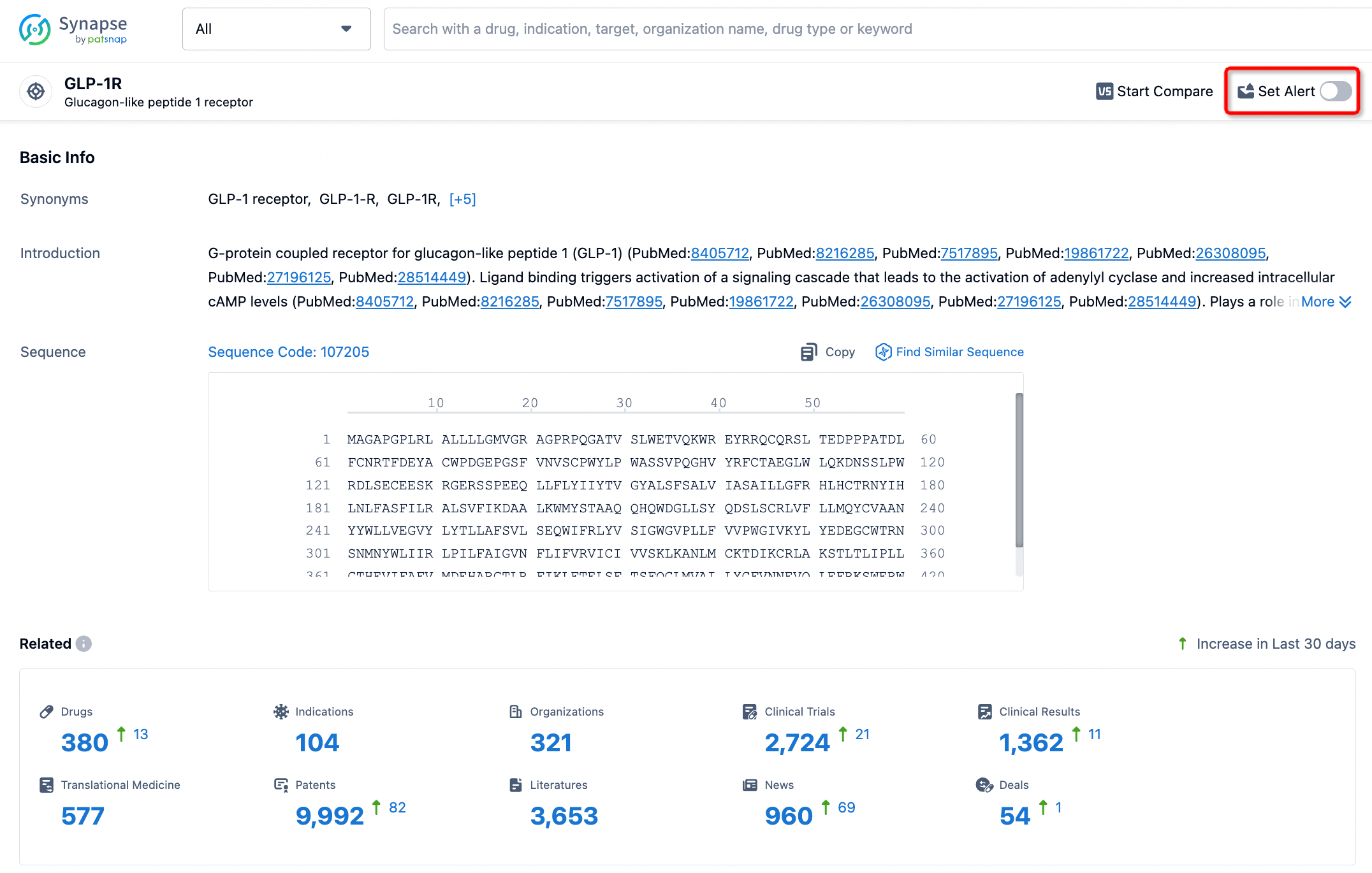
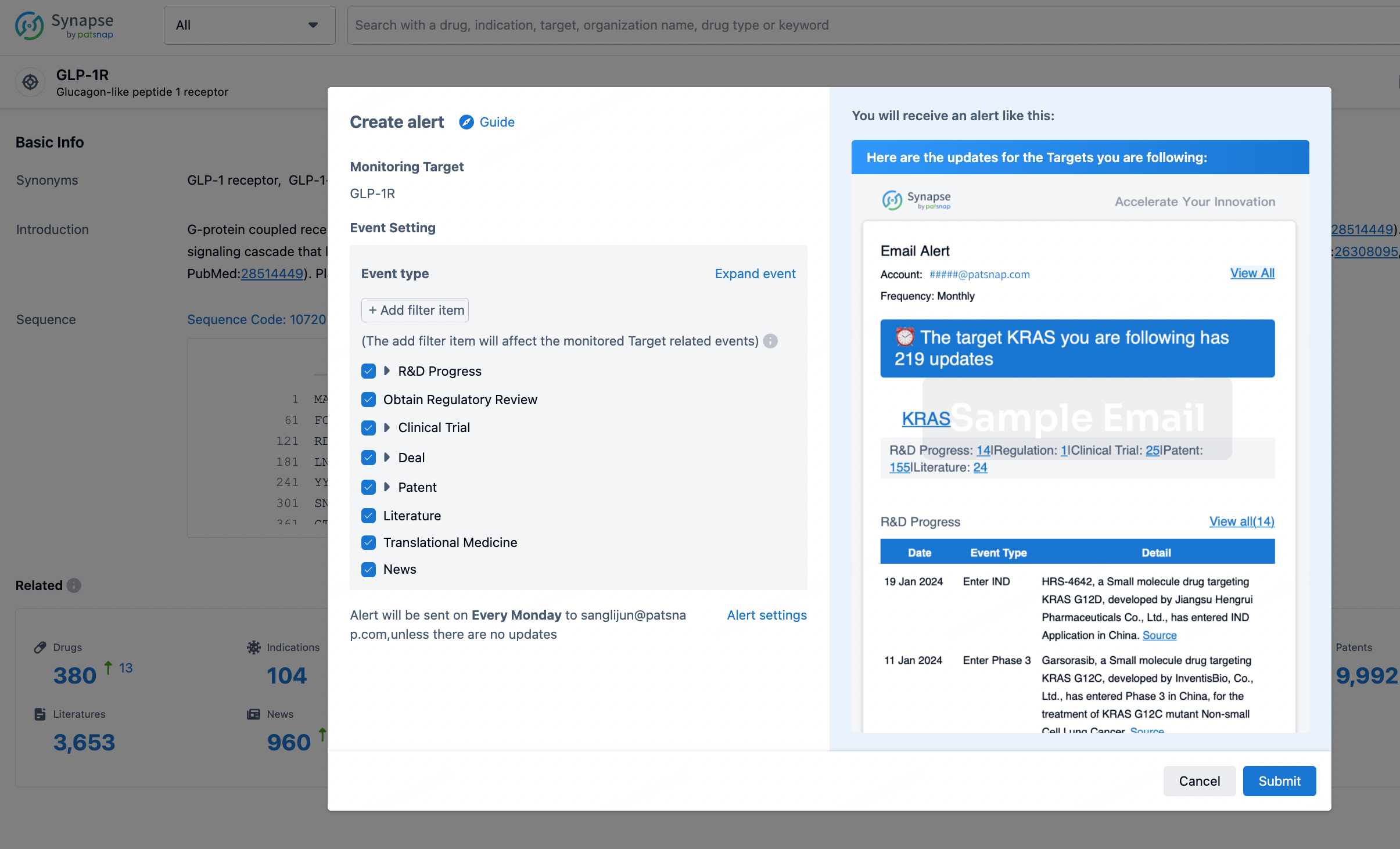
In the Synapse database, you can stay updated on the latest research and development advances of all targets. This service is accessible anytime and anywhere, with updates available daily or weekly. Use the "Set Alert" function to stay informed. Click on the image below to embark on a brand new journey of drug discovery!
Hiro LS Researcher
The AI Search Engine Built to Accelerate Biopharma Decisions
Search across billion-scale life sciences data to uncover signals, validate evidence, and act with confidence.
Ask any biopharma research question→
Get started for free today!
Accelerate Strategic R&D decision making with Synapse, Patsnap’s AI-powered Connected Innovation Intelligence Platform Built for Life Sciences Professionals.
Discover Synapse Data Servers
Synapse data is now integrated into the PatSnap LS Model Context Protocol (MCP) service. Customize your LLM agent now using our MCP server!