Request Demo
What are TrkC inhibitors and how do they work?
21 June 2024
TrkC inhibitors represent an exciting frontier in the realm of targeted therapeutics, particularly within the fields of oncology and neurobiology. TrkC, or Tropomyosin receptor kinase C, is a receptor tyrosine kinase encoded by the NTRK3 gene. It plays a crucial role in the development and function of the nervous system by participating in neural growth, survival, and differentiation. However, aberrant activation or overexpression of TrkC is associated with various pathological conditions, including certain types of cancers and neurodegenerative diseases. Thus, the development of TrkC inhibitors offers a promising avenue for therapeutic intervention in these conditions.
TrkC inhibitors function by blocking the kinase activity of the TrkC receptor. Normally, TrkC is activated by its ligand, neurotrophin-3 (NT-3), which triggers a cascade of intracellular signaling pathways critical for cell growth and survival. In pathological states, such as cancer, these pathways can become hijacked, leading to uncontrolled cell proliferation and survival. TrkC inhibitors bind to the ATP-binding site of the kinase domain, thereby preventing the receptor from phosphorylating its downstream targets. By blocking this activity, the inhibitors can effectively dampen the aberrant signaling pathways that contribute to disease progression.
Mechanistically, TrkC inhibitors can be categorized into two main types: type I and type II inhibitors. Type I inhibitors bind to the active conformation of the kinase, directly competing with ATP. In contrast, type II inhibitors bind to the inactive conformation of the kinase, stabilizing it in a non-functional state. Both types of inhibitors require careful design to ensure specificity and minimize off-target effects, which is crucial for reducing potential side effects and increasing therapeutic efficacy.
The therapeutic applications of TrkC inhibitors are broad and diverse, reflecting the widespread and critical roles of TrkC signaling in various physiological and pathological processes. One of the primary areas of research and development is in oncology. Certain cancers, such as neuroblastomas, medulloblastomas, and some lung cancers, exhibit overexpression or mutations in the TrkC receptor. By targeting these aberrant forms of TrkC, inhibitors can potentially halt tumor growth and induce apoptosis in cancerous cells. Clinical trials are currently underway to evaluate the efficacy and safety of these inhibitors in cancer patients.
Beyond cancer, TrkC inhibitors also hold promise in the treatment of neurodegenerative diseases. Neurotrophic signaling, including that mediated by TrkC, is vital for the maintenance and function of neurons. In conditions such as Alzheimer's disease, dysregulated TrkC signaling may contribute to neuronal death and cognitive decline. By modulating TrkC activity, inhibitors could potentially offer neuroprotective effects and slow the progression of such diseases. However, this application is still in the early stages of research, and much remains to be understood about the precise role of TrkC in neurodegeneration.
Another intriguing application of TrkC inhibitors is in the realm of chronic pain management. TrkC signaling has been implicated in the development and maintenance of certain types of chronic pain, including neuropathic pain. Inhibitors of TrkC could, therefore, provide a novel approach to pain relief, offering an alternative to traditional pain medications, which often come with significant side effects and risk of addiction.
In summary, TrkC inhibitors are a promising class of therapeutic agents with potential applications in oncology, neurodegenerative diseases, and chronic pain management. Their ability to block aberrant TrkC signaling offers a targeted approach to treating these conditions, potentially leading to more effective and safer therapies. As research and development in this field continue, it is likely that we will see a growing number of TrkC-targeted treatments entering clinical practice, offering new hope to patients suffering from these challenging diseases.
TrkC inhibitors function by blocking the kinase activity of the TrkC receptor. Normally, TrkC is activated by its ligand, neurotrophin-3 (NT-3), which triggers a cascade of intracellular signaling pathways critical for cell growth and survival. In pathological states, such as cancer, these pathways can become hijacked, leading to uncontrolled cell proliferation and survival. TrkC inhibitors bind to the ATP-binding site of the kinase domain, thereby preventing the receptor from phosphorylating its downstream targets. By blocking this activity, the inhibitors can effectively dampen the aberrant signaling pathways that contribute to disease progression.
Mechanistically, TrkC inhibitors can be categorized into two main types: type I and type II inhibitors. Type I inhibitors bind to the active conformation of the kinase, directly competing with ATP. In contrast, type II inhibitors bind to the inactive conformation of the kinase, stabilizing it in a non-functional state. Both types of inhibitors require careful design to ensure specificity and minimize off-target effects, which is crucial for reducing potential side effects and increasing therapeutic efficacy.
The therapeutic applications of TrkC inhibitors are broad and diverse, reflecting the widespread and critical roles of TrkC signaling in various physiological and pathological processes. One of the primary areas of research and development is in oncology. Certain cancers, such as neuroblastomas, medulloblastomas, and some lung cancers, exhibit overexpression or mutations in the TrkC receptor. By targeting these aberrant forms of TrkC, inhibitors can potentially halt tumor growth and induce apoptosis in cancerous cells. Clinical trials are currently underway to evaluate the efficacy and safety of these inhibitors in cancer patients.
Beyond cancer, TrkC inhibitors also hold promise in the treatment of neurodegenerative diseases. Neurotrophic signaling, including that mediated by TrkC, is vital for the maintenance and function of neurons. In conditions such as Alzheimer's disease, dysregulated TrkC signaling may contribute to neuronal death and cognitive decline. By modulating TrkC activity, inhibitors could potentially offer neuroprotective effects and slow the progression of such diseases. However, this application is still in the early stages of research, and much remains to be understood about the precise role of TrkC in neurodegeneration.
Another intriguing application of TrkC inhibitors is in the realm of chronic pain management. TrkC signaling has been implicated in the development and maintenance of certain types of chronic pain, including neuropathic pain. Inhibitors of TrkC could, therefore, provide a novel approach to pain relief, offering an alternative to traditional pain medications, which often come with significant side effects and risk of addiction.
In summary, TrkC inhibitors are a promising class of therapeutic agents with potential applications in oncology, neurodegenerative diseases, and chronic pain management. Their ability to block aberrant TrkC signaling offers a targeted approach to treating these conditions, potentially leading to more effective and safer therapies. As research and development in this field continue, it is likely that we will see a growing number of TrkC-targeted treatments entering clinical practice, offering new hope to patients suffering from these challenging diseases.
How to obtain the latest development progress of all targets?
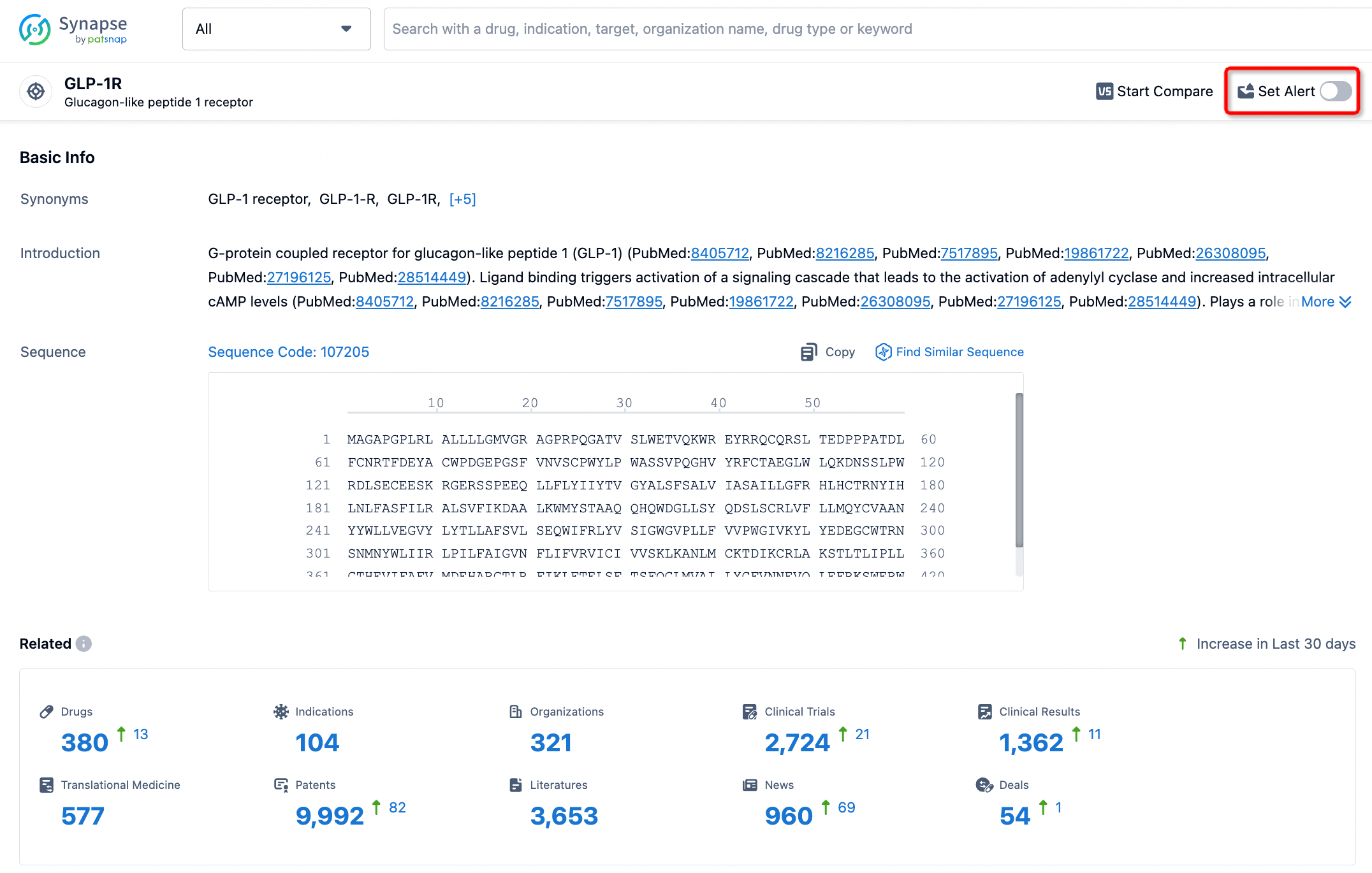
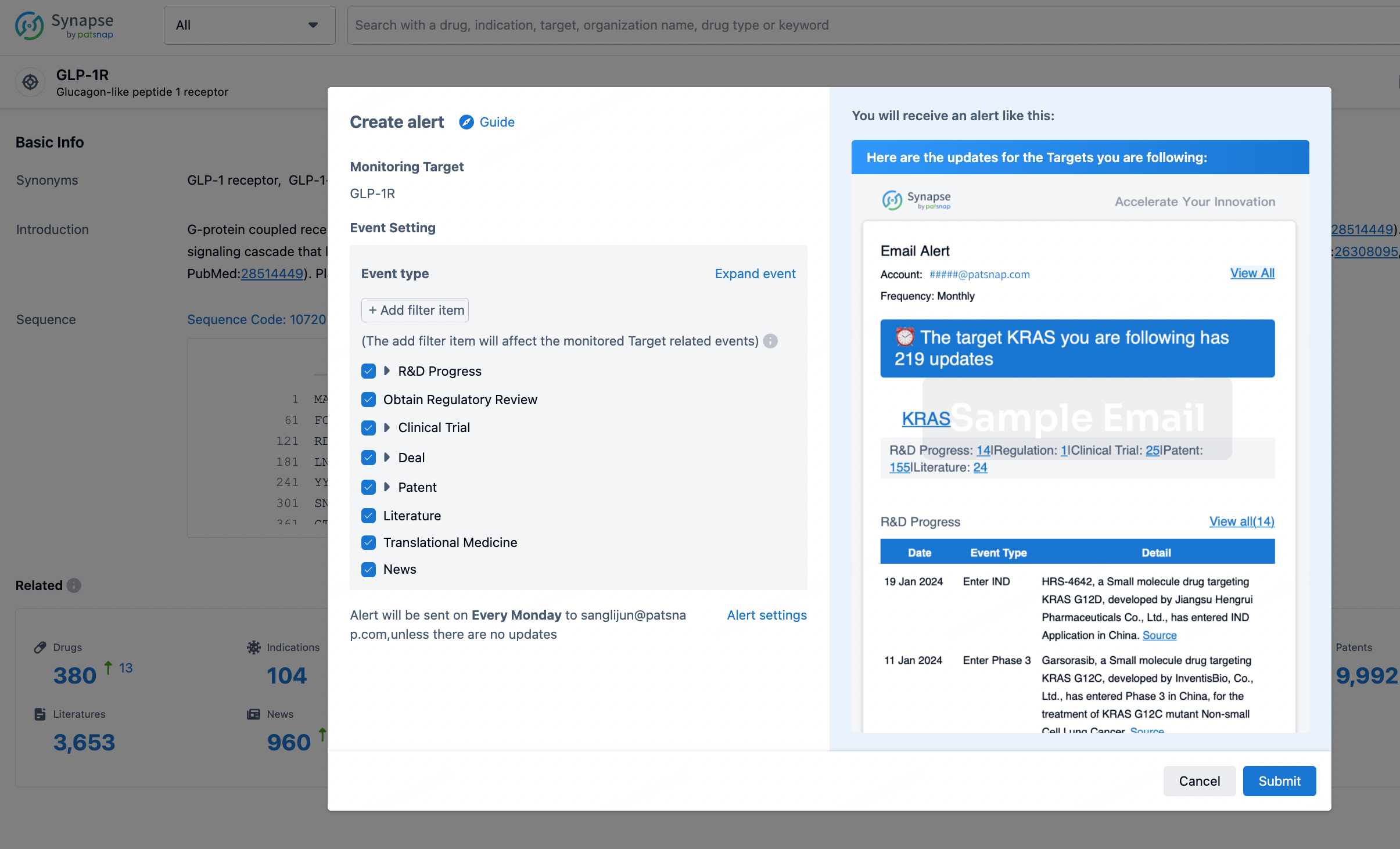
In the Synapse database, you can stay updated on the latest research and development advances of all targets. This service is accessible anytime and anywhere, with updates available daily or weekly. Use the "Set Alert" function to stay informed. Click on the image below to embark on a brand new journey of drug discovery!

AI Agents Built for Biopharma Breakthroughs
Accelerate discovery. Empower decisions. Transform outcomes.
Get started for free today!
Accelerate Strategic R&D decision making with Synapse, PatSnap’s AI-powered Connected Innovation Intelligence Platform Built for Life Sciences Professionals.
Start your data trial now!
Synapse data is also accessible to external entities via APIs or data packages. Empower better decisions with the latest in pharmaceutical intelligence.