Request Demo
What are TXN modulators and how do they work?
21 June 2024
In the rapidly advancing field of biomedicine, thioredoxin (TXN) modulators have emerged as crucial players. These compounds interact with the thioredoxin system, a fundamental component in cellular redox regulation and signal transduction. Understanding TXN modulators' function and applications can illuminate their potential in therapeutic interventions and disease management.
Thioredoxin (TXN) is a small redox protein that plays a pivotal role in maintaining cellular redox homeostasis. It does this by facilitating the reduction of other proteins through the cysteine thiol-disulfide exchange. TXN modulators are compounds that can either enhance or inhibit the activity of the thioredoxin system. The thioredoxin system itself includes thioredoxin, thioredoxin reductase, and NADPH. Together, they form a critical antioxidant defense mechanism that protects cells against oxidative stress, regulates apoptosis, and modulates immune responses.
TXN modulators work by influencing the redox state within cells. The thioredoxin system is involved in reducing oxidized proteins, thereby restoring their function and preventing cellular damage. TXN modulators can either promote or inhibit this reduction process. Enhancers of TXN activity typically act by increasing the availability of reduced thioredoxin or by upregulating the expression of thioredoxin and thioredoxin reductase. These modulators help maintain redox balance, particularly under conditions of oxidative stress.
On the other hand, inhibitors of the thioredoxin system typically work by binding to thioredoxin or thioredoxin reductase, thereby blocking their activity. This inhibition can lead to an accumulation of reactive oxygen species (ROS) within the cell, tipping the balance towards a more oxidized state. While this might seem detrimental, such a shift can be therapeutically beneficial in certain contexts, such as in cancer therapy, where increased ROS levels can induce cancer cell apoptosis.
TXN modulators have found application in a variety of fields, reflecting their versatility and importance. One of the primary uses of TXN modulators is in cancer treatment. Tumor cells are often characterized by elevated levels of oxidative stress and a higher dependency on antioxidant systems like thioredoxin for survival. Inhibitors of the thioredoxin system can selectively induce oxidative stress in tumor cells, leading to cell death while sparing normal cells. This selective toxicity makes TXN modulators promising candidates for anticancer therapy.
Another significant application of TXN modulators is in the management of neurodegenerative diseases. Conditions like Alzheimer's, Parkinson's, and amyotrophic lateral sclerosis (ALS) are associated with oxidative stress and redox imbalance. Enhancing the thioredoxin system's activity can potentially mitigate oxidative damage and slow disease progression. Research is ongoing to develop TXN modulators that can cross the blood-brain barrier and exert protective effects in the central nervous system.
TXN modulators are also being explored for their potential in treating cardiovascular diseases. Oxidative stress plays a critical role in the pathogenesis of conditions such as atherosclerosis and hypertension. By modulating the thioredoxin system, it is possible to reduce oxidative damage to vascular cells, improve endothelial function, and prevent the progression of cardiovascular disease.
Beyond these therapeutic applications, TXN modulators are valuable research tools. They help scientists understand the intricate mechanisms of redox signaling and oxidative stress responses. By selectively enhancing or inhibiting the thioredoxin system, researchers can dissect the pathways involved in various diseases and identify new therapeutic targets.
In conclusion, TXN modulators represent a promising frontier in biomedical research and therapy. By fine-tuning the thioredoxin system, these compounds offer a means to control cellular redox states, providing therapeutic benefits in cancer, neurodegenerative ailments, cardiovascular diseases, and beyond. As research progresses, the development of more specific and effective TXN modulators is likely to yield new treatments and improve outcomes for patients suffering from a variety of oxidative stress-related conditions.
Thioredoxin (TXN) is a small redox protein that plays a pivotal role in maintaining cellular redox homeostasis. It does this by facilitating the reduction of other proteins through the cysteine thiol-disulfide exchange. TXN modulators are compounds that can either enhance or inhibit the activity of the thioredoxin system. The thioredoxin system itself includes thioredoxin, thioredoxin reductase, and NADPH. Together, they form a critical antioxidant defense mechanism that protects cells against oxidative stress, regulates apoptosis, and modulates immune responses.
TXN modulators work by influencing the redox state within cells. The thioredoxin system is involved in reducing oxidized proteins, thereby restoring their function and preventing cellular damage. TXN modulators can either promote or inhibit this reduction process. Enhancers of TXN activity typically act by increasing the availability of reduced thioredoxin or by upregulating the expression of thioredoxin and thioredoxin reductase. These modulators help maintain redox balance, particularly under conditions of oxidative stress.
On the other hand, inhibitors of the thioredoxin system typically work by binding to thioredoxin or thioredoxin reductase, thereby blocking their activity. This inhibition can lead to an accumulation of reactive oxygen species (ROS) within the cell, tipping the balance towards a more oxidized state. While this might seem detrimental, such a shift can be therapeutically beneficial in certain contexts, such as in cancer therapy, where increased ROS levels can induce cancer cell apoptosis.
TXN modulators have found application in a variety of fields, reflecting their versatility and importance. One of the primary uses of TXN modulators is in cancer treatment. Tumor cells are often characterized by elevated levels of oxidative stress and a higher dependency on antioxidant systems like thioredoxin for survival. Inhibitors of the thioredoxin system can selectively induce oxidative stress in tumor cells, leading to cell death while sparing normal cells. This selective toxicity makes TXN modulators promising candidates for anticancer therapy.
Another significant application of TXN modulators is in the management of neurodegenerative diseases. Conditions like Alzheimer's, Parkinson's, and amyotrophic lateral sclerosis (ALS) are associated with oxidative stress and redox imbalance. Enhancing the thioredoxin system's activity can potentially mitigate oxidative damage and slow disease progression. Research is ongoing to develop TXN modulators that can cross the blood-brain barrier and exert protective effects in the central nervous system.
TXN modulators are also being explored for their potential in treating cardiovascular diseases. Oxidative stress plays a critical role in the pathogenesis of conditions such as atherosclerosis and hypertension. By modulating the thioredoxin system, it is possible to reduce oxidative damage to vascular cells, improve endothelial function, and prevent the progression of cardiovascular disease.
Beyond these therapeutic applications, TXN modulators are valuable research tools. They help scientists understand the intricate mechanisms of redox signaling and oxidative stress responses. By selectively enhancing or inhibiting the thioredoxin system, researchers can dissect the pathways involved in various diseases and identify new therapeutic targets.
In conclusion, TXN modulators represent a promising frontier in biomedical research and therapy. By fine-tuning the thioredoxin system, these compounds offer a means to control cellular redox states, providing therapeutic benefits in cancer, neurodegenerative ailments, cardiovascular diseases, and beyond. As research progresses, the development of more specific and effective TXN modulators is likely to yield new treatments and improve outcomes for patients suffering from a variety of oxidative stress-related conditions.
How to obtain the latest development progress of all targets?
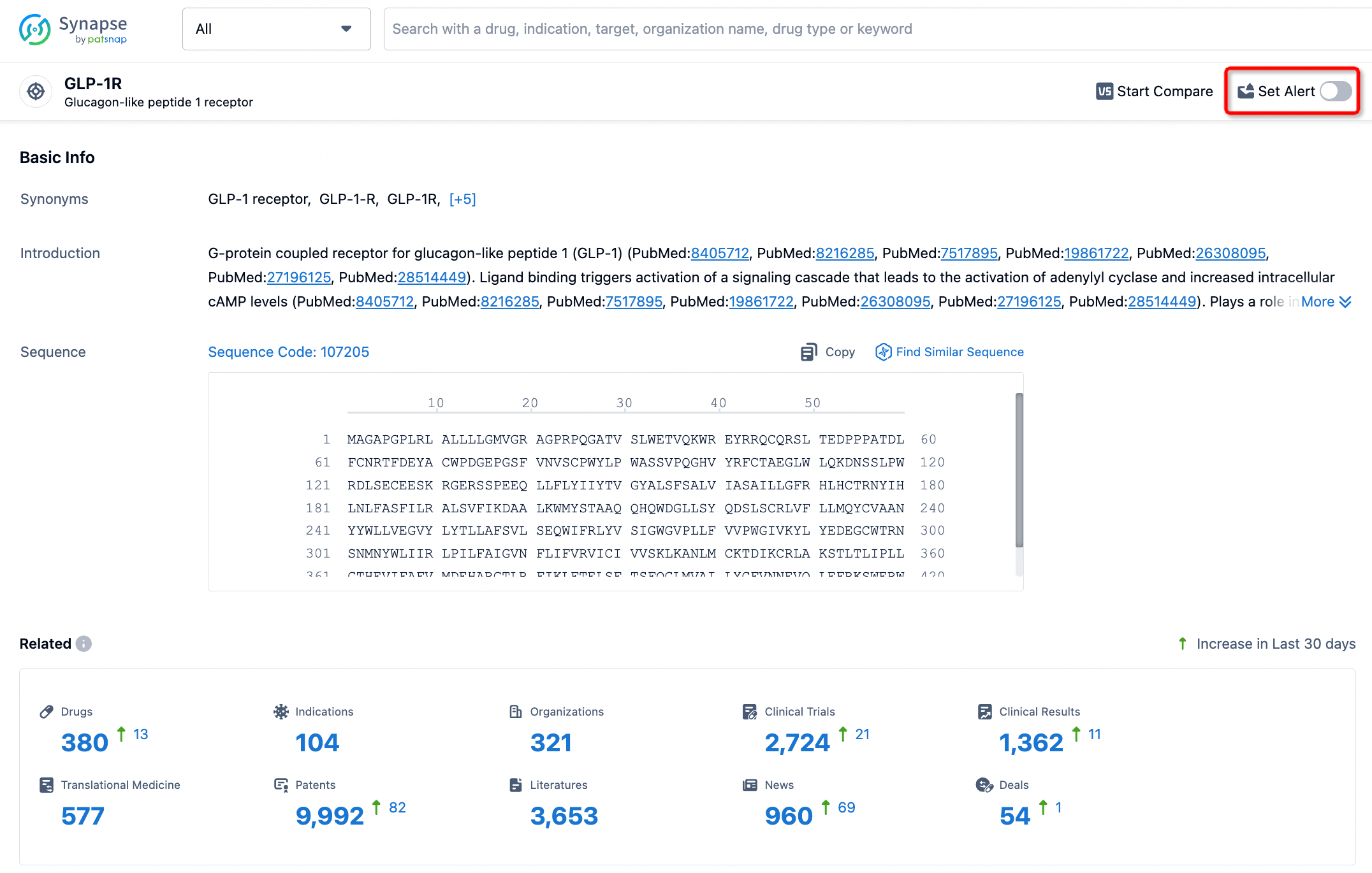
In the Synapse database, you can stay updated on the latest research and development advances of all targets. This service is accessible anytime and anywhere, with updates available daily or weekly. Use the "Set Alert" function to stay informed. Click on the image below to embark on a brand new journey of drug discovery!


AI Agents Built for Biopharma Breakthroughs
Accelerate discovery. Empower decisions. Transform outcomes.
Get started for free today!
Accelerate Strategic R&D decision making with Synapse, PatSnap’s AI-powered Connected Innovation Intelligence Platform Built for Life Sciences Professionals.
Start your data trial now!
Synapse data is also accessible to external entities via APIs or data packages. Empower better decisions with the latest in pharmaceutical intelligence.