Request Demo
What are Ube3a-ATS modulators and how do they work?
25 June 2024
Introduction to Ube3a-ATS modulators
Ube3a-ATS modulators have been garnering significant attention in the field of genetic research and therapeutic development. These modulators are associated with the regulation of the UBE3A gene, which plays a critical role in various neurological functions. UBE3A is particularly notable for its involvement in Angelman syndrome, a neurogenetic disorder characterized by severe developmental delays, lack of speech, seizures, and a happy demeanor. The UBE3A gene is maternally expressed in neurons, with the paternal allele typically silenced by an antisense transcript (UBE3A-ATS). Modulating this antisense transcript presents a promising avenue for therapeutic interventions aimed at reactivating the paternal allele of UBE3A, thereby potentially alleviating the symptoms of Angelman syndrome and other related neurological conditions.
How do Ube3a-ATS modulators work?
To understand the mechanism of Ube3a-ATS modulators, it is essential to delve into the concept of antisense transcription. In the context of the UBE3A gene, the antisense transcript (UBE3A-ATS) plays an inhibitory role by silencing the paternal allele in neurons. This antisense transcript is a long non-coding RNA (lncRNA) that overlaps with the UBE3A gene, preventing its expression.
Ube3a-ATS modulators work by targeting this antisense transcript to diminish or inhibit its expression. By reducing the levels of UBE3A-ATS, these modulators can reactivate the paternal allele of the UBE3A gene in neuronal cells. This reactivation potentially restores the normal function of UBE3A, which is crucial for synaptic development, plasticity, and overall neurological health.
Several approaches are utilized to achieve this modulation. Antisense oligonucleotides (ASOs) are short, synthetic strands of nucleotides designed to bind specifically to the UBE3A-ATS, thereby promoting its degradation or preventing its transcription. Another approach involves the use of small molecules or RNA interference (RNAi) techniques to inhibit the synthesis or function of the antisense transcript. CRISPR/Cas9 gene editing technology is also being explored to precisely target and disrupt the UBE3A-ATS, enabling the expression of the paternal UBE3A allele.
What are Ube3a-ATS modulators used for?
Ube3a-ATS modulators hold significant promise in the treatment of Angelman syndrome. Since the disorder is primarily caused by the lack of functional UBE3A protein due to the silencing of the maternal allele and the absence of expression from the paternal allele, reactivating the latter could potentially mitigate many of the syndrome's debilitating symptoms. Early research and preclinical studies have shown encouraging results, with some Ube3a-ATS modulators successfully reactivating the paternal UBE3A allele in animal models.
Beyond Angelman syndrome, Ube3a-ATS modulators may have broader applications in other neurological and neurodevelopmental disorders where UBE3A plays a role. For instance, certain forms of autism and intellectual disabilities have been linked to dysregulation of UBE3A. By modulating the antisense transcript, it may be possible to restore normal gene function in these conditions as well.
Moreover, the principles underlying Ube3a-ATS modulation could extend to other genes and disorders where antisense transcripts play a regulatory role. This opens up a new frontier in genetic therapy, providing a framework for targeting previously untreatable disorders caused by epigenetic silencing or other regulatory mechanisms.
In summary, Ube3a-ATS modulators represent a cutting-edge advancement in genetic therapy, offering hope for individuals with Angelman syndrome and potentially other neurological disorders. By specifically targeting the antisense transcript that silences the paternal UBE3A allele, these modulators pave the way for innovative treatments aimed at correcting genetic dysfunctions at their source. As research progresses, the therapeutic potential of Ube3a-ATS modulators continues to unfold, promising a new era of precision medicine in the realm of neurogenetics.
Ube3a-ATS modulators have been garnering significant attention in the field of genetic research and therapeutic development. These modulators are associated with the regulation of the UBE3A gene, which plays a critical role in various neurological functions. UBE3A is particularly notable for its involvement in Angelman syndrome, a neurogenetic disorder characterized by severe developmental delays, lack of speech, seizures, and a happy demeanor. The UBE3A gene is maternally expressed in neurons, with the paternal allele typically silenced by an antisense transcript (UBE3A-ATS). Modulating this antisense transcript presents a promising avenue for therapeutic interventions aimed at reactivating the paternal allele of UBE3A, thereby potentially alleviating the symptoms of Angelman syndrome and other related neurological conditions.
How do Ube3a-ATS modulators work?
To understand the mechanism of Ube3a-ATS modulators, it is essential to delve into the concept of antisense transcription. In the context of the UBE3A gene, the antisense transcript (UBE3A-ATS) plays an inhibitory role by silencing the paternal allele in neurons. This antisense transcript is a long non-coding RNA (lncRNA) that overlaps with the UBE3A gene, preventing its expression.
Ube3a-ATS modulators work by targeting this antisense transcript to diminish or inhibit its expression. By reducing the levels of UBE3A-ATS, these modulators can reactivate the paternal allele of the UBE3A gene in neuronal cells. This reactivation potentially restores the normal function of UBE3A, which is crucial for synaptic development, plasticity, and overall neurological health.
Several approaches are utilized to achieve this modulation. Antisense oligonucleotides (ASOs) are short, synthetic strands of nucleotides designed to bind specifically to the UBE3A-ATS, thereby promoting its degradation or preventing its transcription. Another approach involves the use of small molecules or RNA interference (RNAi) techniques to inhibit the synthesis or function of the antisense transcript. CRISPR/Cas9 gene editing technology is also being explored to precisely target and disrupt the UBE3A-ATS, enabling the expression of the paternal UBE3A allele.
What are Ube3a-ATS modulators used for?
Ube3a-ATS modulators hold significant promise in the treatment of Angelman syndrome. Since the disorder is primarily caused by the lack of functional UBE3A protein due to the silencing of the maternal allele and the absence of expression from the paternal allele, reactivating the latter could potentially mitigate many of the syndrome's debilitating symptoms. Early research and preclinical studies have shown encouraging results, with some Ube3a-ATS modulators successfully reactivating the paternal UBE3A allele in animal models.
Beyond Angelman syndrome, Ube3a-ATS modulators may have broader applications in other neurological and neurodevelopmental disorders where UBE3A plays a role. For instance, certain forms of autism and intellectual disabilities have been linked to dysregulation of UBE3A. By modulating the antisense transcript, it may be possible to restore normal gene function in these conditions as well.
Moreover, the principles underlying Ube3a-ATS modulation could extend to other genes and disorders where antisense transcripts play a regulatory role. This opens up a new frontier in genetic therapy, providing a framework for targeting previously untreatable disorders caused by epigenetic silencing or other regulatory mechanisms.
In summary, Ube3a-ATS modulators represent a cutting-edge advancement in genetic therapy, offering hope for individuals with Angelman syndrome and potentially other neurological disorders. By specifically targeting the antisense transcript that silences the paternal UBE3A allele, these modulators pave the way for innovative treatments aimed at correcting genetic dysfunctions at their source. As research progresses, the therapeutic potential of Ube3a-ATS modulators continues to unfold, promising a new era of precision medicine in the realm of neurogenetics.
How to obtain the latest development progress of all targets?
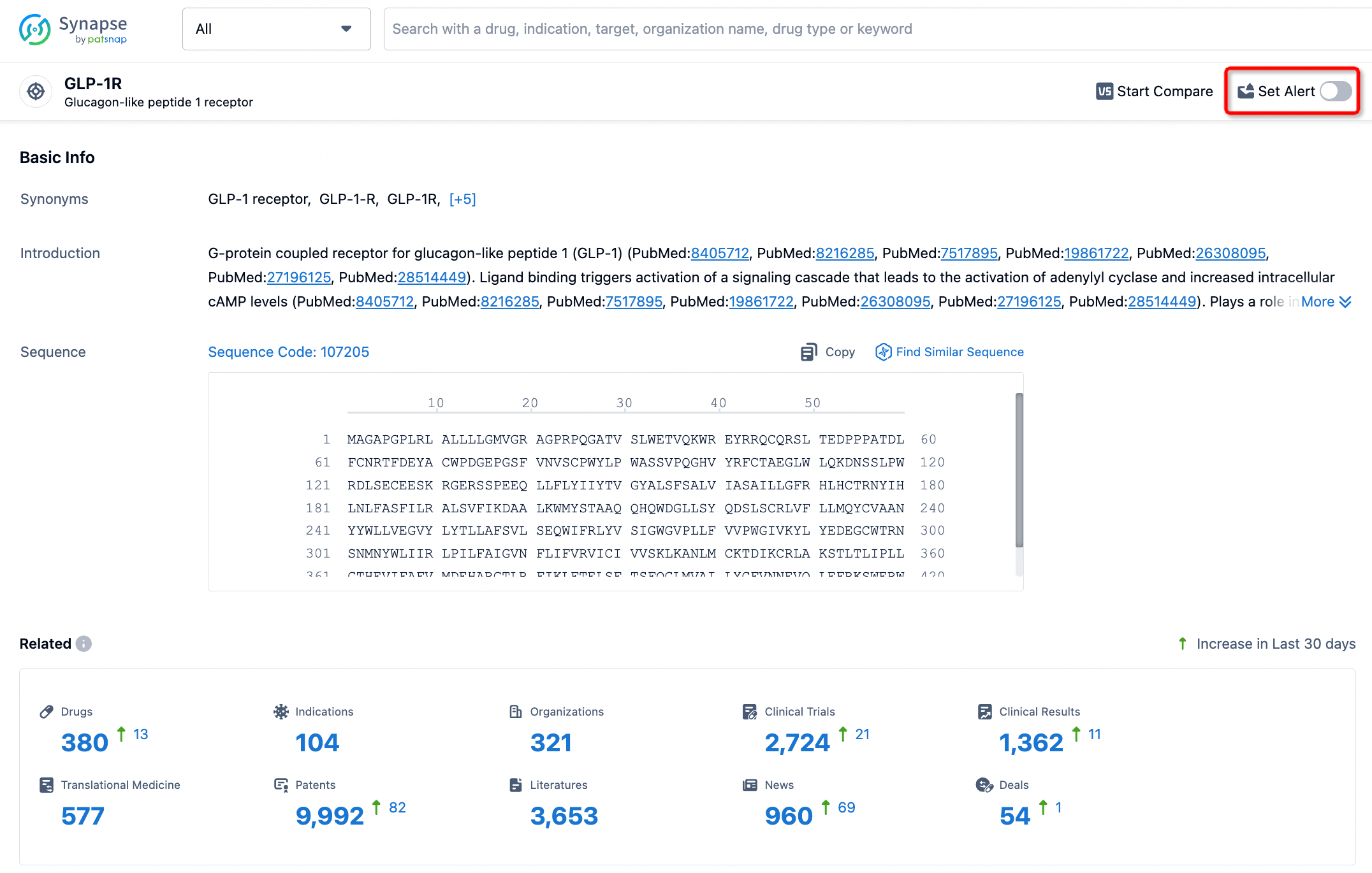
In the Synapse database, you can stay updated on the latest research and development advances of all targets. This service is accessible anytime and anywhere, with updates available daily or weekly. Use the "Set Alert" function to stay informed. Click on the image below to embark on a brand new journey of drug discovery!

AI Agents Built for Biopharma Breakthroughs
Accelerate discovery. Empower decisions. Transform outcomes.
Get started for free today!
Accelerate Strategic R&D decision making with Synapse, PatSnap’s AI-powered Connected Innovation Intelligence Platform Built for Life Sciences Professionals.
Start your data trial now!
Synapse data is also accessible to external entities via APIs or data packages. Empower better decisions with the latest in pharmaceutical intelligence.