Request Demo
What are VEGF-A stimulants and how do they work?
21 June 2024
Vascular endothelial growth factor A, commonly referred to as VEGF-A, is a critical protein that plays a fundamental role in the process of angiogenesis—the formation of new blood vessels from pre-existing ones. VEGF-A stimulants are a class of agents that promote the activity of this protein, encouraging the growth and repair of blood vessels. These stimulants have numerous applications in both the medical and scientific fields, offering hope for treating a variety of diseases and conditions where enhanced blood flow and vascular growth are beneficial.
VEGF-A stimulants operate by targeting the VEGF-A protein, which binds to specific receptors on the surface of endothelial cells—the cells that line the interior surface of blood vessels. When VEGF-A binds to these receptors, it activates a signaling pathway that promotes endothelial cell proliferation, migration, and survival. This process is crucial for the formation of new blood vessels. Essentially, VEGF-A stimulants amplify these natural processes, enhancing the body's ability to grow new blood vessels where they are needed most.
The signaling cascade initiated by VEGF-A involves several key steps. Upon binding to its receptors (primarily VEGFR-1 and VEGFR-2), a series of downstream signals are activated. These signals lead to the production of nitric oxide and the release of other growth factors, which further promote blood vessel dilation and growth. By stimulating these pathways, VEGF-A stimulants can increase blood flow to tissues that are ischemic (lacking adequate blood supply), which is particularly important in conditions like chronic wounds and peripheral artery disease.
VEGF-A stimulants are utilized in a variety of therapeutic contexts. One of the primary applications is in the treatment of cardiovascular diseases, such as ischemic heart disease and peripheral artery disease. In these conditions, reduced blood flow can lead to tissue damage and cell death. By promoting angiogenesis, VEGF-A stimulants help restore blood flow, thereby preventing further damage and aiding in tissue repair. This can significantly improve outcomes for patients suffering from these debilitating conditions.
Another critical application of VEGF-A stimulants is in wound healing. Chronic wounds, such as diabetic ulcers and pressure sores, are notoriously difficult to treat due to poor blood supply and impaired healing processes. By enhancing angiogenesis, VEGF-A stimulants can improve blood flow to the affected area, promoting faster and more effective healing. This not only reduces the risk of infection but also improves the quality of life for patients with chronic wounds.
In the realm of regenerative medicine, VEGF-A stimulants are also being explored for their potential to help grow new tissues and organs. Researchers are investigating ways to use these agents to create vascular networks within engineered tissues, which is a critical step in developing functional organs for transplantation. By ensuring that these engineered tissues have an adequate blood supply, VEGF-A stimulants could help make organ transplantation more successful and widely available.
Oncology is another area where VEGF-A stimulants are being researched. While the primary focus in cancer treatment has been on inhibiting VEGF to prevent tumor growth (since tumors often hijack the angiogenesis process to fuel their growth), there is potential for VEGF-A stimulants to play a role in certain contexts. For example, in the case of revascularizing tissues damaged by radiation therapy, VEGF-A stimulants could help repair the blood vessels and improve tissue health.
In conclusion, VEGF-A stimulants represent a promising avenue for enhancing angiogenesis and improving blood flow in various medical conditions. From treating cardiovascular diseases and chronic wounds to advancing regenerative medicine and oncology, these agents offer significant therapeutic potential. As research continues, the applications of VEGF-A stimulants are likely to expand, providing new hope for patients and advancing the field of medicine.
VEGF-A stimulants operate by targeting the VEGF-A protein, which binds to specific receptors on the surface of endothelial cells—the cells that line the interior surface of blood vessels. When VEGF-A binds to these receptors, it activates a signaling pathway that promotes endothelial cell proliferation, migration, and survival. This process is crucial for the formation of new blood vessels. Essentially, VEGF-A stimulants amplify these natural processes, enhancing the body's ability to grow new blood vessels where they are needed most.
The signaling cascade initiated by VEGF-A involves several key steps. Upon binding to its receptors (primarily VEGFR-1 and VEGFR-2), a series of downstream signals are activated. These signals lead to the production of nitric oxide and the release of other growth factors, which further promote blood vessel dilation and growth. By stimulating these pathways, VEGF-A stimulants can increase blood flow to tissues that are ischemic (lacking adequate blood supply), which is particularly important in conditions like chronic wounds and peripheral artery disease.
VEGF-A stimulants are utilized in a variety of therapeutic contexts. One of the primary applications is in the treatment of cardiovascular diseases, such as ischemic heart disease and peripheral artery disease. In these conditions, reduced blood flow can lead to tissue damage and cell death. By promoting angiogenesis, VEGF-A stimulants help restore blood flow, thereby preventing further damage and aiding in tissue repair. This can significantly improve outcomes for patients suffering from these debilitating conditions.
Another critical application of VEGF-A stimulants is in wound healing. Chronic wounds, such as diabetic ulcers and pressure sores, are notoriously difficult to treat due to poor blood supply and impaired healing processes. By enhancing angiogenesis, VEGF-A stimulants can improve blood flow to the affected area, promoting faster and more effective healing. This not only reduces the risk of infection but also improves the quality of life for patients with chronic wounds.
In the realm of regenerative medicine, VEGF-A stimulants are also being explored for their potential to help grow new tissues and organs. Researchers are investigating ways to use these agents to create vascular networks within engineered tissues, which is a critical step in developing functional organs for transplantation. By ensuring that these engineered tissues have an adequate blood supply, VEGF-A stimulants could help make organ transplantation more successful and widely available.
Oncology is another area where VEGF-A stimulants are being researched. While the primary focus in cancer treatment has been on inhibiting VEGF to prevent tumor growth (since tumors often hijack the angiogenesis process to fuel their growth), there is potential for VEGF-A stimulants to play a role in certain contexts. For example, in the case of revascularizing tissues damaged by radiation therapy, VEGF-A stimulants could help repair the blood vessels and improve tissue health.
In conclusion, VEGF-A stimulants represent a promising avenue for enhancing angiogenesis and improving blood flow in various medical conditions. From treating cardiovascular diseases and chronic wounds to advancing regenerative medicine and oncology, these agents offer significant therapeutic potential. As research continues, the applications of VEGF-A stimulants are likely to expand, providing new hope for patients and advancing the field of medicine.
How to obtain the latest development progress of all targets?
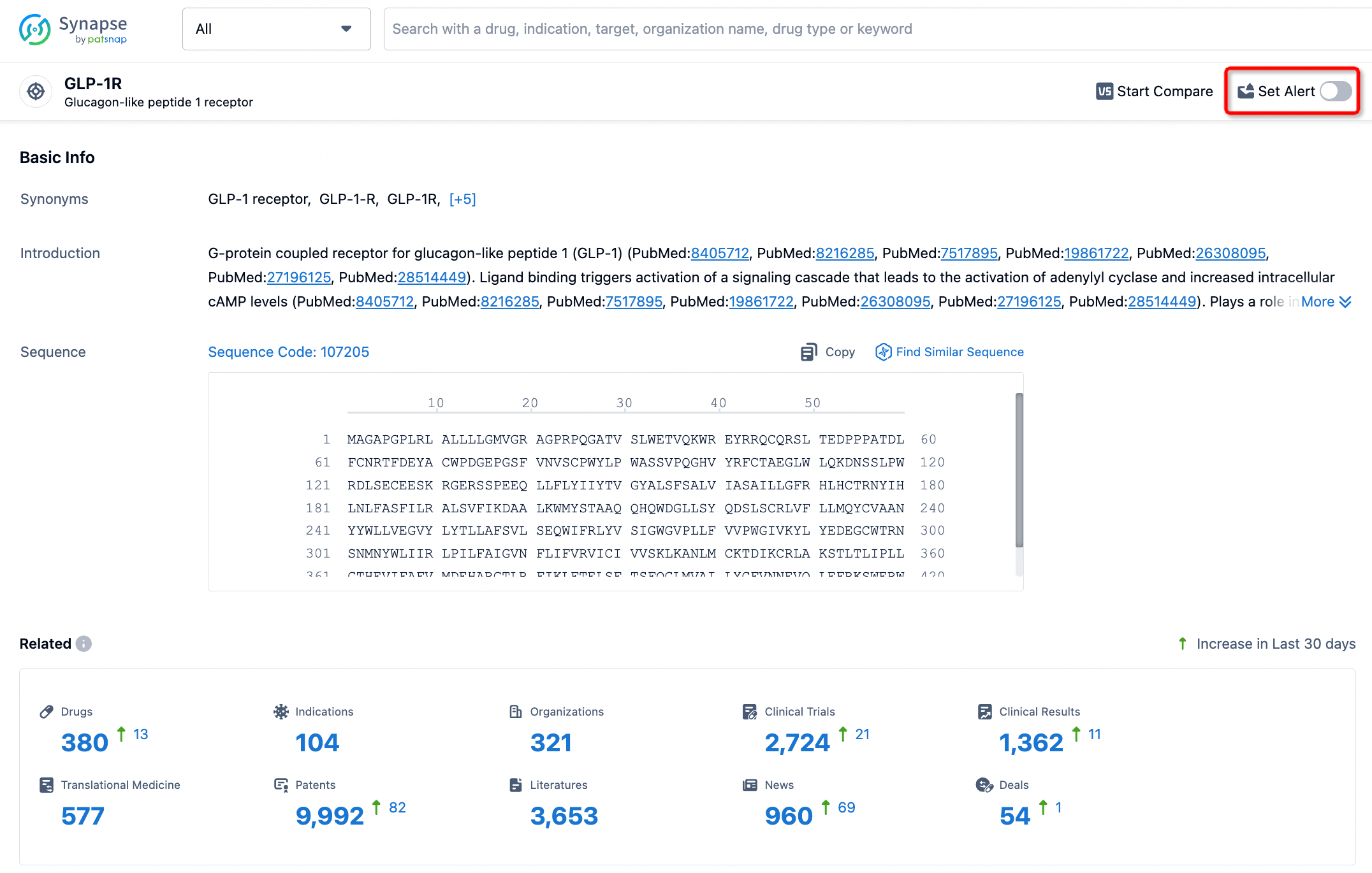
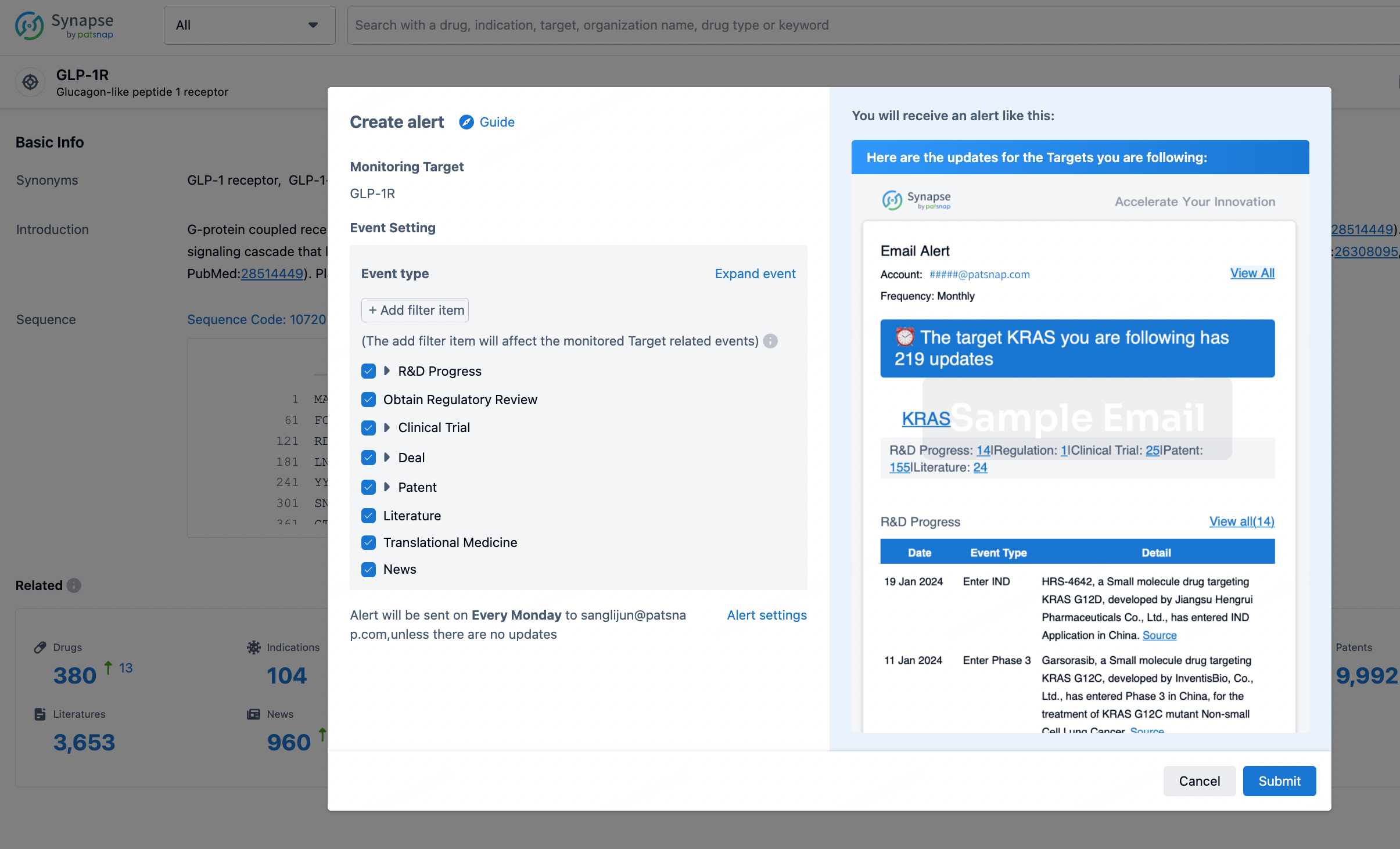
In the Synapse database, you can stay updated on the latest research and development advances of all targets. This service is accessible anytime and anywhere, with updates available daily or weekly. Use the "Set Alert" function to stay informed. Click on the image below to embark on a brand new journey of drug discovery!
AI Agents Built for Biopharma Breakthroughs
Accelerate discovery. Empower decisions. Transform outcomes.
Get started for free today!
Accelerate Strategic R&D decision making with Synapse, PatSnap’s AI-powered Connected Innovation Intelligence Platform Built for Life Sciences Professionals.
Start your data trial now!
Synapse data is also accessible to external entities via APIs or data packages. Empower better decisions with the latest in pharmaceutical intelligence.