Request Demo
What are WWP1 modulators and how do they work?
25 June 2024
In the ever-evolving field of molecular biology, the discovery and understanding of specific enzymes and their modulators have opened new frontiers in medical science. One such enzyme that has garnered significant attention is WWP1 (WW domain-containing E3 ubiquitin protein ligase 1). WWP1 modulators—compounds that can enhance or inhibit the activity of this enzyme—are being closely studied for their potential therapeutic applications. This blog post delves into the intricacies of WWP1 modulators, exploring how they work and what they are used for.
WWP1 is an E3 ubiquitin ligase, a type of enzyme that tags proteins with ubiquitin to signal for their degradation by the proteasome. This process, known as ubiquitination, is crucial for maintaining cellular homeostasis by regulating protein levels and activity. WWP1 plays a pivotal role in various cellular processes, including cell growth, differentiation, and apoptosis. Aberrant activity of WWP1 has been linked to several diseases, most notably cancer, making it a prime target for therapeutic intervention.
WWP1 modulators are designed to either inhibit or enhance the activity of the WWP1 enzyme. The mechanism of action for these modulators can vary. Inhibitors typically work by binding to the active site of the enzyme, preventing it from interacting with its substrate proteins. This can be achieved through competitive inhibition, where the modulator competes with the natural substrate for binding, or through allosteric inhibition, where the modulator binds to a different part of the enzyme, inducing a conformational change that reduces its activity. Enhancers, on the other hand, may promote the binding of WWP1 to its substrates or stabilize the enzyme-substrate complex, thereby increasing its activity.
The development of WWP1 modulators involves high-throughput screening of chemical libraries, computational modeling, and structure-activity relationship (SAR) studies. Once potential modulators are identified, they undergo rigorous testing in cellular and animal models to assess their efficacy and safety. Advanced techniques such as CRISPR-Cas9 gene editing are also employed to elucidate the precise role of WWP1 and its modulation in various biological pathways.
The primary focus of WWP1 modulator research has been in oncology. Aberrant WWP1 activity has been implicated in the progression of several cancers, including breast, prostate, and gastric cancers. In these malignancies, WWP1 often acts on tumor suppressor proteins such as PTEN and p53, leading to their degradation and promoting tumor growth. By inhibiting WWP1, these tumor suppressors can be stabilized, thereby inhibiting cancer cell proliferation and inducing apoptosis. Clinical trials are underway to evaluate the efficacy of WWP1 inhibitors in cancer treatment, and preliminary results have been promising.
Beyond cancer, WWP1 modulators hold potential in treating other diseases characterized by protein homeostasis dysregulation. Neurodegenerative disorders such as Alzheimer's and Parkinson's disease involve the accumulation of misfolded proteins, which can be mitigated by modulating the ubiquitin-proteasome system. WWP1 inhibitors may help reduce the degradation of protective proteins, slowing disease progression. Additionally, WWP1 has been implicated in immune system regulation, and its modulators could be explored for treating autoimmune diseases and inflammation.
WWP1 modulators also offer intriguing possibilities in regenerative medicine. By controlling the degradation of key regulatory proteins, these modulators can influence stem cell differentiation and tissue regeneration. For instance, enhancing WWP1 activity in specific contexts could promote the degradation of differentiation inhibitors, thereby encouraging stem cells to develop into desired cell types for therapeutic purposes.
In conclusion, WWP1 modulators represent a promising avenue in biomedical research with wide-ranging therapeutic applications. By fine-tuning the activity of WWP1, these modulators can address the underlying mechanisms of various diseases, from cancer to neurodegenerative disorders and beyond. As research progresses, the development of more selective and potent WWP1 modulators will likely lead to novel treatments, offering hope for countless patients worldwide.
WWP1 is an E3 ubiquitin ligase, a type of enzyme that tags proteins with ubiquitin to signal for their degradation by the proteasome. This process, known as ubiquitination, is crucial for maintaining cellular homeostasis by regulating protein levels and activity. WWP1 plays a pivotal role in various cellular processes, including cell growth, differentiation, and apoptosis. Aberrant activity of WWP1 has been linked to several diseases, most notably cancer, making it a prime target for therapeutic intervention.
WWP1 modulators are designed to either inhibit or enhance the activity of the WWP1 enzyme. The mechanism of action for these modulators can vary. Inhibitors typically work by binding to the active site of the enzyme, preventing it from interacting with its substrate proteins. This can be achieved through competitive inhibition, where the modulator competes with the natural substrate for binding, or through allosteric inhibition, where the modulator binds to a different part of the enzyme, inducing a conformational change that reduces its activity. Enhancers, on the other hand, may promote the binding of WWP1 to its substrates or stabilize the enzyme-substrate complex, thereby increasing its activity.
The development of WWP1 modulators involves high-throughput screening of chemical libraries, computational modeling, and structure-activity relationship (SAR) studies. Once potential modulators are identified, they undergo rigorous testing in cellular and animal models to assess their efficacy and safety. Advanced techniques such as CRISPR-Cas9 gene editing are also employed to elucidate the precise role of WWP1 and its modulation in various biological pathways.
The primary focus of WWP1 modulator research has been in oncology. Aberrant WWP1 activity has been implicated in the progression of several cancers, including breast, prostate, and gastric cancers. In these malignancies, WWP1 often acts on tumor suppressor proteins such as PTEN and p53, leading to their degradation and promoting tumor growth. By inhibiting WWP1, these tumor suppressors can be stabilized, thereby inhibiting cancer cell proliferation and inducing apoptosis. Clinical trials are underway to evaluate the efficacy of WWP1 inhibitors in cancer treatment, and preliminary results have been promising.
Beyond cancer, WWP1 modulators hold potential in treating other diseases characterized by protein homeostasis dysregulation. Neurodegenerative disorders such as Alzheimer's and Parkinson's disease involve the accumulation of misfolded proteins, which can be mitigated by modulating the ubiquitin-proteasome system. WWP1 inhibitors may help reduce the degradation of protective proteins, slowing disease progression. Additionally, WWP1 has been implicated in immune system regulation, and its modulators could be explored for treating autoimmune diseases and inflammation.
WWP1 modulators also offer intriguing possibilities in regenerative medicine. By controlling the degradation of key regulatory proteins, these modulators can influence stem cell differentiation and tissue regeneration. For instance, enhancing WWP1 activity in specific contexts could promote the degradation of differentiation inhibitors, thereby encouraging stem cells to develop into desired cell types for therapeutic purposes.
In conclusion, WWP1 modulators represent a promising avenue in biomedical research with wide-ranging therapeutic applications. By fine-tuning the activity of WWP1, these modulators can address the underlying mechanisms of various diseases, from cancer to neurodegenerative disorders and beyond. As research progresses, the development of more selective and potent WWP1 modulators will likely lead to novel treatments, offering hope for countless patients worldwide.
How to obtain the latest development progress of all targets?
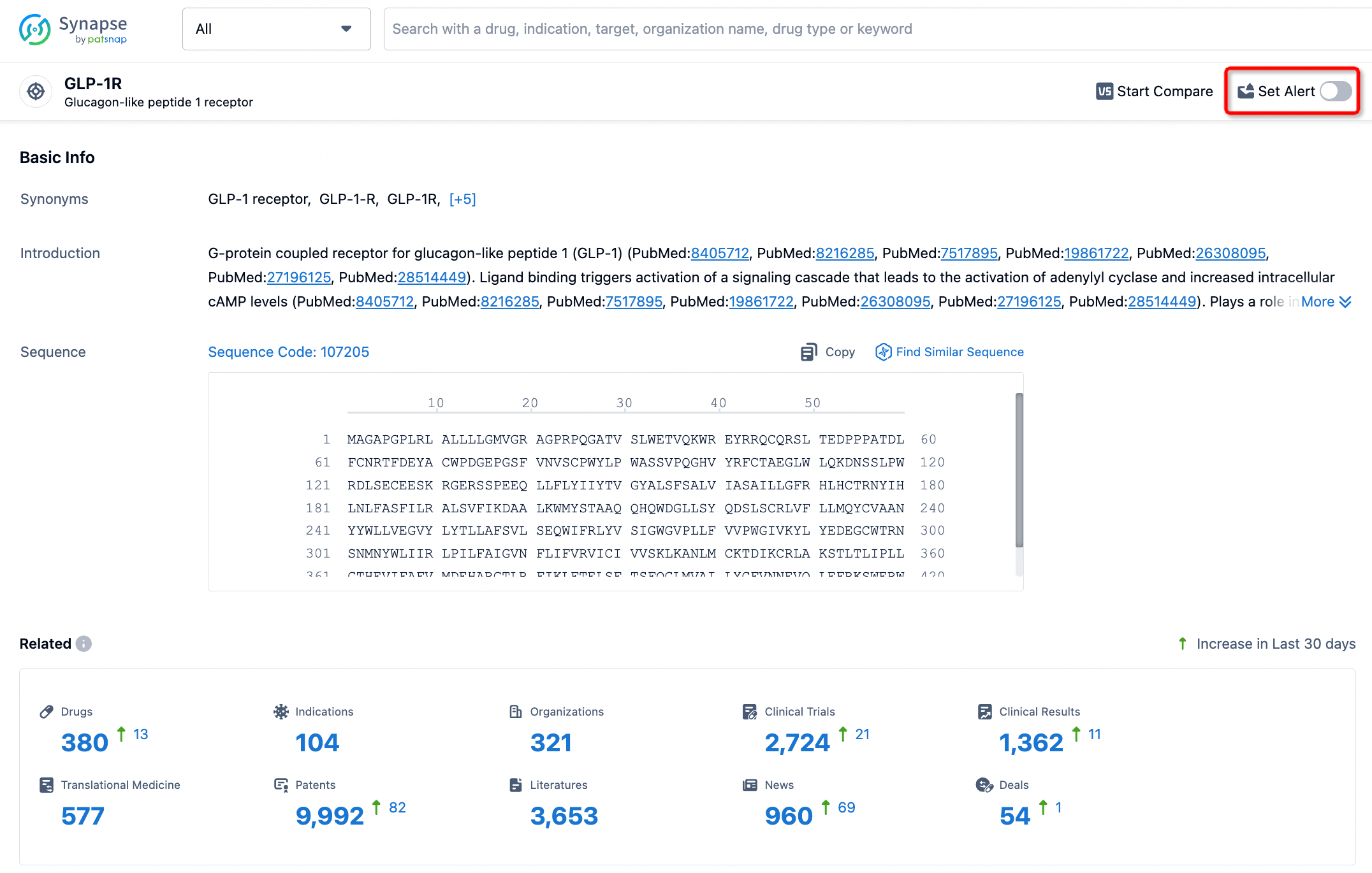
In the Synapse database, you can stay updated on the latest research and development advances of all targets. This service is accessible anytime and anywhere, with updates available daily or weekly. Use the "Set Alert" function to stay informed. Click on the image below to embark on a brand new journey of drug discovery!


AI Agents Built for Biopharma Breakthroughs
Accelerate discovery. Empower decisions. Transform outcomes.
Get started for free today!
Accelerate Strategic R&D decision making with Synapse, PatSnap’s AI-powered Connected Innovation Intelligence Platform Built for Life Sciences Professionals.
Start your data trial now!
Synapse data is also accessible to external entities via APIs or data packages. Empower better decisions with the latest in pharmaceutical intelligence.