Request Demo
What Is Time-Dependent Inhibition (TDI) and Why It Matters?
29 May 2025
Understanding Time-Dependent Inhibition (TDI)
Time-dependent inhibition (TDI) is a key concept in pharmacology that plays a critical role in drug development and safety assessment. It refers to the decrease in enzyme activity over time due to the presence of an inhibitor, which can have significant implications for drug interactions and efficacy. Understanding TDI is crucial for researchers, clinicians, and anyone interested in the field of drug metabolism and pharmacokinetics.
The Basics of Enzyme Inhibition
To grasp the concept of TDI, it's important to first understand enzyme inhibition. Enzymes are proteins that catalyze biochemical reactions and are essential for various physiological processes. Inhibitors are molecules that reduce the activity of enzymes, typically by binding to the enzyme in a way that prevents it from catalyzing its usual reaction. There are several types of enzyme inhibition, including competitive, non-competitive, and uncompetitive inhibition, all of which can affect drug metabolism.
Time-Dependent Inhibition: A Closer Look
Unlike other types of inhibition, time-dependent inhibition is characterized by its progressive nature. In TDI, the inhibitory effect on the enzyme increases over time, potentially leading to significant reductions in enzyme activity. This phenomenon occurs due to the formation of a more stable and often irreversible complex between the inhibitor and the enzyme. In many cases, this involves metabolic activation of the inhibitor to a more reactive species that can covalently bind to the enzyme.
Why TDI Matters in Drug Development
TDI is a critical consideration in drug development for several reasons. Firstly, it affects drug efficacy and safety. If a drug is a time-dependent inhibitor of an enzyme involved in its own metabolism, this can lead to an accumulation of the drug to toxic levels, thereby increasing the risk of adverse effects. Secondly, TDI can impact drug-drug interactions. Drugs that are time-dependent inhibitors of enzymes like cytochrome P450 can alter the metabolism of other co-administered drugs, leading to therapeutic failures or toxicity.
Evaluating TDI: Methods and Challenges
Detecting and characterizing TDI is a complex process that requires sophisticated methodologies. Common approaches include in vitro assays using liver microsomes or recombinant enzymes, which allow researchers to observe changes in enzyme activity over time in the presence of a potential inhibitor. However, these studies must be carefully designed to differentiate between reversible and irreversible inhibition, and to account for factors such as enzyme degradation and inhibitor stability.
The Role of TDI in Personalized Medicine
As the field of personalized medicine advances, understanding TDI becomes increasingly important. Genetic variations can influence an individual's response to drugs, including variations in the enzymes responsible for drug metabolism. By considering TDI in the context of genetic differences, healthcare providers can tailor drug therapies more effectively, optimizing efficacy and minimizing adverse effects for individual patients.
Future Directions and Considerations
The study of TDI is an evolving science, with ongoing research aimed at improving our understanding of this complex phenomenon. Future directions include the development of more accurate predictive models and the integration of TDI data into clinical decision-making tools. As our knowledge grows, so too will our ability to create safer and more effective therapeutic interventions.
In conclusion, time-dependent inhibition is a vital concept in pharmacology that has far-reaching implications for drug development, safety, and personalized medicine. By advancing our understanding of TDI, we can improve drug therapies and ensure better health outcomes for patients worldwide.
Time-dependent inhibition (TDI) is a key concept in pharmacology that plays a critical role in drug development and safety assessment. It refers to the decrease in enzyme activity over time due to the presence of an inhibitor, which can have significant implications for drug interactions and efficacy. Understanding TDI is crucial for researchers, clinicians, and anyone interested in the field of drug metabolism and pharmacokinetics.
The Basics of Enzyme Inhibition
To grasp the concept of TDI, it's important to first understand enzyme inhibition. Enzymes are proteins that catalyze biochemical reactions and are essential for various physiological processes. Inhibitors are molecules that reduce the activity of enzymes, typically by binding to the enzyme in a way that prevents it from catalyzing its usual reaction. There are several types of enzyme inhibition, including competitive, non-competitive, and uncompetitive inhibition, all of which can affect drug metabolism.
Time-Dependent Inhibition: A Closer Look
Unlike other types of inhibition, time-dependent inhibition is characterized by its progressive nature. In TDI, the inhibitory effect on the enzyme increases over time, potentially leading to significant reductions in enzyme activity. This phenomenon occurs due to the formation of a more stable and often irreversible complex between the inhibitor and the enzyme. In many cases, this involves metabolic activation of the inhibitor to a more reactive species that can covalently bind to the enzyme.
Why TDI Matters in Drug Development
TDI is a critical consideration in drug development for several reasons. Firstly, it affects drug efficacy and safety. If a drug is a time-dependent inhibitor of an enzyme involved in its own metabolism, this can lead to an accumulation of the drug to toxic levels, thereby increasing the risk of adverse effects. Secondly, TDI can impact drug-drug interactions. Drugs that are time-dependent inhibitors of enzymes like cytochrome P450 can alter the metabolism of other co-administered drugs, leading to therapeutic failures or toxicity.
Evaluating TDI: Methods and Challenges
Detecting and characterizing TDI is a complex process that requires sophisticated methodologies. Common approaches include in vitro assays using liver microsomes or recombinant enzymes, which allow researchers to observe changes in enzyme activity over time in the presence of a potential inhibitor. However, these studies must be carefully designed to differentiate between reversible and irreversible inhibition, and to account for factors such as enzyme degradation and inhibitor stability.
The Role of TDI in Personalized Medicine
As the field of personalized medicine advances, understanding TDI becomes increasingly important. Genetic variations can influence an individual's response to drugs, including variations in the enzymes responsible for drug metabolism. By considering TDI in the context of genetic differences, healthcare providers can tailor drug therapies more effectively, optimizing efficacy and minimizing adverse effects for individual patients.
Future Directions and Considerations
The study of TDI is an evolving science, with ongoing research aimed at improving our understanding of this complex phenomenon. Future directions include the development of more accurate predictive models and the integration of TDI data into clinical decision-making tools. As our knowledge grows, so too will our ability to create safer and more effective therapeutic interventions.
In conclusion, time-dependent inhibition is a vital concept in pharmacology that has far-reaching implications for drug development, safety, and personalized medicine. By advancing our understanding of TDI, we can improve drug therapies and ensure better health outcomes for patients worldwide.
Discover Eureka LS: AI Agents Built for Biopharma Efficiency
Stop wasting time on biopharma busywork. Meet Eureka LS - your AI agent squad for drug discovery.
▶ See how 50+ research teams saved 300+ hours/month
From reducing screening time to simplifying Markush drafting, our AI Agents are ready to deliver immediate value. Explore Eureka LS today and unlock powerful capabilities that help you innovate with confidence.
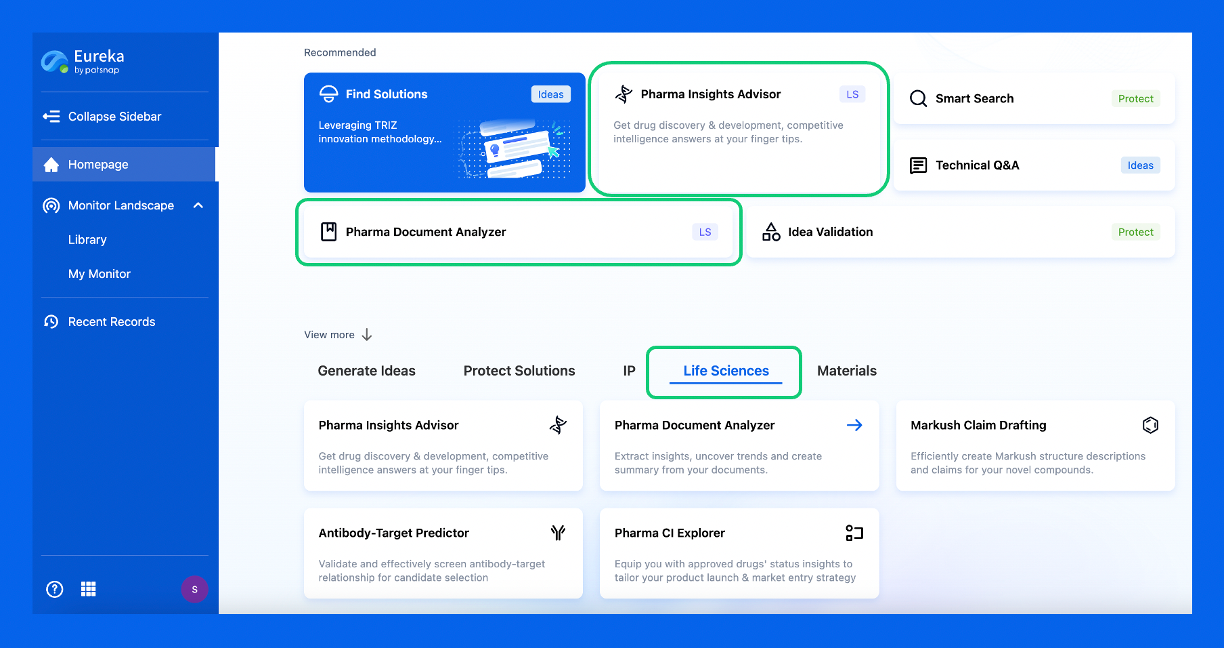
AI Agents Built for Biopharma Breakthroughs
Accelerate discovery. Empower decisions. Transform outcomes.
Get started for free today!
Accelerate Strategic R&D decision making with Synapse, PatSnap’s AI-powered Connected Innovation Intelligence Platform Built for Life Sciences Professionals.
Start your data trial now!
Synapse data is also accessible to external entities via APIs or data packages. Empower better decisions with the latest in pharmaceutical intelligence.