Request Demo
What models are used in in vivo pharmacokinetics studies?
27 May 2025
Understanding In Vivo Pharmacokinetics
In vivo pharmacokinetics is an essential field of study in drug development and biomedical research. It involves analyzing how a drug is absorbed, distributed, metabolized, and excreted by a living organism. Researchers use various models to predict and understand the behavior of drugs in biological systems. These models are crucial for optimizing drug dosage, minimizing side effects, and improving therapeutic efficacy. Here, we explore some of the key models used in in vivo pharmacokinetics studies.
Compartmental Models
Compartmental models are among the most traditional approaches in pharmacokinetics. They simplify the body into compartments where the drug distribution is assumed to be uniform. These models can be one-compartment, two-compartment, or multi-compartment, depending on the complexity required.
1. One-Compartment Model: This is the simplest model and assumes that the entire body acts as a single, homogeneous compartment. It works well for drugs that distribute quickly throughout the body and are eliminated at a constant rate.
2. Two-Compartment Model: This model divides the body into a central compartment (often representing the blood and well-perfused organs) and a peripheral compartment (representing tissues with slower drug distribution). It is used for drugs that exhibit a two-phase decline in plasma concentration.
3. Multi-Compartment Models: These are used for drugs with complex distribution and elimination patterns. While more accurate, they require extensive data and sophisticated mathematical techniques.
Physiologically Based Pharmacokinetic Models (PBPK)
Physiologically based pharmacokinetic models provide a more detailed representation of drug kinetics by incorporating physiological and biochemical parameters. They divide the body into multiple compartments that correspond to actual anatomical and physiological regions.
PBPK models are advantageous because they can incorporate variables such as blood flow, tissue composition, and metabolic rates. They are especially useful in predicting drug interactions, understanding variability among populations (e.g., pediatric versus adult), and simulating scenarios that are difficult to test experimentally.
Non-Compartmental Analysis (NCA)
Non-compartmental analysis is another common method in pharmacokinetics. Unlike compartmental models, NCA does not assume a specific compartmental distribution of the drug. Instead, it uses statistical moments to calculate pharmacokinetic parameters such as clearance, volume of distribution, and half-life.
NCA is particularly useful for its simplicity and minimal assumptions, making it a preferred choice during the initial stages of drug development when the data is limited.
Population Pharmacokinetics
Population pharmacokinetics aims to understand how demographic, genetic, and pathophysiological differences among individuals in a population influence drug kinetics. It uses statistical models to analyze data from diverse groups, identifying covariates that can impact drug behavior.
This approach is valuable in personalized medicine, helping tailor drug regimens to individual needs and optimizing outcomes in clinical settings. Population pharmacokinetic models are often developed with the help of software tools that utilize complex algorithms and large datasets.
Conclusion
The choice of model in in vivo pharmacokinetics studies depends on the specific drug, the available data, and the research objectives. While compartmental models provide a simplistic overview, PBPK models offer detailed insights into physiological processes. Non-compartmental analysis offers a straightforward approach when limited data is available, and population pharmacokinetics provides a broader perspective by accounting for individual variability.
Advances in computational techniques and data analytics continue to refine these models, enhancing our ability to predict drug behavior and improve therapeutic strategies. Understanding and selecting the appropriate pharmacokinetic model is crucial for successful drug development and personalized medicine.
In vivo pharmacokinetics is an essential field of study in drug development and biomedical research. It involves analyzing how a drug is absorbed, distributed, metabolized, and excreted by a living organism. Researchers use various models to predict and understand the behavior of drugs in biological systems. These models are crucial for optimizing drug dosage, minimizing side effects, and improving therapeutic efficacy. Here, we explore some of the key models used in in vivo pharmacokinetics studies.
Compartmental Models
Compartmental models are among the most traditional approaches in pharmacokinetics. They simplify the body into compartments where the drug distribution is assumed to be uniform. These models can be one-compartment, two-compartment, or multi-compartment, depending on the complexity required.
1. One-Compartment Model: This is the simplest model and assumes that the entire body acts as a single, homogeneous compartment. It works well for drugs that distribute quickly throughout the body and are eliminated at a constant rate.
2. Two-Compartment Model: This model divides the body into a central compartment (often representing the blood and well-perfused organs) and a peripheral compartment (representing tissues with slower drug distribution). It is used for drugs that exhibit a two-phase decline in plasma concentration.
3. Multi-Compartment Models: These are used for drugs with complex distribution and elimination patterns. While more accurate, they require extensive data and sophisticated mathematical techniques.
Physiologically Based Pharmacokinetic Models (PBPK)
Physiologically based pharmacokinetic models provide a more detailed representation of drug kinetics by incorporating physiological and biochemical parameters. They divide the body into multiple compartments that correspond to actual anatomical and physiological regions.
PBPK models are advantageous because they can incorporate variables such as blood flow, tissue composition, and metabolic rates. They are especially useful in predicting drug interactions, understanding variability among populations (e.g., pediatric versus adult), and simulating scenarios that are difficult to test experimentally.
Non-Compartmental Analysis (NCA)
Non-compartmental analysis is another common method in pharmacokinetics. Unlike compartmental models, NCA does not assume a specific compartmental distribution of the drug. Instead, it uses statistical moments to calculate pharmacokinetic parameters such as clearance, volume of distribution, and half-life.
NCA is particularly useful for its simplicity and minimal assumptions, making it a preferred choice during the initial stages of drug development when the data is limited.
Population Pharmacokinetics
Population pharmacokinetics aims to understand how demographic, genetic, and pathophysiological differences among individuals in a population influence drug kinetics. It uses statistical models to analyze data from diverse groups, identifying covariates that can impact drug behavior.
This approach is valuable in personalized medicine, helping tailor drug regimens to individual needs and optimizing outcomes in clinical settings. Population pharmacokinetic models are often developed with the help of software tools that utilize complex algorithms and large datasets.
Conclusion
The choice of model in in vivo pharmacokinetics studies depends on the specific drug, the available data, and the research objectives. While compartmental models provide a simplistic overview, PBPK models offer detailed insights into physiological processes. Non-compartmental analysis offers a straightforward approach when limited data is available, and population pharmacokinetics provides a broader perspective by accounting for individual variability.
Advances in computational techniques and data analytics continue to refine these models, enhancing our ability to predict drug behavior and improve therapeutic strategies. Understanding and selecting the appropriate pharmacokinetic model is crucial for successful drug development and personalized medicine.
Discover Eureka LS: AI Agents Built for Biopharma Efficiency
Stop wasting time on biopharma busywork. Meet Eureka LS - your AI agent squad for drug discovery.
▶ See how 50+ research teams saved 300+ hours/month
From reducing screening time to simplifying Markush drafting, our AI Agents are ready to deliver immediate value. Explore Eureka LS today and unlock powerful capabilities that help you innovate with confidence.
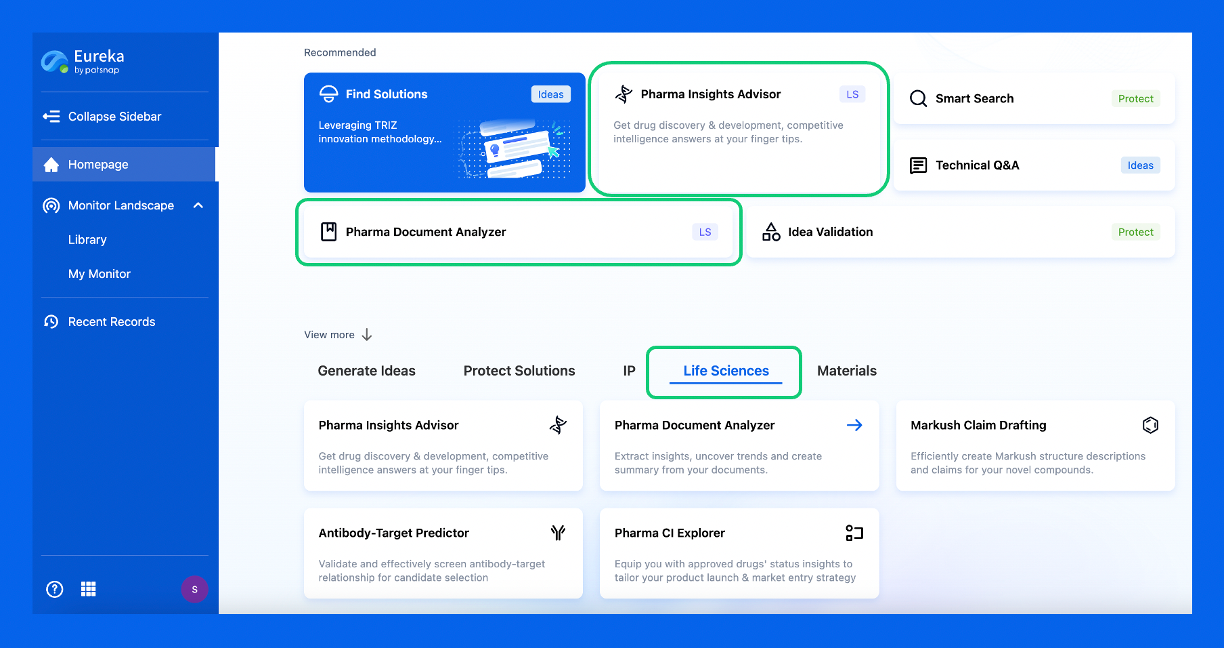
AI Agents Built for Biopharma Breakthroughs
Accelerate discovery. Empower decisions. Transform outcomes.
Get started for free today!
Accelerate Strategic R&D decision making with Synapse, PatSnap’s AI-powered Connected Innovation Intelligence Platform Built for Life Sciences Professionals.
Start your data trial now!
Synapse data is also accessible to external entities via APIs or data packages. Empower better decisions with the latest in pharmaceutical intelligence.