Who are the main competitors of Livzon Pharmaceutical Group?
Overview of Livzon Pharmaceutical Group
Livzon Pharmaceutical Group is an integrated pharmaceutical manufacturer and distributor that has established a significant presence in China. The company has built a diversified business model over many years, positioning itself as a reputable player in the field of chemical drug preparations, biological products, active pharmaceutical ingredients, and traditional Chinese medicine (TCM) formulations. Over time, Livzon has expanded its operations by engaging in strategic acquisitions and partnerships that have strengthened its market footprint. For instance, recent strategic moves include the acquisition of additional stakes in Zhuhai Livzon Diagnostics Inc., which underscores the company’s commitment to expanding its diagnostic and pharmaceutical capabilities. This history of steady growth has allowed Livzon to evolve from a traditional manufacturer into a multifaceted pharmaceutical group that now regularly confronts both domestic and international competition.
Product Portfolio and Market Presence
Livzon’s product portfolio spans several categories. The company produces chemical drug preparations, biological products, and active pharmaceutical ingredients utilized in various therapeutic areas. It has also made significant inroads in the diagnostics space and TCM, reflecting its dual approach to both modern medicine and traditional therapies. Livzon’s market presence is marked by a robust domestic position, underpinned by strong distribution networks concentrated primarily in China, while it has begun to explore opportunities for international expansion. Its portfolio is designed to address both acute and chronic conditions, catering to a broad range of patients. This diversified approach allows the company to manage risks effectively while capitalizing on emerging market trends such as the increasing demand for innovative therapies and integrated diagnostic solutions. The company’s strategic initiatives, such as enhancing its R&D capabilities and optimizing its manufacturing processes, have further solidified its standing in an increasingly competitive global pharmaceutical sector.
Major Competitors in the Pharmaceutical Industry
Key Competitors in the Domestic Market
Within China’s dynamic pharmaceutical market, Livzon faces competition from several domestic players who are also focused on integrated manufacturing and innovation. Among these, companies like China Shineway Pharmaceutical Group and Shandong Luoxin Pharmacy Stock Co., Ltd. have consistently been highlighted as significant competitors. For example, recent detailed company analysis reports reveal that both China Shineway Pharmaceutical Group and Shandong Luoxin Pharmacy Stock are recognized for their strong market positions and comprehensive product portfolios that span traditional Chinese medicines, chemical drugs, and innovative biologics. Additionally, local pharmaceutical companies continue to leverage their deep knowledge of regulatory nuances, local market dynamics, and cost-efficient manufacturing techniques to gain competitive advantages. These domestic competitors not only challenge Livzon on price and product efficacy but are also increasingly investing in R&D to transition from generics to innovative medicines, thus creating a tightly contested environment with shared growth ambitions.
Key Competitors in the International Market
On the international stage, Livzon’s main competitors include some of the world’s leading multinational pharmaceutical companies. Notably, Novartis emerges as one of the principal competitors, as evidenced by market intelligence sources that list Novartis among the 23 companies competing with Livzon. Other key global players include Bristol-Myers Squibb, Pfizer, Roche, and Takeda, all of which have expansive R&D pipelines, significant global market shares, and robust commercialization strategies. These international giants are usually well-funded and capable of leveraging their vast resources to create innovative therapies and penetrate emerging markets, making them formidable competitors for any company that aims to expand beyond domestic borders. Their strategic focus on drug innovation, diverse product portfolios, and aggressive market penetration strategies create an environment in which any contender—regardless of domestic success—must continuously innovate and improve to capture international market share.
Competitive Analysis
Market Share and Positioning
Livzon Pharmaceutical Group holds a solid and defensible position in the Chinese market due to its diversified product portfolio and integrated business model. Domestically, it competes with other leading pharmaceutical companies by leveraging traditional Chinese medicine synergies along with modern drug production techniques. In recent years, the competitive landscape has seen a degree of consolidation among domestic manufacturers as companies seek to scale up operations, improve efficiencies, and expand their R&D capabilities. Livzon’s market share is maintained through strategic acquisitions such as the purchase of additional stakes in diagnostic companies, which boosts its presence in both the pharmaceuticals and diagnostics segments.
In contrast, the market share battle on the international front is more challenging. Global pharmaceutical companies like Novartis and Bristol-Myers Squibb continue to dominate many therapeutic areas, commanding larger shares of the oncology, cardiovascular, and immunotherapy segments. Because these competitors benefit from extensive global distribution networks and significant R&D investments, Livzon’s positioning in international markets relies heavily on its ability to differentiate through focused niche strategies, strategic partnerships, and localized product development that responds to specific regional health care needs. While its integrated production model allows for high operational efficiency domestically, capturing a greater international market share would necessitate a parallel emphasis on innovation and global regulatory expertise.
Product and Innovation Comparison
When comparing product portfolios, Livzon distinguishes itself by maintaining a balance between traditional therapies and modern pharmaceutical innovations. Its product lines include well-established chemical drugs and biologics alongside TCM therapies, positioning it as a unique hybrid in the pharmaceutical landscape. Domestic competitors, like China Shineway Pharmaceutical Group, also offer similarly diversified portfolios. However, multinational companies such as Novartis and Roche often focus on cutting-edge research and development, investing heavily in next-generation biologics and precision medicine approaches. These competitors typically bring new molecules to market faster and secure patents that provide longer exclusivity periods, which translate into stronger market positions internationally.
In terms of innovation, Livzon has been making steady progress, investing in R&D to develop new formulations and boost the quality of its existing products. However, compared with global leaders with significantly higher R&D budgets and well-established innovation pipelines, Livzon's innovation strategy is still in a growth phase. The emphasis by international competitors on next-generation therapies, advanced drug delivery systems, and digital health solutions puts considerable pressure on Livzon to accelerate its own R&D efforts. In addition, product quality and regulatory compliance remain critical rankers; multinational players have well-documented histories of achieving high regulatory standards, and their practices often set the benchmark in international markets.
From a technological perspective, advanced manufacturing techniques and digital innovation are transforming the pharmaceutical industry globally. Competitors like Pfizer and Takeda are increasingly leveraging digital data analytics, electronic clinical trials, and streamlined regulatory submission processes—trends that are rapidly becoming industry standards. Livzon’s ongoing efforts towards process optimization and quality control, as reflected in its manufacturing strategies and technological investments, are essential to closing the gap between domestic robustness and international competitiveness. Furthermore, these initiatives are not only aimed at enhancing production efficiency but also ensuring that product quality remains aligned with, or even exceeds, global benchmarks.
Strategic Insights and Market Trends
Current Market Trends
The global pharmaceutical industry is undergoing rapid transformation driven by several convergent factors. Key trends include an increasing focus on innovation and biotechnology, shifts in regulatory frameworks, and heightened competition from both established multinational corporations and agile domestic players. Within China, for example, pharmaceutical reforms and enhanced government investment in biomedical research are fueling a higher number of new drug applications (INDs) and clinical trials. Livzon’s strategic positioning, therefore, is influenced by this accelerating innovation landscape, which calls for constant adaptation and rapid scaling.
Market trends are further characterized by an enhanced emphasis on personalized medicine, which relies heavily on genomics and bioinformatics to develop targeted therapies for complex diseases. Global competitors are investing significantly in these areas, thereby challenging Livzon to follow suit. At the same time, digital technology integration is becoming paramount across all facets of the drug development lifecycle—from research and clinical trials to post-market surveillance and customer engagement. These technological advancements assist companies in reducing R&D cycle times, optimizing production processes, and enhancing regulatory compliance, underlining a shift towards more agile, data-driven operations.
Another trend observed in the industry is the rise of strategic collaborations and mergers & acquisitions (M&A) as companies seek to consolidate market position and expand their portfolios quickly. Livzon itself has participated in such strategic moves, including acquiring stakes in diagnostic companies, reflecting a trend that is widely adopted in the industry. This consolidation trend is crucial as it not only aids in expanding market share but also provides the scaling necessary to be competitive against industry behemoths operating on a global scale.
Strategic Moves by Competitors
To maintain and even enhance their market positions, global competitors are undertaking several strategic initiatives. Multinational companies such as Novartis and Bristol-Myers Squibb are not only bolstering their R&D investment portfolios but also engaging in high-profile mergers and acquisitions. These strategic moves often include the acquisition of emerging biotechnology companies and innovative research platforms that can offer high-value specialized products. In addition, their deep pockets allow them to invest heavily in international clinical trials aimed at securing rapid market approvals in both established markets and emerging economies.
In the domestic market, companies like China Shineway Pharmaceutical Group are also accelerating their R&D efforts and engaging in strategic collaborations with research institutions and biotech start-ups, which is a direct response to the competitive pressures from both traditional generics and innovative drug segments. These companies are implementing initiatives to streamline their production processes, reduce manufacturing costs, and ensure high product quality, in line with regulatory improvements spurred by government reforms in China.
Furthermore, global competitors are increasingly enhancing their digital capabilities to improve operational efficiency, market forecasting, and customer engagement. For instance, digital transformation strategies include the utilization of advanced analytics for R&D productivity, automated quality monitoring systems in manufacturing, and robust digital platforms for patient monitoring and clinical trial management. These moves enable multinationals to not only maintain but also expand their market share by rapidly adapting to changing market dynamics and patient needs.
Future Outlook for Livzon and Its Competitors
Looking ahead, both Livzon Pharmaceutical Group and its competitors are poised for significant growth, albeit with varying challenges and opportunities on different fronts. Domestically, it is expected that government policies aimed at improving drug regulatory science and fostering innovation will benefit both Livzon and its domestic competitors. This will likely result in an increased rate of innovation, as evidenced by the rising number of new drug applications and clinical trials in China. However, the future competitive landscape is likely to be more crowded as more local players invest in advanced therapeutics and digital transformation.
In the international arena, the future outlook for Livzon is more challenging. To compete effectively with industry giants such as Novartis, Pfizer, and Roche, Livzon will need to rapidly scale its R&D initiatives and invest in state-of-the-art manufacturing technologies. There will be a continuous need for strategic alliances and partnerships to enhance product pipelines and broaden its market access, especially in regulated markets like the European Union and the United States, where the regulatory and quality standards are stringent.
Moreover, with the global shift towards personalized medicine and digital healthcare solutions, Livzon’s future competition will not only be about launching new drugs but also about delivering comprehensive healthcare solutions that integrate diagnostics, treatment, and real-time patient data analysis. Its competitors are expected to push the boundaries of innovation by integrating artificial intelligence, machine learning, and big data analytics into their drug development and patient management systems. For Livzon to remain competitive, a similar investment in these digital technologies will be essential, particularly to support its global expansion plans.
Another aspect influencing the future outlook is the intensifying regulatory environment. Companies operating on the international stage are increasingly subjected to rigorous regulatory scrutiny, which often translates into extended approval timelines and higher costs. Competitors with substantial global experience tend to navigate these challenges more efficiently through established systems and expertise. Livzon, in comparison, must accelerate its learning curve in meeting these standards internationally through international collaborations and the continuous improvement of its internal quality systems.
Furthermore, market trends indicate that patients and healthcare systems are increasingly demanding value-based care. This encompasses high treatment efficacy, safety, and cost-effectiveness. Global competitors have been proactive in aligning their strategies with this demand by investing in outcome-driven research and developing drugs that offer a clear competitive advantage over existing treatments. Livzon’s ability to compete in this regard will depend largely on its success in translating its diversified portfolio into measurable health outcomes and cost savings for healthcare systems, both domestically and abroad.
Conclusion
In summary, Livzon Pharmaceutical Group operates as a well-established, integrated pharmaceutical manufacturer with a diverse product portfolio comprising chemical drugs, biologics, traditional Chinese medicines, and diagnostic solutions. Domestically, it competes with major players such as China Shineway Pharmaceutical Group and Shandong Luoxin Pharmacy Stock Co., Ltd., who all leverage localized operational efficiencies, cost-effective manufacturing, and deep regulatory insights. Internationally, Livzon faces formidable competition from global giants like Novartis, Bristol-Myers Squibb, Pfizer, Roche, and Takeda, which benefit from extensive R&D pipelines, advanced manufacturing processes, and broad market reach.
From a competitive analysis viewpoint, Livzon’s domestic market share is strong due to its integrated business model and historical presence. However, its international positioning requires further enhancement through accelerated R&D investments, strategic partnerships, and digital innovation initiatives. Competitors in the global market are not only advancing technologically but are also reinforcing their strategies through strategic acquisitions and enhanced digital processes, all of which contribute to their robust global market shares.
Current market trends indicate an evolving landscape characterized by increased regulatory rigor, digital transformation, and a demand for personalized and outcome-based therapies. Global competitors are setting high benchmarks by integrating advanced analytics, digital monitoring, and innovative manufacturing technologies. To remain competitive, Livzon will need to continue investing in these areas while leveraging its domestic strengths and capitalizing on government-supported reforms in the Chinese pharmaceutical sector.
Looking forward, the future for both Livzon and its competitors will be shaped by the ability to balance innovation with operational efficiency, particularly as trends such as personalized medicine and digital healthcare become increasingly prominent. Livzon’s challenge will be to build on its historical strengths while rapidly expanding its innovation capabilities and global regulatory expertise. In doing so, it must navigate a competitive landscape that is not only densely populated by domestic players but also dominated by well-resourced multinational giants.
In conclusion, the competitive landscape for Livzon Pharmaceutical Group is multi-layered and highly dynamic. Domestically, it is contending with several robust players who are rapidly embracing innovation and digitalization. Internationally, it is up against some of the largest pharmaceutical companies in the world, whose strengths lie in their extensive R&D investments and global operational expertise. Livzon’s ability to thrive in this environment will depend on its capacity to innovate continuously, optimize its production processes, and adopt best practices from global leaders—all while maintaining the unique advantages that its diversified portfolio and deep local market knowledge provide.
By strategically focusing on these areas, Livzon has the potential to not only defend its current market position but also to emerge as a significant competitor on the international stage. The company’s future success will be determined by its agility in adapting to evolving market trends, the effectiveness of its strategic initiatives, and its ongoing commitment to quality and innovation. Overall, Livzon Pharmaceutical Group must leverage its dual strengths in traditional and modern pharmaceutical practices to create a competitive edge that resonates both domestically and internationally, ensuring robust growth and sustained market leadership in the years to come.
This detailed analysis, drawing on reliable insights from structured synapse sources, highlights the multi-faceted competitive environment in which Livzon operates. From an overview of its company profile and diverse product portfolio to an in-depth competitive analysis across domestic and international markets, it is clear that while Livzon enjoys a solid foundation at home, its future success on the global stage will require strategic adaptations and increased commitment to innovation. The competitive dynamics indicate that success will hinge on balancing traditional strengths with new technological paradigms, ensuring that Livzon remains agile, competitive, and poised for long‐term growth in an ever‐evolving industry landscape.
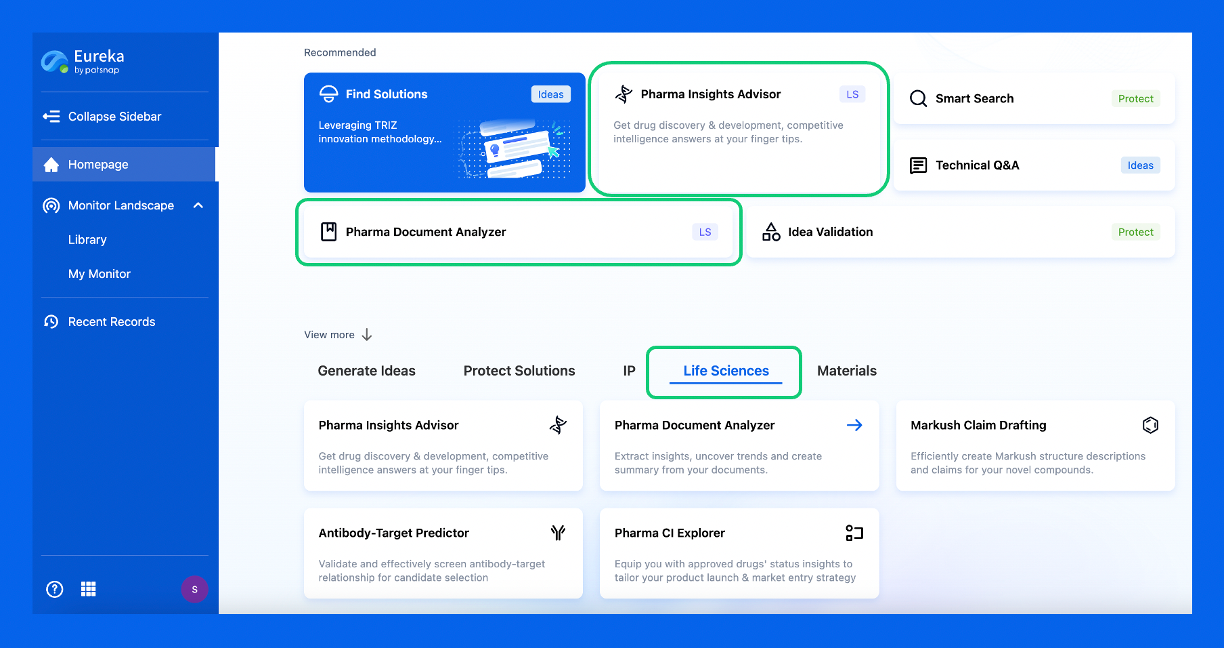
Discover Eureka LS: AI Agents Built for Biopharma Efficiency
Stop wasting time on biopharma busywork. Meet Eureka LS - your AI agent squad for drug discovery.
▶ See how 50+ research teams saved 300+ hours/month
From reducing screening time to simplifying Markush drafting, our AI Agents are ready to deliver immediate value. Explore Eureka LS today and unlock powerful capabilities that help you innovate with confidence.