Who holds the patent for Benralizumab?
Introduction to Benralizumab
Benralizumab is a humanized monoclonal antibody that targets the α‐subunit of the interleukin-5 receptor (IL‑5Rα) and is specifically designed to lead to rapid and nearly complete depletion of eosinophils via antibody‐dependent cell‐mediated cytotoxicity (ADCC). Its unique mechanism, which involves both blockade of IL‑5 signaling and enhanced recruitment of natural killer cells through afucosylation of its Fc region, makes it distinct from other IL‑5 targeting agents that neutralize the IL‑5 cytokine itself. This therapeutic approach has paved the way for an innovative treatment strategy for patients with eosinophilic conditions, particularly severe asthma and chronic obstructive pulmonary disease (COPD).
Clinical Uses of Benralizumab
Clinically, benralizumab is primarily used as an add-on treatment for patients with severe eosinophilic asthma who have not achieved adequate control on high-dose inhaled corticosteroids and long-acting beta-agonists. Its potent eosinophil-depleting effects contribute to significant reductions in the frequency of exacerbations, improvements in lung function, and an overall better disease control profile. Moreover, studies have also explored its use in other eosinophilic disorders such as COPD and even in special contexts such as nasal polyposis. Through rigorous clinical trials—including phase 3 studies like SIROCCO, CALIMA, and ZONDA—benralizumab has validated its safety profile and clinical efficacy, thereby reaffirming its role in modern respiratory medicine.
Patent Information
Identification of Patent Holder
The patents related to benralizumab, particularly those describing the methods for treating diseases such as chronic obstructive pulmonary disease and severe asthma, are predominantly held by AstraZeneca and its affiliated entities. Multiple patent documents associated with benralizumab feature current assignees that reflect AstraZeneca’s ownership. For example, one patent document with the title "Methods for treating chronic obstructive pulmonary disease in an enhanced patient population using benralizumab" is assigned to AstraZeneca PLC, the Swedish branch of AstraZeneca. Additional documents show consistent information, with current assignees such as ASTRAZENECA AB and related AstraZeneca entities (e.g., Korean subsidiaries under 아스트라제네카 아베) maintaining patent rights over the benralizumab technology. This indicates that AstraZeneca, a globally recognized biopharmaceutical company, is the key patent holder for benralizumab.
Patent Details and Specifications
Patent documents covering benralizumab often include detailed descriptions of the antibody’s molecular structure, its production process, and therapeutic applications. Various patent filings encompass methods for treating both chronic obstructive pulmonary disease and severe asthma by administering benralizumab or its antigen-binding fragments. The patents specify the effective use of benralizumab dosage regimens, routes of administration (such as subcutaneous injections), and even formulations intended to maximize pharmacodynamic effects by ensuring rapid eosinophil depletion.
For instance, the Chinese patent CN114007641A expribes methods for administering benralizumab in patient populations with COPD, detailing how an effective amount of the monoclonal antibody can provide clinical benefit. In a similar fashion, an Australian patent document (AU2020273681A1) discusses treatment methodologies, reinforcing the clinical utility of the antibody in managing respiratory conditions. These documents not only protect the composition of benralizumab as a monoclonal antibody but also secure the methods and protocols that guide its clinical development and administration.
Implications of Patent Ownership
Market Exclusivity and Competition
The patents held by AstraZeneca into benralizumab grant the company significant market exclusivity, which is a cornerstone in the biopharmaceutical industry. Such exclusivity prevents direct competition from generic manufacturers during the life of the patent while also encouraging further innovation. By holding comprehensive rights on both the compound and its therapeutic methods, AstraZeneca is able to benefit from a competitive edge in the market, reducing the risk of immediate generic competition upon launch.
From a competitive intelligence perspective, maintaining robust patent protection also serves as an important barrier against competitors targeting similar indications. The detailed patent claims ensure that any party wishing to develop an equivalent treatment must navigate around the protected intellectual property, either by licensing or by designing around the claims—a process that can be both costly and time-consuming. This level of protection not only enhances market stability for benralizumab but also positions AstraZeneca as a leader in the severe asthma and COPD therapeutic sectors.
Impact on Pricing and Accessibility
Patent protection is inherently linked to the pricing and accessibility of innovative therapies. By holding exclusive rights, AstraZeneca is able to set pricing strategies that reflect the costs associated with research and development, clinical trials, and regulatory compliance. Premium pricing models for benralizumab can thus be justified on the grounds of innovation and the investment required to bring the drug to market.
Furthermore, the control of patents ensures that the introduction of benralizumab into the market is accompanied by strategies that protect its clinical benefits while balancing the pressures of healthcare economics. Nonetheless, in the long term, as patents approach their expiry, price reductions may occur due to generic competition. Several studies have demonstrated that drug prices tend to drop significantly after patent expiry—a trend that is well documented in the literature regarding the life cycle of pharmaceutical compounds. Until such generic alternatives emerge, AstraZeneca’s patents help secure both the market share and the pricing strategy for benralizumab.
Future Prospects
Patent Expiry and Generic Alternatives
Looking forward, the expiration dates of patents related to benralizumab will be a critical milestone in the drug’s market lifecycle. As with many biologic therapies, once the patent on benralizumab expires, regulatory pathways may open for biosimilar versions, potentially reducing treatment costs and broadening patient access. A decline in prices is a common pattern once exclusivity ends, as seen in detailed analyses where generic or biosimilar entries lead to significant price decreases within a few years of patent loss.
Given the substantial investment AstraZeneca has made in developing benralizumab, the company is likely to explore additional indications and possibly new formulations before the patent expiry. Extending the period of market exclusivity might also be achieved through secondary patents covering improved delivery methods or combination therapies. Such strategies are common in the industry and serve to delay the competitive pressure that follows patent expiry.
Potential for New Developments
With strong patent protection in place, AstraZeneca can further invest in research and development to identify new uses for benralizumab and potentially improve its therapeutic profile. The broad therapeutic area of respiratory diseases means there is room for further exploration into secondary indications beyond severe asthma and COPD—for example, investigating its role in treating eosinophilic granulomatosis with polyangiitis (EGPA) or other eosinophilic conditions, as discussed in recent review articles.
Moreover, as competitors attempt to develop therapies that may circumvent existing patents, AstraZeneca’s robust intellectual property portfolio also positions the company to engage in cross-licensing and collaborations. Such partnerships can lead to next-generation therapeutics that build upon the foundation laid by benralizumab, further solidifying its market position while expanding treatment options for patients.
Developments in drug delivery, such as self-administration technologies using autoinjectors and accessorized prefilled syringes, also represent areas of ongoing innovation. These contribute not only to patient convenience but also to the overall competitive advantage of benralizumab within its class. Continuous innovation may lead to product enhancements that are eligible for new patent protection, effectively extending the commercial lifespan of the product.
Conclusion
In summary, the patents for benralizumab are held by AstraZeneca and its affiliated entities, as evidenced by multiple patent documents filed in different regions—including CN114007641A, AU2020273681A1, and other filings that consistently attribute ownership to AstraZeneca. This robust patent portfolio not only protects the molecular composition and therapeutic methods of benralizumab but also reinforces AstraZeneca’s market exclusivity, allowing the company to establish premium pricing and mitigate competitive entry during the patent term.
From a general perspective, AstraZeneca’s strong intellectual property rights reflect the company’s commitment to innovation and clinical excellence, especially in the field of severe eosinophilic asthma and other related respiratory conditions. On a specific note, the detailed patent filings provide clear documentation of the effective therapeutic protocols and structural details of benralizumab, acting as a bulwark against immediate generic competition. Finally, on a general level again, as the patent lifespan eventually reaches its end, the market dynamics are likely to shift towards lower drug prices and increased generic competition. However, AstraZeneca has the potential to extend its market advantage by further innovating and protecting new uses and formulations, ensuring benralizumab remains at the forefront of asthma and COPD management.
This multifaceted view not only underscores the importance of patent ownership in shaping the competitive landscape but also highlights how AstraZeneca’s strategic management of its intellectual property contributes to the broader goals of improving patient outcomes while maintaining economic sustainability in a competitive global market.
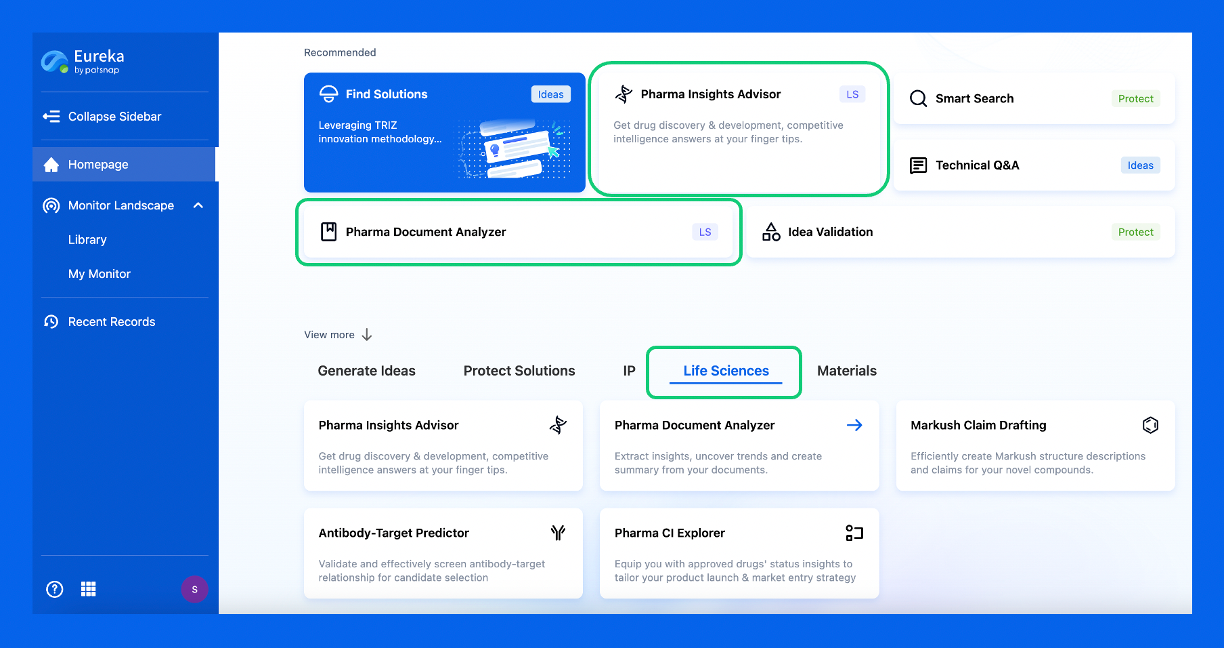
Discover Eureka LS: AI Agents Built for Biopharma Efficiency
Stop wasting time on biopharma busywork. Meet Eureka LS - your AI agent squad for drug discovery.
▶ See how 50+ research teams saved 300+ hours/month
From reducing screening time to simplifying Markush drafting, our AI Agents are ready to deliver immediate value. Explore Eureka LS today and unlock powerful capabilities that help you innovate with confidence.