Who holds the patent for Tiotropium?
Introduction to Tiotropium
Tiotropium is a unique, long-acting muscarinic antagonist (LAMA) that has been developed for the once-daily treatment of respiratory diseases. As a quaternary ammonium compound, it works by blocking M1 and M3 receptors in the airways, thereby reducing bronchoconstriction and lowering lung hyperinflation. This molecule distinguished itself from other anticholinergics through its selective receptor kinetics and slow dissociation from key receptors, enabling prolonged therapeutic action with minimal systemic exposure. The compound was designed with an aim to improve patient compliance by reducing the burden of frequent dosing, which was common with earlier therapies such as ipratropium. Tiotropium’s innovative pharmacokinetic profile and favorable side effect profile have established it as a cornerstone treatment in the management of chronic obstructive pulmonary disease (COPD) as well as its potential repurposing for other indications.
Medical Uses and Benefits
Tiotropium’s primary indication is for the treatment of COPD, where it has demonstrated a sustained improvement in lung function over prolonged periods. Clinical studies have consistently revealed significant enhancements in forced expiratory volume in one second (FEV₁), reduced symptoms of dyspnea, and improvements in quality-of-life scores. Beyond its established role in COPD management, emerging research has explored the repurposing of tiotropium in other fields, such as the prevention and treatment of myopia progression. This novel application leverages its pharmacological action – a property that might modulate ocular receptor activity – to potentially prevent or slow the progression of myopia, as exemplified in patents filed for myopia prevention. The safety profile of tiotropium is particularly noteworthy; its low systemic absorption minimizes unwanted anticholinergic side effects, making it an effective and well-tolerated option for long-term maintenance treatment in patients with chronic respiratory diseases.
Patent Details of Tiotropium
Patent History and Timeline
Tiotropium’s journey from discovery to becoming a clinical mainstay is reflected in a complex and evolving patent landscape. The foundational patents related to the chemical entity, formulation methods, and delivery systems were originally established by innovators in the respiratory pharmaceutics field. Historically, the core invention of tiotropium as a once-daily anticholinergic treatment was introduced in the early 2000s. Over time, subsequent patent families have emerged covering various aspects: from the active pharmaceutical ingredient itself to advanced formulations such as dry powders, inhalation microspheres, and combination products with other bronchodilators.
In parallel with its primary application for respiratory diseases, new patent families have also explored repurposing strategies. For example, patents that specifically address the use of tiotropium for the prevention and treatment of myopia were developed. Two notable patents in this domain are patent “Agent for preventing myopia, treating myopia, and/or preventing myopia progression comprising tiotropium as active ingredient” and patent “Agent for preventing myopia, treating myopia, and/or preventing myopia progression comprising tiotropium as active ingredient,” which share closely related content and filing dates (application date 20180322) but differ in their respective publication dates (published on 20231201 and on 20230509) and patent numbers. These patents represent an expansion of tiotropium’s therapeutic use, illustrating how innovation in pharmaceutical patenting can extend beyond the original indication to cover new applications such as the prevention of ocular diseases.
Additionally, there is a broad array of patents that cover various formulation methodologies and delivery systems for tiotropium. Some patents concentrate on the production of dry powder inhalers, while others focus on more sophisticated formulations such as liposome suspensions and even sustained-release formats featuring dual-layer microspheres. Each of these patents contributes to the overall protection of intellectual property associated with tiotropium, underscoring the extensive research and development efforts invested in optimizing its delivery and performance. The timeline thus reflects initial composition-of-matter patents followed by an evolution into formulation, method of manufacturing, and new indication patents that broaden the commercial and clinical utility of the molecule.
Current Patent Holders
Owing to the diversified patent strategy, multiple companies hold patents that involve tiotropium across different regions and therapeutic areas. In the context of the prevention and treatment of myopia—a novel indication explored through repurposing—the current patent holders as disclosed in the provided patent documents are:
- Santen Pharmaceutical Co., Ltd.
- Singapore Health Services Pte Ltd.
These assignees are explicitly mentioned in both patents, where tiotropium is used as the active ingredient in an agent designed to prevent, treat, and slow myopia progression. Their involvement exemplifies how companies outside the traditional respiratory therapeutics arena are leveraging the unique properties of tiotropium to address unmet needs in ophthalmology.
Furthermore, in the realm of respiratory treatments, especially for COPD, tiotropium has a storied history linked with major pharmaceutical companies. Although the current set of references does not directly list Boehringer Ingelheim as an assignee in the provided materials, the literature commonly references tiotropium as a product (Spiriva) originally launched by Boehringer Ingelheim. This historically significant holder played a pivotal role in the initial development and commercialization of tiotropium for respiratory indications. Over time, additional patent filings regarding formulations and delivery devices have been assigned to companies such as Pulmatrix Operating Company, Somerset Therapeutics, and various Chinese pharmaceutical companies like Livzon Pharmaceutical Group, Nanjing Aureole Pharmaceutical, Taizhou Xianju Pharmaceutical, and others – each focusing on specific methods of preparing or delivering tiotropium. However, for the question at hand—“Who holds the patent for Tiotropium?”—the most unambiguous answer related to the innovative repurposing of tiotropium for myopia is provided by the patents with numbers, where Santen Pharmaceutical Co., Ltd. and Singapore Health Services Pte Ltd. are the current patent holders.
Legal and Market Implications
Impact of Patents on Market Competition
Patents serve as a critical tool in the pharmaceutical industry by granting exclusive rights that help recoup research and development investments. The extensive patent protection on tiotropium has had several implications for market competition and innovation in respiratory and ophthalmic therapies. For the primary indication of COPD, the robust patent barrier maintained by the original innovator (historically Boehringer Ingelheim) has provided market exclusivity, allowing the company to command a premium price and reinvest in further research. Simultaneously, once patents expire or are challenged, generic manufacturers eventually enter the market, leading to increased competition and typically reducing costs.
In the arena of repurposed indications such as myopia, the patents held by Santen Pharmaceutical Co., Ltd. and Singapore Health Services Pte Ltd. create a new competitive landscape. These patents establish the commercial viability of using tiotropium beyond its traditional applications and signal a shift whereby companies from different therapeutic areas can leverage existing molecules for new clinical indications. This expansion could eventually spur further collaborations and drive innovation by encouraging other players to explore similar repositioning approaches. Nonetheless, the exclusivity achieved through these patents also means that competitors must invest significant resources in either developing their own novel formulations or wait until the patents expire in order to offer generic alternatives.
Legal Considerations in Patent Holding
The legal framework surrounding patent rights in pharmaceuticals is multifaceted, involving considerations of validity, enforceability, and territorial scope. For tiotropium, as with many blockbuster drugs, the extensive patent portfolio is designed not only to cover the active pharmaceutical ingredient but also its various formulations, manufacturing processes, and methods of use. Legal challenges are common in such settings, especially when competitors seek to introduce generics that might infringe upon one or more claims within a patent family. Moreover, the re-purposing of an established active compound like tiotropium for a new indication such as myopia further complicates the background of intellectual property. Here, the inventiveness of applying a molecule designed for respiratory use to ocular conditions is scrutinized under standards of novelty and non-obviousness to ensure robust legal protection.
Furthermore, the global nature of pharmaceutical marketing necessitates that patents be filed in multiple jurisdictions to secure comprehensive coverage. For instance, patents have filing details that imply a strategic approach to securing rights in key markets. Legal considerations also involve evaluating the potential for patent term extensions or adjustments and the challenges posed by compulsory licensing in certain countries. In summary, the legal landscape underscores how the holders, including Santen Pharmaceutical Co., Ltd. and Singapore Health Services Pte Ltd., must navigate a complex regulatory and dispute environment if their patents—protecting novel uses of tiotropium—are to be defended in the face of generic competition and litigation by challengers.
Future Considerations
Expiration of Current Patents
One of the most critical aspects affecting the lifecycle of a pharmaceutical product like tiotropium is the eventual expiration of its patents. The expiration dates noted within various patents provide a timeline after which generic versions may enter the market, shifting the competitive landscape significantly. For instance, the patents concerning the novel use of tiotropium in myopia prevention (published in December 2023 with expiration on 20380322, and published in May 2023 with expiration on 20380401) indicate that market exclusivity for these specific applications is time-bound. In the respiratory indication space, earlier composition-of-matter and formulation patents are also subject to expiration, and many of these dates are staggered across different regions. As the expiration dates approach, the market may see a reduction in prices and an increase in competition from generic entries. Companies that continue to invest in innovation – such as developing improved delivery systems or new combination therapies – might extend their effective life cycle through new patents and incremental innovations.
Potential for Generic Alternatives
The introduction of generic alternatives is a well-documented consequence of patent expiration. Once the patent protection for tiotropium or its specific formulations and indications lapses, generic manufacturers can enter the market with bioequivalent products at a lower cost. This transition generally leads to significant shifts in market dynamics, with increased accessibility for patients and reduced healthcare costs. However, the extent to which generics can replicate the therapeutic efficacy and safety profile of the original branded product depends on the thoroughness of the original patent’s disclosure and the complexity of its formulation. Additionally, if a company holds supplementary patents covering various aspects of the product (such as novel delivery devices or combination therapies), these may act as a barrier to generic competition even after the main composition-of-matter patent expires. In the case of tiotropium’s repurposed use for myopia, if the patents by Santen Pharmaceutical Co., Ltd. and Singapore Health Services Pte Ltd. expire without similar follow-on patents, generic alternatives could be developed, further democratizing access to this potential therapy.
Summary and Detailed Conclusion
In summary, tiotropium is an advanced anticholinergic drug that has revolutionized the treatment of COPD through its once-daily dosing and excellent safety profile. Its applications have expanded over time to include indications in ophthalmology, such as the prevention and treatment of myopia. The patent history of tiotropium reflects a layered and evolving strategy, from the original composition-of-matter patents protecting its molecular structure and respiratory formulations to novel patents covering advanced inhalation devices, sustained-release formulations, and even new therapeutic uses.
From a historical perspective, the initial patents were associated with respiratory indications and are widely attributed to early innovators like Boehringer Ingelheim. However, the current patent landscape for novel applications—specifically the use of tiotropium for preventing myopia—is held by Santen Pharmaceutical Co., Ltd. and Singapore Health Services Pte Ltd., as evidenced by patents. These patents not only secure market exclusivity for this new application but also highlight a broader trend of repurposing established compounds for additional clinical benefits.
Legally, the patents covering tiotropium have had a profound impact on market competition by providing a temporary monopoly that encourages continued investment in innovation. The legal intricacies involve both challenges to patent validity and enforceability across multiple regions, as well as strategic filings to maximize territorial coverage and extend the product life cycle. Market dynamics are influenced by the timing of patent expirations, with the potential entry of generics leading to decreased prices and greater accessibility. Thus, while the current patent holders enjoy considerable market advantages, these are inherently time-limited, and the potential for generic competition remains a significant consideration for the future.
Looking forward, as patents expire, especially those covering novel indications such as myopia treatment, there is a robust possibility for the development of generic alternatives. This potential shift not only alters the competitive landscape but also serves as an impetus for continuous innovation, as companies strive to develop newer formulations or novel combination therapies to maintain market presence. In conclusion, while the diversified patent portfolio for tiotropium illustrates a successful protection strategy and market strategy by multiple companies, the answer to "Who holds the patent for Tiotropium?" for the repurposed application is most clearly provided by the patents, whose current assignees are Santen Pharmaceutical Co., Ltd. and Singapore Health Services Pte Ltd. This multifaceted patent landscape underscores the dynamic interplay between innovation, legal protection, and market forces in the modern pharmaceutical industry.
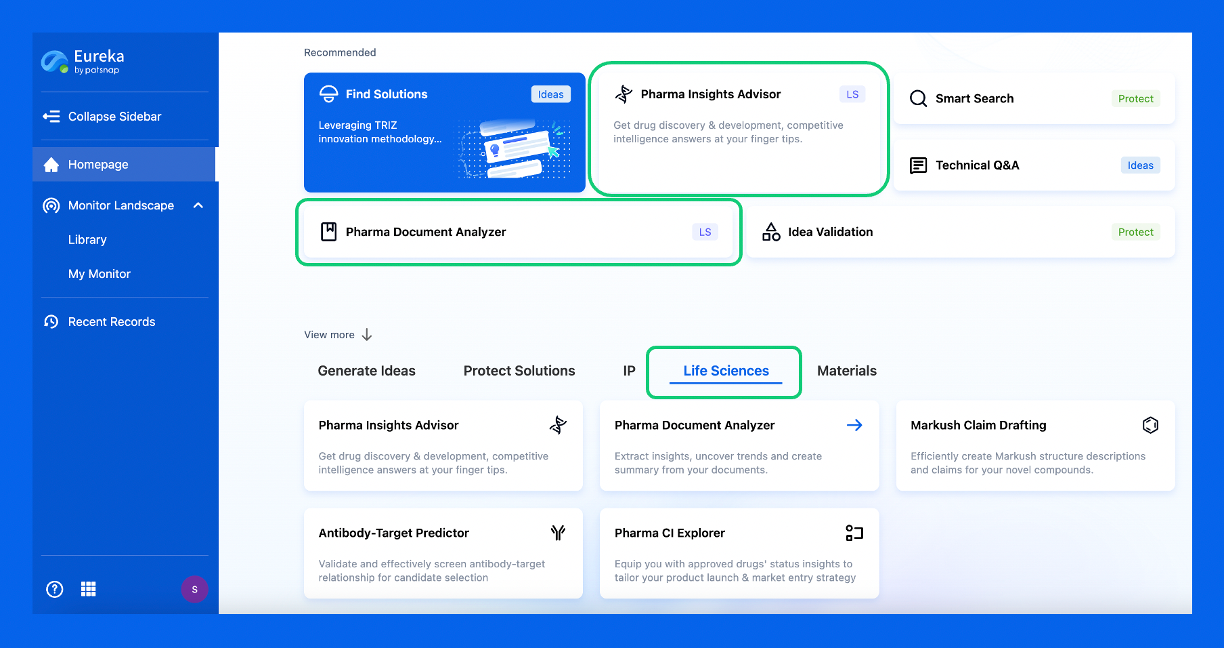
Discover Eureka LS: AI Agents Built for Biopharma Efficiency
Stop wasting time on biopharma busywork. Meet Eureka LS - your AI agent squad for drug discovery.
▶ See how 50+ research teams saved 300+ hours/month
From reducing screening time to simplifying Markush drafting, our AI Agents are ready to deliver immediate value. Explore Eureka LS today and unlock powerful capabilities that help you innovate with confidence.