Dare Bioscience Company BD Opportunity Scan Report 2026: Pipeline, Deals and Partnering Shortlist
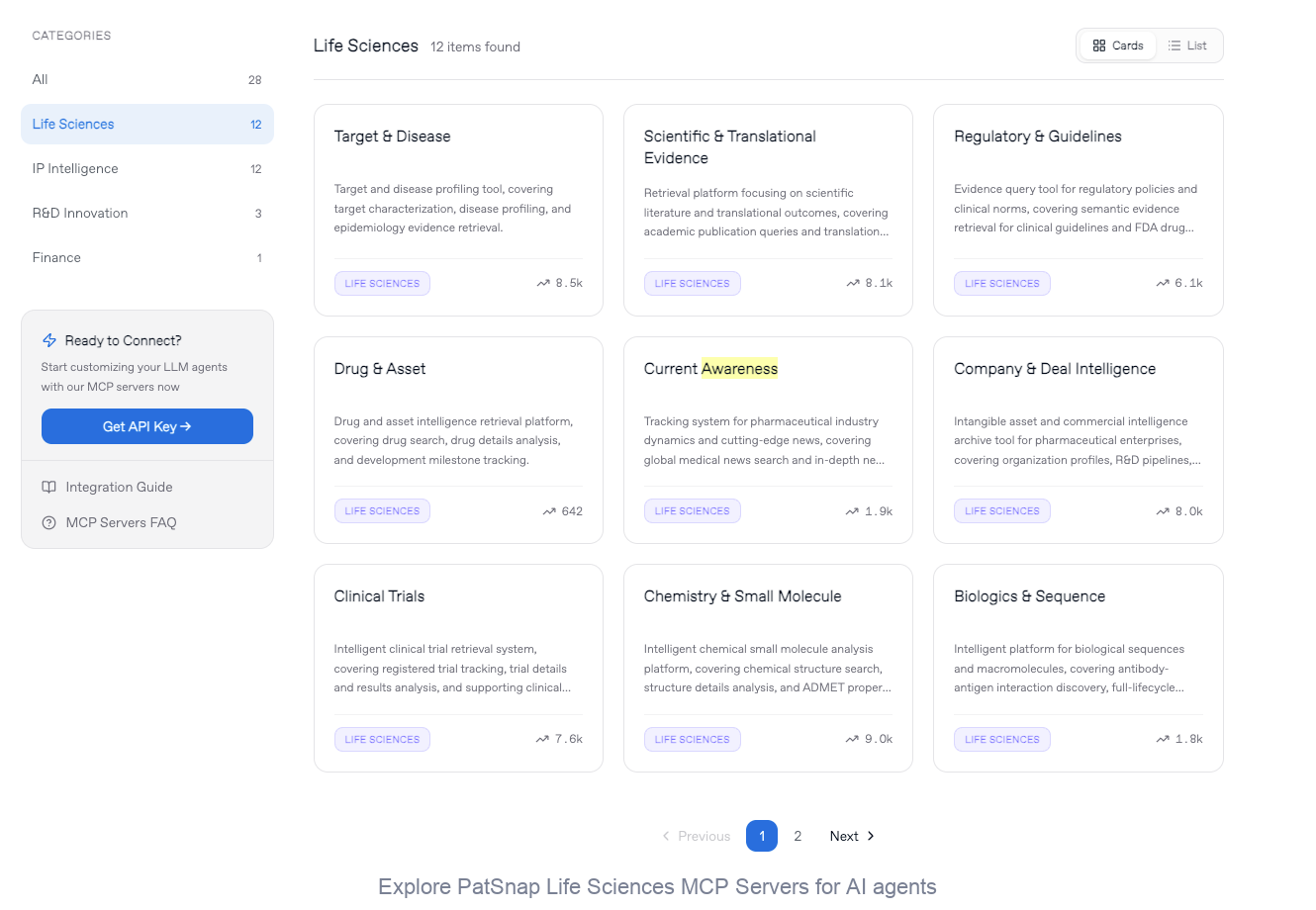
This Dare Bioscience Company BD Opportunity Scan Report was built with PatSnap Life Sciences MCP workflows. Company & Deal Intelligence MCP establishes the sampled pipeline and transaction context; Financial Report Search tests for capital signals; Current Awareness MCP checks recent catalysts. Explore the MCP servers used in this report.
Decision date: 7 August 2026. This is a screening memorandum, not legal, medical, patent or investment advice. Pipeline stages and transaction records must be confirmed in primary materials.
Executive BD thesis
Dare Bioscience enters this scan because organization_pipeline_fetch returned 23 pipeline records. The sampled lead, Ovaprene, is associated with target not disclosed, Contraception and a highest visible sampled stage of Phase 3. The practical question is whether the visible program, rights perimeter and evidence package support a timely partnering process—not whether the portfolio is interesting in the abstract.
The initial outreach thesis is to test a focused collaboration around Ovaprene while preserving optionality across the wider Infectious disease and vaccines portfolio. The buyer should present a specific capability contribution—clinical execution, translational biomarkers, CMC scale-up, regulatory strategy, regional commercialization or capital—and connect it to the next stage-defining milestone. Generic expressions of strategic interest will not create urgency.
No organization website passed the batch HTTP verification rule, so no unverified corporate link is embedded. Confirm the current legal entity, corporate status, subsidiaries, acquired assets and regional rights through primary corporate and regulatory records before outreach.
How PatSnap MCP assembled this scan
The workflow begins with Company & Deal Intelligence MCP organization_pipeline_fetch, which supplies the asset names, targets, indications and status tables used below. Drug Deal Search then provides a theme-level transaction frame. Financial Report Search tests for capital and runway signals, while Current Awareness checks whether a recent event changes timing. Each output is treated as a discovery layer: entity identity, ownership, stage and economics still require primary-source confirmation.
The shortlist deliberately separates public attribution from confirmed ownership. Acquisitions, regional licenses, academic obligations, platform sublicenses, co-development structures and change-of-control clauses can divide control among several parties. “Owner” therefore means the organization associated with the MCP pipeline record; it does not mean that every worldwide right is available.
Partnering shortlist: owner, stage, evidence, IP risk and outreach rationale
| Asset | Owner / rights checkpoint | Stage | Target and indication evidence | Evidence package to request | IP risk | Outreach rationale |
|---|---|---|---|---|---|---|
| Ovaprene | Dare Bioscience (public attribution; contracting entity and rights chain to confirm) | Phase 3 | Target not disclosed; Contraception | Pivotal protocol, statistical analysis plan, full safety tables, regulator correspondence and commercial CMC readiness | Medium: composition, use, formulation, dosing and process claims require family/status verification | Anchor outreach to the next value inflection, evidence gap, territory scope and capital required to complete late development. |
| Lopinavir/Ritonavir | Dare Bioscience (public attribution; contracting entity and rights chain to confirm) | Phase 2 | HIV-1 pol; Human Papillomavirus Infection, Human Papillomavirus-Related Cervical Carcinoma | Interim efficacy, subgroup and biomarker analyses, safety listings, protocol/SAP and dose-selection rationale | Medium: composition, use, formulation, dosing and process claims require family/status verification | Anchor outreach to the next value inflection, evidence gap, territory scope and capital required to complete late development. |
| Sildenaifl Citrate | Dare Bioscience (public attribution; contracting entity and rights chain to confirm) | Phase 2 | PDE5A; Female sexual dysfunction, Sexual Dysfunctions, Psychological | Interim efficacy, subgroup and biomarker analyses, safety listings, protocol/SAP and dose-selection rationale | Medium: composition, use, formulation, dosing and process claims require family/status verification | Anchor outreach to the next value inflection, evidence gap, territory scope and capital required to complete late development. |
| Etonogestrel | Dare Bioscience (public attribution; contracting entity and rights chain to confirm) | Phase 1 | PR; Contraception | Protocol, investigator brochure, safety, PK/PD, dose-escalation logic, biomarker data and clinical-grade CMC | Medium: composition, use, formulation, dosing and process claims require family/status verification | Propose a staged option or co-development discussion tied to proof-of-concept, biomarker and safety milestones. |
| DARE-PDM1 | Dare Bioscience (public attribution; contracting entity and rights chain to confirm) | Phase 1 | Target not disclosed; Primary dysmenorrhea | Protocol, investigator brochure, safety, PK/PD, dose-escalation logic, biomarker data and clinical-grade CMC | Medium: composition, use, formulation, dosing and process claims require family/status verification | Propose a staged option or co-development discussion tied to proof-of-concept, biomarker and safety milestones. |
The sampled shortlist is not a ranking of clinical quality. Priority should rise when the stage is legible, the next value inflection is time-bound, the target or modality fits the buyer, and the counterparty can document control of the requested territories. Priority should fall when the asset identity, current status, chain of title or evidence package cannot be reconciled.
Transaction precedent and negotiation frame
The Drug Deal Search MCP did not return a usable transaction item for the Infectious disease and vaccines screen. That gap should not be interpreted as an absence of comparable transactions. The deal team should broaden the modality, target and indication search, then normalize stage, scope, territories, economics and governance before setting an offer range.
Before using any precedent, normalize asset maturity at signing, target validation, clinical signal, platform versus single-asset scope, research funding, equity components, development-cost allocation, regulatory milestones, sales milestones, tiered royalties, opt-in rights, governance, diligence obligations, termination and change-of-control treatment. Headline values can be misleading when contingent payments dominate.
Financial signal and counterparty readiness
A strict company-name check identified a Financial Report Search MCP candidate: Dare Bioscience, Inc. - 2021 Annual report. Treat this as a pointer to the source document, not a concluded runway assessment. Confirm cash, quarterly burn, committed R&D spend, debt, going-concern language and financing events in the primary filing before proposing economics.
Current-awareness check and timing
Current Awareness MCP returned no company-specific news chunk that met the strict name-match rule for this scan. This does not prove that no event occurred. Re-run the search within 24 hours of outreach and verify financing, trial, regulatory, management, patent-dispute and transaction developments against primary announcements.
Re-check current awareness before contact and log the source, date and entity match; a financing, readout, safety event or competing transaction can change timing.
IP risk and freedom-to-operate workplan
The IP labels in the shortlist are triage ratings, not legal opinions. Build an asset-by-asset claim chart covering composition of matter, sequences or constructs, target engagement, methods of use, combinations, formulations, dosing, biomarkers, manufacturing, delivery technology and companion tools. Map priority dates, legal status, remaining term, patent-term adjustment or extension, prosecution history, assignments, liens, inventorship, academic licenses and government-funding obligations.
For Infectious disease and vaccines, add a competitor landscape around target not disclosed and the relevant technical architecture. Identify blocking claims owned by platform suppliers or competitors, test design-around options and map geographic exposure. Any gap between the pipeline organization, patent assignee, trial sponsor, regulatory applicant and contracting entity should pause commercial diligence until reconciled.
Evidence package and diligence gates
- Identity gate: reconcile asset names, aliases, targets, constructs, salts, formulations and internal codes.
- Ownership gate: confirm the legal owner, chain of title, regional rights, encumbrances and third-party consent requirements.
- Development gate: obtain protocols, investigator brochures, data cuts, safety listings, CMC plans and regulator correspondence appropriate to stage.
- IP gate: review patent families, claim scope, term, validity risks, freedom to operate and platform dependencies.
- Commercial gate: validate patient segmentation, treatment pathway, competitor timing, pricing assumptions and adoption evidence.
- Finance gate: model remaining cost, runway, milestone timing, downside cases and governance needed to preserve option value.
Outreach rationale and proposed sequence
Days 0–10: contact the business-development owner with a narrow thesis tied to Ovaprene, target not disclosed and the next stage-defining milestone. Request a short non-confidential discussion, a current rights summary and confirmation of the legal counterparty. Days 10–30: if interest is mutual, execute confidentiality terms and request the minimum evidence package above. Days 30–60: run clinical, translational, CMC, IP, finance and commercial workstreams in parallel, then choose among a regional license, co-development, option-to-license, asset acquisition or platform collaboration.
The first note should explain why the asset fits the buyer, what execution capability the buyer contributes and which uncertainty the proposed structure resolves. It should also state what the team does not yet know. This combination of specificity and disciplined uncertainty is more credible than a broad request for “strategic discussions.”
Decision memo
Recommendation: proceed to a tightly scoped, non-confidential contact, subject to an ownership and current-status refresh. The MCP pipeline result supports an initial screen, and the theme-level transaction search supplies a market frame. Financial and news signals are used only when the company name matches strictly; missing results remain explicit diligence gaps. Do not enter valuation or term-sheet work until ownership, evidence quality, IP control and the next value inflection are documented.

Use PatSnap MCP to reproduce the workflow, refresh the evidence and expand the shortlist: Explore PatSnap Life Sciences MCP servers.
MCP provenance: Company & Deal Intelligence — organization_pipeline_fetch and drug_deal_search; Company & Deal Intelligence — financial_report_search; Current Awareness — news_search. Organization-link discovery: BIO Member Directory, with batch HTTP verification. Decision date: 7 August 2026.
