BRD4 Target Evaluation Report: Biology, Validation, Competition, IP, and R&D Strategy
This BRD4 target evaluation report was generated from PatSnap Life Sciences MCP data workflows, combining Target & Disease MCP Server outputs for biology and disease context with Clinical Trials MCP Server checks for clinical development signals. The goal is to show how an AI agent can turn structured life-science data into a decision-ready target assessment.
For BRD4, the main question is not simply whether the biology is interesting. It is whether the biology, validation evidence, competitive intensity, IP surface, and indication strategy leave enough room for a differentiated R&D program.
323 Tracked drugs 323 drug records were returned by Target & Disease MCP for this target. | 226 Development-stage drugs 226 development records suggest a very active BET bromodomain field. | 135 Linked diseases 135 disease associations frame the indication search space. | 82 Target score 82/100 reflects the combined biology, validation, competition and room-to-win readout. |
Executive Readout
BRD4 is a highly validated chromatin-reader target with strong transcriptional-control biology and heavy competitive density. The best opportunities are not generic BET inhibition, but selective, degradative or biomarker-defined approaches that improve tolerability and response depth.
Biology confidence88/100
Validation maturity84/100
Competition pressure88/100
Room for differentiation60/100
Why MCP Data Matters Here
A target report becomes useful when the evidence is traceable. In this workflow, Target & Disease MCP supplies the target profile, aliases, UniProt-linked biology, drug count, development count and disease-linkage context. Clinical Trials MCP is then used as a validation layer to check whether the competitive story is supported by trial activity and named development programs. When a clinical query returns broad or noisy matches, the report keeps the claim conservative instead of overstating the signal.
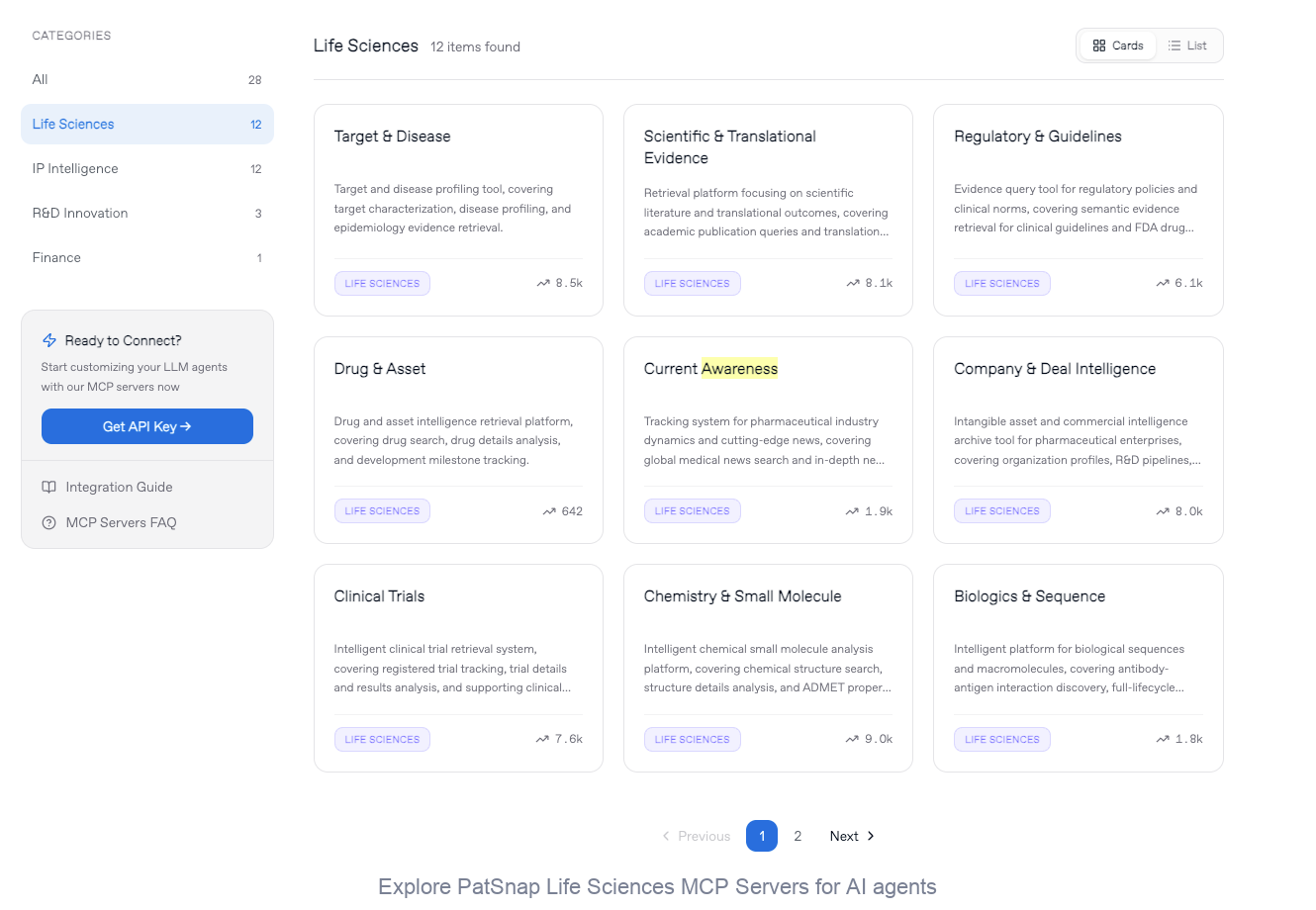
Explore PatSnap Life Sciences MCP Servers for AI agents
Biology: What the Target Controls
Target & Disease MCP describes BRD4 as a chromatin reader that binds acetylated histones, preserves epigenetic memory through cell division and recruits P-TEFb to promoters and enhancers to regulate transcriptional pause release.
Mechanistic anchorBRD4 links acetylated chromatin to active transcription, making it important in oncogenic transcription programs and inflammatory signaling. | Disease logicThe 135 disease associations and 323 tracked drug records indicate substantial oncology and inflammatory-disease development interest. | Translational caveatBET biology is broad, so thrombocytopenia, GI effects and transcriptional adaptation are core development risks. |
Validation Evidence
Validation is high: Target MCP returned 323 tracked drugs and 226 development-stage records.
From an AI-agent perspective, this is a useful pattern: one MCP call provides the biological rationale, while the next call checks whether that rationale has already translated into assets, trials, or clinical-stage development. The output is not a final investment decision, but it narrows the review queue quickly.
Clinical and Competitive Landscape
Competition is high across BET inhibitors, BD2-selective inhibitors and BRD4 degraders. New entrants need a clear selectivity or degrader thesis.
Known development examplesBET inhibitors and PROTAC/degrader programs define the current benchmark for efficacy and tolerability. | Competitive implicationA simple pan-BET inhibitor is unlikely to stand out; selectivity, degradation kinetics or disease-state biomarkers are required. | Where to look nextPrioritize MYC-driven tumors, hematologic malignancies, inflammatory indications and degrader-sensitive settings. |
IP and Freedom-to-Operate Lens
IP review should cover bromodomain binders, BD1/BD2 selectivity, PROTAC linkers, degrader warheads and biomarker-selected claims.
For IP review, the practical next step is to connect target evidence with modality, chemotype, sequence space, formulation, combinations and indication-specific claims. A target with many assets is not automatically blocked, but it needs a sharper claim strategy.
R&D Recommendation
Advance BRD4 only with a differentiated modality or biomarker plan. It is attractive, but crowded.

Start building target evaluation agents with PatSnap Life Sciences MCP Servers
Data workflow note: target biology, drug counts, development counts and disease associations are based on PatSnap Target & Disease MCP Server outputs retrieved on 9 July 2026. Clinical development commentary is written conservatively when trial-query outputs are broad, and should be refreshed before investment or BD decisions.


