CXCR4 Target Evaluation Report: Biology, Validation, Competition, IP, and R&D Strategy
This CXCR4 target evaluation report was generated from PatSnap Life Sciences MCP data workflows, combining Target & Disease MCP Server outputs for biology and disease context with Clinical Trials MCP Server checks for clinical development signals. The goal is to show how an AI agent can turn structured life-science data into a decision-ready target assessment.
For CXCR4, the main question is not simply whether the biology is interesting. It is whether the biology, validation evidence, competitive intensity, IP surface, and indication strategy leave enough room for a differentiated R&D program.
175 Tracked drugs 175 drug records were returned by Target & Disease MCP for this target. | 122 Development-stage drugs 122 development records suggest highly active chemokine-receptor and hematology/oncology field. | 194 Linked diseases 194 disease associations frame the indication search space. | 81 Target score 81/100 reflects the combined biology, validation, competition and room-to-win readout. |
Executive Readout
CXCR4 is a high-attractiveness target because it connects chemokine signaling, hematopoietic cell trafficking, tumor microenvironment biology, and clinical development activity. The Target & Disease MCP footprint shows 175 drug records, 122 development-stage drug records, and 194 disease associations, while the Clinical Trials MCP search identified 326 related clinical trials, indicating a mature but still investable competitive space.
Biology confidence84/100
Validation maturity84/100
Competition pressure82/100
Room for differentiation62/100
Why MCP Data Matters Here
A target report becomes useful when the evidence is traceable. In this workflow, Target & Disease MCP supplies the target profile, aliases, UniProt-linked biology, drug count, development count and disease-linkage context. Clinical Trials MCP is then used as a validation layer to check whether the competitive story is supported by trial activity and named development programs. When a clinical query returns broad or noisy matches, the report keeps the claim conservative instead of overstating the signal.
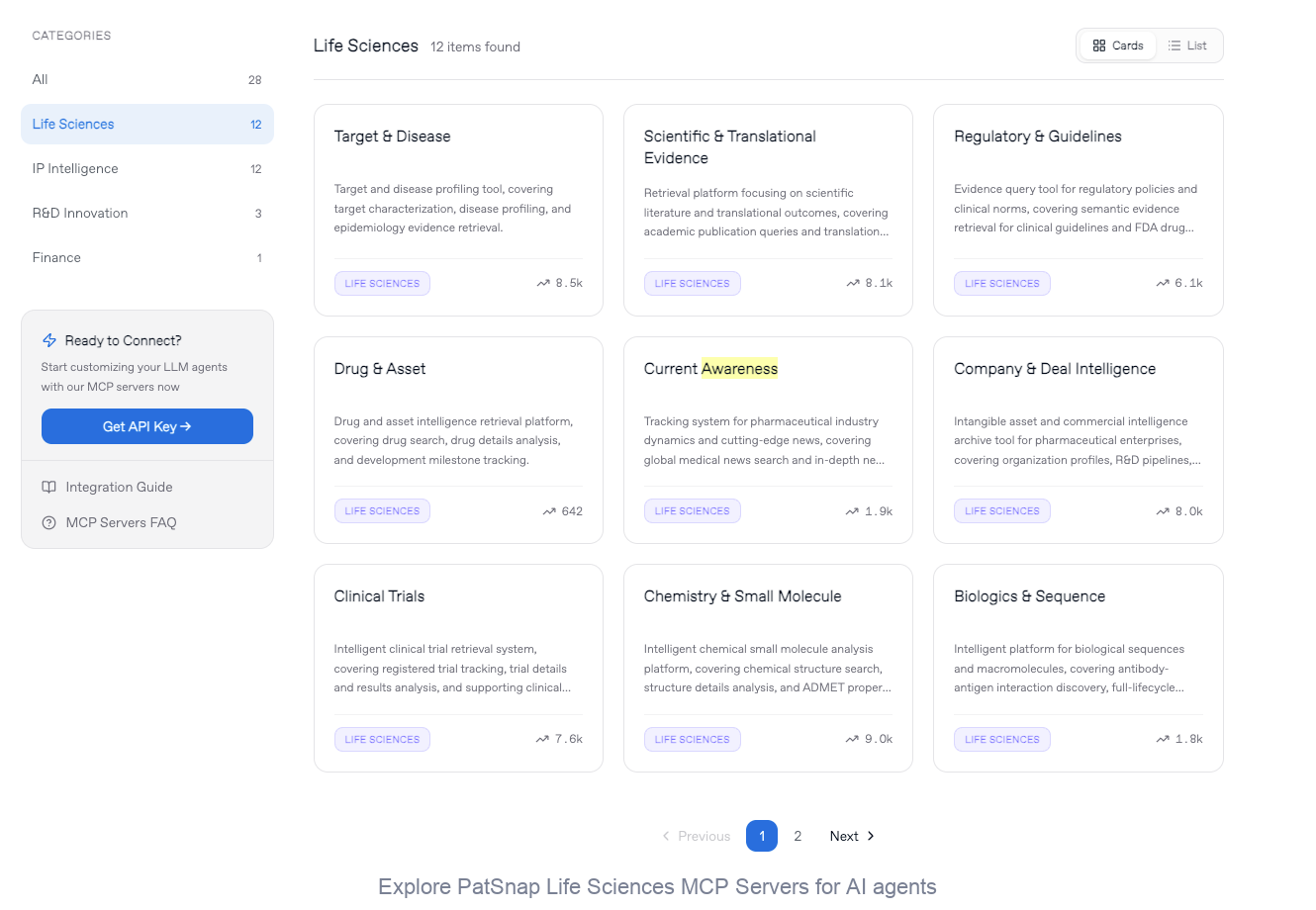
Explore PatSnap Life Sciences MCP Servers for AI agents
Biology: What the Target Controls
The Target & Disease MCP profile describes CXCR4 as the receptor for CXCL12/SDF-1. Ligand binding triggers G-protein signaling, intracellular calcium changes, MAPK1/MAPK3 activation, adenylate cyclase inhibition through Gi signaling, and AKT pathway involvement. This gives CXCR4 a strong mechanistic role in cell migration, hematopoiesis, inflammatory responses, and tumor-stroma interactions.
Mechanistic anchorFor therapeutic development, CXCR4 is attractive because blocking or modulating the CXCL12-CXCR4 axis can alter cell trafficking, bone-marrow retention, immune-cell positioning, and tumor microenvironment support. The same axis can be relevant for stem-cell mobilization, hematologic malignancy strategies, solid-tumor combinations, and imaging approaches. | Disease logicThe 194-disease MCP footprint supports broad biological relevance. However, the best R&D opportunities are not simply broad-use CXCR4 inhibition. They are indication-specific strategies where cell trafficking, marrow niche biology, immune exclusion, or CXCR4-positive disease localization can be measured and connected to clinical endpoints. | Translational caveatThe main caveat is competitive maturity. CXCR4 is well known and clinically explored, so a new program must explain why its pharmacology, route, schedule, safety profile, or combination setting improves on existing approaches. |
Validation Evidence
Clinical Trials MCP found 326 CXCR4-related registered trials. Recent examples include studies around plasma cell leukemia, stem-cell mobilization, 68Ga-Pentixafor PET/CT in multiple myeloma and indolent lymphoma, motixafortide for MRD sensitization in AML, and CAR-T work in relapsed or refractory T-ALL. This supports strong clinical validation across both therapeutic and diagnostic use cases.
From an AI-agent perspective, this is a useful pattern: one MCP call provides the biological rationale, while the next call checks whether that rationale has already translated into assets, trials, or clinical-stage development. The output is not a final investment decision, but it narrows the review queue quickly.
Clinical and Competitive Landscape
Competition is active across small molecules, peptides, antibodies, radiopharmaceutical or imaging approaches, mobilization regimens, and oncology combinations. This creates a high validation signal but also raises the bar for differentiation.
Known development examplesA practical Clinical Trials MCP review should segment CXCR4 programs into mobilization, oncology sensitization, tumor imaging, immune-combination, and cell-therapy support categories rather than reading all trials as one market. | Competitive implicationThe competitive implication is clear: CXCR4 is attractive for teams with a differentiated modality or a clear indication wedge. Generic antagonist positioning is unlikely to stand out. | Where to look nextUse Target & Disease MCP to prioritize diseases where CXCL12-CXCR4 biology is central, then use Clinical Trials MCP to benchmark trial phase, modality, sponsor, and combination partner patterns. |
IP and Freedom-to-Operate Lens
IP diligence should focus on chemotype or binding modality, dosing and mobilization regimens, imaging ligand claims, combination use, biomarker-defined enrollment, and disease-specific method-of-use claims.
For IP review, the practical next step is to connect target evidence with modality, chemotype, sequence space, formulation, combinations and indication-specific claims. A target with many assets is not automatically blocked, but it needs a sharper claim strategy.
R&D Recommendation
Prioritize CXCR4 when the program can connect target modulation to a measurable trafficking or microenvironment endpoint. The target is validated and commercially interesting, but differentiation must be explicit from the start.

Start building target evaluation agents with PatSnap Life Sciences MCP Servers
Data workflow note: target biology, drug counts, development counts and disease associations are based on PatSnap Target & Disease MCP Server outputs retrieved on 9 July 2026. Clinical development commentary is written conservatively when trial-query outputs are broad, and should be refreshed before investment or BD decisions.


