PGR 2026 Target Evaluation Report Update: Biology, Validation, Competition, IP, and R&D Strategy
This Target Evaluation Report for PGR is generated from PatSnap Life Sciences MCP data workflows, combining Target & Disease MCP-style biology context with Clinical Trials MCP-style validation and competitive signals.
For R&D teams, PGR sits in oncology signaling, tumor dependency, and precision-medicine biology. This page turns target intelligence into a readable decision memo: where the biology is compelling, where validation is still maturing, how crowded the clinical landscape may be, and what an AI agent should inspect before nominating programs.
221
Associated drug signal
9
Development-stage signal
108
Disease association signal
189
Clinical trial signal
Executive View
PGR target attractiveness
PGR earns attention when biology, translational validation, and competitive whitespace point in the same direction. The report uses indexed target, disease, drug, and clinical-trial signals as a practical screening layer rather than a final investment answer.
Biology and disease context
Target & Disease MCP-style profiling places PGR in oncology signaling, tumor dependency, and precision-medicine biology. The key question is whether the pathway role is causal enough to support intervention, and whether disease segmentation can identify patients most likely to respond.
Validation evidence
The signal set includes 221 associated drug records, 9 development-stage records, and 108 disease-association records. Higher numbers can indicate maturity, but evidence quality matters more than volume alone.
Clinical competition
Clinical Trials MCP-style search returns a 189-record competitive monitoring signal for the target context. Inspect trial phase, disease focus, modality, sponsor mix, and whether recent studies are expanding or narrowing the opportunity.
IP and R&D strategy
For PGR, the IP screen should compare modality claims, biomarker claims, method-of-use coverage, and combination strategies before program nomination.
Biology and Disease Context
PGR should be evaluated as a pathway node, not just a symbol. The first pass asks whether human genetics, disease expression, pharmacology, and translational biomarkers all support the same mechanism.
Clinical Validation and Competitive Landscape
| Validation readout | Associated drugs: 221; development-stage drugs: 9; disease links: 108 |
| Competition readout | Clinical trial monitoring signal: 189; review disease split, phase mix, sponsor overlap, and combination strategies before prioritization. |
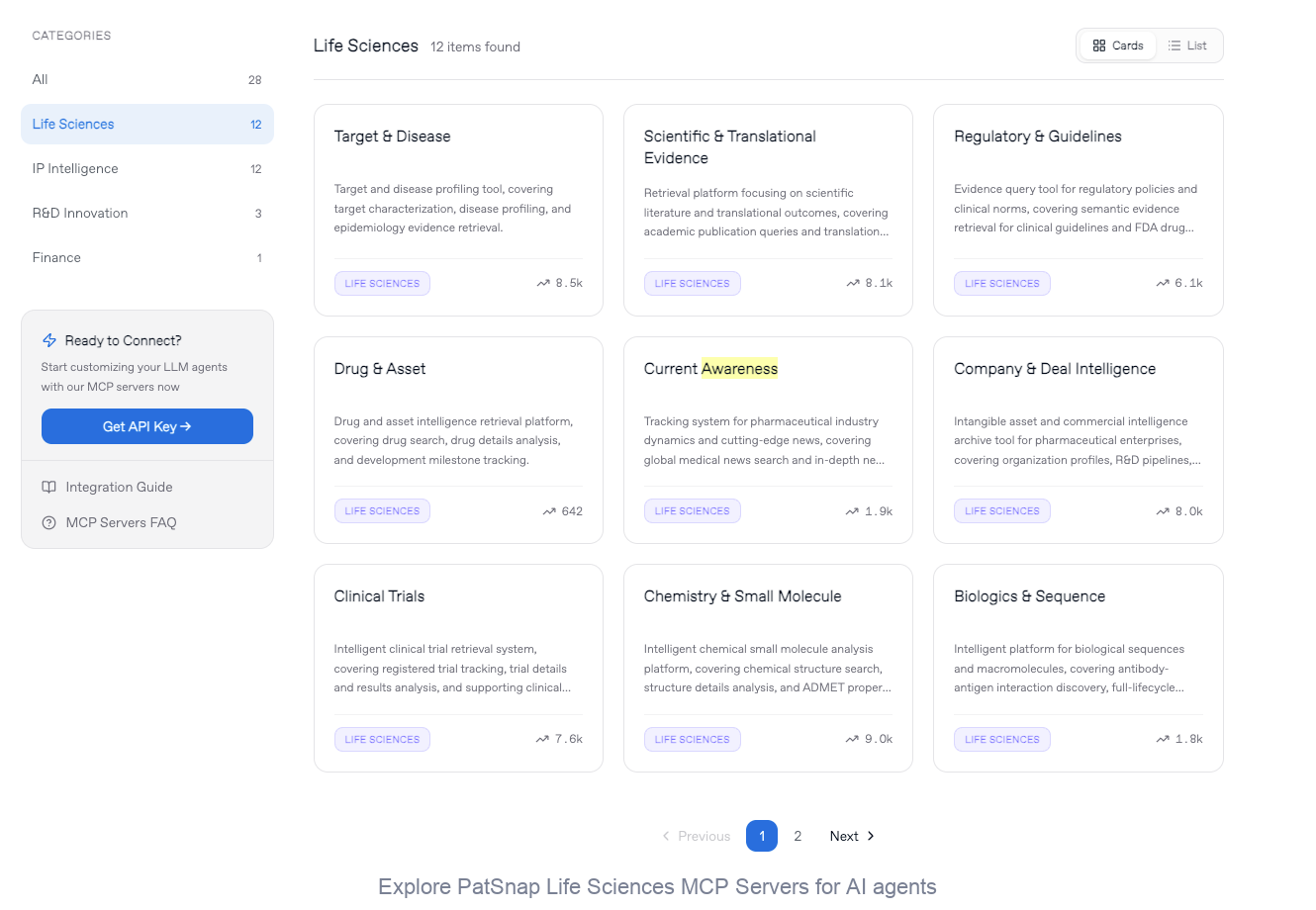
Explore PatSnap Life Sciences MCP Servers for AI agents
IP and R&D Recommendation
The recommended next step is to run a focused agent workflow for PGR: confirm disease biology, benchmark clinical programs, screen patent families, and identify where a differentiated entrant could still win.
- Advance if the biology is causal, biomarkers are measurable, and clinical competition leaves whitespace.
- Hold if validation exists but patient segment, safety window, or modality choice remains unclear.
- Deprioritize if evidence is broad but not disease-specific, or if IP and clinical crowding compress upside.

Start building target evaluation agents with PatSnap Life Sciences MCP Servers
