Request Demo
Last update 15 Dec 2025
Tyrosine kinase inhibitors (Leadartis)
Last update 15 Dec 2025
Overview
Basic Info
Drug Type Small molecule drug |
Synonyms- |
Target |
Action inhibitors |
Mechanism Protein kinases inhibitors |
Therapeutic Areas |
Active Indication- |
Inactive Indication |
Originator Organization |
Active Organization- |
Inactive Organization |
License Organization- |
Drug Highest PhaseDiscontinuedPreclinical |
First Approval Date- |
Regulation- |

Related
100 Clinical Results associated with Tyrosine kinase inhibitors (Leadartis)
Login to view more data
100 Translational Medicine associated with Tyrosine kinase inhibitors (Leadartis)
Login to view more data
100 Patents (Medical) associated with Tyrosine kinase inhibitors (Leadartis)
Login to view more data
34
Literatures (Medical) associated with Tyrosine kinase inhibitors (Leadartis)01 Jan 2025·SURGERY
Neoadjuvant systemic therapy for inoperable differentiated thyroid cancers: Impact on tumor resectability
Article
Author: Nelson, Jon A. ; Eisen, Richard ; Nelson, Jon A ; Westfall, Elizabeth ; Shellenberger, Thomas ; Tomeh, Chafeek ; Ahmad, Iram ; Metzger, Rosemarie ; Dickerson, Kylie ; Niu, Jiaxin ; Milas, Mira ; Nasr, Christian ; Hebert, Michael
BACKGROUND:
Limited treatment options exist for inoperable thyroid cancers. We evaluated whether neoadjuvant use of systemic tyrosine kinase inhibitors facilitates surgery of differentiated thyroid cancers in this challenging context.
METHODS:
A single-institution experience of 42 patients receiving tyrosine kinase inhibitors for papillary, follicular and anaplastic thyroid carcinomas between 2018 and 2023 was reviewed to identify differentiated thyroid cancers treated with neoadjuvant tyrosine kinase inhibitors (dabrafenib/trametinib, lenvatinib/pembrolizumab, or lenvatinib alone) via multidisciplinary protocols.
RESULTS:
Nine patients with differentiated thyroid cancers (age 49 years, range 19-80, 5 women, 4 men) received neoadjuvant tyrosine kinase inhibitors with intent to improve resectability of primary or recurrent/residual tumors. All had locoregionally advanced disease deemed either unresectable or resectable with unacceptable morbidities. Six exhibited distant metastases (6 lungs, 6 vertebral/axial bones, 1 sternum). Tumors had BRAF V600E (6 papillary thyroid carcinoma) or RAS/TERT (2 follicular thyroid carcinoma) mutations or NCOA4-RET fusion. Most received neoadjuvant tyrosine kinase inhibitors for <6 months with visible results within weeks, radiologically and by examination. All patients completing surgery achieved R0 resection without major surgical complications or aerodigestive structure resection. Neoadjuvant tyrosine kinase inhibitors were generally well-tolerated (4 minor, 1 major toxicity that halted therapy but not surgery). Unique patients with distant metastases continued to receive adjuvant tyrosine kinase inhibitors. At median postoperative follow-up of 2 years, all patients are alive without new locoregional recurrence.
CONCLUSION:
Neoadjuvant use of tyrosine kinase inhibitors seems extremely effective in downstaging surgically unresectable differentiated thyroid cancers to achieve R0 resection while avoiding unnecessary surgical morbidities. A multidisciplinary approach with early genomic profiling to guide personalized neoadjuvant use of tyrosine kinase inhibitors is essential. Prospective studies are urgently needed to define the potential role of neoadjuvant tyrosine kinase inhibitors in advanced thyroid cancer management.
01 Jul 2023·Targeted oncology
Pathological Response and Tumor Immune Microenvironment Remodeling Upon Neoadjuvant ALK-TKI Treatment in ALK-Rearranged Non-Small Cell Lung Cancer
Article
Author: Zhao, Qian ; Lu, Conghua ; Zheng, Nan ; Luo, Nuo ; Tang, Huan ; Tian, Jie ; Xiao, Hualiang ; Li, Li ; He, Yong ; Zhang, Ruiguang ; Ma, Qiang ; Zeng, Yue ; Wu, Fang ; Zhang, Yimin ; Wang, ZhiGuo
BACKGROUND:
Anaplastic lymphoma kinase-tyrosine kinase inhibitors (ALK-TKI; ALKi) have shown potent antitumor activity in metastatic non-small-cell lung cancer (NSCLC) with ALK rearrangement (ALK+); however, their efficacy in neoadjuvant settings has been poorly explored.
OBJECTIVE:
This retrospective study aimed to examine the clinical activity and tumor immune microenvironment (TIME) changes of neoadjuvant ALKi therapy.
METHODS:
ALK+ NSCLC patients treated with neoadjuvant ALKi at three hospitals in China between February 2018 and January 2023 were assessed. Data on clinical features and radiographic and pathological responses were collected and evaluated. Multiplex immunofluorescence was performed on pretreatment biopsy specimens and surgically resected specimens to investigate the impact of ALKi on TIME.
RESULTS:
A total of 12 patients with stage IIA-IIIB NSCLC who received neoadjuvant ALKi therapy were analyzed. The objective response rate was 91.7% (11/12) and the major pathological response (MPR) rate was 75.0% (9/12), with 58.3% (7/12) achieving a pathological complete response (pCR). After neoadjuvant ALKi therapy, we observed a significant increase in immune infiltration of CD8+ cells (histochemistry score [H-score]: median 10.51 vs. 24.01, p = 0.028; density: median 128.38 vs. 694.09 cells/mm2, p = 0.028; percentage: median 3.53% vs. 15.92%, p = 0.028) and CD4+ cells (density: median 275.56 vs. 651.82 cells/mm2, p = 0.028; percentage: median 5.98% vs. 10.46%, p = 0.028). Similar results were found for CD4+FOXP3+, CD8+PD1+, CD8+PD1-, CD8+GB+, and CD8+GB- cells. However, macrophages, including CD68+CD163- M1 and CD68+CD163+ M2 macrophages, showed little change after neoadjuvant ALKi therapy.
CONCLUSION:
Neoadjuvant ALKi therapy achieved an encouraging MPR rate of 75% and enhanced immune infiltration, suggesting its safety and feasibility for ALK+ resectable NSCLC. This study advances our understanding of TIME changes by neoadjuvant ALKi therapy and merits further investigation.
01 Jul 2023·American journal of hematology
Imatinib compared with second-generation tyrosine kinase-inhibitors in persons with chronic myeloid leukemia presenting in accelerated phase.
Letter
Author: Jing, Yu ; Han, Yan-Qiu ; Huang, Jian ; Weng, Jian-Yu ; Liang, Rong ; Pan, Ling ; Zhou, Ze-Ping ; Liu, Zhuo-Gang ; Huang, Xiao-Jun ; Li, Fei ; Sun, Zhi-Qiang ; Xiao, Zhen ; Yang, Yun-Fan ; Li, Wei-Ming ; Meng, Li ; Zhang, Xiaoshuai ; Zheng, Yuan-Jun ; Du, Xin ; Meng, Jun-Xia ; Hu, Jian-da ; Liu, Bing-Cheng ; Xu, Na ; Zeng, Yun ; Zhang, Yan-Li ; Liu, Chun-Shui ; Lin, Li-E ; Zhu, Huan-Ling ; Li, Guo-Hui ; Qiu, Hui-Ying ; Yang, Sen ; Zhang, Wei-Hua ; Yang, Wei ; Liu, Xiao-Li ; Yi, Hai ; Wang, Xiao-Dong ; Feng, Ru ; Chen, Chun-Yan ; Bai, Yan-Liang ; Liu, Zhen-Fang ; Zhao, Yan-Hong ; Jiang, Qian ; Jia, Zhi-Lin ; Chen, Su-Ning ; Yang, Li-Jie ; Sun, Xiu-Li ; Wu, Shi-Xin ; Zhang, Yan-Qing ; Gale, Robert Peter ; Liu, Yi-Lan ; Luo, Jian-Min
Nowadays, imatinib and second generation tyrosine kinase inhibitors (2G-TKIs) as initial therapy are used in newly-diagnosed chronic myeloid leukemia (CML) present in the accelerated phase.At the last follow-up, 166 subjects in the imatinib cohort (62%) and 121 in the 2G-TKI cohort (74%) remained on their first TKI.With a median follow-up of 39 (IQR, 18-73) months. 382 (90%) subjects achieved complete hematol. response (CHR) in 3 mo.In the cohort of subjects with basophils ≥20%, 127 subjects received imatinib and 82 received a 2G-TKI. 21 (17%) and 15 (18%) had a grade 3/4 hematol. AEs.Both the 2G-TKI and imatinib cohorts included subjects receiving branded and generic drug versions.In summary, we found no advantage in outcomes using a 2G-TKI in persons with CML initially presenting in an accelerated phase compared with imatinib except for better mol. response in subjects with basophils >20%.In some instances, there was a disadvantage seemingly reflecting 2G-TKI-associated dose interruptions and/or discontinuations because of hematol. AEs.Our conclusions need validation in a randomized controlled trial but may help physicians choose the best initial TKI therapy for subjects with CML initially presenting in the accelerated phase.
1
News (Medical) associated with Tyrosine kinase inhibitors (Leadartis)03 Nov 2022
Amplity Insights' data scientifically accepted by leading European conference for health economics and outcomes research (HEOR), ISPOR Europe
LANGHORNE, Pa., Nov. 3, 2022 /PRNewswire/ -- Amplity Health, a leading global medical and commercial partner to biopharmaceutical companies, today announced two abstracts have been accepted for poster presentation at the ISPOR Europe 2022 conference, taking place November 6-9 in Vienna, Austria, and virtually. The presented research demonstrates the use of Amplity Insights to generate therapy-specific real-world evidence on healthcare resource utilization, routine care treatment patterns, and potential limitations.
The titles for the two scientific posters are as follows, which can be viewed at any time during the conference:
Understanding Treatment Patterns, Disruptions, and Potential Limitations of Tyrosine Kinase Inhibitors in ROS1+ Non–Small-Cell Lung Cancer Patients in a Retrospective Review of US Electronic Medical Transcription Records
Healthcare Resource Utilization of US ROS1+ Non–Small-Cell Lung Cancer Patients Treated with Tyrosine Kinase Inhibitors: Analysis of Electronic Medical Transcription Records
"The research presented in these posters showcases the effectiveness of Amplity Insights' data," said Joe Turner, Head of Amplity Insights. "We are proud to stand by our client as they present how they've solved for scarcity in a meaningful way with Amplity Insights' deep, disease-specific insights, provided at the point of care, that they couldn't find elsewhere."
The posters will be made available on Amplity.com following their respective presentations at the conference. For more information on the ISPOR Europe 2022 conference, please visit .
About the Amplity Insights Database
Amplity Insights' database of medical transcription records provides a unique perspective on patient conditions and provider interactions. This robust database offers access to HEOR studies, patient journey reports, provider-targeting lists, and beyond. Using our proprietary Natural Language Processing (NLP) algorithms, meaningful data end points may be quickly extracted and evaluated for specific research questions. Leveraging this rich source of patient-level data, researchers are able to glean insights related to the true prevalence of disease, treatment patterns, rationale for treatment, and patient-reported outcomes. Visit to learn more.
About Amplity Health
The true partner of global healthcare companies, Amplity Health delivers tailored medical and commercial solutions that scale throughout the life cycle of your drug. Amplity is a global authority in scientific stakeholder engagement, go-to-market strategies, and is built upon our belief in the power of face-to-face interaction that nurtures trust with physicians, patients, and payers, allowing for the exchange of complex ideas. We are proud of our inclusive culture and our EPIIC values. Amplity has the expertise, global infrastructure, and data-driven insights to help clients overcome their medical and commercial challenges. Amplity's wide-ranging capabilities include clinical and medical outsourced teams; clinical and medical capability development; companion diagnostic and precision medicine solutions; medical communications; expert engagement; remote and field solutions for patients, payers, and physicians; and strategic and access consulting. Amplity's one-of-a-kind Insights database offers clients a detailed view into patient–provider interactions and provider treatment rationale not found through any other provider. For more information, visit amplity.com. Connect with Amplity on Twitter and LinkedIn. Amplity Health is a portfolio company of Altamont Capital Partners.
About Altamont Capital Partners
Altamont Capital Partners is a private investment firm based in the San Francisco Bay Area with more than $3.5 billion of assets under management. Altamont is focused on investing in middle market businesses where it can partner with leading management teams to help its portfolio companies reach their full potential. The firm's principals have significant experience building business success stories across a range of industries, including healthcare, business services, financial services, consumer/retail, and industrials.
SOURCE Amplity Health
100 Deals associated with Tyrosine kinase inhibitors (Leadartis)
Login to view more data
R&D Status
10 top R&D records. to view more data
Login
| Indication | Highest Phase | Country/Location | Organization | Date |
|---|---|---|---|---|
| Solid tumor | Preclinical | Spain | - |
Login to view more data
Clinical Result
Clinical Result
Indication
Phase
Evaluation
View All Results
| Study | Phase | Population | Analyzed Enrollment | Group | Results | Evaluation | Publication Date |
|---|
No Data | |||||||
Login to view more data
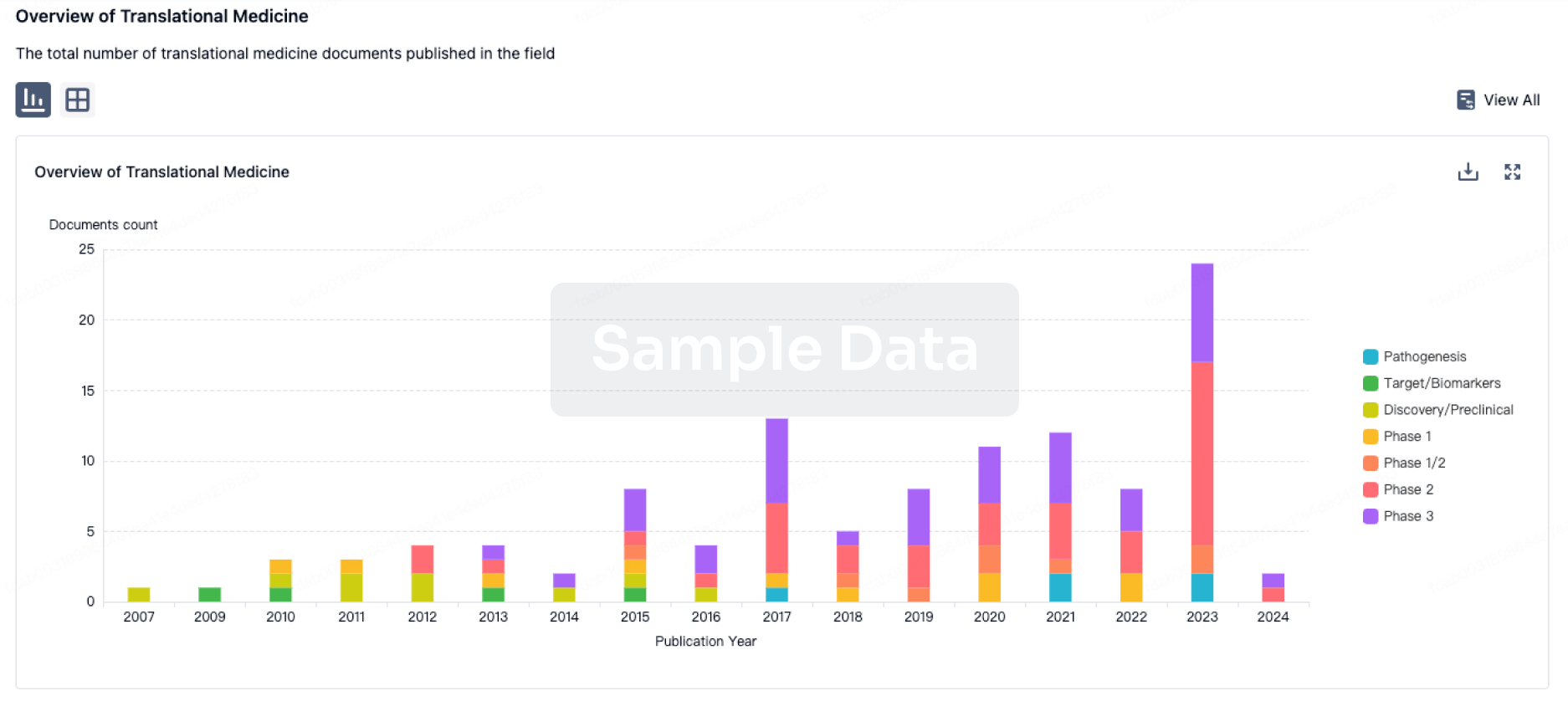
Translational Medicine
Boost your research with our translational medicine data.
login
or
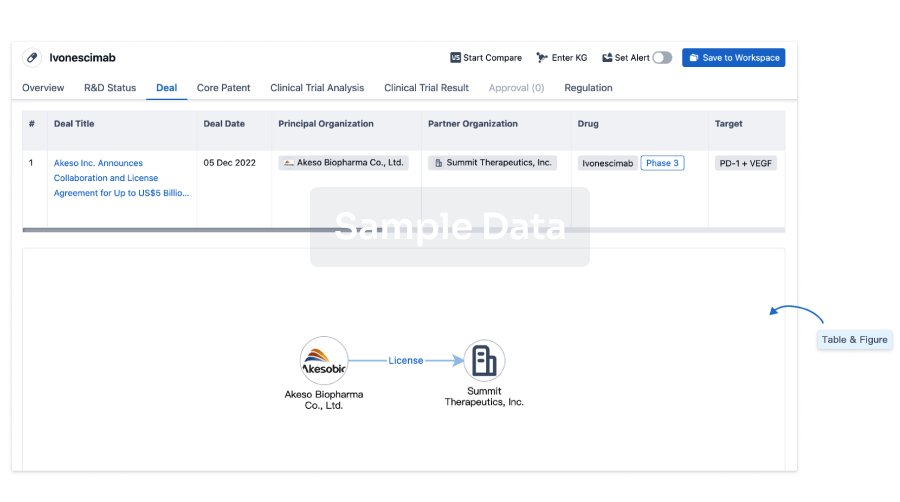
Deal
Boost your decision using our deal data.
login
or
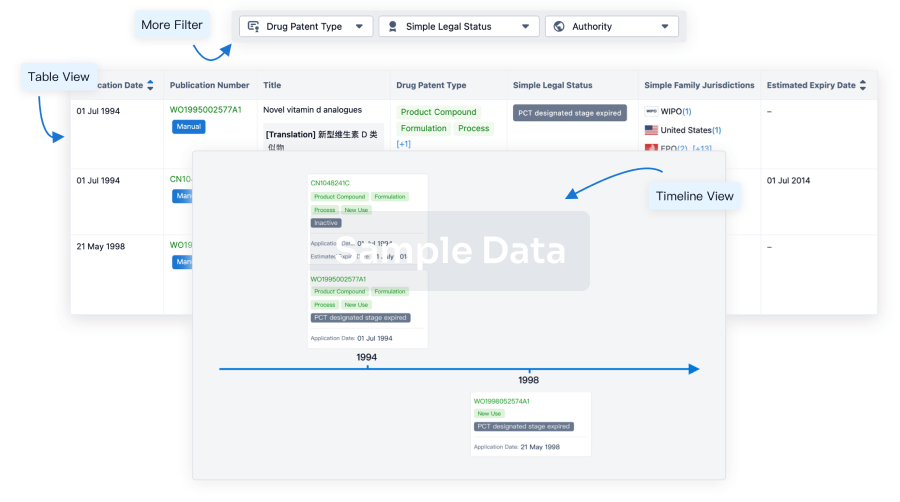
Core Patent
Boost your research with our Core Patent data.
login
or
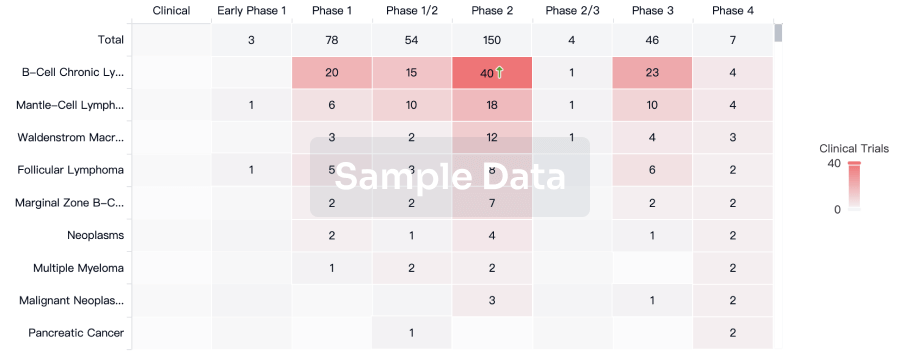
Clinical Trial
Identify the latest clinical trials across global registries.
login
or
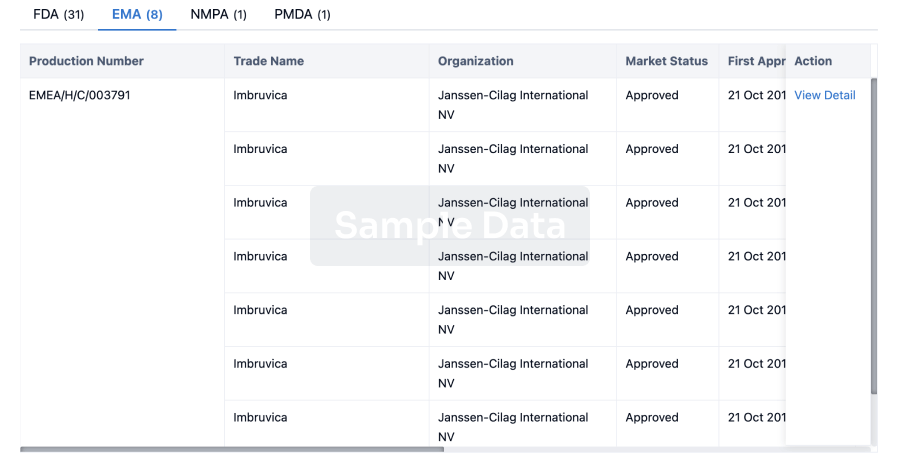
Approval
Accelerate your research with the latest regulatory approval information.
login
or
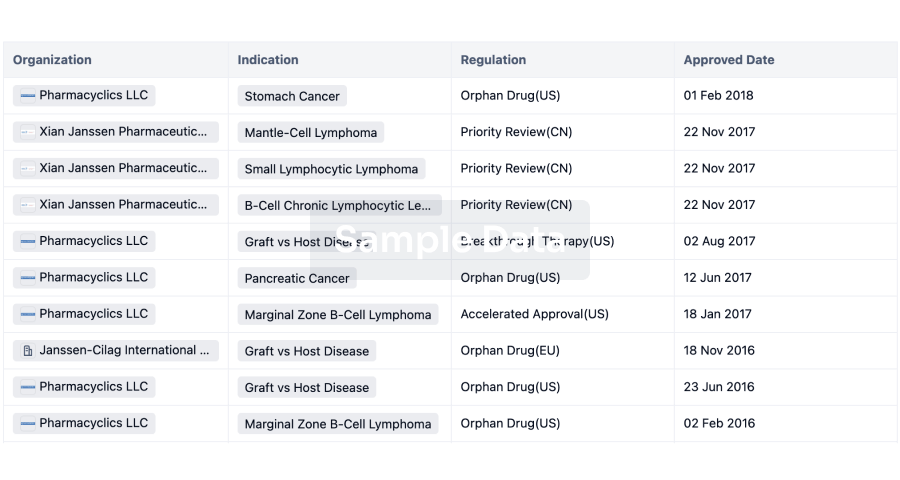
Regulation
Understand key drug designations in just a few clicks with Synapse.
login
or
AI Agents Built for Biopharma Breakthroughs
Accelerate discovery. Empower decisions. Transform outcomes.
Get started for free today!
Accelerate Strategic R&D decision making with Synapse, PatSnap’s AI-powered Connected Innovation Intelligence Platform Built for Life Sciences Professionals.
Start your data trial now!
Synapse data is also accessible to external entities via APIs or data packages. Empower better decisions with the latest in pharmaceutical intelligence.
Bio
Bio Sequences Search & Analysis
Sign up for free
Chemical
Chemical Structures Search & Analysis
Sign up for free