Request Demo
Last update 30 Oct 2025
HDAC8 inhibitors(Zhejiang Chinese Medical University)
Last update 30 Oct 2025
Overview
Basic Info
Drug Type Small molecule drug |
Synonyms Compound 5k |
Target |
Action inhibitors |
Mechanism HDAC8 inhibitors(Histone deacetylase 8 inhibitors), Epigenetic drug |
Therapeutic Areas |
Active Indication |
Inactive Indication- |
Originator Organization |
Active Organization |
Inactive Organization- |
License Organization- |
Drug Highest PhasePreclinical |
First Approval Date- |
Regulation- |

Structure/Sequence
Molecular FormulaC16H17N3O5 |
InChIKeyREOGGGRQBBOXAW-UHFFFAOYSA-N |
CAS Registry3028095-13-5 |
Related
100 Clinical Results associated with HDAC8 inhibitors(Zhejiang Chinese Medical University)
Login to view more data
100 Translational Medicine associated with HDAC8 inhibitors(Zhejiang Chinese Medical University)
Login to view more data
100 Patents (Medical) associated with HDAC8 inhibitors(Zhejiang Chinese Medical University)
Login to view more data
107
Literatures (Medical) associated with HDAC8 inhibitors(Zhejiang Chinese Medical University)01 Dec 2025BIOORGANIC & MEDICINAL CHEMISTRY LETTERS
Recent progress in synthetic strategies to develop potent, HDAC8-selective, small-molecule inhibitors
Review
Author: Fletcher, Steven ; Lowe, Brandon D
Key players in epigenetic control, the 11 zinc-dependent histone deacetylase (HDAC) enzymes have been affirmed as therapeutic targets, particularly in the discovery of new chemotherapy drugs: currently there are 3 FDA-approved pan-HDAC inhibitors (HDACi's), although these are not without their side effects. It has been rationalized that achieving HDAC isoform-selective inhibitors may yield safer drugs. HDAC8 has recently been validated as a novel target for the treatment of (pediatric) neuroblastoma, and its overexpression has been implicated in a range of other diseases. Herein, we discuss the topology of the HDAC8 active site in the context of inhibitor design, and we present recent progress in the discovery of potent, HDAC8-selective small-molecule inhibitors, with a discussion on the particular structural criteria required. HDACi's largely conform to a canonical pharmacophore model of a capping group connected via a linker to a zinc binding group (ZBG), which is typically a (potentially mutagenic) hydroxamic acid. In particular, for HDAC8-selectivity, the small-molecule should adopt a geometric "L"-shape, which may be accomplished by the linker itself, or the linker and capping group. More recently, HDAC isoform selectivity has been realized with hydroxamic acid surrogates, such as ortho-aminoanilides that yield potent and HDAC1-3-selective (but HDAC8-inactive) inhibitors. Hydrazides have long been utilized as bioisosteres of hydroxamic acids in HDAC inhibitor design, but a recent re-visiting explored the attachment of alkyl groups, and an n-hexyl substituent on the distal, non-acylated nitrogen affords potent and selective HDAC8 inhibitors probably through targeting the foot pocket of the active site; this discovery was observed across three different HDACi scaffolds, and thus appears quite general. α-Aminoketo ZBGs have also demonstrated HDAC8-selectivity, with associated benzylic moieties likewise engaging the foot pocket. We speculate that a re-imagining of the ortho-aminoanilide ZBG through a careful and methodical survey of related moieties, may lead to the discovery of additional HDAC8-selective ZBGs towards the realization of safe, pre-clinical inhibitors. 2025 Elsevier Ltd. All rights reserved.
01 Dec 2025EUROPEAN JOURNAL OF MEDICINAL CHEMISTRY
Assessing the anti-leukemic efficacy of a curcuminoid in cellular and animal models
Article
Author: Shyamjith, P ; Choudhary, Bibha ; Teraiya, Nishith ; Kumar, Sujeet ; Karki, Subhas S ; Ravindran, Febina ; Sudarshan, Vijayalakshmi
Leukemia ranks as the tenth most common cause of cancer-related deaths, and significant side effects often limit current treatments. Curcumin, a lipophilic polyphenol, has garnered considerable attention for its therapeutic potential in addressing various conditions, including inflammation, diabetes, aging, and cancer, particularly leukemia. In this study, ten novel curcuminoids were synthesized and structurally characterized for integrity and purity using spectral techniques. Cytotoxic evaluation against the MOLT-4, HEK, EL4, YAC1 and L1210 cell lines identified one compound, (3E,5E)-3,5-bis((3-(4-chlorophenyl)-1-phenyl-1H-pyrazol-4-yl)methylene)piperidin-4-one (5e), to be potent, demonstrating superior cytotoxic activity compared to curcumin. Mechanistic studies revealed that treatment with 5e induced the production of reactive oxygen species (ROS), disrupted mitochondrial membrane potential, and promoted apoptosis, as confirmed by annexin-V-FITC/PI staining. Cell cycle analysis further showed significant accumulation in the sub-G0/G1 phase, consistent with apoptotic or necrotic cell death. In vivo studies using Dalton's Lymphoma models demonstrated that 5e effectively reduced tumor volume with minimal systemic toxicity. Western blot analyses confirmed activation of the intrinsic apoptotic pathway, with significant upregulation of cytochrome c and cleaved caspase-3. Moreover, 5e inhibited HDACs significantly in vitro, with activity greater than curcumin and comparable to trichostatin A, suggesting a target of anticancer action. Additionally, molecular docking studies suggested that 5e acts as a potential HDAC8 inhibitor, correlating with its enhanced anticancer activity. Collectively, these findings establish compound 5e as a promising curcuminoid analogue with potent cytotoxic and anti-proliferative effects against leukemia, highlighting its therapeutic potential.
01 Aug 2025Medicinal Chemistry
Crucial Structural Understanding for Selective HDAC8 Inhibition: Common Pharmacophores, Molecular Docking, Molecular Dynamics, and Zinc Binder Analysis of Selective HDAC8 Inhibitors
Article
Author: Sen, Debanjan ; Debnath, Sudhan ; Sarkar, Kakali ; Sil, Samir Kumar ; Kar, Supratik
Background::
Overexpression of HDAC8 was observed in various cancers and inhibition
of HDAC8 has emerged as a promising therapeutic approach in recent decades.
Objective::
This review aims to facilitate the discovery of novel selective HDAC8 inhibitors by
analyzing the structural scaffolds of 66 known selective HDAC8 inhibitors, along with their IC50
values against HDAC8 and other HDACs.
Methods::
The inhibitors were clustered based on structural symmetry, and common pharmacophores
for each cluster were identified using Phase. Molecular docking with all HDACs was performed
to determine binding affinity and crucial interacting residues for HDAC8 inhibition. Representative
inhibitors from each cluster were subjected to molecular dynamics simulation to analyze
RMSD, RMSF, active site amino acid residues, and crucial interacting residues responsible for
HDAC8 inhibition. The study reviewed the active site amino acid information, active site cavities
of all HDACs, and the basic structure of Zn2+ binding groups.
Results::
Common pharmacophores identified included AADHR_1, AADDR_1, ADDR_1,
ADHHR_1, and AADRR_1. Molecular docking analysis revealed crucial interacting residues: HIS-
142, GLY-151, HIS-143, PHE-152, PHE-20 in the main pocket, and ARG-37, TYR-100, TYR-111,
TYR-306 in the secondary pocket. The RMSD of protein and RMSF of active site amino acid residues
for stable protein-ligand complexes were less than 2.4 Å and 1.0 Å, respectively, as identified
from MD trajectories. The range of Molecular Mechanics Generalized Born Surface Area (MMGBSA)
ΔG predicted from MD trajectories was between -15.8379 Å and -61.5017 Å kcal/mol.
Conclusion::
These findings may expedite the rapid discovery of selective HDAC8 inhibitors subject
to experimental evaluation.
1
News (Medical) associated with HDAC8 inhibitors(Zhejiang Chinese Medical University)
100 Deals associated with HDAC8 inhibitors(Zhejiang Chinese Medical University)
Login to view more data
R&D Status
10 top R&D records. to view more data
Login
| Indication | Highest Phase | Country/Location | Organization | Date |
|---|---|---|---|---|
| Breast Cancer | Preclinical | China | 07 Aug 2024 |
Login to view more data
Clinical Result
Clinical Result
Indication
Phase
Evaluation
View All Results
Login to view more data
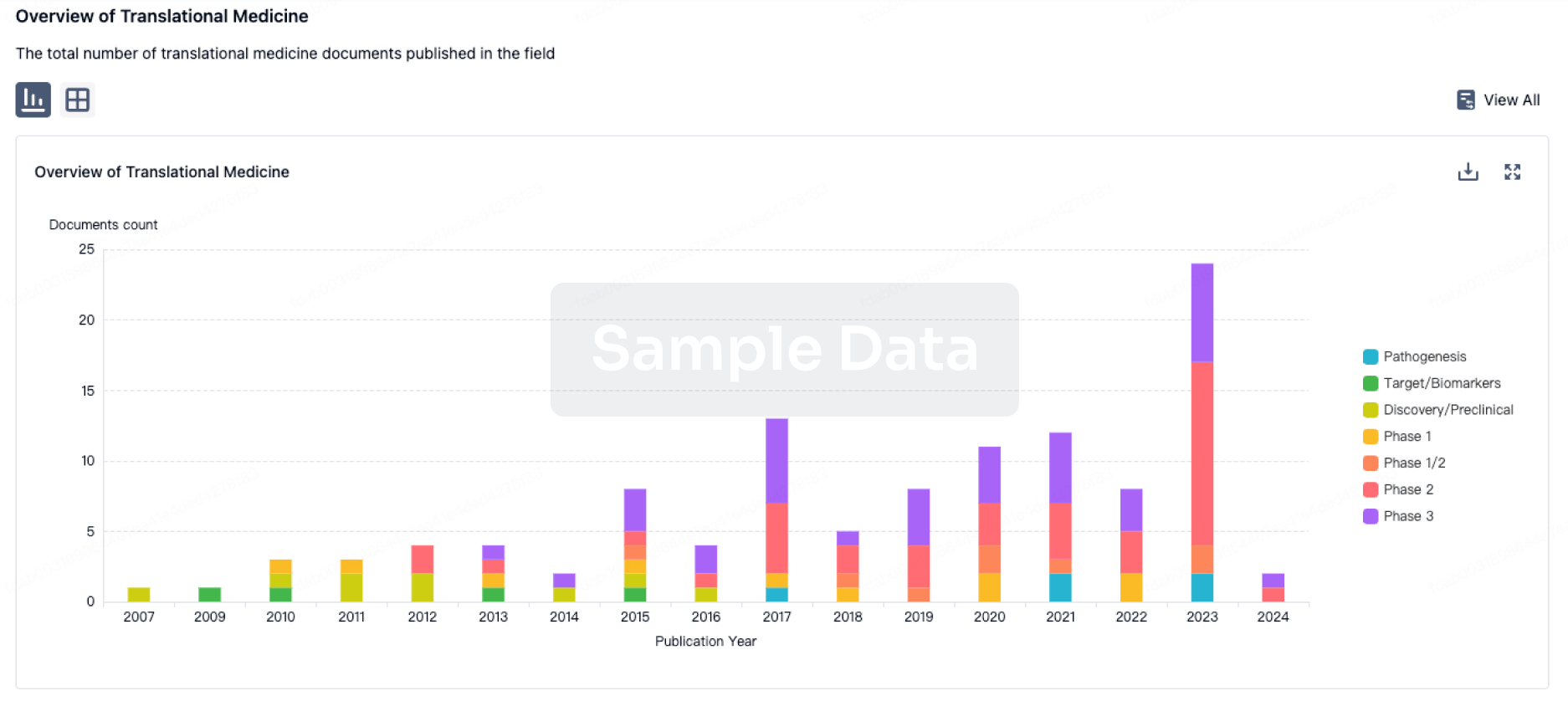
Translational Medicine
Boost your research with our translational medicine data.
login
or
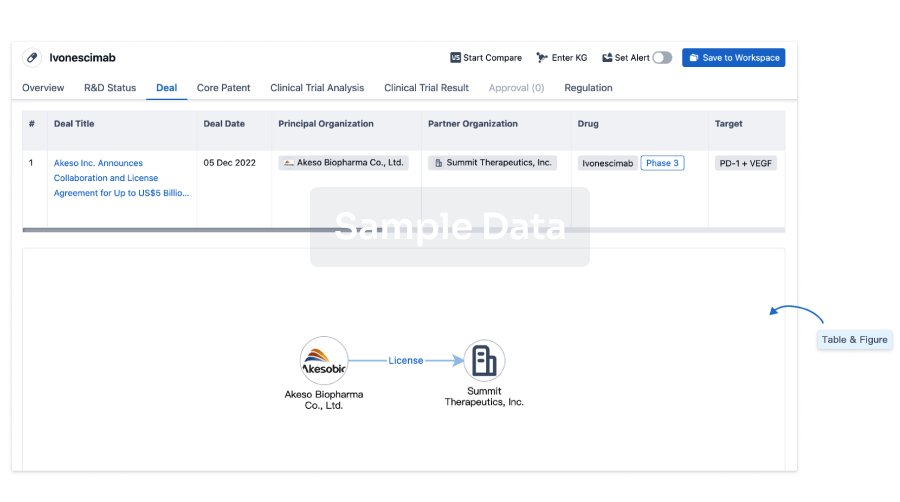
Deal
Boost your decision using our deal data.
login
or
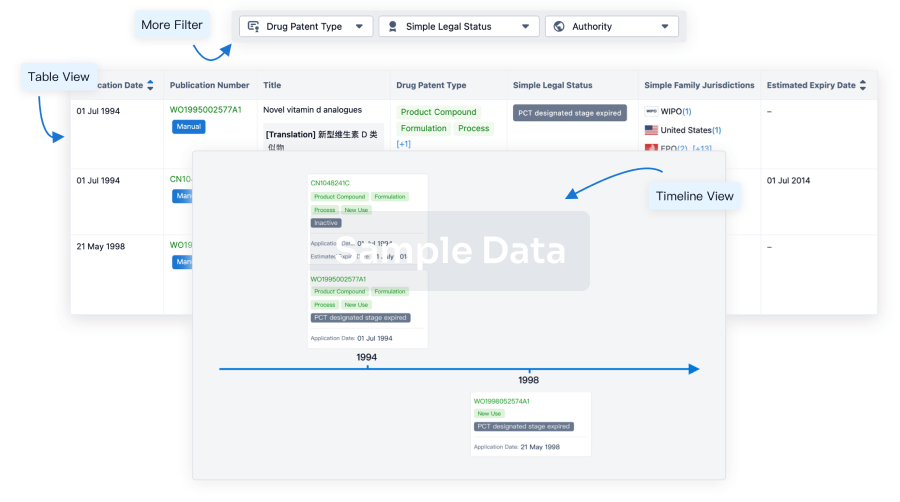
Core Patent
Boost your research with our Core Patent data.
login
or
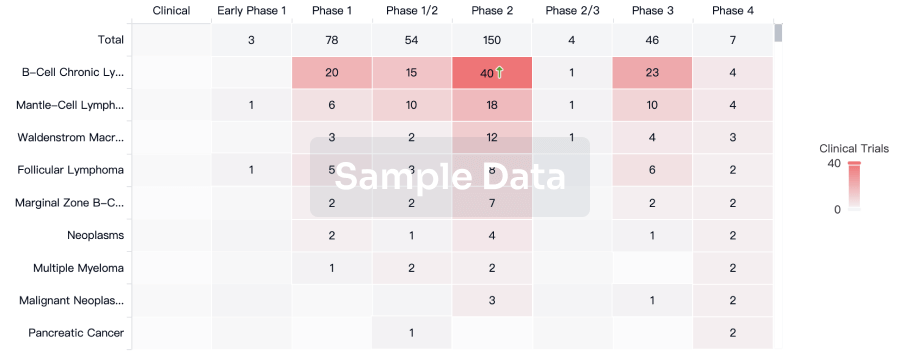
Clinical Trial
Identify the latest clinical trials across global registries.
login
or
Approval
Accelerate your research with the latest regulatory approval information.
login
or
Regulation
Understand key drug designations in just a few clicks with Synapse.
login
or
AI Agents Built for Biopharma Breakthroughs
Accelerate discovery. Empower decisions. Transform outcomes.
Get started for free today!
Accelerate Strategic R&D decision making with Synapse, PatSnap’s AI-powered Connected Innovation Intelligence Platform Built for Life Sciences Professionals.
Start your data trial now!
Synapse data is also accessible to external entities via APIs or data packages. Empower better decisions with the latest in pharmaceutical intelligence.
Bio
Bio Sequences Search & Analysis
Sign up for free
Chemical
Chemical Structures Search & Analysis
Sign up for free