Request Demo
Last update 08 Aug 2026
Insulin inhaled(CoreMed Corp.)
Last update 08 Aug 2026
Overview
Basic Info
Drug Type Peptide Hormone |
Synonyms Alveair, Insulin inhalation |
Target |
Action agonists |
Mechanism INSR agonists(Insulin receptor agonists) |
Therapeutic Areas |
Active Indication- |
Inactive Indication |
Originator Organization |
Active Organization- |
Inactive Organization |
License Organization- |
Drug Highest PhasePendingPhase 1 |
First Approval Date- |
Regulation- |


Login to view timeline
Related
100 Clinical Results associated with Insulin inhaled(CoreMed Corp.)
Login to view more data
100 Translational Medicine associated with Insulin inhaled(CoreMed Corp.)
Login to view more data
100 Patents (Medical) associated with Insulin inhaled(CoreMed Corp.)
Login to view more data
13
Literatures (Medical) associated with Insulin inhaled(CoreMed Corp.)01 Sep 2019Diabetes careQ1 · MEDICINE
Lung Cancer–Related Mortality With Inhaled Insulin or a Comparator: Follow-Up Study of patients previously enrolled in Exubera Controlled Clinical Trials (FUSE) Final Results
Q1 · MEDICINE
Article
Author: Koralek, Daniel O. ; Duggan, William T. ; Cohen, Roger B. ; Bracken, Michael B. ; Klioze, Sol ; Gatto, Nicolle M. ; Jackson, Neville C. ; Koch, Gary G. ; Wise, Robert A. ; Lem, Joanna
OBJECTIVE:
The Follow-Up Study of patients previously enrolled in Exubera controlled clinical trials (FUSE) was designed to evaluate whether patients previously treated with Exubera (EXU; insulin human [rDNA origin], inhaled powder) in controlled clinical trials died because of incident primary lung cancer at a substantially higher rate than patients treated with a comparator.
RESEARCH DESIGN AND METHODS:
FUSE is a hybrid, randomized, controlled trial/cohort study including participants of 17 prior EXU clinical trials. Pooled patient data from these trials were used, and the subset of patients enrolled in the follow-up cohort study was followed prospectively for 2 years in order to evaluate the incidence of fatal and nonfatal primary lung cancers and all-cause mortality.
RESULTS:
There were 24,409 person-years (PY) of observation among 7,439 trial patients, with 4,017 PY (16.5%) from the period after the trials but before the prospective follow-up and 5,299 PY (21.7%) from the prospective follow-up. Just over half of the 2,631 patients (51.6%) in the prospective follow-up were randomized to EXU in the original trial. The incidence density ratio was 2.8 (95% CI 0.5, 28.5) for lung cancer–related mortality and 3.7 (95% CI 1.0, 20.7) for incident primary lung cancer. The hazard ratio for all-cause mortality was 0.81 (95% CI 0.60, 1.10).
CONCLUSIONS:
These data cannot exclude an increased risk of lung cancer–related mortality associated with EXU use. If real, the absolute increased risk of lung cancer–related mortality was small (0.48 cases per 1,000 PY). For all-cause mortality—the most reliably measured end point with the clearest interpretation—EXU users did not experience an excess all-cause death rate (relative or absolute) compared with users of other diabetes treatments over the study period.
01 Dec 2017Clinical diabetes : a publication of the American Diabetes Association
Taking Control Of Your Diabetes: An Innovative Approach to Improving Diabetes Care Through Educating, Motivating, and Making the Connection Between Patients and Health Care Providers
Article
Author: Edelman, Steven V.
The gold-standard goal of diabetes management has been to achieve meaningful and sustained glycemic control to reduce the risk of long-term complications. Unfortunately, results from the National Health and Nutrition Examination Survey indicate that only ∼50% of adults with diabetes in the United States, mostly with type 2 diabetes, are achieving an A1C <7.0%, and this percentage has not changed over the past decade (1).
In addition, the proportion of patients meeting individualized targets has declined according to the American Diabetes Association and American Association of Clinical Endocrinologists, and the overall proportion of patients in very poor control, defined as an A1C >9%, has actually increased (2,3).
The Healthcare Effectiveness Data and Information Set results, with data from >1,000 health plans covering >171 million lives, are even more striking, demonstrating that, in 2014, ∼40% of commercially insured health maintenance organization patients and 30% of government insured patients achieved an A1C <7.0, again reflecting no change in the past 10 years (4).
All of this has occurred despite the introduction of >40 new treatment options for people with type 2 diabetes. This fact is quite shocking and difficult to understand, especially given that our armamentarium of effective and safe type 2 medications has expanded over the same time period to include dipeptidyl peptidase 4 (DPP-4) inhibitors, sodium glucose cotransporter 2 inhibitors, designer insulins, inhaled insulin, and glucagon-like peptide 1 (GLP-1) receptor agonists.
Although there may be many reasons why these new treatment options haven’t made a dent in the glycemic control of our patients with type 2 diabetes during these past 10 years, I feel strongly that the basic and primary issue is a lack of patient education, motivation, and activation.
Type 2 diabetes is a silent condition with few or no symptoms caused by poor …
01 Dec 2015Journal of pharmacology & pharmacotherapeutics
Erratum: Inhaled insulin: A “puff” than a “shot” before meals
[This corrects the article on p. 126 in vol. 6, PMID: 26311994.].
2
News (Medical) associated with Insulin inhaled(CoreMed Corp.)29 May 2026

Phase 3Drug ApprovalClinical Result
100 Deals associated with Insulin inhaled(CoreMed Corp.)
Login to view more data
R&D Status
10 top R&D records. to view more data
Login
| Indication | Highest Phase | Country/Location | Organization | Date |
|---|---|---|---|---|
| Diabetes Mellitus | Phase 1 | China | - | |
| Diabetes Mellitus | Phase 1 | - | - |
Login to view more data
Clinical Result
Clinical Result
Indication
Phase
Evaluation
View All Results
Login to view more data
Translational Medicine
Boost your research with our translational medicine data.
login
or

Deal
Boost your decision using our deal data.
login
or

Core Patent
Boost your research with our Core Patent data.
login
or

Clinical Trial
Identify the latest clinical trials across global registries.
login
or

Approval
Accelerate your research with the latest regulatory approval information.
login
or
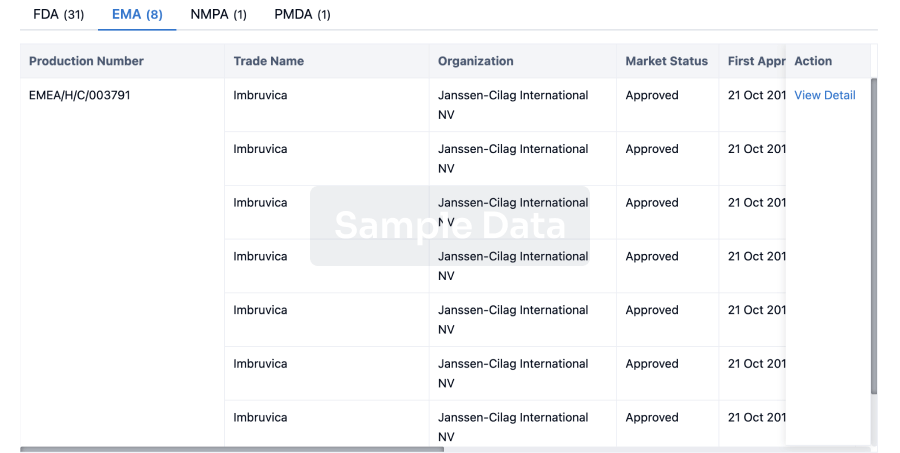
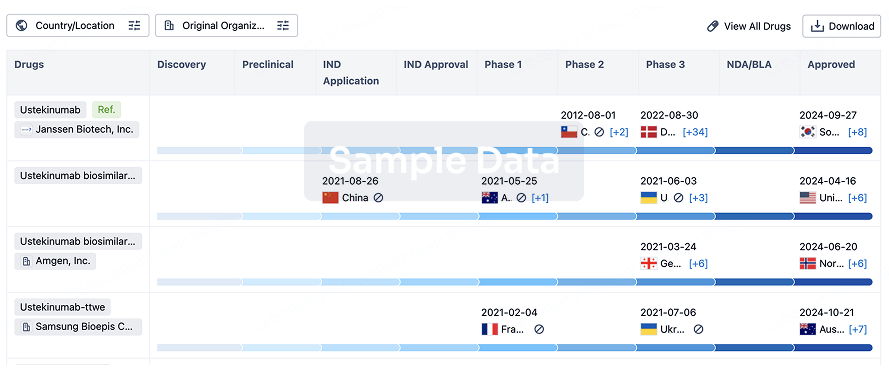
Biosimilar
Competitive landscape of biosimilars in different countries/locations. Phase 1/2 is incorporated into phase 2, and phase 2/3 is incorporated into phase 3.
login
or
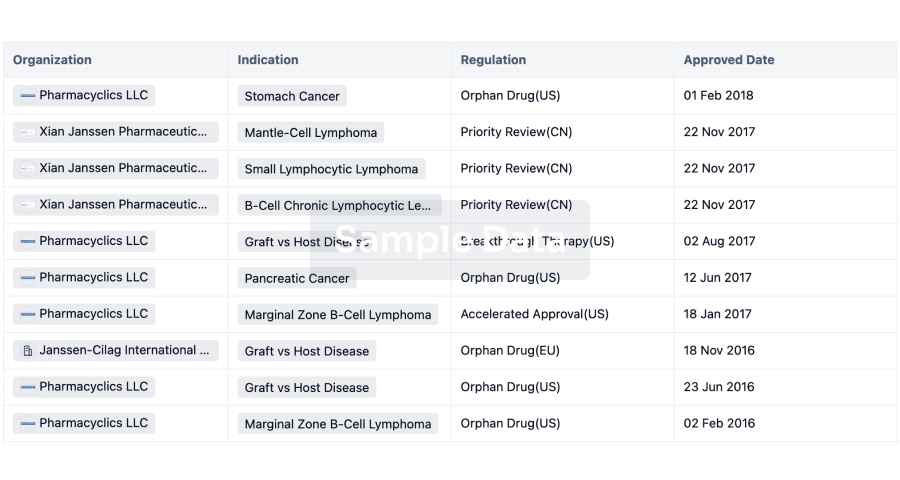
Regulation
Understand key drug designations in just a few clicks with Synapse.
login
or
Hiro LS Researcher
The AI Search Engine Built to Accelerate Biopharma Decisions
Search across billion-scale life sciences data to uncover signals, validate evidence, and act with confidence.
Ask any biopharma research question→
Get started for free today!
Accelerate Strategic R&D decision making with Synapse, Patsnap’s AI-powered Connected Innovation Intelligence Platform Built for Life Sciences Professionals.
Discover Synapse Data Servers
Synapse data is now integrated into the PatSnap LS Model Context Protocol (MCP) service. Customize your LLM agent now using our MCP server!
Bio
Bio Sequences Search & Analysis
Sign up for free
Chemical
Chemical Structures Search & Analysis
Sign up for free