Request Demo
Last update 08 May 2025
Last update 08 May 2025
Overview
Related
100 Clinical Results associated with Wallenberg Wood Science Center
Login to view more data
0 Patents (Medical) associated with Wallenberg Wood Science Center
Login to view more data
167
Literatures (Medical) associated with Wallenberg Wood Science Center08 Apr 2025·Macromolecules
Benchmarking the Elastic Modulus of Conjugated Polymers with Nanoindentation
Article
Author: Haraguchi, Shuichi ; Gu, Xiaodan ; Fabiano, Simone ; Müller, Christian ; Paleti, Sri Harish Kumar ; Pons i Tarrés, Judith ; Kalaboukhov, Alexei ; Mihiretie, Besira ; Craighero, Mariavittoria ; Cao, Zhiqiang ; Kim, Youngseok ; Zeng, Zijin ; Kimpel, Joost ; Huang, Junda ; Zhu, Di ; Li, Qifan ; Sowinski, Przemyslaw
26 Mar 2025·Nordic Pulp & Paper Research Journal
Effects of chemical environment on softwood kraft pulp: exploring beyond conventional washing methods
Author: Lindström, Mikael E. ; Henriksson, Gunnar ; Vikström, Tomas ; Sevastyanova, Olena ; Senthilkumar, Eashwara Raju
11 Mar 2025·Macromolecules
Impact of Humidity on Water Dynamics and Electrical Conductivity in PEDOT:PSS/Cellulose Nanofibril Nanocomposite Films: Insights from Quasi-Elastic Neutron Scattering
Author: Roth, Stephan V. ; Betker, Marie ; Niebuur, Bart-Jan ; Kreuzer, Lucas P. ; Ollivier, Jacques ; Wolf, Marcell ; Söderberg, L. Daniel
4
News (Medical) associated with Wallenberg Wood Science Center27 Apr 2023
Researchers have developed the first transistor made of wood. Their study paves the way for further development of wood-based electronics and control of electronic plants.
Researchers at Linköping University and the KTH Royal Institute of Technology have developed the world's first transistor made of wood. Their study, published in the journal PNAS, paves the way for further development of wood-based electronics and control of electronic plants.
Transistors, invented almost one hundred years ago, are considered by some to be an invention just as important to humanity as the telephone, the light bulb or the bicycle. Today, they are a crucial component in modern electronic devices, and are manufactured at nanoscale. A transistor regulates the current that passes through it and can also function as a power switch.
Researchers at Linköping University, together with colleagues from the KTH Royal Institute of Technology, have now developed the world's first electrical transistor made of wood.
"We've come up with an unprecedented principle. Yes, the wood transistor is slow and bulky, but it does work, and has huge development potential," says Isak Engquist, senior associate professor at the Laboratory for Organic Electronics at Linköping University.
In previous trials, transistors made of wood have been able to regulate ion transport only. And when the ions run out, the transistor stops functioning. The transistor developed by the Linköping researchers, however, can function continuously and regulate electricity flow without deteriorating.
The researchers used balsa wood to create their transistor, as the technology involved requires a grainless wood that is evenly structured throughout. They removed the lignin, leaving only long cellulose fibres with channels where the lignin had been.
These channels were then filled with a conductive plastic, or polymer, called PEDOT:PSS, resulting in an electrically conductive wood material.
The researchers used this to build the wood transistor and could show that it is able to regulate electric current and provide continuous function at a selected output level. It could also switch the power on and off, albeit with a certain delay -- switching it off took about a second; on, about five seconds.
Possible applications could include regulating electronic plants, which is another strong research area at Linköping University. One advantage of the transistor channel being so large is that it could potentially tolerate a higher current than regular organic transistors, which could be important for certain future applications. But Isak Engquist wants to stress something:
"We didn't create the wood transistor with any specific application in mind. We did it because we could. This is basic research, showing that it's possible, and we hope it will inspire further research that can lead to applications in the future," says Isak Engquist.
The study was financially supported by the Knut and Alice Wallenberg Foundation through the Wallenberg Wood Science Center.
03 Apr 2023
The addition of the alpHaONE wireless pH-capsule reflux testing system furthers Laborie's commitment to advancing diagnostic solutions for esophageal diseases and expands the Gastroenterology Motility and Reflux Portfolio.
PORTSMOUTH, N.H., April 3, 2023 /PRNewswire/ -- Leading diagnostic and therapeutic medical technology company, Laborie Medical Technologies Corp. (Laborie), announced the launch of the alpHaONE system that is specifically designed to diagnose gastroesophageal reflux disease (GERD) and offers up to 96 hours of monitoring data.
GERD is a chronic medical condition caused by the flow of contents from the stomach upwards into the esophagus resulting in both symptoms and complications. It is estimated that 20% of the US population suffers from GERD with the most common symptoms being heartburn and regurgitation1.
With an increasing number of options for GERD diagnosis, patients and healthcare providers face a challenge in choosing the best solution for a clear diagnosis. alpHaONE offers a unique solution with its ergonomic and compact design, enlarged and easy-to-press buttons, and fail-safe capsule delivery system that protects the patient's esophagus.
"alpHaONE is a patient-centric system that allows for comfortable monitoring and accurate, reliable data, fulfilling the needs of both patients and healthcare providers to diagnosis GERD," said Rhett Klein, Vice President of Sales and Marketing for Laborie's GI Business Unit. "Our primary objective has always been to provide solutions that elevate patient outcomes and enhance their overall experience and we look forward to launching this product."
The comprehensive software application incorporated in the alpHaONE system consists of a Virtual Instruction Program, which allows for effortless navigation. In addition, user-customizable symptom buttons and automatic pH data analysis ensure a seamless user experience.
Laborie will showcase alpHaONE at the Digestive Disease Week (DDW) event in Chicago, Illinois on May 6-9, 2023.
About Laborie Medical Technologies
Laborie is a global medical technology company focused on Urology, Urogynecology, Gastroenterology, Obstetrics, Gynecology & Neonatal Health headquartered in Portsmouth, New Hampshire. We manufacture and deliver high-quality, high-impact diagnostic and therapeutic products that help clinicians and hospitals preserve and restore patient dignity.
Clinicians and hospitals look to us as the market-leading experts in our business segments, and we support our products with a world-class Clinical Education & Information program. For more information visit .
Laborie is owned by Patricia Industries, a part of Investor AB.
About Patricia Industries
Patricia Industries is a long-term owner that invests in companies and works to develop each company to its full potential. Patricia Industries is a part of the industrial holding company Investor AB, whose main owners are the Wallenberg foundations.
About Investor AB
Investor, founded by the Wallenberg family in 1916, is an engaged owner of high-quality, global companies. We have a long-term investment perspective. Through board participation, as well as industrial experience, our network and financial strength, we work continuously to support our companies to remain or become best-in-class.
References
1. Acid Reflux: What is GERD?
Digital Media: photograph of alpHaONE product
View original content to download multimedia:
SOURCE Laborie Medical Technologies
Diagnostic Reagents
14 Feb 2023
PORTSMOUTH, N.H., Feb. 14, 2023 /PRNewswire/ -- Leading diagnostic and therapeutic medical technology company, Laborie Medical Technologies Corp. (Laborie), announced that it has acquired Novonate, Inc. (Novonate) and its LifeBubble technology, a device that revolutionizes umbilical catheter protection and securement to improve safety for neonates in the intensive care setting. Founded in 2017, Novonate is a medical device company based in South San Francisco, CA. The company developed LifeBubble after seeing an unserved need in the Neonatal Intensive Care Unit (NICU). Each year in the U.S., more than 200,000 babies require umbilical cord catheters to receive nutrients and medicine. Typically, umbilical catheters are held in place with tape and adhesive, a method that increases the risk of complications and infections. The LifeBubble umbilical catheter securement system offers a safe, innovative, and user-friendly method that allows for easy positioning and removal while protecting the insertion site. "At Laborie, we believe that great healthcare is an essential safeguard of human dignity and we are focused on improving the standard of care for patients. LifeBubble is the first product in the world designed to more effectively secure and protect umbilical catheters, improving health outcomes for newborns," said Nikki Bruce, Vice President and General Manager of Laborie's OB Business Unit. "We are pleased to add the technology to our Obstetrics, Gynecology and Neonatal portfolio." "We designed this product to tackle an unmet need and benefit one of the most vulnerable patient populations. I'm incredibly proud of our team for their passion and dedication for pushing forward to bring LifeBubble from conception to market," said Novonate CEO Eric Chehab, "Laborie's mission is well aligned with our goals of advancing the standard of care for neonates in intensive care." "We are excited to support Laborie's long-term growth and deliver on our shared commitment to provide innovative solutions that improve clinical outcomes for mothers and babies around the world with the acquisition of Novonate and the LifeBubble," said Yuriy Prilutskiy, Head of Patricia Industries North America. About Laborie Medical Technologies Headquartered in Portsmouth, New Hampshire, Laborie is a global medical technology company focused on Urology, Urogynecology, Gastroenterology, Obstetrics, Gynecology & Neonatal Health. We manufacture and deliver high-quality, high-impact diagnostic and therapeutic products that help clinicians and hospitals preserve and restore patient dignity. Clinicians and hospitals look to us as the market-leading experts in our business segments, and we support our products with a world-class Clinical Education & Information program. For more information visit www.laborie.com. Laborie is owned by Patricia Industries, a part of Investor AB.
Acquisition
100 Deals associated with Wallenberg Wood Science Center
Login to view more data
100 Translational Medicine associated with Wallenberg Wood Science Center
Login to view more data
Corporation Tree
Boost your research with our corporation tree data.
login
or

Pipeline
Pipeline Snapshot as of 09 Dec 2025
No data posted
Login to keep update
Deal
Boost your decision using our deal data.
login
or
Translational Medicine
Boost your research with our translational medicine data.
login
or
Profit
Explore the financial positions of over 360K organizations with Synapse.
login
or
Grant & Funding(NIH)
Access more than 2 million grant and funding information to elevate your research journey.
login
or
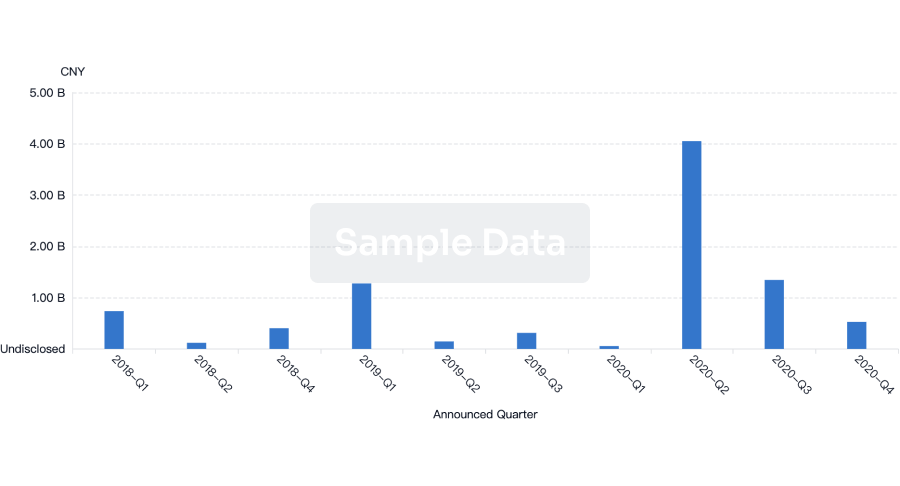
Investment
Gain insights on the latest company investments from start-ups to established corporations.
login
or
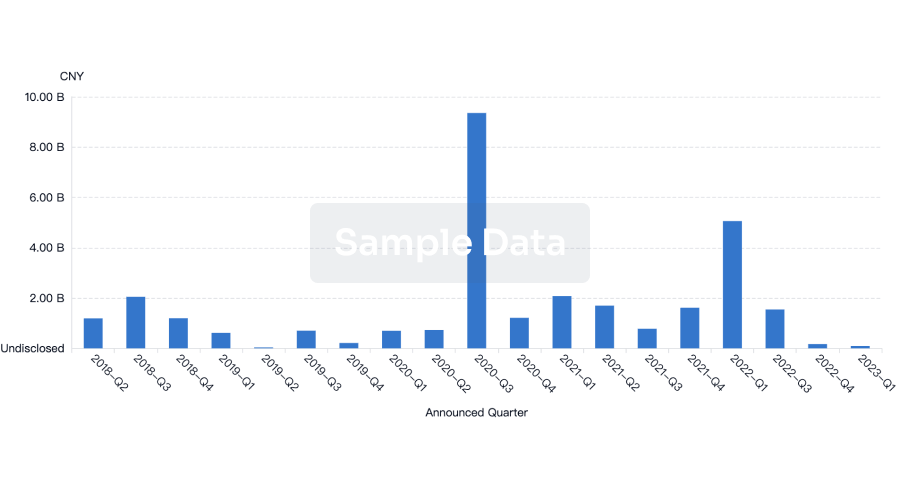
Financing
Unearth financing trends to validate and advance investment opportunities.
login
or
AI Agents Built for Biopharma Breakthroughs
Accelerate discovery. Empower decisions. Transform outcomes.
Get started for free today!
Accelerate Strategic R&D decision making with Synapse, PatSnap’s AI-powered Connected Innovation Intelligence Platform Built for Life Sciences Professionals.
Start your data trial now!
Synapse data is also accessible to external entities via APIs or data packages. Empower better decisions with the latest in pharmaceutical intelligence.
Bio
Bio Sequences Search & Analysis
Sign up for free
Chemical
Chemical Structures Search & Analysis
Sign up for free