Request Demo
Last update 09 Dec 2025

Poznan University Technology
Last update 09 Dec 2025
Overview
Related
NCT06161233
Pilot Study of the eHealth Application "Cancer Patients Better Life Experience" (CAPABLE) - Italy

NCT05081765
The Effect of Glucose Level and Diabetes Mellitus on the Plasma Minimum Steady-state Concentration Ctrough of Olaparib in Patients With Ovarian Cancer

100 Clinical Results associated with Poznan University Technology
Login to view more data
Login to view more data
01 Sep 2025INTERNATIONAL JOURNAL OF BIOLOGICAL MACROMOLECULES
Optimization of a mucoadhesion testing protocol using a vertical force measurement system for chitosan- and pectin-based lyophilized polymer matrices and enteric-coated capsules
Article
Author: Zielińska, Maria ; Voelkel, Adam ; Rojewska, Monika ; Wilczyńska, Maja ; Zielińska, Monika ; Sandomierski, Mariusz
BACKGROUND:
The aim of this study was to optimize a mucoadhesion testing protocol utilizing a vertical motorized test stand combined with a digital force gauge. The optimized protocol was applied to evaluate the mucoadhesive performance of various test materials, including lyophilized polymer matrices composed of chitosan, pectin, poly(vinyl alcohol) (PVA), and hydroxypropyl methylcellulose (HPMC); compressed pectin-only disks; and commercial enteric-coated (HPMC-based) capsules.
METHODS:
Optimization involved systematic evaluation of key test parameters including start speed, applied contact force, contact time, and return (detachment) speed. Standardized simulated gastric (SGF, pH 2) and intestinal fluids (SIF, pH 6.8) containing 1 % w/v mucin were employed as test media. Final measurements were expressed as detachment force normalized to the contact area (N/cm2) and corrected for baseline adhesion in mucin-free media.
RESULTS:
Optimized conditions (start speed 10 mm/min, force 1 N, contact time 60 s, return speed 60 mm/min) allowed sensitive detection of material differences. Pressed pectin discs showed the highest mucoadhesive strength (>20 N/cm2).
CONCLUSIONS:
The developed method is reliable for evaluating mucoadhesion using mucin-containing media. Polymer composition, environmental pH, and lyophilization strongly influenced adhesive performance. The protocol offers a standardized tool for the design of mucoadhesive drug delivery systems.
01 Jun 2025MARINE ENVIRONMENTAL RESEARCH
Effects of co-treatment with nano/microplastics and hydroxychloroquine on early development stages of Salmo trutta
Article
Author: Raugelė, Saulius ; Buszewski, Boguslaw ; Dzingelevičius, Nerijus ; Kowalkowski, Tomasz ; Karabanovas, Vitalijus ; Montvydienė, Danguolė ; Baranauskis, Kęstutis ; Jurgelėnė, Živilė ; Dzingelevičienė, Reda ; Morkvėnas, Augustas
As a potential remedy for COVID-19 treatment, hydroxychloroquine (HCQ) attracted considerable scholarly attention early in the pandemic. However, the ecological consequences of HCQ are not well understood, especially regarding their interactions with plastic waste such as nano-and microplastics (PS). This study aimed to investigate colloidal stability, bioaccumulation, and acute toxicity of carboxylate-modified polystyrene-based PS and HCQ, both alone and in combination, to Salmo trutta embryos and larvae. Spectroscopic properties of PS were found to change over time and to be affected by the presence of HCQ in the incubation water of organisms. Confocal microscopy showed that PS and HCQ, both alone and in combination, caused damage to the chorion of the exposed fish embryos. Particles of PS were detected in external tissues of larvae. The impact of the tested substances on fish was found to be dependent on the PS particle size, exposure duration, and the life stage of fish.
01 May 2025FOOD CHEMISTRY
Comment on “Stability and degradation mechanism of (−)-epicatechin in thermal processing”
Letter
Author: Frańska, Magdalena
Catechins, due to their high antioxidant capacity, are ones of the most common ingredients of human diet (e.g. tea, fruits, cacao) of the well-known health benefit properties. Catechins are relatively unstable compounds, therefore the degradation processes of catechins is of interest with respect to the human diet. Huang et al. (2025) have published an interesting paper devoted to the degradation process of (-)-epicatechin in boiling water and it is clear that the results may be of interest with respect to the food preparation processes. However, the issue which is disputable in the paper is the mass spectrometric identification of the 22 degradation products. Some of the claimed products are the well-known compounds, however, the reported fragmentation patterns are not in agreement with those documented in the scientific literature. If the claimed degradation product is the compound which is commercially available, its identification should be confirmed by analysis of the respective standard. Furthermore, in order to confirm the elemental composition of the claimed degradation products, the HPLC-MS analysis should be performed by using mass spectrometer equipped with high resolution analyzer.
100 Deals associated with Poznan University Technology
Login to view more data
100 Translational Medicine associated with Poznan University Technology
Login to view more data
Corporation Tree
Boost your research with our corporation tree data.
login
or

Pipeline
Pipeline Snapshot as of 15 Mar 2026
No data posted
Login to keep update
Deal
Boost your decision using our deal data.
login
or

Translational Medicine
Boost your research with our translational medicine data.
login
or

Profit
Explore the financial positions of over 360K organizations with Synapse.
login
or

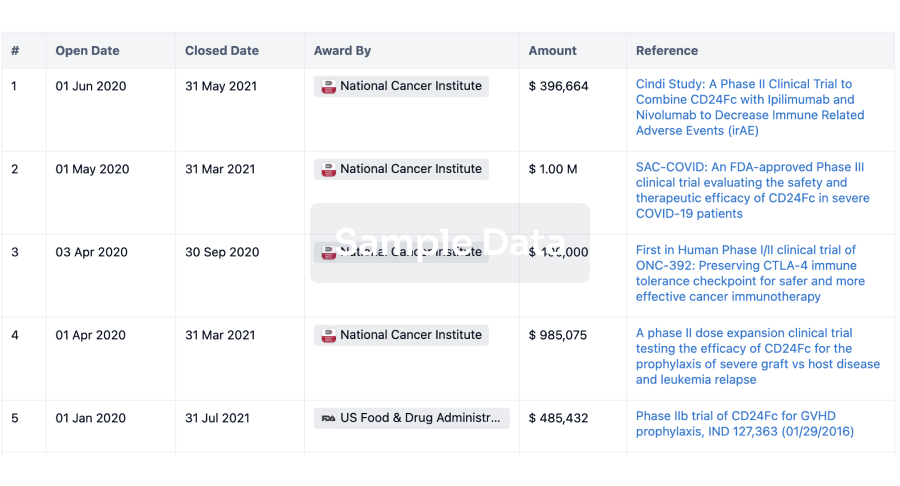
Grant & Funding(NIH)
Access more than 2 million grant and funding information to elevate your research journey.
login
or
Investment
Gain insights on the latest company investments from start-ups to established corporations.
login
or

Financing
Unearth financing trends to validate and advance investment opportunities.
login
or

AI Agents Built for Biopharma Breakthroughs
Accelerate discovery. Empower decisions. Transform outcomes.
Get started for free today!
Accelerate Strategic R&D decision making with Synapse, PatSnap’s AI-powered Connected Innovation Intelligence Platform Built for Life Sciences Professionals.
Start your data trial now!
Synapse data is also accessible to external entities via APIs or data packages. Empower better decisions with the latest in pharmaceutical intelligence.
Bio
Bio Sequences Search & Analysis
Sign up for free
Chemical
Chemical Structures Search & Analysis
Sign up for free